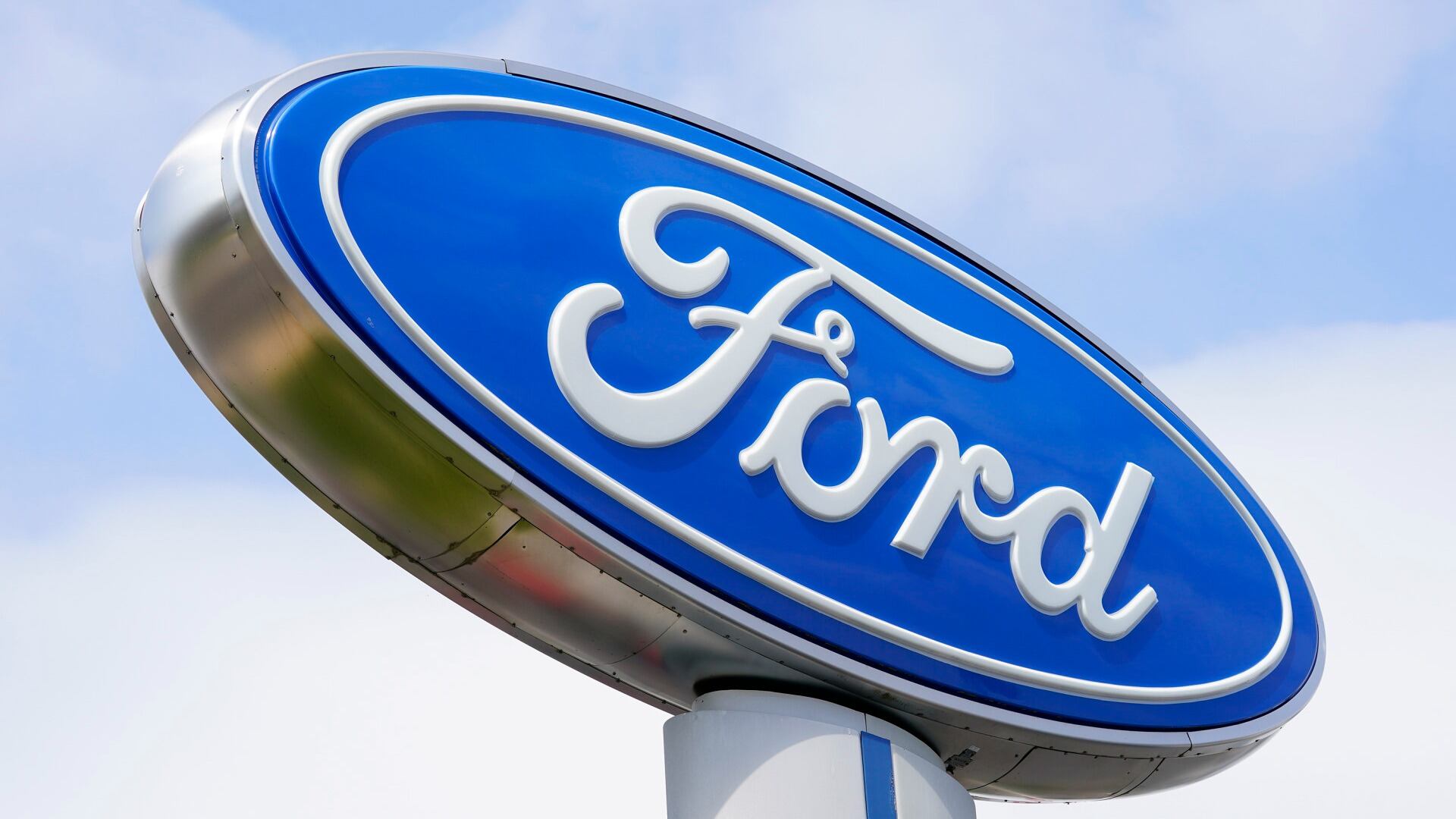
A Ford sign is shown at a dealership in Springfield, Pa., Tuesday, April 26, 2022. Ford Motor Co. is recalling certain 2004 to 2006 Ranger vehicles, Friday, May 5, 2023, because replacement front passenger air bag inflators may have been installed incorrectly. The National Highway Traffic Safety Administration said in a letter that the recall includes 231,942 vehicles. (AP Photo/Matt Rourke, File)
By Tom Krisher
Autoworkers at the first Ford factory to go on strike have voted overwhelmingly in favor of a tentative contract agreement reached with the company.
Members of Local 900 at the Michigan Assembly Plant in Wayne, Michigan, west of Detroit voted 81% in favor of the four year-and-eight month deal, according to Facebook postings by local members on Thursday.
Two union officials confirmed the accuracy of the percentage Thursday. Neither wanted to be identified because the vote totals had not been made public.
About 3,300 UAW members went on strike at the plant Sept. 15 after the union's contract with Ford expired. They remained on the picket lines until Oct. 25, when the union announced the tentative deal with Ford.
Production workers voted 81% to ratify the deal, while skilled trades workers voted 90% in favor.
Voting at Ford will continue through Nov. 17.
Local union leaders from across the country at Jeep maker Stellantis are meeting in Detroit Thursday to get an explanation of the company's tentative agreement from UAW President Shawn Fain and Vice President Rich Boyer. If they endorse the contract, Fain and Boyer will explain it to members in an online presentation Thursday evening.
General Motors local leaders will meet on Friday, with another contract explanation on Friday evening.
The deals with all three companies are generally the same, although there are some differences. All give workers 25% general pay raises with 11% upon ratification. With cost of living pay, the raises will exceed 30% by the time the contracts end on April 30, 2028.
Workers began their strikes with targeted walkouts at all three automakers that grew during a six-week period in an effort to pressure the companies into a deal. GM was the last company to settle early Sunday morning.
Most members of the Federal Reserve’s interest-rate setting committee supported further reductions to its key interest rate this year, minutes from last month’s meeting showed.
Sinead O’Sullivan breaks down Taylor Swift’s genius marketing for The Life of a Showgirl, which just set the record for most albums sold in a single week.
Markets are emerging from a turbulent Q3. Horizon’s Mike Dickson shares insights on interest rates, small caps, and where investors should look in Q4 and beyond
Bambu Ventures's Kyle Pretsch dives into Lemonaid’s $10M buyout, down from 23andMe’s $400M price tag, and what’s next after Chrome Co.’s dramatic pivot.
Former Cisco Systems CEO John Chambers learned all about technology’s volatile highs and lows as a veteran of the internet’s early boom days during the late 1990s and the ensuing meltdown that followed the mania. And now he is seeing potential signs of the cycle repeating with another transformative technology in artificial intelligence. Chambers is trying take some of the lessons he learned while riding a wave that turned Cisco into the world's most valuable company in 2000 before a crash hammered its stock price and apply them as an investor in AI startups. He recently discussed AI's promise and perils during an interview with The Associated Press.
Grove Collaborative’s CEO shares how the company is reinventing everyday goods with sustainability at the core and working toward a plastic-free future.
Atlanta Mayor Andre Dickens shares plans for affordable housing, community-led growth, and why private and public grocery stores could be key to food equity.