This June 1, 2020, rendering provided by Mohammed Bin Rashid Space Centre shows the Hope probe. The U.S., China and the United Arab Emirates are sending spacecraft to Mars in quick succession beginning this week. (MBRSC via AP)
By Mari Yamaguchi
The liftoff of the United Arab Emirates' Mars orbiter was postponed until Friday due to bad weather at the Japanese launch site.
The orbiter named Amal, or Hope, is the Arab world's first interplanetary mission. The launch was scheduled for Wednesday from the Tanegashima Space Center in southern Japan, but the UAE mission team announced the rescheduled date on Twitter.
Mitsubishi Heavy Industries' H-IIA rocket will carry UAE's craft into space. Mitsubishi launch official Keiji Suzuki had said on Monday a postponement was possible as intermittent lightning and rain were forecast over the next few days.
Heavy rain has fallen for more than a week in large areas of Japan, triggering mudslides and floods and killing more than 70 people, most of them on the southern main island of Kyushu.
Hope is set to reach Mars in February 2021, the year the UAE celebrates 50 years since its formation. A successful Hope mission would be a major step for the oil-dependent economy seeking a future in space.
Hope carries three instruments to study the upper atmosphere and monitor climate change and is scheduled to circle the red planet for at least two years.
Emirates Mars Mission Project Director Omran Sharaf, who joined Monday’s briefing from Dubai, said the mission will provide a complete view of the Martian atmosphere during different seasons for the first time.
Two other Mars missions are planned in the coming days by the U.S. and China. Japan has its own Martian moon mission planned in 2024.
Vaccine maker Pfizer delayed its COVID shot for kids allegedly due to a lack of data on how it would perform against the omnicron variant, according to the Wall Street Journa. Peter Pitts, professor and founder of the Center for Medicine in the Public Interest and a former FDA associate commissioner, joined Cheddar News Wrap to break down why the authorization can't be rushed. "Going forward, the FDA wants to look at data specifically against omicron, and it looks like that's going to be a three-shot regimen versus two, which was efficient against delta but not omicron because obviously omicron is more infectious," said Pitts.
Walker Ross, Assistant Professor of Sports Business Management at Florida Southern College, joins Business of Sports: The Beijing Winter Olympics 2022, where he says that actions Beijing and other Olympic host sites have been implementing to combat climate change has simply not been enough to offset their carbon footprint.
Bamboo-based toilet paper company Cloud Paper raised $5 million in a recent funding round. Its product is a bamboo-based alternative to traditional toilet paper made from trees, and its mission is to end the deforestation caused by traditional paper products. Cloud Paper says the raise will allow it to make significant investments in its supply chain, product development, and hiring. Ryan Fritsch, a co-founder of Cloud Paper, joined Cheddar News' Closing Bell to discuss.
Space tourism company World View plans to launch its first commercial flights in early 2024, with voyages to take off from iconic locations around the world like the Grand Canyon — but seemingly at a flexible price point. Dale Hipsh, president of tourism and exploration at World View, joined Cheddar to discuss what a trip to the stratosphere would look like with his company and its much less expensive take on space travel. "Our technology allows us to be more democratic, to offer more opportunities for people to experience near space, and that overview effect," he said. "So we're really thrilled to be bringing it to market."
A recent NOAA report found America's coastline could experience a century's worth of sea rise in just 30 years. By 2050, water on the U.S. coast will be 10-12 inches higher, causing major eastern cities to be hit regularly with floods, even on sunny days. Gary Mitchum, professor of physical oceanography at the University of South Florida, joins Cheddar News to discuss.
The Biden administration is launching a new task force to promote the use of 'cleaner' construction materials with lower life cycle emissions. This comes as the White House works to speed up government purchases of greener products. Sweta Chakraborty, climate change expert and U.S. president of "We Don't Have Time," joins Cheddar News to discuss.
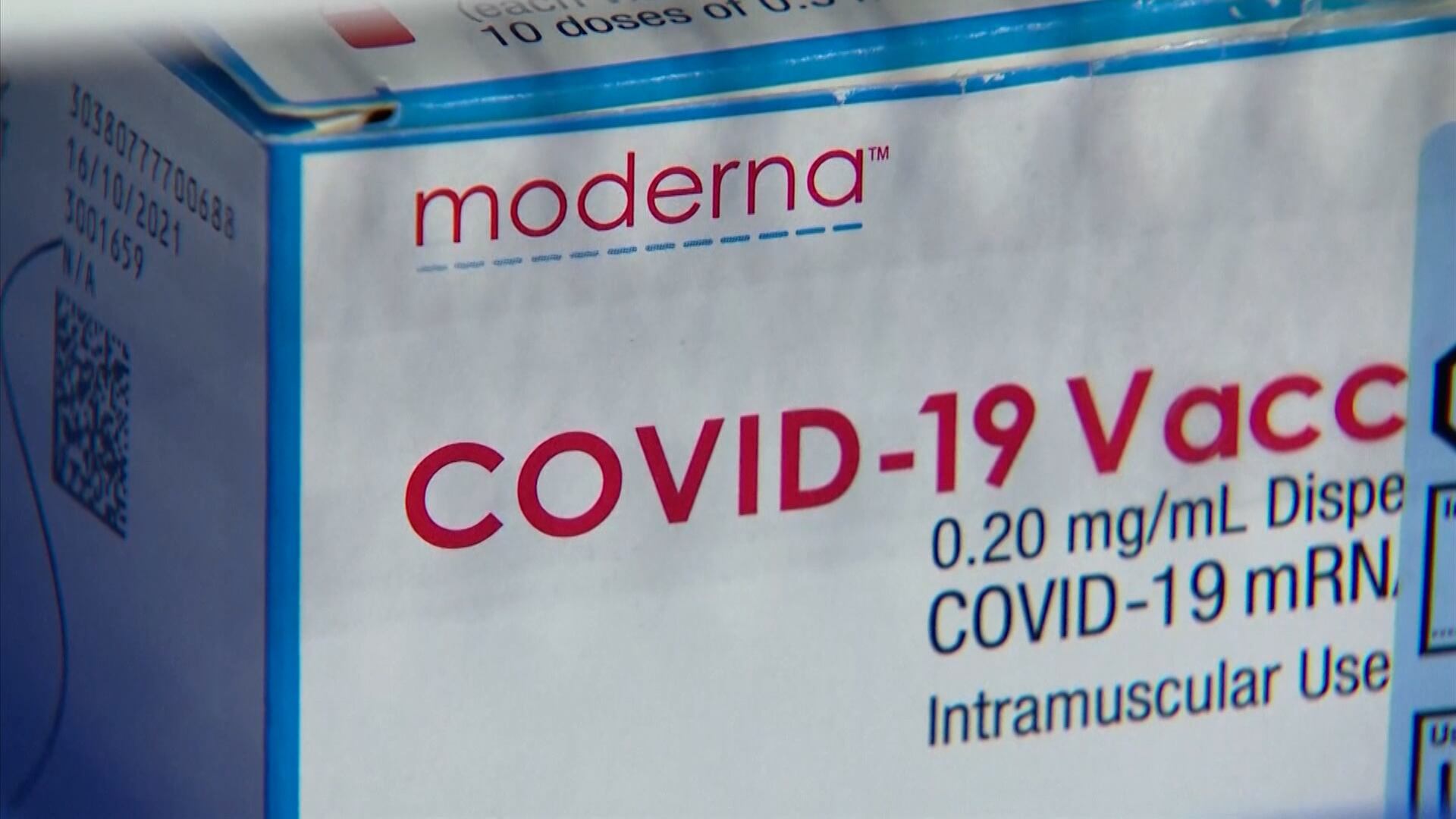
Stephen Gardner, director at ETF Managers Group, explains why investors shouldn't be rushing to sell vaccine stocks like Moderna or BioNTech even as the spread of COVID-19 slows down.
On this episode of Cheddar Innovates: Evolution Devices CEO breaks down how the Evowalk wearable device can help those with walking impairments; Cresilon CEO explains how he's created a plant-based gel to easily treat wounds in both humans and animals; A look at Curiosity Stream's 'The Colorado Problem.'
Pier Mantovani, Founder and CEO of Evolution Devices, joins Cheddar Innovates to discuss how the Evowalk wearable device can help those with walking impairments, and how remote physical therapy is becoming a reality.