ALEX VEIGA and DAMIAN J. TROISE AP Business Writers
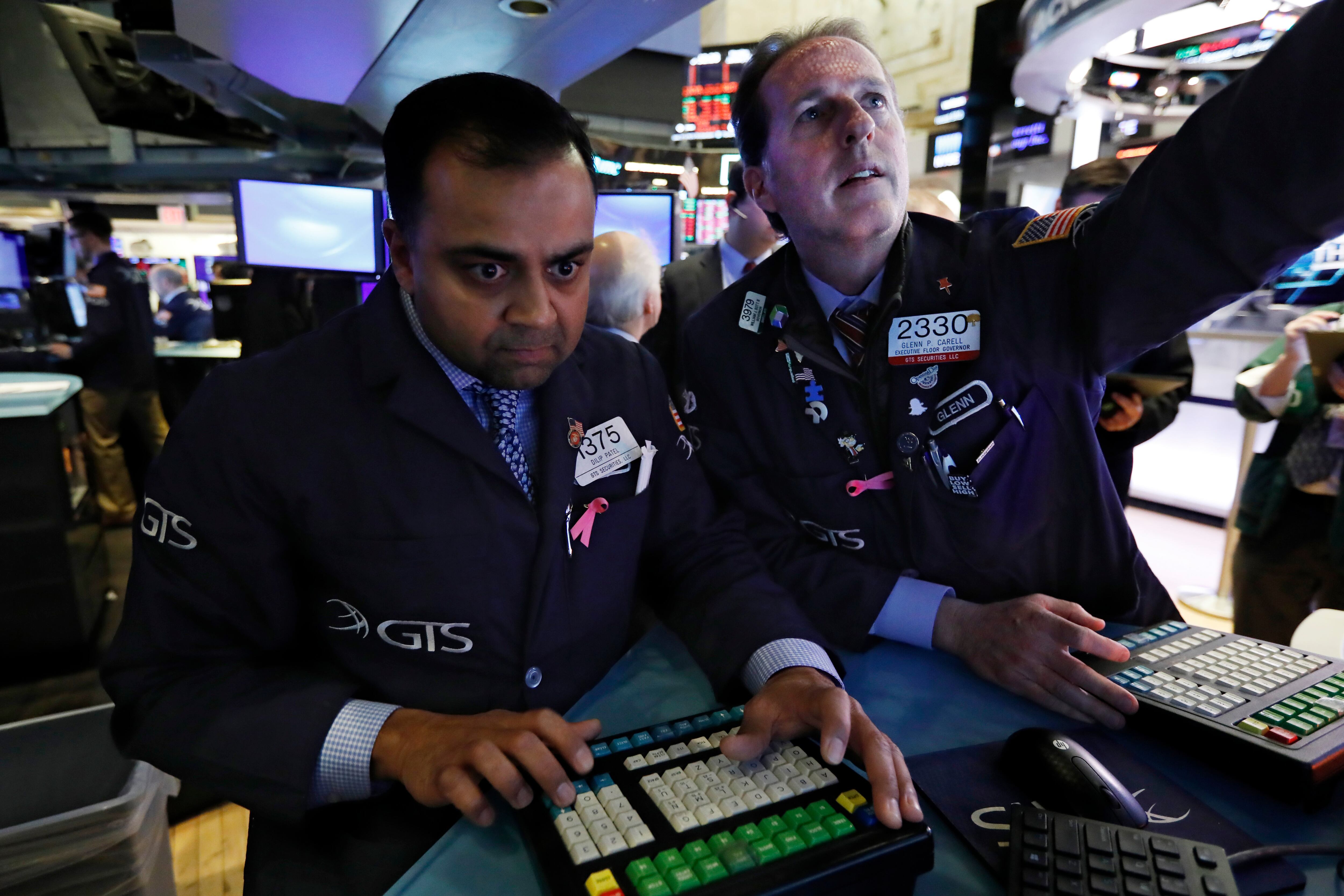
U.S. stocks fell sharply Monday, sending the Dow Jones Industrial Average down by more than 450 points, as investors grappled with fresh worries about the spread of a new virus in China that threatens global economic growth.
The sell-off gave the Dow its first 5-day losing streak since early August and handed the S&P 500 its worst day since early October. Both indexes were off about 1.5%, giving up a significant portion of their gains this month.
The latest bout of selling on Wall Street came after China announced a sharp rise in cases of the virus.
Airlines, resorts and other companies that rely on travel and tourism suffered steep losses. Gold prices rose as did bonds as traders sought refuge in safer holdings. The yield on the 10-year Treasury fell to 1.60%, its lowest level since October. The market's broad slide followed a sell-off in markets in Europe and Japan.
“Over the weekend you saw more cases,” said Quincy Krosby, chief market strategist at Prudential Financial. “That got investors and traders worried that this may be a longer event. The next question is, 'What happens to global growth if this does continue and magnify?'"
The Dow Jones Industrial Average fell 453.93 points, or 1.6%, to 28,535.80. The Dow had been down nearly 550 points. The S&P 500 index dropped 51.84 points, or 1.6%, to 3,243.63. The Nasdaq lost 175.60 points, or 1.9%, to 9,139.31. The Russell 2000 index of smaller company stocks gave up 18.09 points, or 1.1%, to 1,644.14.
Most markets in Asia were closed for the Lunar New Year holiday, but Japan’s Nikkei fell 2.03%, its biggest decline in five months. European markets also slumped. Germany’s DAX and France’s CAC 40 dove 2.7%.
Chinese health authorities have confirmed 2,750 cases of the virus along with 81 related deaths as authorities extended a week-long public holiday by an extra three days as a precaution against having the virus spread still further. The virus has spread to a dozen countries, including the U.S. Besides the threat to people's lives and health, investors are worried about how much damage the virus will do to profits for companies around the world.
Even if they're thousands of miles away from Wuhan, the interconnected global economy means U.S. companies have plenty of customers and suppliers in China. It's the world's second-largest economy, and it accounts for 6% of all revenue for S&P 500 companies over the last 12 months. That's nearly double any other country besides the United States, according to FactSet.
“Markets hate uncertainty, and the coronavirus is the ultimate uncertainty in that no one knows how badly it will impact the global economy,” said Alec Young, managing director of global markets research at FTSE Russell.
Resort operators were among the biggest losers in the S&P 500. Wynn Resorts led all company’s in the index lower with an 8.1% tumble, while Las Vegas Sands dropped 6.7%. The companies get most of their revenue from the Chinese gambling haven of Macao. MGM Resorts fell 3.9%.
American Airlines lost 5.5% and Delta dropped 3.4% as part of a broad slide for airlines because of concerns international travel will decline amid the virus’ spread.
Booking companies and cruise-line operators also got hurt. Expedia Group fell 2.7% and Carnival slid 4.7%.
Chinese companies that trade shares in the U.S. also declined. Search engine operator Baidu fell 2.9% and e-commerce company JD.com dropped 4.8%.
The technology sector, the biggest in the S&P 500, also saw heavy selling. Apple, which relies on China for supplies and sales, fell 2.9%.
Financial stocks also took steep losses. Citigroup dropped 2.2%.
Energy stocks fell broadly as U.S. oil prices fell 1.9% on worries about reduced demand from China. Schlumberger skidded 5.1%.
Utilities, real estate stocks and household goods makers held up better than the rest of the market, though they still finished in the red. The sectors are viewed as less-risky and are not as affected by international issues and developments.
A few companies managed to climb against the sliding markets. Bleach and cleaning products maker Clorox rose 1.1%.
Small biotechnology companies and drug developers made some of the biggest gains. Cleveland BioLabs more than doubled, while NanoViricides and BioCryst also climbed sharply.
"If you look at this right now, investors and traders are looking at pockets of opportunity,” Krosby said. “It's not a question of if, but when they start buying.”
Investors are also dealing with a heavy week of corporate earnings. Apple will report financial results on Tuesday. Pharmaceutical giant Pfizer and Starbucks will also report.
Boeing, McDonald’s, Coca-Cola and Amazon are also among some of the biggest names reporting earnings throughout the week that includes 147 S&P 500 companies.
Benchmark crude oil fell $1.05 to settle at $53.14 a barrel. Brent crude oil, the international standard, dropped $1.37 to close at $59.32 a barrel.
Wholesale gasoline slid 3 cents to $1.48 per gallon. Heating oil declined 5 cents to $1.70 per gallon. Natural gas inched 1 cent higher to $1.90 per 1,000 cubic feet.
Gold rose $5.50 to $1,577.40 per ounce, silver fell 6 cents to $18.06 per ounce and copper slid 9 cents to $2.60 per pound.
The dollar fell to 108.92 Japanese yen from 109.24 yen on Friday. The euro weakened to $1.1020 from $1.1029.
Private equity firms in 2021 spent $401.71 billion in U.S. tech investments — doubling 2020's level of $196.34 billion. As tech becomes increasingly interwoven into our lives amid the pandemic, investors grow bullish on the sector, especially software-as-a-service companies. How will 2022 stack up to 2021, and is there potential for parts of the tech sector to sink this year? John Jannarone, Editor in Chief at IPO-Edge, joins Cheddar News' Closing Bell to discuss 2021's record year of deals, how potential interest rate hikes will impact tech investments in 2022, the fastest-growing IPOs, and more.
Bed Bath & Beyond delivered disappointing fiscal third-quarter results for 2022. Shares initially dove more than 9% in premarket trading on the news but finished the day up nearly 8%. Bed Bath & Beyond has been a meme-stock target for online investors in the past -- so was meme-stock mania a factor in the recent stock movement for the company? Jaime Rogozinski, the founder of the subreddit WallStreetBets, joins Cheddar News' Closing Bell for more, as his forum helped spark the meme stock phenomena. He also discussed some decentralized finance services and trends for the retail investor to watch for in 2022.
College athletes scored big in 2021 when they were finally allowed to begin earning money based off of their name, image, and likeness, known as NIL. But how can young athletes best manage their money so they can set themselves up for years of success? Nicole Pullen Ross, Head of Goldman Sachs Sports and Entertainment Solutions, joins Cheddar News' Closing Bell to discuss why financial management for college athletes is important, common pitfalls they could run into, and more.
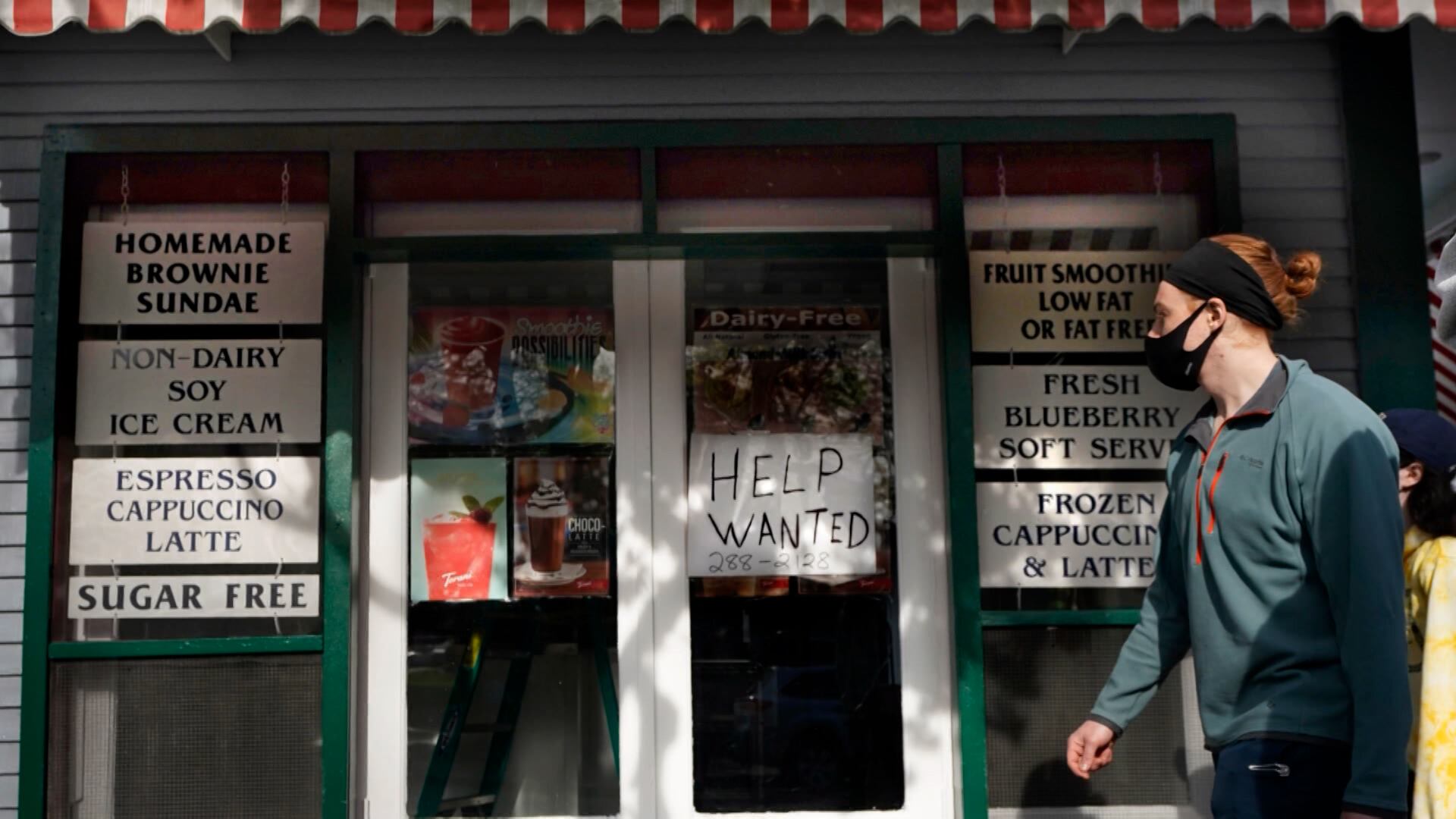
December's jobs report was weaker than expected: the economy only added 199,000 nonfarm payrolls compared to an estimate of 422,000. However, the unemployment rate hit a new pandemic-era low of 3.9%, beating expectations. One thing to consider is the fact that the impact of the COVID-19 omicron variant is not factored into these results as the read is taken around the middle of the month. So — how might the variant impact job reports over the next few months? Mark Zandi, Chief Economist at Moody's Analytics, joins Cheddar News' Closing Bell to discuss December's jobs numbers, his 2022 labor market outlook, how COVID-19 will continue to impact the labor market, and more.
Digital medical care provider Pear Therapeutics rang the closing bell on the Nasdaq Friday and President and CEO Dr. Corey McCann, joined Cheddar to talk about how the company plans to grow the business of software-based therapeutics and how the first FDA authorized prescription digital therapeutics company will go about treating illnesses like insomnia and addiction. "These really are pieces of software. In many cases, they're apps and in the cases of our addiction products, these are based on something called cognitive behavioral therapy or CBT," he said. "These products change the patient's brain circuitry to help them be abstinent, to help them stay in treatment, and that's exactly what we see in randomized clinical trials and that's what we see in the real world." He also addressed the ongoing mental health crises brought on by the pandemic. **copy updated to remove IPO information as Pear Therapeutics went public in December**
Gamestop shares were up on The Wall Street Journal report that the video game retail company plans to enter the NFT and crypto space. Adam Hollander, the founder of Hungry Wolves NFT, joined Cheddar to break down how it could be a lifeline for the struggling meme stock darling. "They're not resigning themselves to becoming the next Blockbuster story, and so while people may not be buying as many video games in a retail environment anymore, NFTs, in particular, people are starting to expect more gaming utility on the backend — at least for a variety of projects — and I personally think its a very smart move for them to do this," Hollander told Cheddar.
On Saturday, New York will join neighboring New Jersey and Connecticut in authorizing mobile sports betting. Matt Kalish, president and co-founder of Draftkings North America, joined Cheddar to talk about the landmark change that is estimated to rake in $500 million in annual tax revenue on a potential billion-dollar market. Kalish also addressed the possibility that legalized sports betting in the Empire State could cannibalize his company's revenues in the bordering states. "It's pretty inconvenient, you know, to go across the border to make a bet. And people were doing it, but I think it really stifled a lot of the opportunity," he said. "So while there's some of that going on, I think really a tremendous amount, like a giant percent, of New York will be very incremental."
James Tattersall, director of sales and marketing for Lake Nona Wave Hotel, talks about the hotel's initiatives to foster diversity and how these amenities champion inclusivity in the Orlando area.
Desmond Howard, former NFL wide receiver and Modelo college football playoff ambassador, joins Cheddar News to talk about the Modelo sweepstakes honoring the 30th anniversary of his iconic punt return.
Satoshi Island is looking to become the world's first blockchain-driven economy. James Law, the chief architect of the planned private community, joined Cheddar to discuss the vision for the potential crypto capital of the world and how it will be brought to life. For people looking to live on the island, Law said they will be able to purchase land and homes and even design their own dwellings both in real life and via the metaverse. "Satoshi Island has already been digitally scanned. We have an absolute digital twin already in our metaverse," he said. Citizenship applications are expected to be launched via NFTs, he told Cheddar.