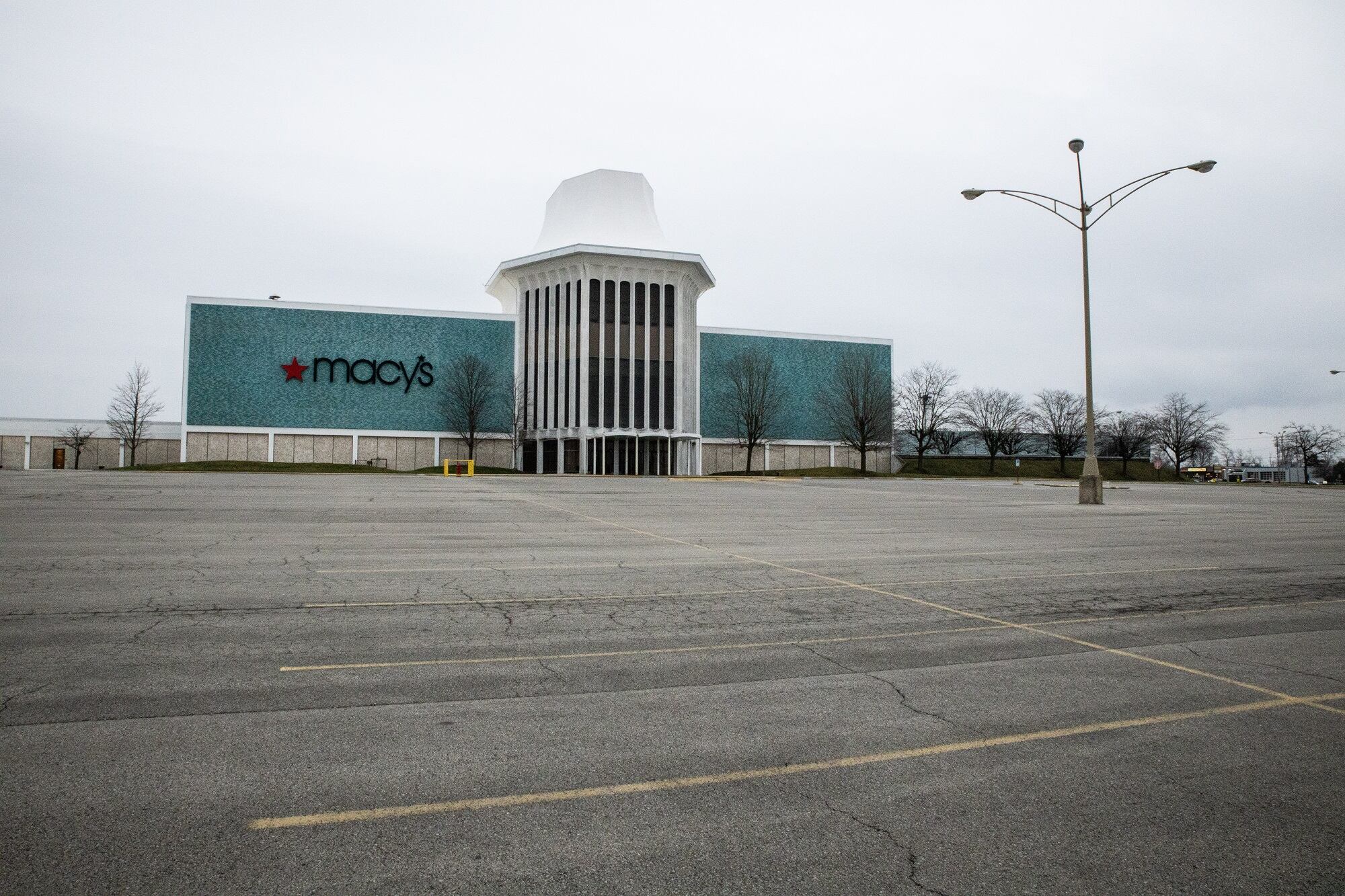
A closed shopping mall is seen in Lima, Ohio on March 24, 2020 amidst the coronavirus pandemic. (Photo by Megan JELINGER/Anadolu Agency via Getty Images)
By Christopher Rugaber
A record-long streak of U.S. job growth ended suddenly in March after nearly a decade as employers cut 701,000 jobs because of the viral outbreak that's all but shut down the U.S. economy. The unemployment rate jumped to 4.4% from a 50-year low of 3.5%.
Last month's actual job loss was likely even larger because the government surveyed employers before the heaviest layoffs hit in the past two week. Nearly 10 million Americans applied for unemployment benefits in the last two weeks of March, far exceeding the figure for any corresponding period on record.
Virus-induced shutdowns have forced widespread layoffs throughout the economy, from hotels, restaurants and movie theaters to auto factories, department stores and administrative offices.
One sign of how painfully deep the job losses will likely prove to be: During its nearly decade-long hiring streak, the U.S. economy added 22.8 million jobs. Economists expect the April jobs report being released in early May to show that all those jobs will have been lost.
TIME's editorial director Emma Barker unpacks the 2026 100 Most Influential Companies list, spotlighting trends, AI impact, surprises, and leadership shifts.
From dire wolves to new species targets, scientists at Colossal Biosciences are using gene editing to revive extinction and reshape biodiversity as we know it.
R.J. Hottovy, Head of Analytical Research at Placer.ai, breaks down restaurant trends, pricing power, and which chains are winning this earnings season.
William Shatner and LifeWave CEO David Schmidt share lessons from his “world’s oldest intern” experience and offer advice for young professionals starting out.
The Live Nation ruling is in. Diana Moss of the Progressive Policy Institute joins us to unpack what it means for competition, consumers, and live music.