By Ken Moritsugu and Matthew Lee
The United States said Wednesday that it has ordered China to close its consulate in Houston "to protect American intellectual property" and the private information of Americans.
China strongly condemned the move, the latest in a series of steps by the Trump administration as it ratchets up pressure on the world's second-largest economy over trade, technology, human rights and security.
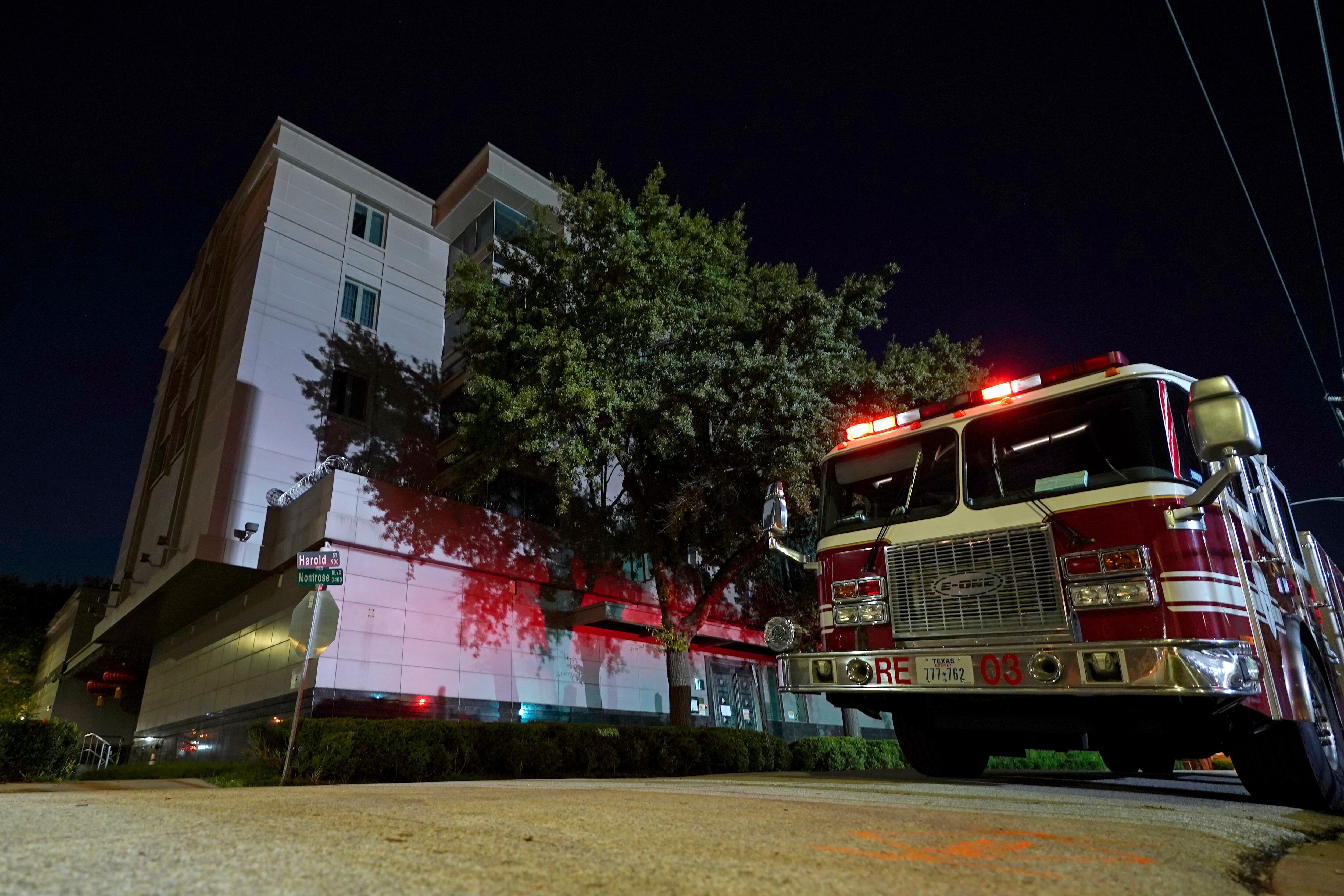
In Houston, firefighters responded to reports of papers being burned on the consulate grounds Tuesday night but were barred entry, according to news media reports.
The U.S., in a brief statement, did not provide any details on why the consulate in Texas was targeted.
"The United States will not tolerate (China's) violations of our sovereignty and intimidation of our people, just as we have not tolerated (its) unfair trade practices, theft of American jobs, and other egregious behavior," said the statement, which was attributed to State Department spokesperson Morgan Ortagus.
Secretary of State Mike Pompeo said the Trump administration is taking action to halt long-running intellectual property theft, noting indictments announced Tuesday against two Chinese individuals accused of hacking.
"President (Donald) Trump has said 'Enough, we're not going to allow this to continue to happen,'" he said while on an official visit to Copenhagen.
The U.S. also has decided not to reopen its consulate in the city of Wuhan, which was closed in late January at the height of the coronavirus outbreak in China, a Trump administration official said.
The official, who was not authorized to discuss the matter publicly and spoke on condition of anonymity, said the closure of the Wuhan consulate might mitigate China's response to the shutdown of the Houston consulate.
China was informed of the decision Tuesday, Chinese foreign ministry spokesperson Wang Wenbin said, calling it "an outrageous and unjustified move that will sabotage relations between the two countries."
"The unilateral closure of China's consulate general in Houston within a short period of time is an unprecedented escalation of its recent actions against China," Wang said at a daily news briefing in Beijing.
He warned of firm countermeasures if the U.S. does not reverse itself. Besides Wuhan, the U.S. has four other consulates in China — in Shanghai, Guangzhou, Chengdu and Shenyang — along with its embassy in Beijing, according to its website.
In a reflection of China's economic importance, a Houston business group expressed regret at the announcement, saying the consulate has been important in building trade, investment and cultural ties. It noted that the Houston consulate was China's first in the U.S. when it opened in 1979.
The Greater Houston Partnership expressed hope that China would take immediate steps to address intellectual property and cybersecurity concerns. "We look forward to the reopening of the consulate in Houston once these concerns are addressed," it said in a statement.
Houston media reports said authorities responded to reports of a fire at the Chinese Consulate. Witnesses said people were burning paper in what appeared to be trash cans, the Houston Chronicle reported, citing police.
Police were told that occupants were given until 4 p.m. Friday to leave the property, the Chronicle said.
Houston police said in a tweet that officers responded to "a meet the firefighter" call at the Chinese Consulate building at 3417 Montrose Blvd. The tweet said smoke was observed in an outdoor courtyard area, and that officers were not allowed to enter the building.
Wang accused the U.S. of opening Chinese diplomatic pouches without permission multiple times, confiscating Chinese items for official use and imposing restrictions on Chinese diplomats in the U.S. last October and again in June. He also said that U.S. diplomats in China engage in infiltration activities.
"If we compare the two, it is only too evident which is engaged in interference, infiltration, and confrontation," Wang said.
He also said that the Chinese Embassy in Washington has received bomb and death threats, and accused the U.S. government of fanning hatred against China.
President Trump, his reelection prospects damaged by the coronavirus outbreak, has blamed China repeatedly for the pandemic. Almost every day brings a fresh U.S. action against what Trump has called the rising Asian superpower's exploitation of America.
Already this week, the Commerce Department has sanctioned 11 Chinese companies over alleged human rights abuses in the Xinjiang region and the Justice Department said two Chinese stole intellectual property and targeted companies developing coronavirus vaccines.
Pompeo is expected to continue the attacks Thursday in a speech on U.S.-China relations at the Nixon Library in California.
Chinese Foreign Minister Wang Yi, saying U.S.-China relations face their most severe challenge since diplomatic ties were established in 1979, asked recently if the two nations would be able to stay the course after a more than four-decade voyage.
___
Lee reported from Washington, DC