LOLITA C. BALDOR and ZEKE MILLER Associated Press
WASHINGTON (AP) — Two U.S. officials said Thursday it was “highly likely” that an Iranian anti-aircraft missile downed a Ukrainian jetliner late Tuesday, killing all 176 people on board.
The crash came just a few hours after Iran launched a ballistic missile attack against Iraqi military bases housing U.S. troops amid a confrontation with Washington over the U.S. drone strike that killed an Iranian Revolutionary Guard general last week. The officials, citing U.S. intelligence, spoke on the condition of anonymity to discuss sensitive information. They said they had no certain knowledge of Iranian intent. But they said it could very well have been a mistake, and that the airliner was mistaken for a threat.
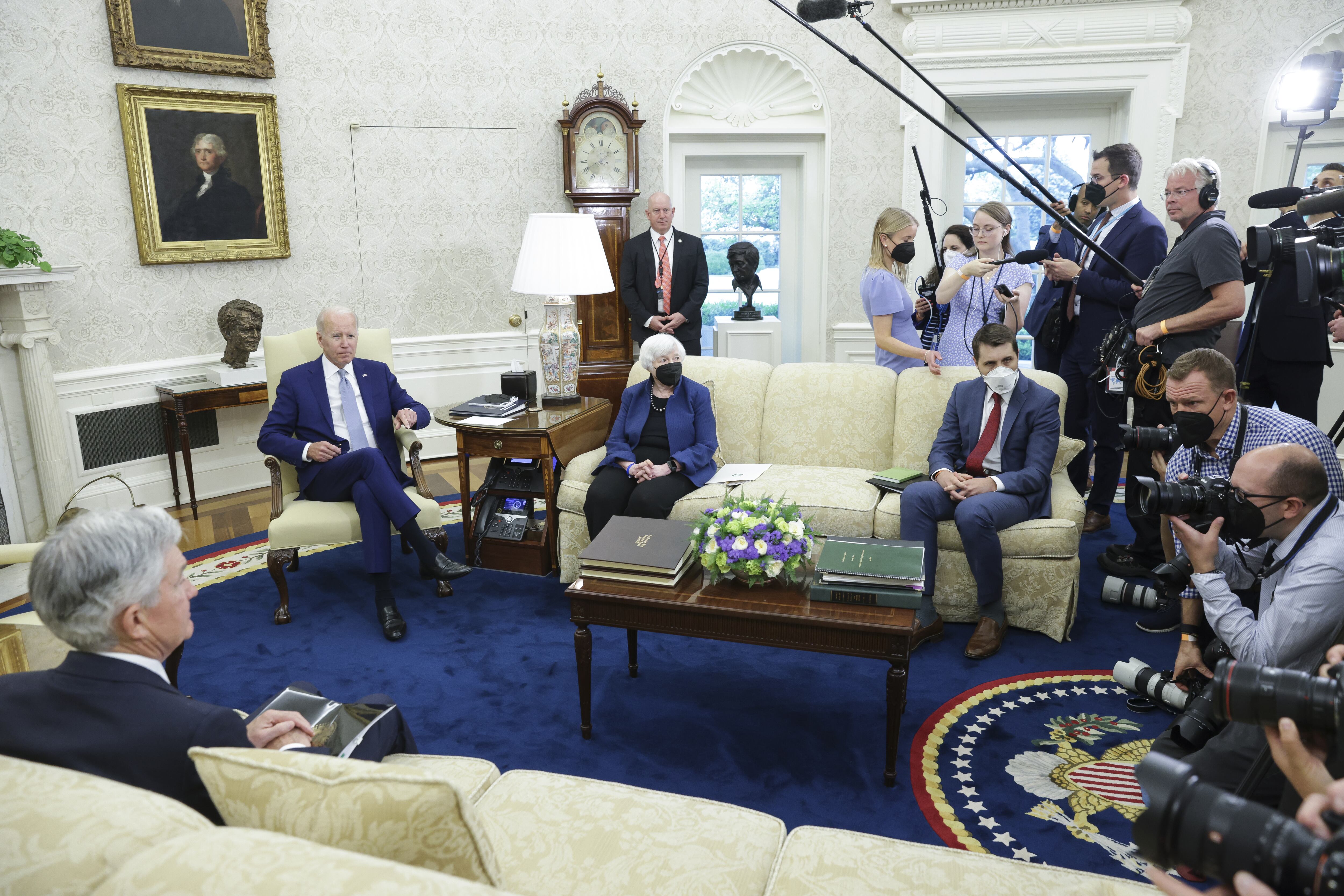
President Donald Trump suggested that he believes Iran was responsible and wouldn't directly lay the blame on Iran, but dismissed Iran's initial claim that it was a mechanical issue.
“Somebody could have made a mistake on the other side.," Trump said, noting the plane was flying in a “pretty rough neighborhood."
“Some people say it was mechanical,” Trump added. “I personally don't think that's even a question.”
The U.S. officials wouldn’t say what intelligence they have that points to an Iranian missile. But they acknowledged the existence of satellites and other sensors in the region, as well as the likelihood of communications intercepts and other similar intelligence.
The U.S. assessment comes after a preliminary Iranian investigative report released Thursday said the pilots never made a radio call for help and claimed the aircraft was trying to turn back for the airport when the burning plane went down. Ukraine, meanwhile, said it considered a missile strike as one of several possible theories for the crash, despite Iran's denials.
The Iranian report suggests that a sudden emergency struck the Boeing 737 operated by Ukrainian International Airlines late Tuesday, when it crashed, just minutes after taking off from Imam Khomeini International Airport in Tehran.
Investigators from Iran's Civil Aviation Organization offered no immediate explanation for the disaster, however. Iranian officials initially blamed a technical malfunction for the crash, something initially backed by Ukrainian officials before they said they wouldn't speculate amid an ongoing investigation.
The Ukrainian International Airlines took off at 6:12 a.m. Wednesday, Tehran time, after nearly an hour's delay at Tehran's Imam Khomeini Airport, the main airport for travelers in Iran. It gained altitude heading west, reaching nearly 8,000 feet, according to both the report and flight-tracking data.
Then something went wrong, though “no radio messages were received from the pilot regarding unusual situations,” the report said. In emergencies, pilots reach out to air-traffic controllers to warn them and to clear the runway for their arrival, though their first priority is to keep the aircraft flying.
Eyewitnesses, including the crew of another flight passing above it, described seeing the plane engulfed in flames before crashing at 6:18 a.m., the report said. Flight-tracking data for the plane stopped before the crash, which occurred in the town of Shahedshahr to the northeast of the plane's last reported position. That's the wrong direction of the flight plan, bolstering the report's claim that the pilots tried to turn the aircraft back to the airport.
The crash caused a massive explosion when the plane hit the ground, likely because the aircraft had been fully loaded with fuel for the flight to Kyiv, Ukraine.
The report also confirmed that both of the so-called “black boxes” that contain data and cockpit communications from the plane had been recovered, though they sustained damage and some parts of their memory was lost. It also said that investigators have initially ruled out laser or electromagnetic interference as causing the crash.
Hours before the plane crash the U.S. Federal Aviation Administration had issued an emergency flight restriction barring U.S. carriers and pilots from flying over areas of Iraqi, Iranian and some Persian Gulf airspace warning of the “potential for miscalculation or mis-identification” for civilian aircraft due to heightened political and military tensions.
Oleksiy Danilov, secretary of Ukraine's Security Council, told Ukrainian media that officials had several working theories regarding the crash, including a missile strike.
"A strike by a missile, possibly a Tor missile system, is among the main (theories), as information has surfaced on the internet about elements of a missile being found near the site of the crash," Danilov said. He did not elaborate on where he saw the information on the internet.
Ukrainian investigators that arrived in Iran earlier on Thursday currently await permission from Iranian authorities to examine the crash site and look for missile fragments, Danilov said.
The Tor is a Russian-made missile system. Russia delivered 29 Tor-M1s to Iran in 2007 as part of a $700 million contract signed in December 2005. Iran has displayed the missiles in military parades as well.
Iran did not immediately respond to the Ukrainian comments. However, Gen. Abolfazl Shekarchi, the spokesman of the Iranian armed forces, denied a missile hit the airplane in comments reported Wednesday by the semi-official Fars news agency. He dismissed the allegation as "psychological warfare" by foreign-based Iranian opposition groups.
Ukraine has a grim history with missile attacks, including in July 2014 when one such strike downed a Malaysian Airlines flight over eastern Ukraine, killing all 298 people aboard.
Danilov also said other possible causes under consideration included a drone or another flying object crashing into the plane, a terrorist attack or an engine malfunction causing an explosion. However, no terror group has claimed responsibility for the attack and the plane was only 3½ years old.
Oleksandr Zaporozhchenko, a mechanic with the Ukraine International Airlines in 2016-2018, said he knew one of the crew members of the plane and had never heard any complaints about the aircraft.
“It is one the most reliable planes out there,” Zaporozhchenko told The Associated Press.
The manufacturer of the plane's engines, U.S.-French firm CFM, declined to comment. French air accident investigators have not been asked to take part in the investigation so far.
The plane was carrying 167 passengers and nine crew members from several countries, including 82 Iranians, at least 63 Canadians and 11 Ukrainians, according to officials. Many of the passengers were believed to be international students attending universities in Canada; they were making their way back to Toronto by way of Kyiv after visiting with family during the winter break.
Ukrainian President Volodymyr Zelenskiy said he planned to call Iranian President Hassan Rouhani about the crash and the investigation.
“Undoubtedly, the priority for Ukraine is to identify the causes of the plane crash,” Zelenskiy said. “We will surely find out the truth.”
The crash ranked among the worst losses of life for Canadians in an aviation disaster. The flag over Parliament in Ottawa was lowered to half-staff, and Canadian Prime Minister Justin Trudeau has vowed to get to the bottom of the disaster.
While the cause of the tragedy remained unknown, the disaster could further damage Boeing’s reputation, which has been battered by the furor over two deadly crashes involving a different model of the Boeing jet, the much-newer 737 Max, which has been grounded for nearly 10 months. The uproar led to the firing of the company’s CEO last month.
Boeing extended condolences to the victims’ families and said it stands ready to assist. However, it remains unclear if Iran will allow that amid tensions with Washington, given Boeing is a U.S.-based firm.