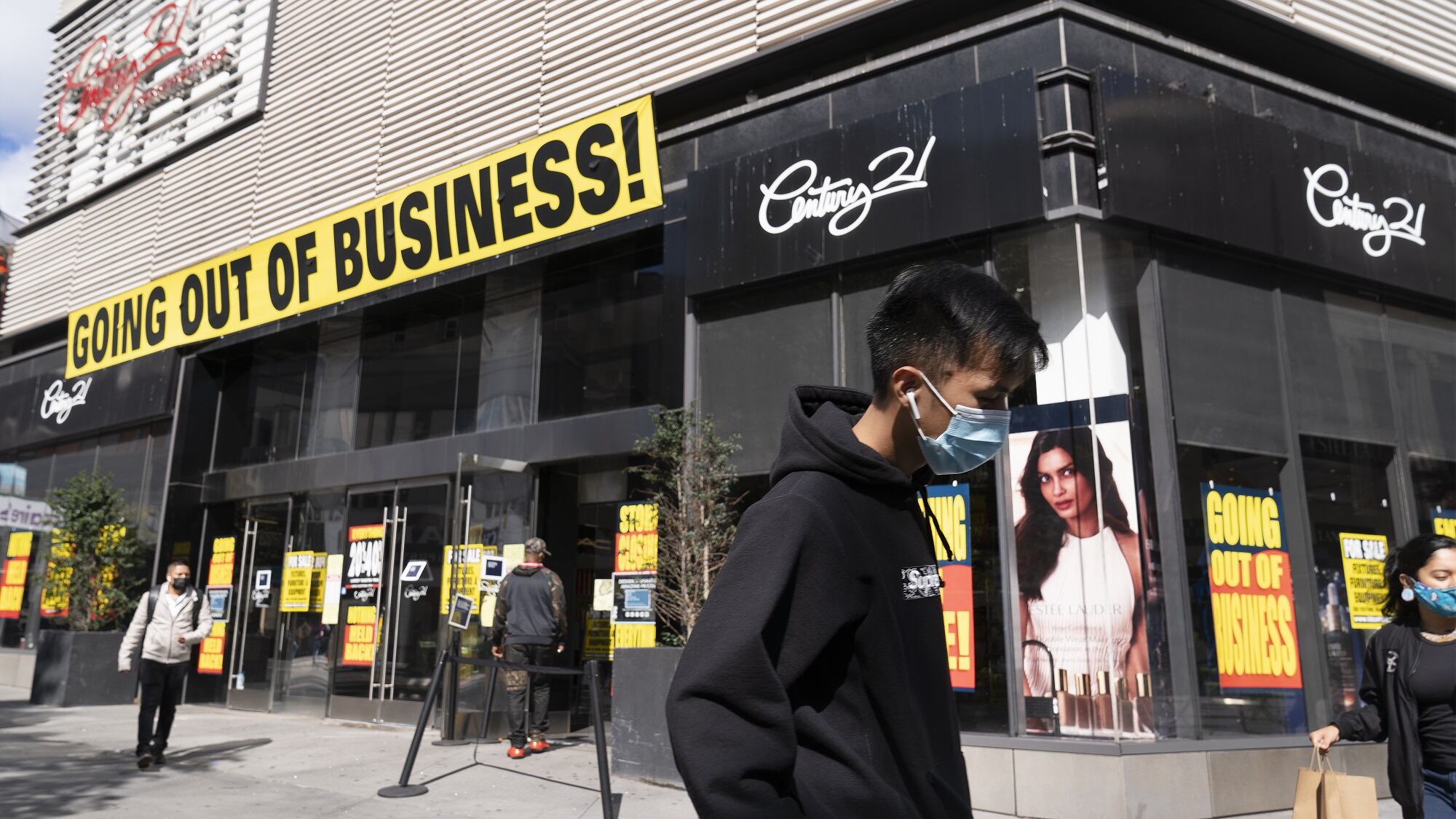
A man wearing a mask walks by Century 21 department store, Wednesday, Sept. 30, 2020 in the Brooklyn borough of New York. The discount department store chain has filed for Chapter 11 bankruptcy protection and is closing its 13 stores. (AP Photo/Mark Lennihan)
By Christopher Rugaber
The number of Americans seeking unemployment benefits declined last week to a still-high 837,000, evidence that the economy is struggling to sustain a tentative recovery that began this summer.
The Labor Department's report, released Thursday, suggests that companies are still cutting a historically high number of jobs, though the weekly numbers have become less reliable as states have increased their efforts to root out fraudulent claims and process earlier applications that have piled up.
For example, California, which accounts for more than one-quarter of aid applications, simply provided the same figure it submitted the previous week. The state had said it would stop accepting jobless claims online so it could tackle a backlog of 600,000 claims.
Measures of the U.S. economy have been sending mixed signals. Consumer confidence jumped in September, fueled by optimism among higher-income households, though it remains below pre-pandemic levels. And a measure of pending home sales rose in August to a record high, lifted by ultra-low mortgage rates.
Yet some real-time measures indicate that growth has lost momentum with the viral pandemic still squeezing many employers, especially small retailers, hotels, restaurants and airlines, nearly seven months after it paralyzed the economy. An economic index compiled by the Federal Reserve Bank of New York grew in September at a weaker pace than during the summer months.
In its report on jobless claims Thursday, the Labor Department said the number of people who are continuing to receive benefits fell to 11.8 million, extending a steady decline since spring. That suggests that many of the unemployed are being recalled to their old jobs.
But it also reflects the fact that tens of thousands of jobless Americans have exhausted their regular state unemployment benefits. Some of them are likely transitioning to an extended jobless aid program that provides benefits for an additional three months.
Weekly applications for unemployment benefits are typically watched as a proxy for layoffs, although the data has become muddied in recent months. The flood of laid-off workers during the pandemic recession overwhelmed state agencies.
Congress also made millions of contractors and self-employed people eligible for jobless aid for the first time through a new program that is managed by state agencies. This program has further burdened the states.
The states’ efforts to clear backlogs and uncover fraud in the new program have made it harder to interpret the government’s report on unemployment benefits. Many economists no longer consider it a clear sign of the pace of layoffs.
Initial jobless claims are stuck above the highest levels reached in the 2008-2009 Great Recession. But last week, economists at Goldman Sachs noted that according to other government data, layoffs have fallen below the peaks of a decade ago.
Still, many large companies are announcing further layoffs.
The Walt Disney Co. said this week that it’s cutting 28,000 jobs in California and Florida, a consequence of the damage it’s suffered from the viral outbreak and the shutdowns and attendance limits that were imposed in response.
Allstate said it will shed 3,800 jobs — 7.5% of its workforce. And tens of thousands of airline workers will lose their jobs this month as federal aid to the airlines expires. The airlines were barred from cutting jobs as long as they were receiving the government assistance.
Late Wednesday, two of them — American and United — announced that they would begin to furlough 32,000 employees after lawmakers and the White House failed to agree on a pandemic relief package that would extend the aid to airlines.
On Friday, the government will issue the jobs report for September, the final such report before Election Day, Nov. 3. Analysts have forecast that it will show a gain of 850,000, which would mark the third straight monthly slowdown in job growth. It would mean that the economy has regained just over half the 22 million jobs that were lost to the pandemic.
The unemployment rate is expected to decline from 8.4% to 8.2%, according to data provider FactSet.
A group of crypto enthusiasts pooled over $40 million dollars in an attempt to win a copy of the U.S. Constitution last week. However, their efforts came up short, as hedge fund billionaire Ken Griffin emerged as the victor in a $43.2 million Sotheby's auction. Matt Cutler, CEO & Co-Founder of Blocknative, joins Cheddar News' Closing Bell, where he explains why ConstitutionDAO ultimately came up short.
Gparency, a company that says its mission is to revolutionize the commercial mortgage industry, raised $15 million in its first funding round - representing the largest ever seed round in the commercial real estate space. Gparency's service will allow landlords and real estate developers to receive funding directly from banks, without the need for a mortgage broker. The company says its new approach will give power back to the consumer. Gparency founder and CEO Ira Zlotowitz joins Cheddar News' Closing Bell to discuss.
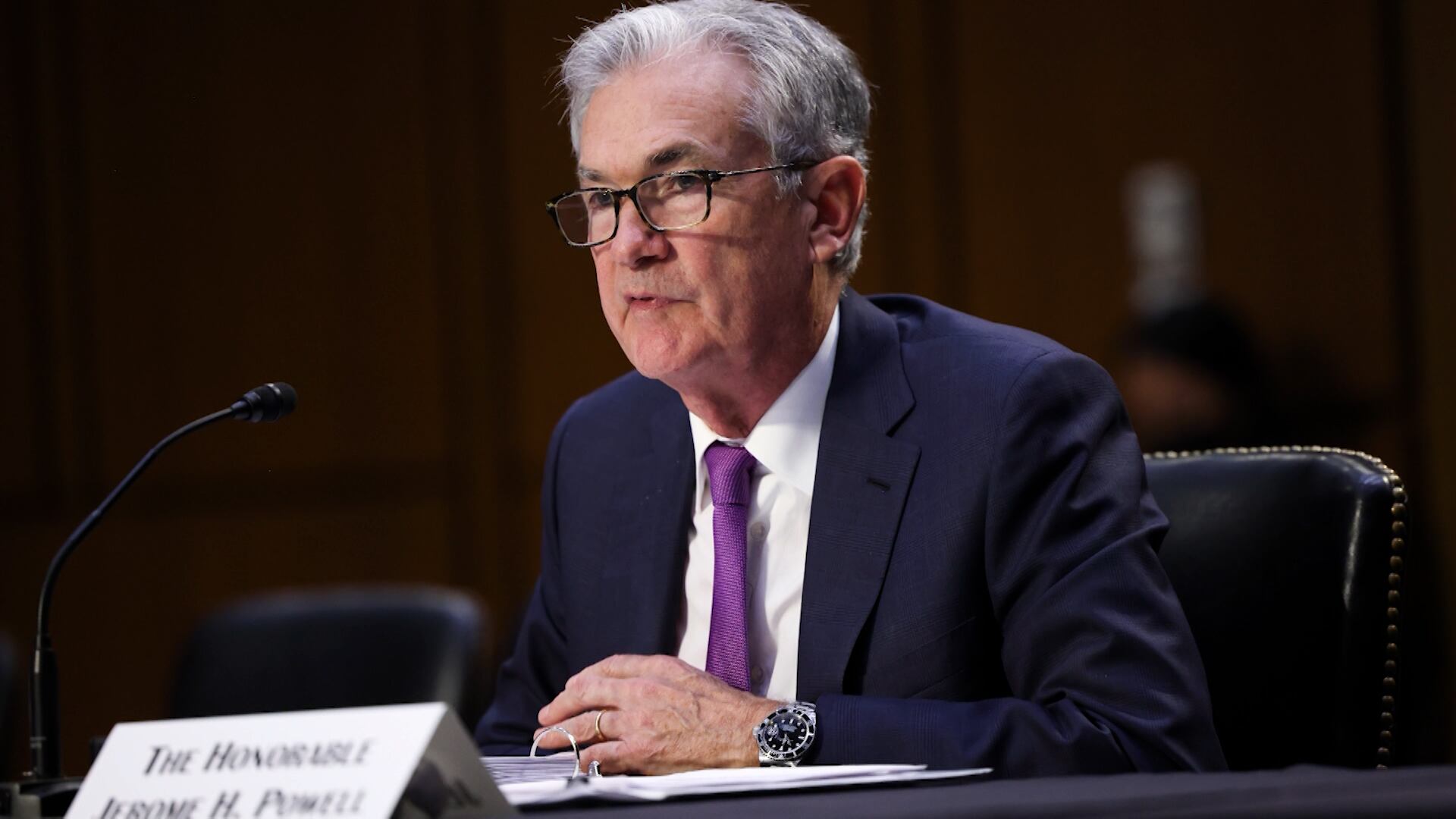
President Joe Biden announced Monday he is re-nominating Federal Reserve Chairman Jerome Powell after weeks of speculation that he would choose Democrat and Fed Governor Lael Brainard to fill the role. Biden could be looking for continuity as the U.S. continues to grapple with COVID-19 and high inflation, and investors could be on the same page: markets and treasuries ticked up after the White House made the announcement. MarketWatch Senior Reporter Greg Robb joins Cheddar News' Closing Bell to discuss Powell's re-nomination, what we can expect from the Fed's December meeting, whether it will speed up its taper timeline, and more.
President Joe Biden named Jerome Powell, initially appointed by President Trump, to keep his seat as the chair of the Federal Reserve on Monday amid the ongoing challenges of the pandemic, inflation, and unemployment. David Beckworth, a former international economist for the Treasury Department and a senior fellow with the Mercatus Center, joined Cheddar to discuss what he sees as the practicality of Biden's decision. "What Powell brings to the table is he's built up political capital with Republicans and Democrats," he said. "It's easy for him to get the job done. I think in one way he was the path of least resistance for the president."
As housing prices continues to rise, Tim Rood, managing director at the real estate finance solutions company SitusAMC, joined Cheddar's "Closing Bell" to talk about what is driving up the costs, attributing it to supply chain constraints and regulatory expenses. Rood stated that the federal government's response to the 2008 financial crisis has added to the growing price tags. "The government came down super hard on banks and independent mortgage companies because of the defaults," he said.
Colleen Kelly, CEO of Concern Worldwide US, joined Cheddar to discuss food insecurity concerns as the cost of this year's Thanksgiving dinner has surged amid record inflation. Kelly also talked about the ongoing issues derailing global supply chains and raising food prices, which undercuts efforts to tackle food insecurity in the United States and around the world. "Everything that hits the U.S. hits countries that are in extreme poverty even harder, and as you can imagine there were three major things affecting this in the last year: climate change, COVID, and conflict," she said.
Papa Johns has a new look for its logo, graphics, and storefronts. CEO Rob Lynch joined Cheddar's "Closing Bell" to talk about the timing of the rebrand following its ongoing success through the pandemic. Patrons entering revamped locations will notice a lack of menu boards thanks to customer smartphone use and glass panels to allow customers to watch pizzas being made by hand. "Everyone has a menu board in their pocket in the form of their phone," Lynch said. "Eighty percent of our business is ordered digitally, whether it's web-based or our fastest-growing channel being app-based."
In a surprise turn of events, Elizabeth Holmes took the stand in her own defense on Friday and is expected to continue her testimony later today. Holmes, who founded a blood testing start-up Theranos back in 2003, faces 11 counts of wire fraud as well as conspiracy to commit wire fraud. Aron Solomon, Chief Legal Analyst, Esquire Digital joined Cheddar's Opening Bell to discuss.
NFL Hall of Famer Jerry Rice and his daughter/business partner Jaqui Rice Gold joined Cheddar's "Between Bells" to talk about their energy drink G.O.A.T. Fuel. The pair talked about launching the brand during the height of the pandemic and what makes it different from competing brands. "The thing that separates us from the other energy drinks is we have cordyceps mushrooms in the drink," he said. "You're not going to have the jitters or anything like that." The duo also discussed the Los Angeles Lakers making it the official energy drink of its organization and what that means for the growth of the brand.