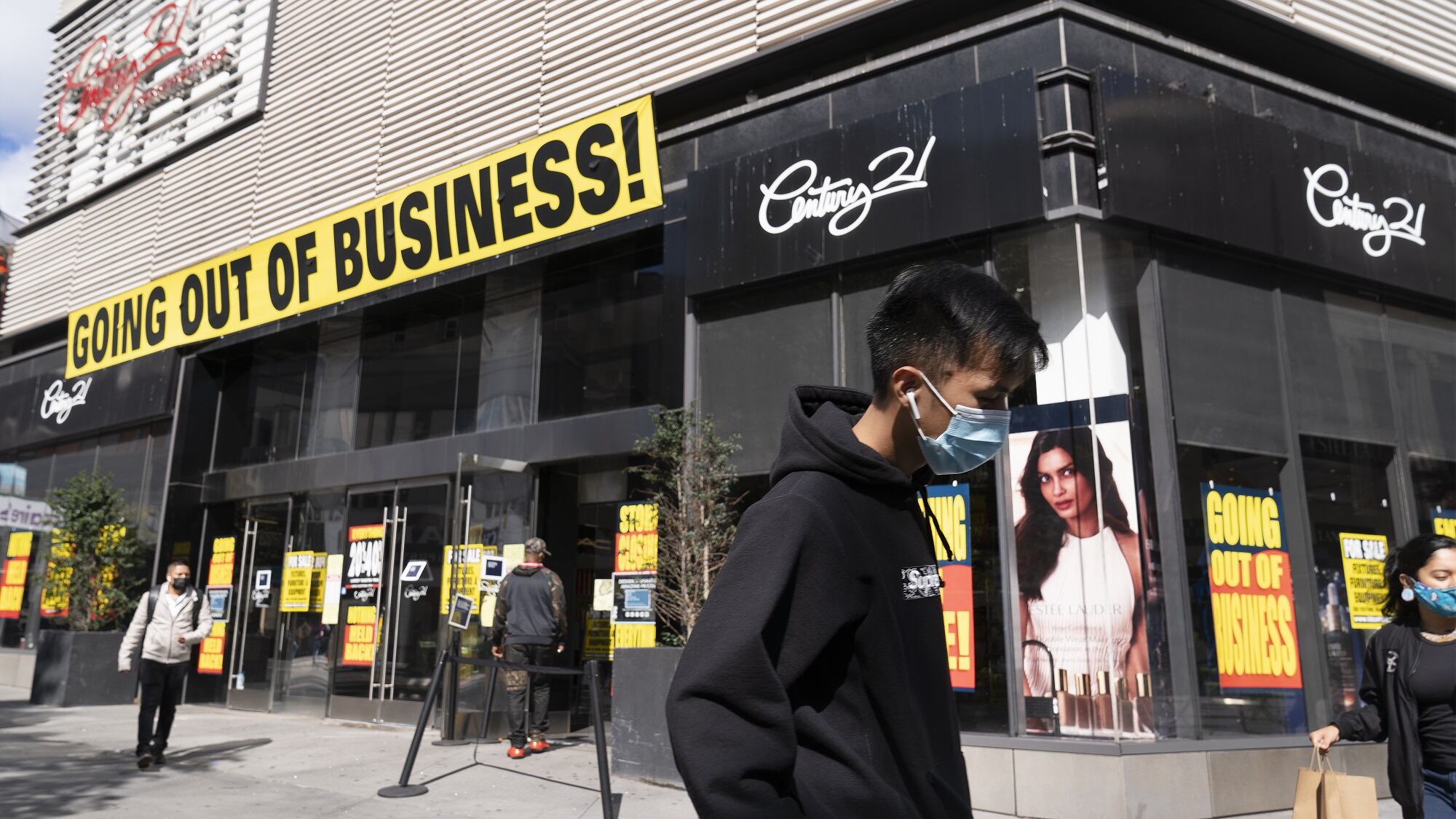
A man wearing a mask walks by Century 21 department store, Wednesday, Sept. 30, 2020 in the Brooklyn borough of New York. The discount department store chain has filed for Chapter 11 bankruptcy protection and is closing its 13 stores. (AP Photo/Mark Lennihan)
By Christopher Rugaber
The number of Americans seeking unemployment benefits declined last week to a still-high 837,000, evidence that the economy is struggling to sustain a tentative recovery that began this summer.
The Labor Department's report, released Thursday, suggests that companies are still cutting a historically high number of jobs, though the weekly numbers have become less reliable as states have increased their efforts to root out fraudulent claims and process earlier applications that have piled up.
For example, California, which accounts for more than one-quarter of aid applications, simply provided the same figure it submitted the previous week. The state had said it would stop accepting jobless claims online so it could tackle a backlog of 600,000 claims.
Measures of the U.S. economy have been sending mixed signals. Consumer confidence jumped in September, fueled by optimism among higher-income households, though it remains below pre-pandemic levels. And a measure of pending home sales rose in August to a record high, lifted by ultra-low mortgage rates.
Yet some real-time measures indicate that growth has lost momentum with the viral pandemic still squeezing many employers, especially small retailers, hotels, restaurants and airlines, nearly seven months after it paralyzed the economy. An economic index compiled by the Federal Reserve Bank of New York grew in September at a weaker pace than during the summer months.
In its report on jobless claims Thursday, the Labor Department said the number of people who are continuing to receive benefits fell to 11.8 million, extending a steady decline since spring. That suggests that many of the unemployed are being recalled to their old jobs.
But it also reflects the fact that tens of thousands of jobless Americans have exhausted their regular state unemployment benefits. Some of them are likely transitioning to an extended jobless aid program that provides benefits for an additional three months.
Weekly applications for unemployment benefits are typically watched as a proxy for layoffs, although the data has become muddied in recent months. The flood of laid-off workers during the pandemic recession overwhelmed state agencies.
Congress also made millions of contractors and self-employed people eligible for jobless aid for the first time through a new program that is managed by state agencies. This program has further burdened the states.
The states’ efforts to clear backlogs and uncover fraud in the new program have made it harder to interpret the government’s report on unemployment benefits. Many economists no longer consider it a clear sign of the pace of layoffs.
Initial jobless claims are stuck above the highest levels reached in the 2008-2009 Great Recession. But last week, economists at Goldman Sachs noted that according to other government data, layoffs have fallen below the peaks of a decade ago.
Still, many large companies are announcing further layoffs.
The Walt Disney Co. said this week that it’s cutting 28,000 jobs in California and Florida, a consequence of the damage it’s suffered from the viral outbreak and the shutdowns and attendance limits that were imposed in response.
Allstate said it will shed 3,800 jobs — 7.5% of its workforce. And tens of thousands of airline workers will lose their jobs this month as federal aid to the airlines expires. The airlines were barred from cutting jobs as long as they were receiving the government assistance.
Late Wednesday, two of them — American and United — announced that they would begin to furlough 32,000 employees after lawmakers and the White House failed to agree on a pandemic relief package that would extend the aid to airlines.
On Friday, the government will issue the jobs report for September, the final such report before Election Day, Nov. 3. Analysts have forecast that it will show a gain of 850,000, which would mark the third straight monthly slowdown in job growth. It would mean that the economy has regained just over half the 22 million jobs that were lost to the pandemic.
The unemployment rate is expected to decline from 8.4% to 8.2%, according to data provider FactSet.
If there's any question about whether inflation is here to stay, today's November consumer price index data gives us an answer. This is the second month in a row we've seen a hot inflation reading — CPI last month rose to 6.8%, after jumping to 6.2% in October. Amid the holiday shopping season, what does this mean for consumers? And how will the Federal Reserve move forward after previously announcing it would speed up its asset taper timeline? Art Hogan, Chief Market Strategist at National Securities, joins Cheddar News' Closing Bell to discuss November's CPI jump, where consumers are hurting the most, what the Fed could do to help ease inflation, and more.
Editorial and stock photo provider Getty Images is gearing up to make its public debut via a SPAC merger with CC Neuberger Principal Holdings II bringing it to a $4.8 billion valuation. CEO Craig Peters joined Cheddar to break down the decision to go public and noted that the merger will help to pay down debt. "That's going to really enable a lot of additional free cash flow and financial flexibility into the business," he noted. "That's just going to allow us to just invest more aggressively into the business to accelerate what is already accelerating growth." Peters also discussed the legacy image platform's place going forward in the expanding world of digital assets like NFTs and the metaverse.
Ben Schiller, the managing editor for features and opinion at CoinDesk, breaks down how the year's top 10 crypto influencers were selected and what to expect from the blockchain ecosystem, especially the growth of NFTs, in 2022. "This whole crypto story has become not just a story about money or the future of money," he said. "It's also become a cultural story where it's getting into gaming, it's getting into artwork, into collectibles, and all kinds of cultural categories it wasn't in before." Schiller noted that he expects the U.S. and other world governments to establish crypto regulations in the coming year.
Ford said it will ramp up production for its Mustang Mach-E as demand for the electric vehicle surges. The automaker expects to sell upwards of 200,000 annually by 2023.
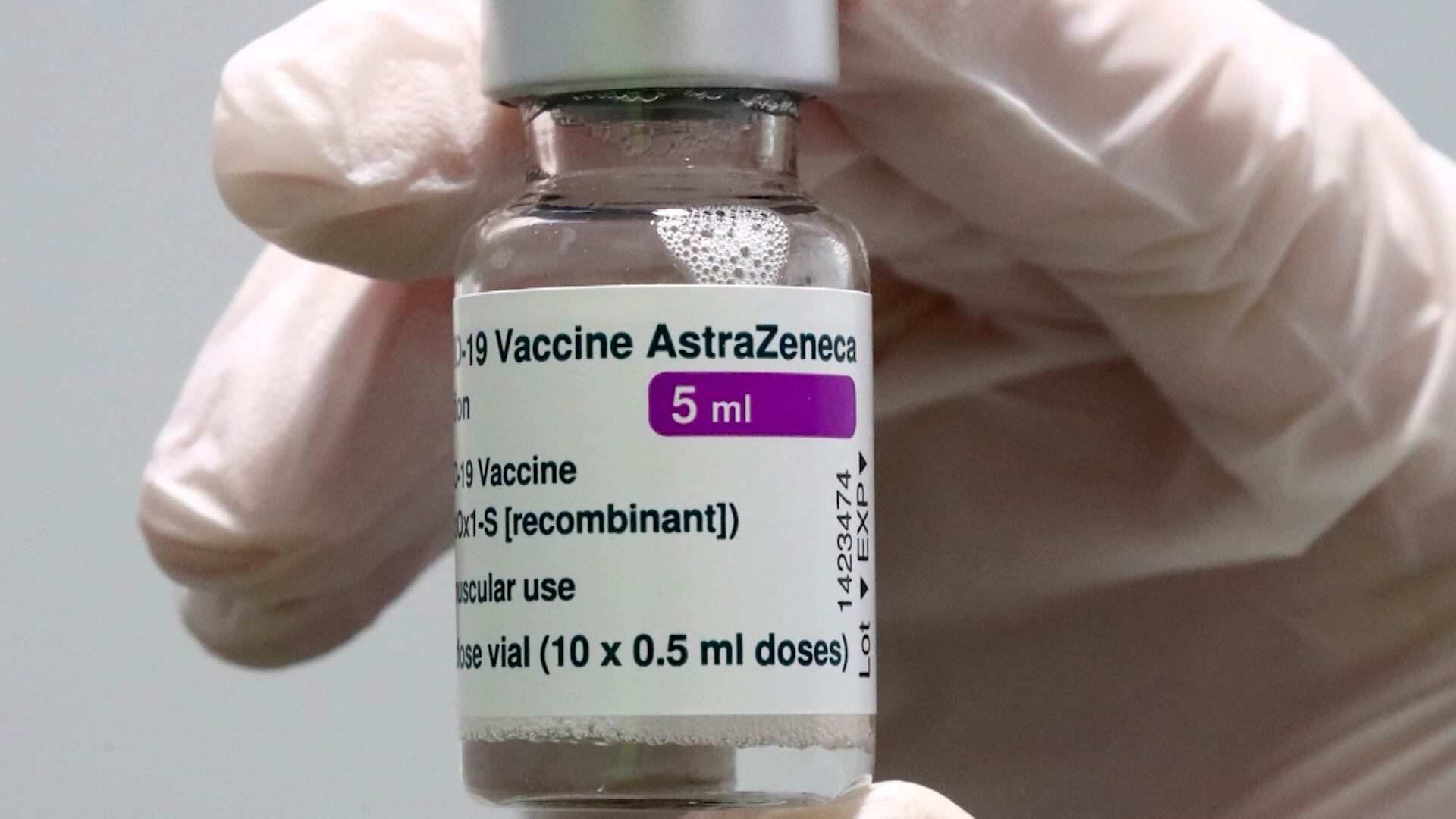
Mina Makar, senior vice president of respiratory and immunology, Astrazeneca, joined Cheddar to discuss the FDA's decision to give emergency use authorization to the pharma giant's COVID-19 antibody treatment called Evusheld for immunocompromised patients For about 2 percent of the U.S. Makar noted that the injection is supposed to provide antibody protection for those who can't generate their own adequate immune response via the vaccines for a minimum of six months, though long-term trials are underway.
The pandemic has forced corporate America to reshape itself to adapt, including onboarding doctors as chief medical officers to help maintain the health and safety of staff. Dr. Geeta Nayyar, chief medical officer at Salesforce, joined Cheddar to break down her role and how it has become relevant and necessary in the evolving workplace. "Every business today is now in the business of healthcare," she said. "It is a priority to empower employees to then serve your customers."
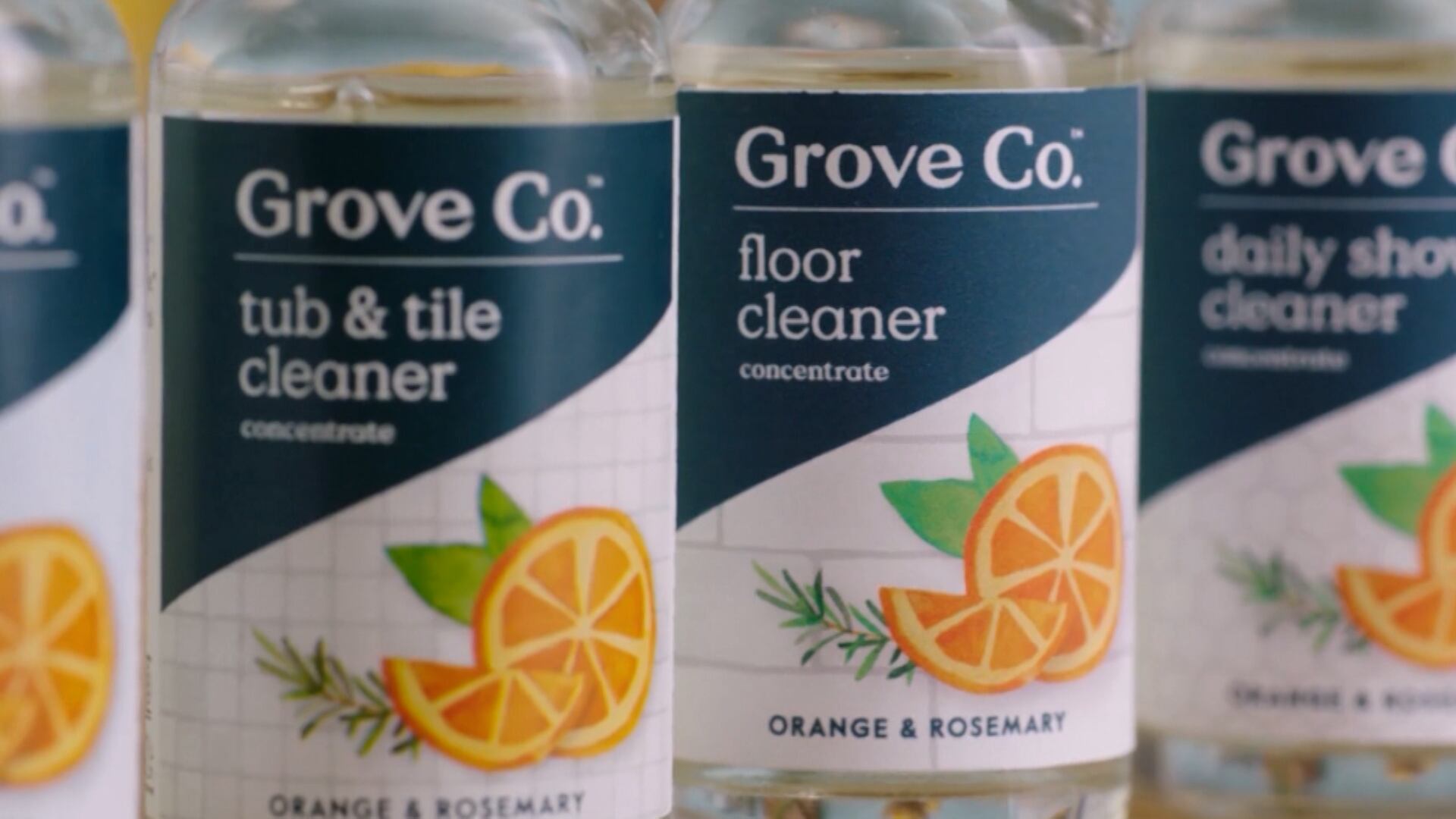
Sustainable consumer products maker Grove Collaborative is gearing up to launch an IPO via a SPAC merger with Richard Branson's Virgin Group Acquisition Corp II. Stuart Landesberg, CEO and co-founder of Grove Collaborative, talked to Cheddar's Kristen Scholer about going public through the merger and aligning with a partner he felt also prioritizes climate. "What this partnership will mean is that we're able to expand the assortment and innovations that we bring to market in products that work just as well as the conventionals and market leaders but have a significantly different environmental profile," Landesberg said.
Cuy Sheffield, head of crypto at Visa, joined Cheddar's "Closing Bell" to talk about Visa's commitment and the partnerships the company has established to make crypto a conventional form of currency. He noted that banks are becoming more receptive to digital currency as their customers move portions of money to crypto platforms and also explained steps Visa is taking to make them more climate conscious.
Many brands and industries are announcing their predictions for new trends to watch in 2022. According to Forbes, cooking robots and plant-based meat are just some of the many food trends that are expected to dominate. Jeff Crivello, CEO of BBQ Holdings, joins Cheddar News to discuss more.