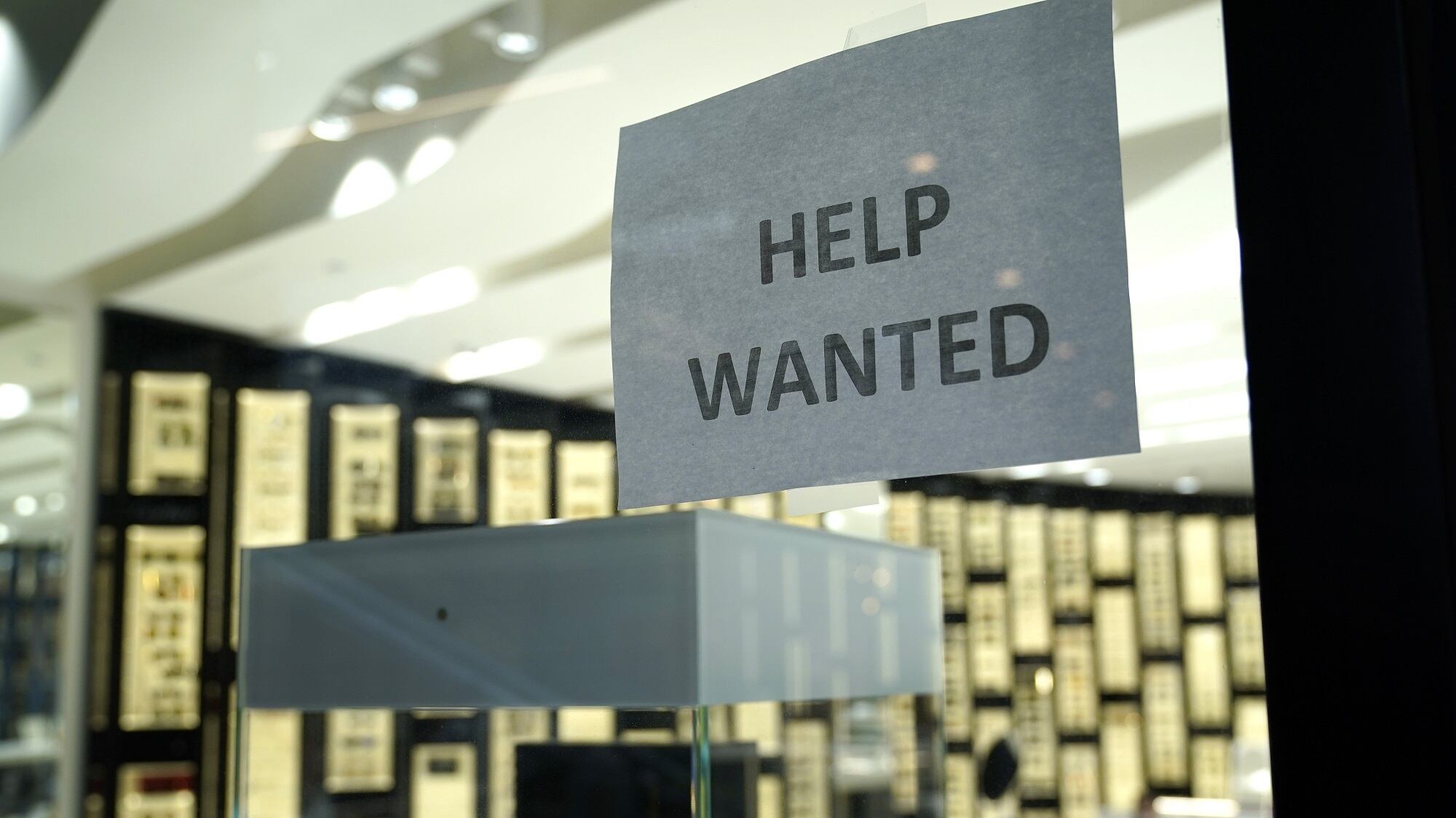
A Help Wanted sign is posted at a Designer Eyes store at Brickell City Centre, Friday, Nov. 6, 2020, in Miami. The number of people applying for unemployment aid jumped last week to 853,000, the most since September, evidence that some companies are cutting more jobs as new virus cases spiral higher. The Labor Department said Thursday, Dec. 10, that the number of applications increased from 716,000 the previous week. (AP Photo/Lynne Sladky)
By Paul Wiseman
The number of Americans applying for unemployment benefits rose again last week to 885,000 as a resurgence of coronavirus cases threatens the economy's recovery from its springtime collapse.
The Labor Department said Thursday that the number of applications increased from 862,000 the previous week. It showed that nine months after the viral pandemic paralyzed the economy, many employers are still slashing jobs as the pandemic forces more business restrictions and leads many consumers to stay home.
Before the coronavirus erupted in March, weekly jobless claims had typically numbered only about 225,000. The far-higher current pace of claims reflects an employment market under stress and diminished job security for many.
The total number of people who are receiving traditional state unemployment benefits fell to 5.5 million from 5.8 million. That figure is down sharply from its peak of nearly 23 million in May. It means that some jobless Americans are finding jobs and no longer receiving aid. But it also indicates that many of the unemployed have used up their state benefits, which typically expire after six months.
With layoffs still elevated and new confirmed viral cases in the United States now exceeding 200,000 a day on average, the economy’s modest recovery is increasingly in danger. States and cities are issuing mask mandates, limiting the size of gatherings, restricting restaurant dining, closing gyms or reducing the hours and capacity of bars, stores and other businesses.
On Wednesday, the Federal Reserve signaled that it expects the economy to rebound at a healthy pace next year as viral vaccines become widely distributed. But Chair Jerome Powell warned that the next three to six months will likely be painful for the unemployed and small businesses as pandemic cases spike. The Fed made clear that it’s prepared to keep interest rates ultra-low for the long run to help the economy withstand those threats.

Dave Long, CEO and Co-Founder of Orangetheory Fitness joins Cheddar to chat trends in the industry for 2024. He updates us on the company's plans to expand and what the state of the economy has meant for business.
One of the world's largest renewable energy developers will be getting hundreds of wind turbines from General Electric spinoff GE Vernova as part of a record equipment order and long-term service deal.
A moon landing attempt by a private US company appears doomed because of a fuel leak on the newly launched spacecraft. Astrobotic Technology managed to orient the lander toward the sun Monday so its solar panel could capture sunlight and charge its onboard battery.
Treasury Secretary Janet Yellen has announced that 100,000 businesses have signed up for a new database that collects ownership information intended to help unmask shell company owners. Yellen says the database will send the message that “the United States is not a haven for dirty money.”
A new version of the federal student aid application known as the FAFSA is available for the 2024-2025 school year, but only on a limited basis as the U.S. Department of Education works on a redesign meant to make it easier to apply.
A steep budget deficit caused by plummeting tax revenues and escalating school voucher costs will be in focus Monday as Democratic Gov. Katie Hobbs and the Republican-controlled Arizona Legislature return for a new session at the state Capitol.
The first U.S. lunar lander in more than 50 years is on its way to the moon. The private lander from Astrobotic Technology blasted off Monday from Cape Canaveral, Florida, catching a ride on United Launch Alliance's brand new rocket Vulcan.
Global prices for food commodities like grain and vegetable oil fell last year from record highs in 2022, when Russia’s war in Ukraine, drought and other factors helped worsen hunger worldwide, the U.N. Food and Agriculture Organization said Friday.
Wall Street is drifting higher after reports showed the job market remains solid, but key parts of the economy still don’t look like they’re overheating.