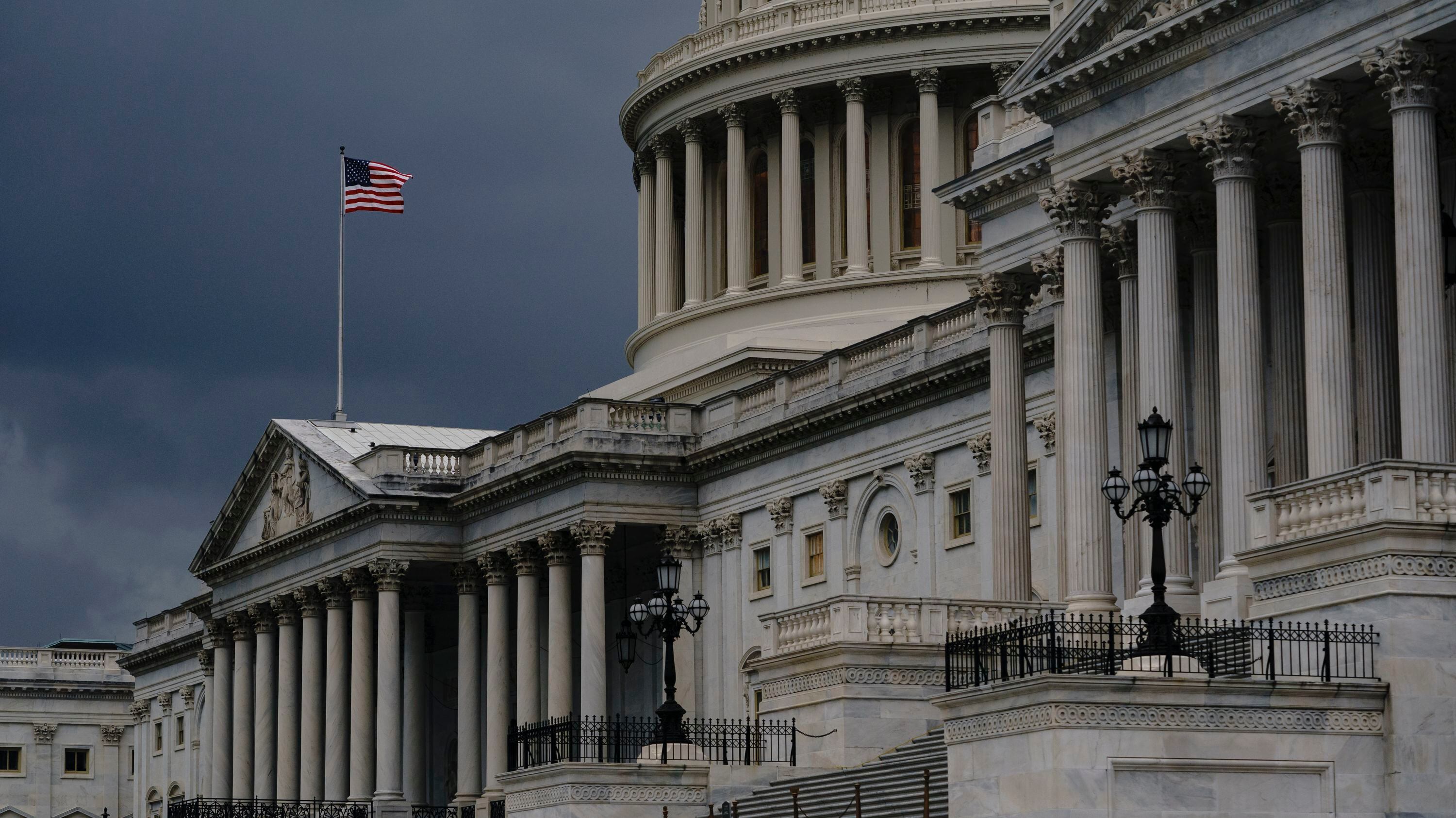
In this Aug. 3, 2020, file photo dark clouds and heavy rain sweep over the U.S. Capitol in Washington. (AP Photo/J. Scott Applewhite, File)
By Martin Crutsinger
The U.S. budget deficit hit an all-time high of $3 trillion for the first 11 months of this budget year, the Treasury Department said Friday.
The ocean of red ink is a product of the government's massive spending to try to cushion the impact of a coronavirus-fueled recession that has cost millions of jobs.
The deficit from October through August is more than double the previous 11-month record of $1.37 billion set in 2009. At that time the government was spending large sums to get out of the Great Recession triggered by the 2008 financial crisis.
With one month to go in the 2020 budget year, which ends Sept. 30, the deficit could go even higher. The Congressional Budget Office is forecasting the deficit this year will hit a record of $3.3 trillion. However, the government often runs surpluses in September so it is possible the final figure for this year could come in just under $3 trillion.
That would still put the deficit well above last year's imbalance of $984 billion. The previous record deficit for a fiscal year was $1.4 trillion in 2009 in the aftermath of the financial crisis.
Catching you up on the stories you need to know this morning, the U.S. could soon get its first major gun safety law in years, the House Select Committee investigating the January 6th attack on the U.S. capitol holds its second hearing, and today might just be the day the Supreme Court overturns Roe v. Wade, and decides on new gun laws.
U.S. stocks closed Thursday at their lowest levels of the trading day, as investors continue to eye inflation ahead of the May CPI report out Friday. Art Hogan, Chief Market Strategist for National Holdings, joins Cheddar News' Closing Bell to discuss.
The PGA has suspended 17 golfers, including Phil Mickelson and Dustin Johnson, who are competing in a Saudi-backed golf event outside of London. In a memo, commissioner Jay Monahan said "these players have made their choice for their own financial-based reasons", announcing they are ineligible to participate on the PGA tour or any other tours it sanctions. Hugh Kellenberger, Senior Managing Editor at the Athletic, breaks down the controversy, and what might happen next.