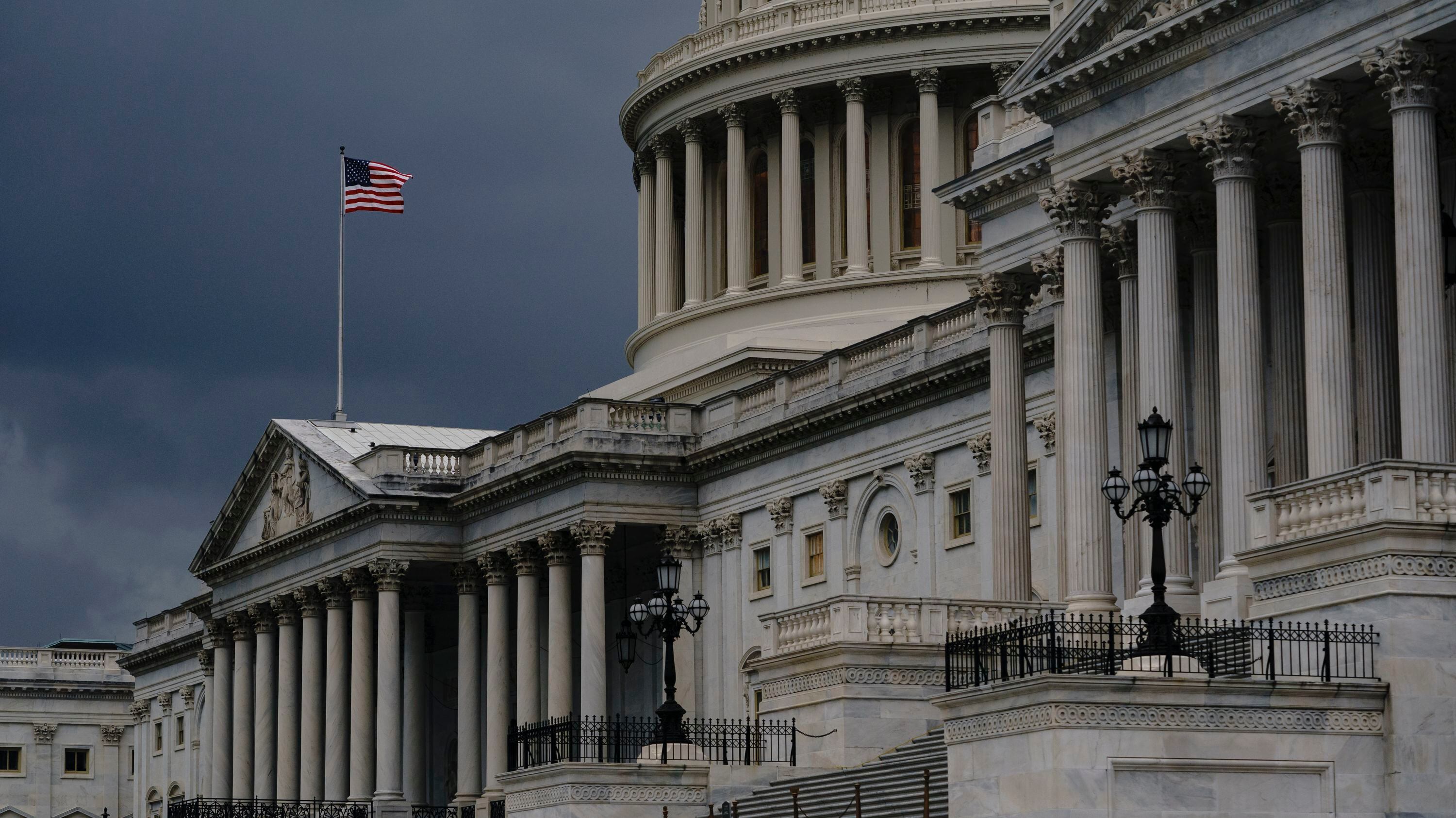
In this Aug. 3, 2020, file photo dark clouds and heavy rain sweep over the U.S. Capitol in Washington. (AP Photo/J. Scott Applewhite, File)
By Martin Crutsinger
The U.S. budget deficit hit an all-time high of $3 trillion for the first 11 months of this budget year, the Treasury Department said Friday.
The ocean of red ink is a product of the government's massive spending to try to cushion the impact of a coronavirus-fueled recession that has cost millions of jobs.
The deficit from October through August is more than double the previous 11-month record of $1.37 billion set in 2009. At that time the government was spending large sums to get out of the Great Recession triggered by the 2008 financial crisis.
With one month to go in the 2020 budget year, which ends Sept. 30, the deficit could go even higher. The Congressional Budget Office is forecasting the deficit this year will hit a record of $3.3 trillion. However, the government often runs surpluses in September so it is possible the final figure for this year could come in just under $3 trillion.
That would still put the deficit well above last year's imbalance of $984 billion. The previous record deficit for a fiscal year was $1.4 trillion in 2009 in the aftermath of the financial crisis.
Former New Jersey Gov. and current Republican presidential candidate Chris Christie took aim at Donald Trump, calling him a "three-time loser." He also criticized the probe against Hunter Biden and gave his stance on Social Security.
The family of a fallen officer is breaking three decades of silence to defend New York City Mayor Eric Adams, who is under scrutiny, partly over a comment he made in an exclusive interview with News 12.
President Joe Biden is heading to South Carolina on Thursday to make the case that economic measures he pushed through Congress despite stiff Republican opposition are helping to keep the deep red state — and others that voted for Donald Trump in 2020 — humming.
By striking a hyphen and two numerals, he extended an annual per-student funding increase from the next two academic years through the next four centuries.