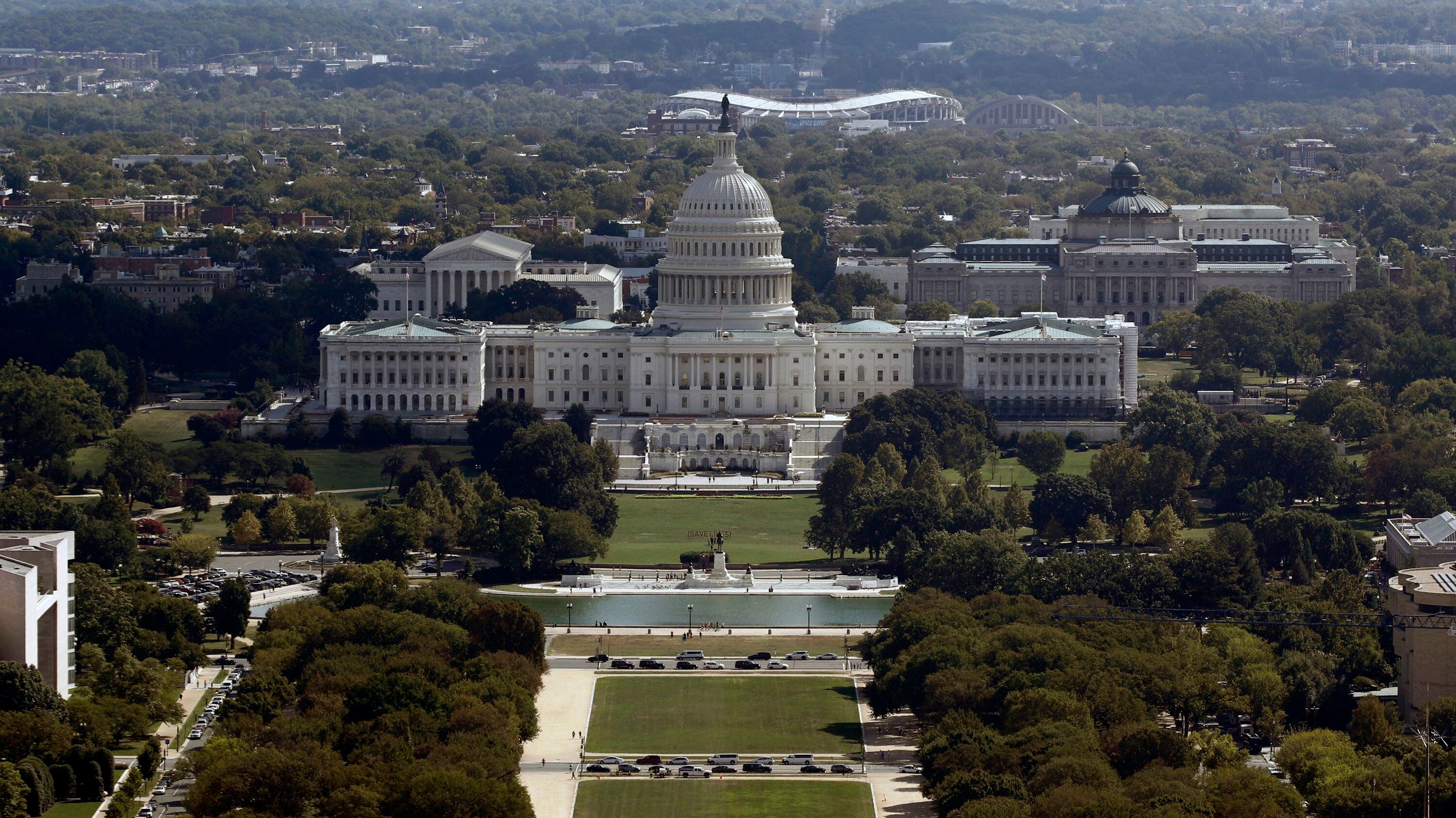
This Sept. 18, 2019, file photo shows the view of the U.S. Capitol building from the Washington Monument in Washington. The federal government incurred the biggest monthly budget deficit in history in June 2020 as spending on programs to combat the coronavirus recession exploded while millions of job losses cut into tax revenues. The Treasury Department reported Monday, July 13, 2020 that the deficit hit $864 billion last month, an amount of red ink that surpasses most annual deficits in the nation’s history and is above the previous monthly deficit record of $738 billion in April.(AP Photo/Patrick Semansky, File)
By Martin Crutsinger
The federal government incurred the biggest monthly budget deficit in history in June as spending on programs to combat the coronavirus recession exploded while millions of job losses cut into tax revenues.
The Treasury Department reported Monday that the deficit hit $864 billion last month, an amount of red ink that surpasses most annual deficits in the nation's history and is above the previous monthly deficit record of $738 billion in April. That amount was also tied to the trillions of dollars Congress has provided to cushion the impact of the widespread shutdowns that occurred in an effort to limit the spread of the viral pandemic.
For the first nine months of this budget year, which began Oct. 1, the deficit totals $2.74 trillion, also a record for that period. That puts the country well on the way to hitting the $3.7 trillion deficit for the whole year that has been forecast by the Congressional Budget Office.
That total would surpass the previous annual record of $1.4 trillion set in 2009 when the government was spending heavily to lift the country out of the recession caused by the 2008 financial crisis.
The June deficit was driven higher by spending on various government relief programs such as an extra $600 per week in expanded unemployment benefits and a Paycheck Protection Program that provided support to businesses to keep workers on their payrolls.
The report showed that the cost of the Paycheck Protection Program in June was $511 billion. That reflected a charge to the government for all the bank loans made under the program even though the government will not actually have to pay out funds until the banks determine whether the businesses met the criteria for having the loans forgiven. Those requirements include spending at least 60% of the loan amount on worker pay with the other 40% going to overhead costs such as rent and utilities.
Another reason for the surge in the June deficit was the government's decision to delay tax payments this year until July 15. That decision means that quarterly payments made by individual taxpayers and corporations will not be due until July 15 this year rather than June.
So far this budget year, revenues total $2.26 trillion, down 13.4% from the same period last year, while spending totals $5 trillion, up 49.1% from a year ago.
The CBO estimate of a $3.7 trillion deficit for this year could go higher depending on the course of the economy. The country fell into a deep recession in February, ending a record long expansion of nearly 11 years. The Trump administration is predicting that the economy will come roaring back in the second half of this year but many private forecasters are concerned that a resurgence of virus cases could make consumers too fearful to resume spending, which drives 70% of the economy.
Congress which has already approved more than $3 trillion in a series of rescue packages, is scheduled to debate another support effort when it returns from recess on June 20. Democrats are pushing for an extension of the expanded unemployment benefits which will soon run out.
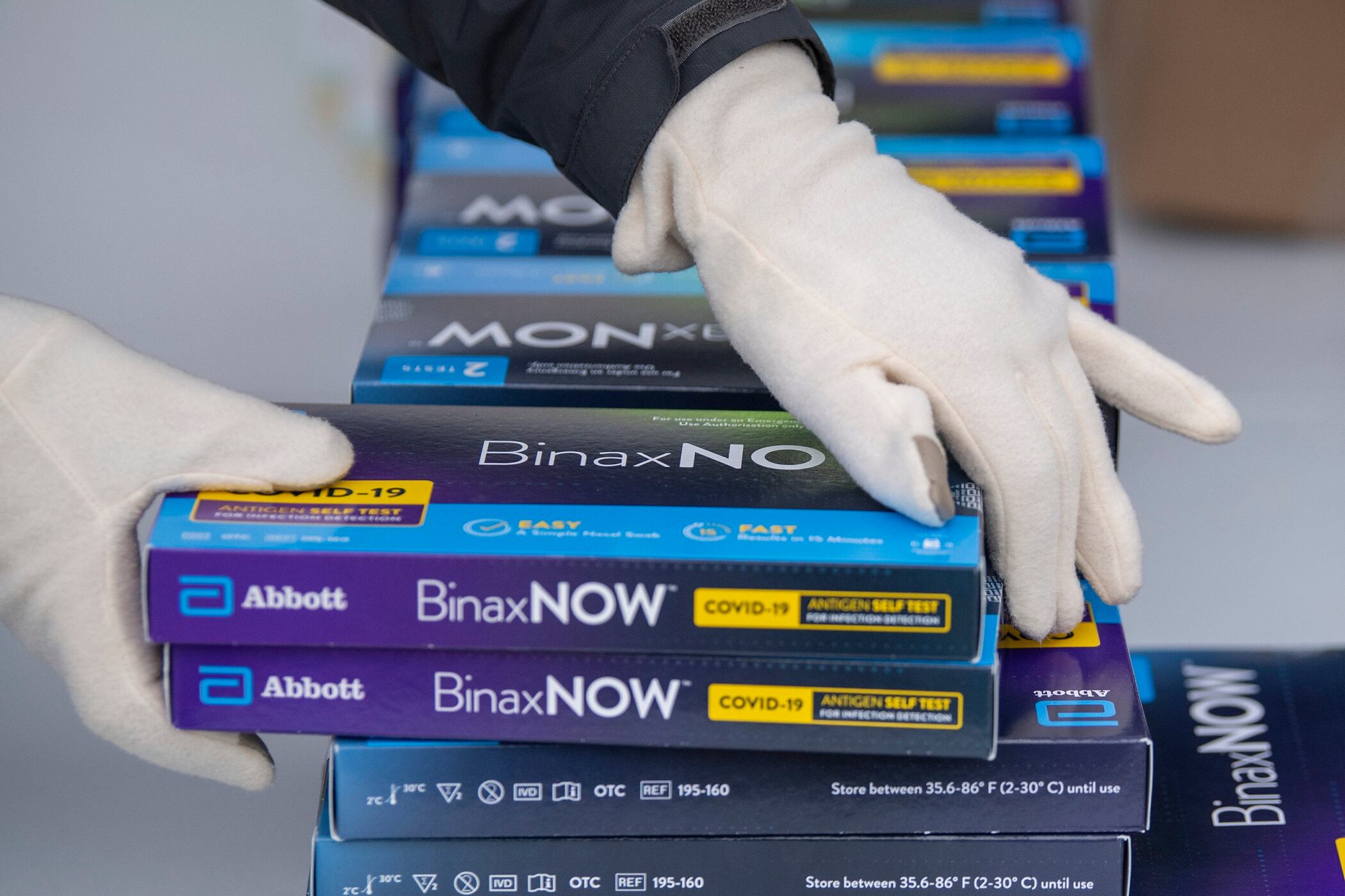
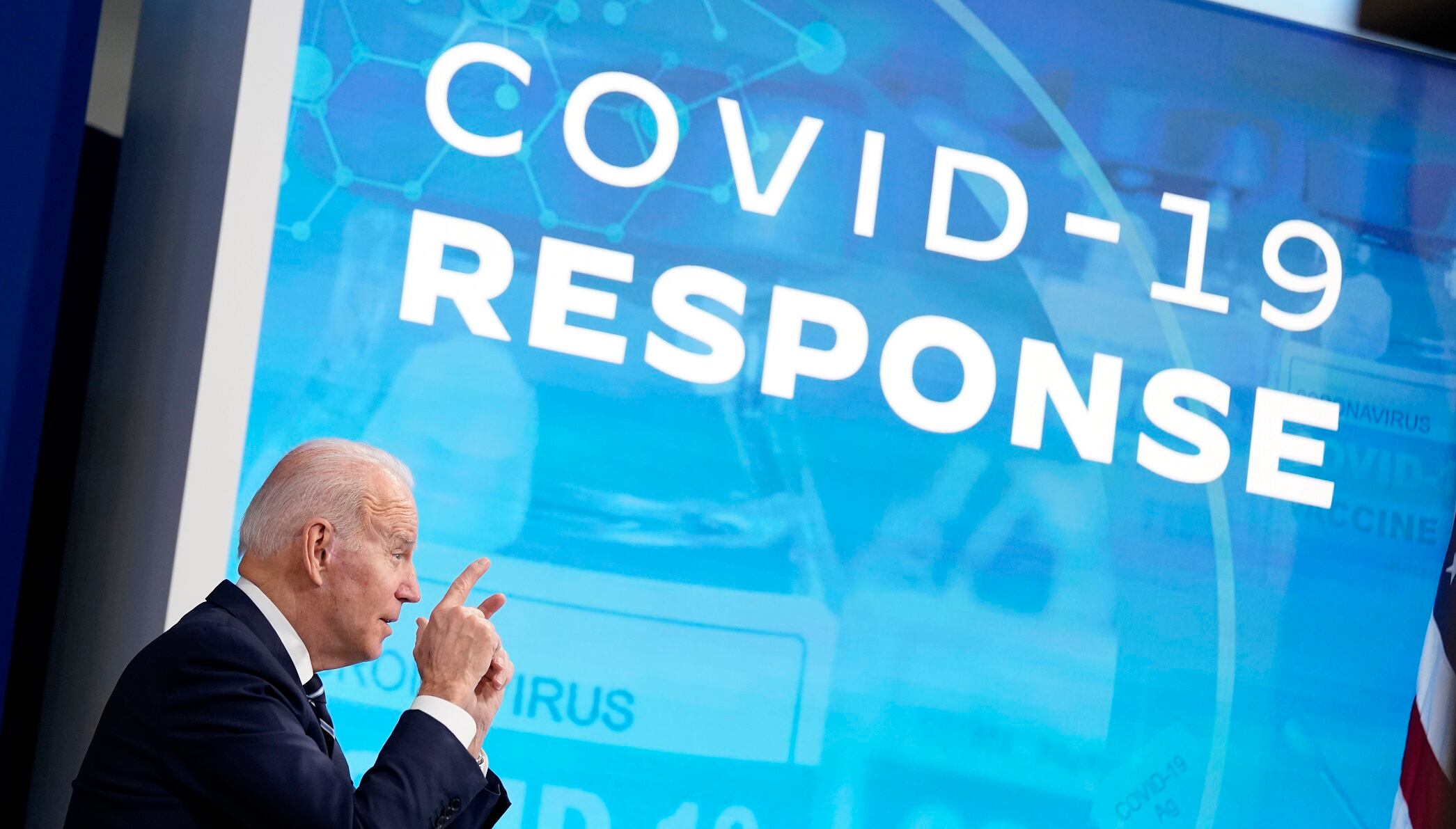
The Biden administration on Tuesday quietly launched its website for Americans to request free at-home COVID-19 tests, a day before the site was scheduled to officially launch.
Just 27% of voters aged 18-29 approve of the job Biden is doing as president, according to a survey from The Economist and YouGov late last year. Santiago Mayer, executive director of Voters of Tomorrow, joins Cheddar Politics to discuss why President Biden is losing support among young voters.
Jesse Lehrich, co-founder of Accountable Tech, joins Cheddar News to discuss it being one year since Trump was exiled from social media and the former President's new platform 'Truth Social.'
Cliff Albright, co-founder of the group Black Voters Matter, joins Cheddar Politics to discuss why he boycotted President Biden's voting rights speech this week, and the push from Senate Democrats to debate and vote on the Freedom to Vote Act and the John Lewis Voting Rights Advancement Act.
Senator Jon Ossoff (D-Ga.) has teamed up with fellow Democratic senator and former astronaut Mark Kelly to introduce the Ban Congressional Stock Trading Act, a bill to essentially end stock trading by sitting lawmakers. From the other side of the aisle, Senator Josh Hawley (R-Mo.) introduced his own legislation to enact something similar. The dueling bills come at a time when it's popular to constrain members of Congress from owning and trading stocks. Karl Evers-Hillstrom, a business and lobbying reporter at The Hill, spoke to Cheddar about the significance of the bills, and what they could mean for lawmakers, their families, and staffers moving forward.
A second Starbucks location in the U.S. has officially voted to unionize. On Monday, the National Labor Relations Board announced workers at the Starbucks store located in the Buffalo, NY suburb of Cheektowaga voted 15-9 in favor of being represented by Workers United, an affiliate of the Service Employees International Union. The New York Times reports votes were tallied in December but remained inconclusive as the union challenged the ballots of several employees it said did not work at the store. A Starbucks spokesperson has said that it may appeal the labor board's decision, which comes as several other Starbucks stores across the country are also pushing to form a union. Danka Dragic, shift supervisor for the second Starbucks store in the country to unionize, joined Cheddar News' Closing Bell to discuss.
Earlier today, Minnesota Republican Representative, Tom Emmer, introduced a bill that would prevent the Federal Reserve from issuing a central bank digital currency directly to American consumers. According to the Congressman from Minnesota, requiring Americans to open a fed account to access a digital currency, would "put the Fed on insidious path akin to China's digital authoritarianism." Rep. Tom Emmer joined Cheddar's None of The Above to discuss more.
Sixteen of the country's most prestigious universities have been hit with a lawsuit claiming those schools illegally conspired to eliminate competitive financial aid offers for students. Just some of the schools mentioned include Yale, Brown, Columbia, UPenn, and Cornell. Author of "Who Gets In and Why" and Professor of practice at Arizona State University, Jeff Selingo, joined Cheddar to discuss more.