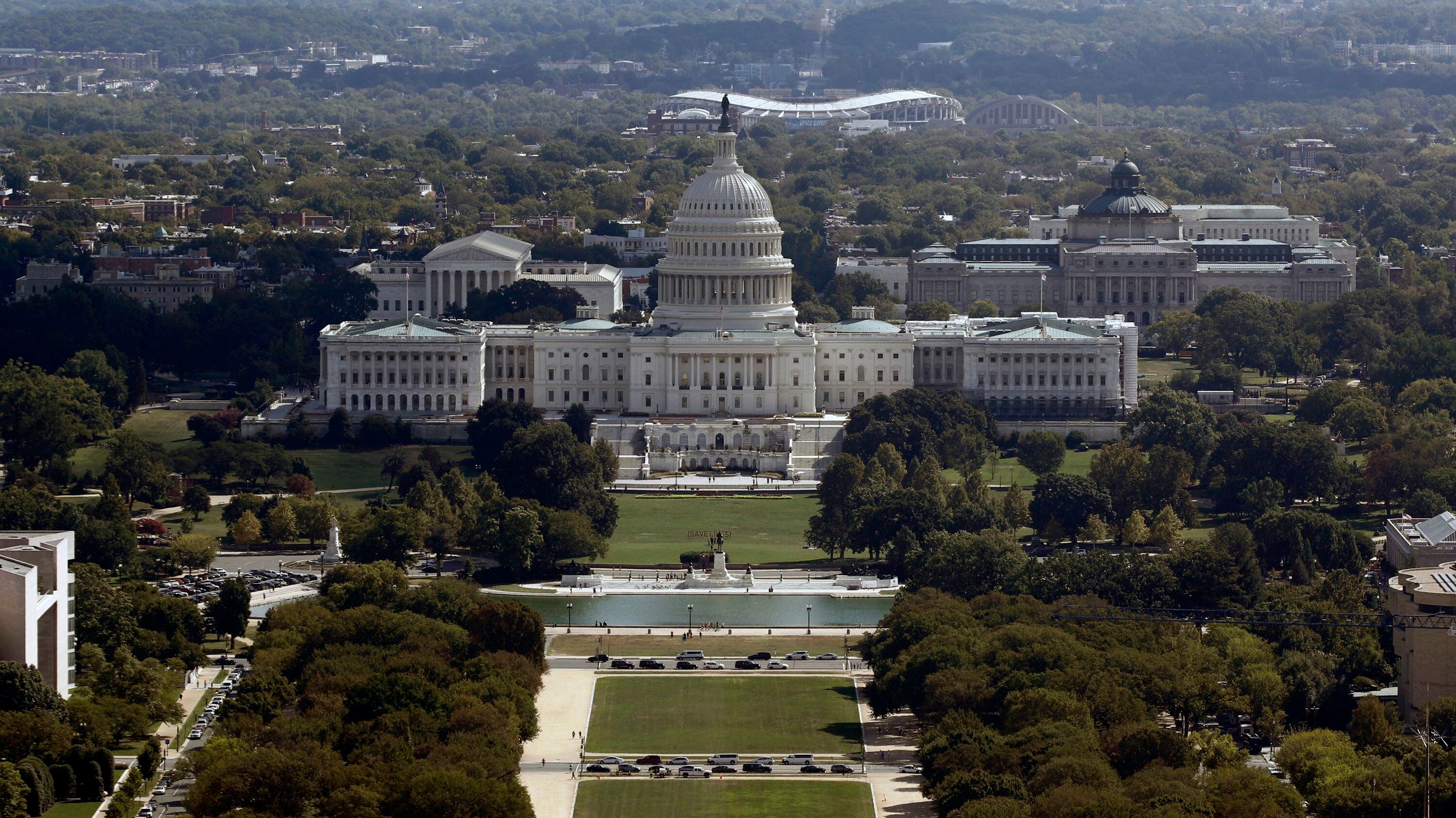
This Sept. 18, 2019, file photo shows the view of the U.S. Capitol building from the Washington Monument in Washington. The federal government incurred the biggest monthly budget deficit in history in June 2020 as spending on programs to combat the coronavirus recession exploded while millions of job losses cut into tax revenues. The Treasury Department reported Monday, July 13, 2020 that the deficit hit $864 billion last month, an amount of red ink that surpasses most annual deficits in the nation’s history and is above the previous monthly deficit record of $738 billion in April.(AP Photo/Patrick Semansky, File)
By Martin Crutsinger
The federal government incurred the biggest monthly budget deficit in history in June as spending on programs to combat the coronavirus recession exploded while millions of job losses cut into tax revenues.
The Treasury Department reported Monday that the deficit hit $864 billion last month, an amount of red ink that surpasses most annual deficits in the nation's history and is above the previous monthly deficit record of $738 billion in April. That amount was also tied to the trillions of dollars Congress has provided to cushion the impact of the widespread shutdowns that occurred in an effort to limit the spread of the viral pandemic.
For the first nine months of this budget year, which began Oct. 1, the deficit totals $2.74 trillion, also a record for that period. That puts the country well on the way to hitting the $3.7 trillion deficit for the whole year that has been forecast by the Congressional Budget Office.
That total would surpass the previous annual record of $1.4 trillion set in 2009 when the government was spending heavily to lift the country out of the recession caused by the 2008 financial crisis.
The June deficit was driven higher by spending on various government relief programs such as an extra $600 per week in expanded unemployment benefits and a Paycheck Protection Program that provided support to businesses to keep workers on their payrolls.
The report showed that the cost of the Paycheck Protection Program in June was $511 billion. That reflected a charge to the government for all the bank loans made under the program even though the government will not actually have to pay out funds until the banks determine whether the businesses met the criteria for having the loans forgiven. Those requirements include spending at least 60% of the loan amount on worker pay with the other 40% going to overhead costs such as rent and utilities.
Another reason for the surge in the June deficit was the government's decision to delay tax payments this year until July 15. That decision means that quarterly payments made by individual taxpayers and corporations will not be due until July 15 this year rather than June.
So far this budget year, revenues total $2.26 trillion, down 13.4% from the same period last year, while spending totals $5 trillion, up 49.1% from a year ago.
The CBO estimate of a $3.7 trillion deficit for this year could go higher depending on the course of the economy. The country fell into a deep recession in February, ending a record long expansion of nearly 11 years. The Trump administration is predicting that the economy will come roaring back in the second half of this year but many private forecasters are concerned that a resurgence of virus cases could make consumers too fearful to resume spending, which drives 70% of the economy.
Congress which has already approved more than $3 trillion in a series of rescue packages, is scheduled to debate another support effort when it returns from recess on June 20. Democrats are pushing for an extension of the expanded unemployment benefits which will soon run out.
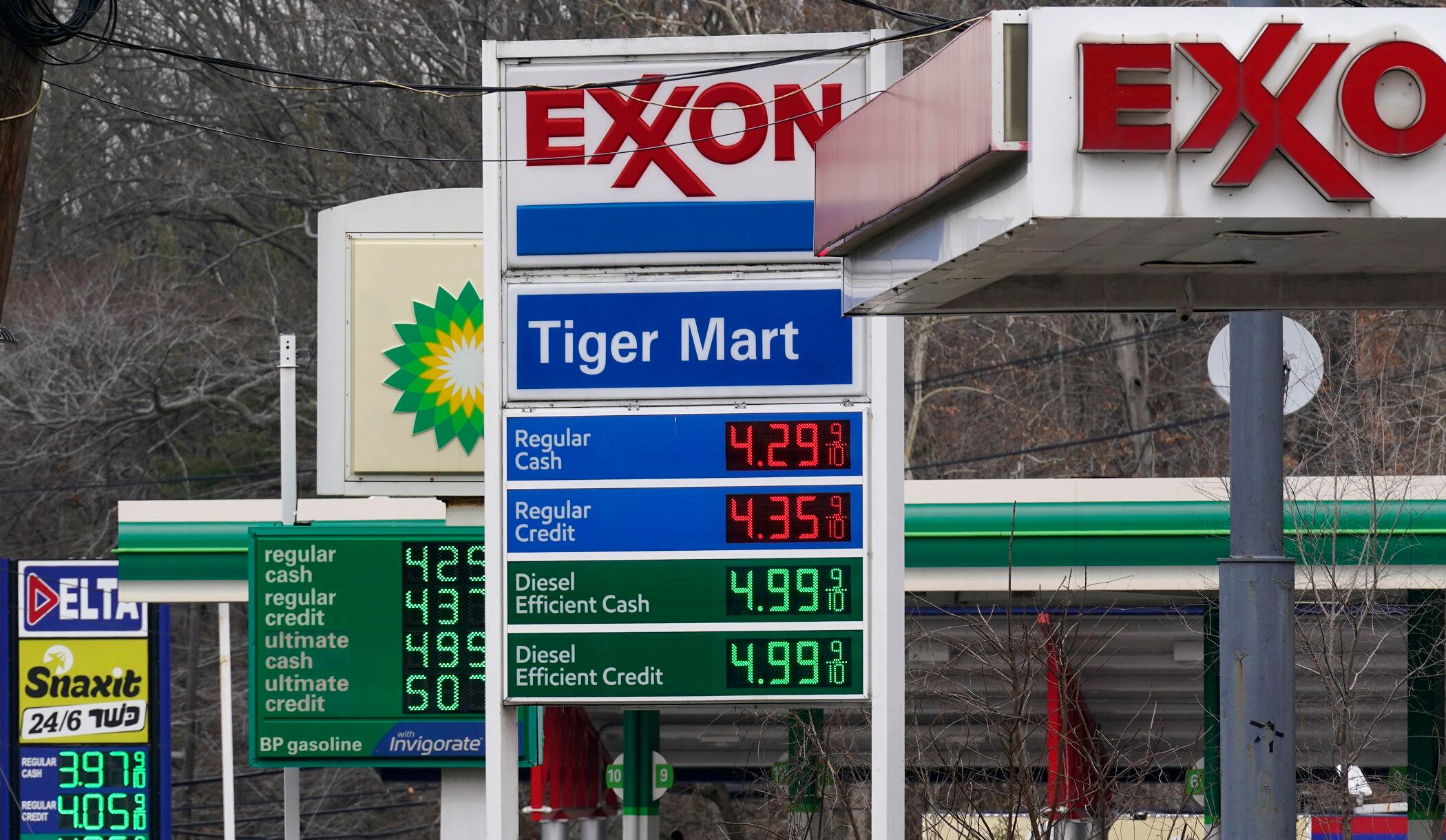
Americans continue to feel the pain at the pump as a result of Russia’s invasion of Ukraine. Patrick DeHaan, head of petroleum analysis at GasBuddy, joined Cheddar News to discuss how prices are being affected by the war and how much worse it could potentially get for drivers. "It's obviously a fluid situation. In one field today, I might feel differently in a half hour. But for now, I think we could see the national average realistically go somewhere into the mid $4 range, maybe $4.40 to $4.65 based on what we're seeing," he said.
Russia’s invasion of Ukraine has entered its 12th day following what Ukrainian authorities described as increased shelling of encircled cities and another failed attempt to evacuate civilians from the port city of Mariupol.
Gasoline prices are pushing even farther above $4 a gallon, the highest price that American motorists have faced since July 2008, as calls grow to ban imports of Russian oil.
Jay Hatfield, Chief Investment Officer at ICAP, believes a lot of the bad news regarding the fighting in Ukraine and Fed is already priced into the market and looming uncertainty factored into Friday's movement. However, he also believes the upcoming Fed decision will be good news for Wall Street.
News of Russian forces taking control of a Ukrainian after artillery bombardment of a nuclear power plant raised concerns this week. Nuclear policy expert and Quincy Institute Distinguished Fellow Joe Cirincione joined Cheddar News to discuss the implications for a potential disaster. “I’m with the director general of the IAEA, the International Atomic Energy Agency. He says that he is extremely concerned, and that this Russian attack is a severe risk and that Russia clearly violated the fundamental principle of preserving the integrity of nuclear power plants," Cirincione said.
Amid Russia's attack on Ukraine, major businesses from BP to Big Tech like Apple have been pausing their business dealings with the invading nation. Brian Walker, chief strategy officer at commerce software company Bloomreach, joined Cheddar News to discuss how some companies are showing support for Ukraine and what this could mean for consumers. "Whether it be impacts on energy or operational costs, shipping and logistics, or frankly impacts on the financial services industry, these will have long term implications on retail prices," he said.
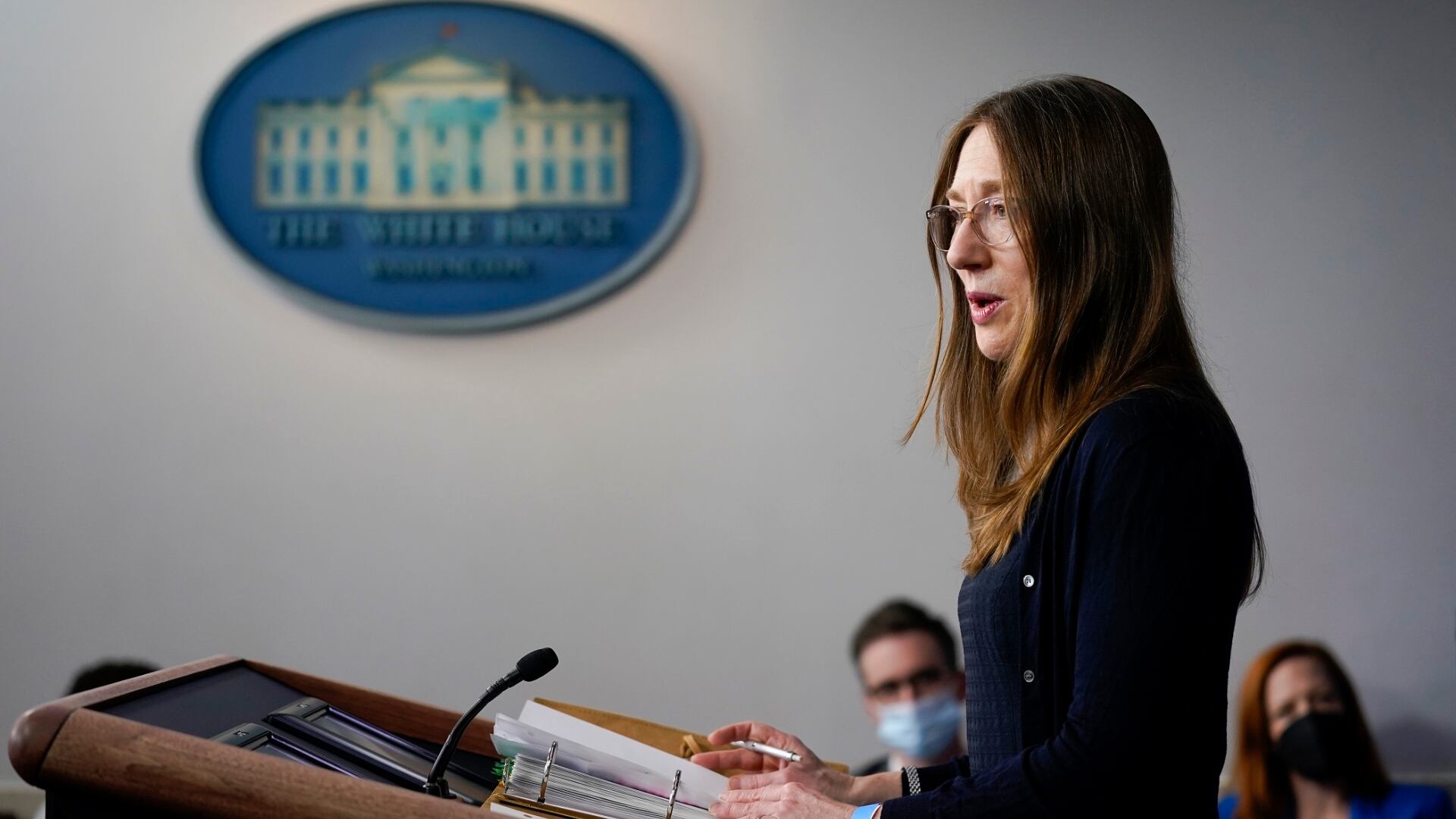
About 678,000 jobs were created in February, hundreds of thousands more than predicted, according to the latest Labor Department report, showing a broad economic recovery despite inflation woes. Heather Boushey, member of the Council of Economic Advisers for President Biden, joined Cheddar News to talk about the employment figures. "This really shows that the economy is now more resilient because of the tools that we have in place," Boushey said. "So I'm optimistic that we'll be able to weather future storms."
Ramit Varma, Independent candidate for Mayor of Los Angeles, joins Cheddar News to discuss the race and how he plans to tackle critical issues in the California city.