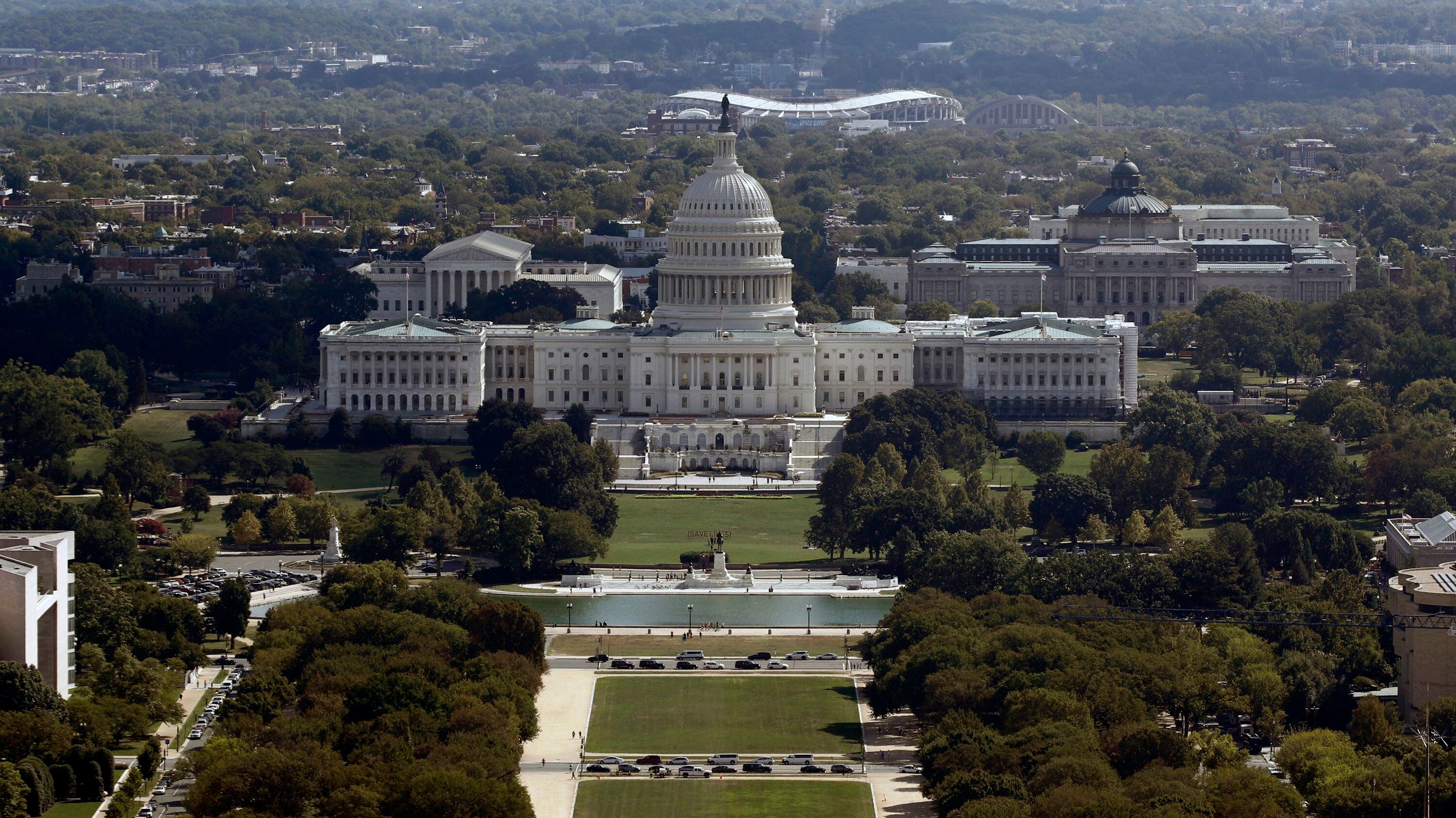
This Sept. 18, 2019, file photo shows the view of the U.S. Capitol building from the Washington Monument in Washington. The federal government incurred the biggest monthly budget deficit in history in June 2020 as spending on programs to combat the coronavirus recession exploded while millions of job losses cut into tax revenues. The Treasury Department reported Monday, July 13, 2020 that the deficit hit $864 billion last month, an amount of red ink that surpasses most annual deficits in the nation’s history and is above the previous monthly deficit record of $738 billion in April.(AP Photo/Patrick Semansky, File)
By Martin Crutsinger
The federal government incurred the biggest monthly budget deficit in history in June as spending on programs to combat the coronavirus recession exploded while millions of job losses cut into tax revenues.
The Treasury Department reported Monday that the deficit hit $864 billion last month, an amount of red ink that surpasses most annual deficits in the nation's history and is above the previous monthly deficit record of $738 billion in April. That amount was also tied to the trillions of dollars Congress has provided to cushion the impact of the widespread shutdowns that occurred in an effort to limit the spread of the viral pandemic.
For the first nine months of this budget year, which began Oct. 1, the deficit totals $2.74 trillion, also a record for that period. That puts the country well on the way to hitting the $3.7 trillion deficit for the whole year that has been forecast by the Congressional Budget Office.
That total would surpass the previous annual record of $1.4 trillion set in 2009 when the government was spending heavily to lift the country out of the recession caused by the 2008 financial crisis.
The June deficit was driven higher by spending on various government relief programs such as an extra $600 per week in expanded unemployment benefits and a Paycheck Protection Program that provided support to businesses to keep workers on their payrolls.
The report showed that the cost of the Paycheck Protection Program in June was $511 billion. That reflected a charge to the government for all the bank loans made under the program even though the government will not actually have to pay out funds until the banks determine whether the businesses met the criteria for having the loans forgiven. Those requirements include spending at least 60% of the loan amount on worker pay with the other 40% going to overhead costs such as rent and utilities.
Another reason for the surge in the June deficit was the government's decision to delay tax payments this year until July 15. That decision means that quarterly payments made by individual taxpayers and corporations will not be due until July 15 this year rather than June.
So far this budget year, revenues total $2.26 trillion, down 13.4% from the same period last year, while spending totals $5 trillion, up 49.1% from a year ago.
The CBO estimate of a $3.7 trillion deficit for this year could go higher depending on the course of the economy. The country fell into a deep recession in February, ending a record long expansion of nearly 11 years. The Trump administration is predicting that the economy will come roaring back in the second half of this year but many private forecasters are concerned that a resurgence of virus cases could make consumers too fearful to resume spending, which drives 70% of the economy.
Congress which has already approved more than $3 trillion in a series of rescue packages, is scheduled to debate another support effort when it returns from recess on June 20. Democrats are pushing for an extension of the expanded unemployment benefits which will soon run out.
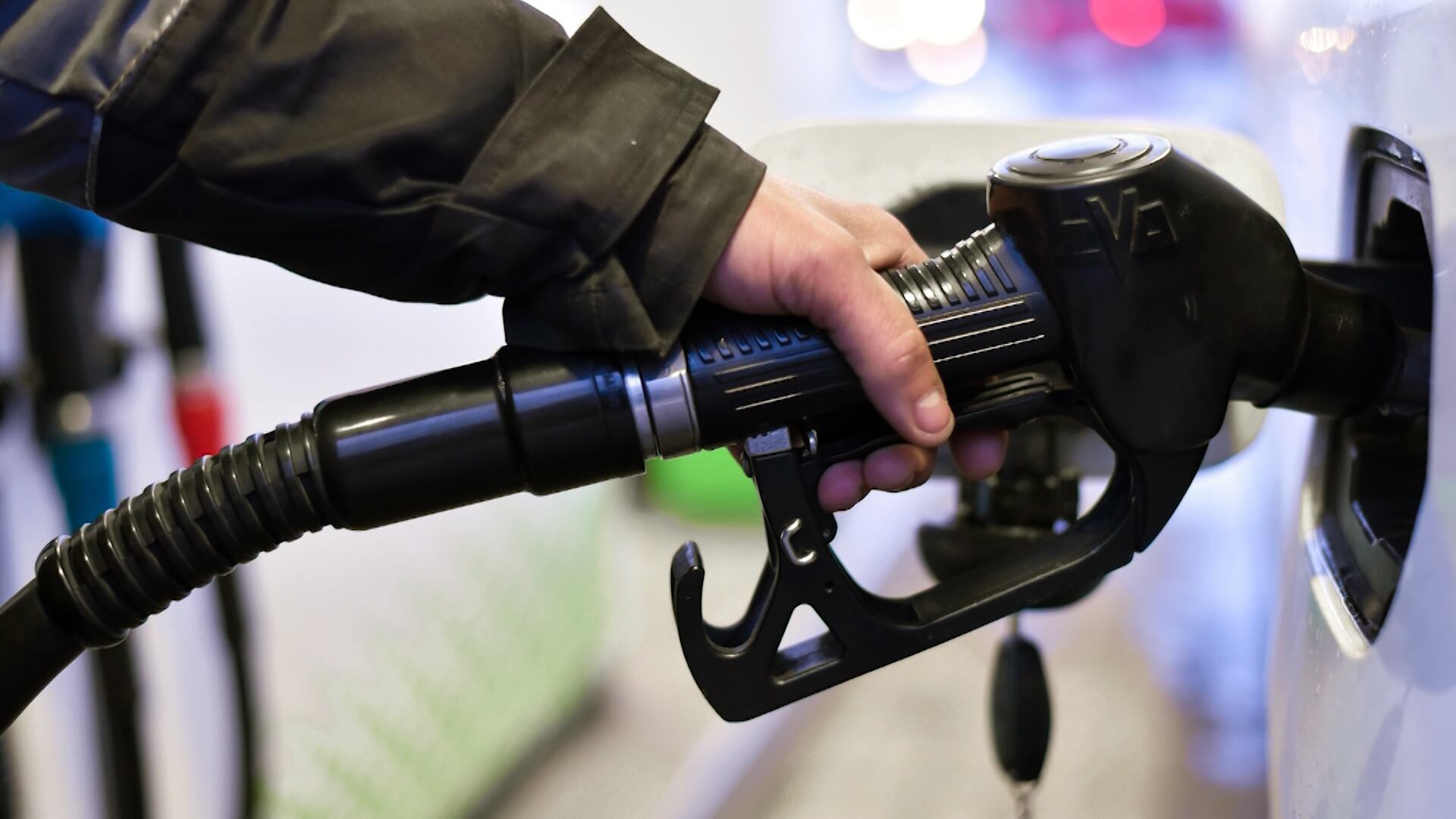
Peter Zalzal, associate vice president for clean air strategies at the Environmental Defense Fund, a nonprofit environmental advocacy group, joined Cheddar to discuss the Biden Administration's unveiling of stricter fuel-efficiency standards for new automobiles. "The administration estimated that these rules will reduce about 2.5 billion tons of climate pollution by 2050, and using less fuel also means that we have to go to the gas pump less often. And so it means we save money, thousands of dollars in avoided fuel costs each year for consumers," he noted.
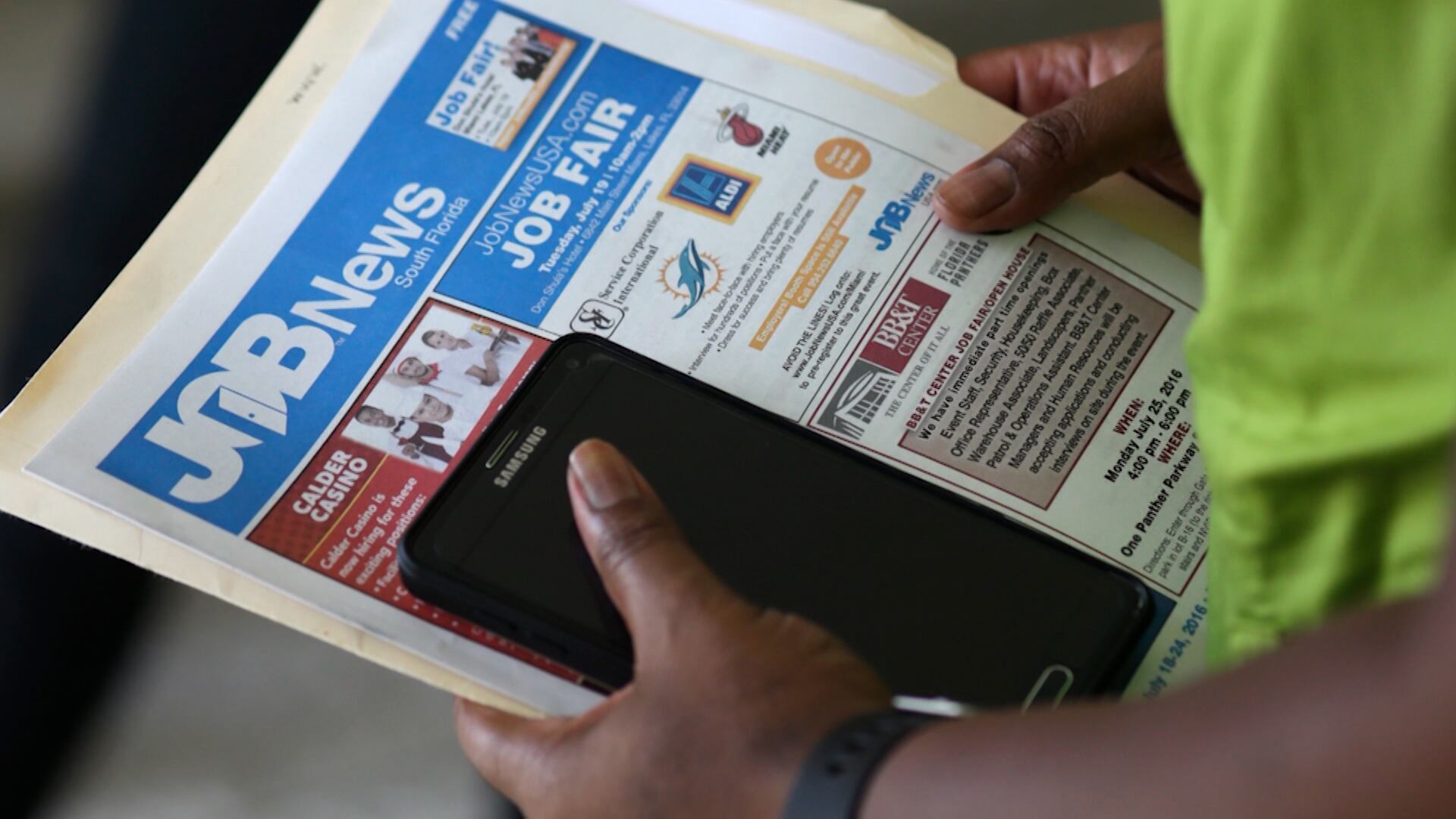
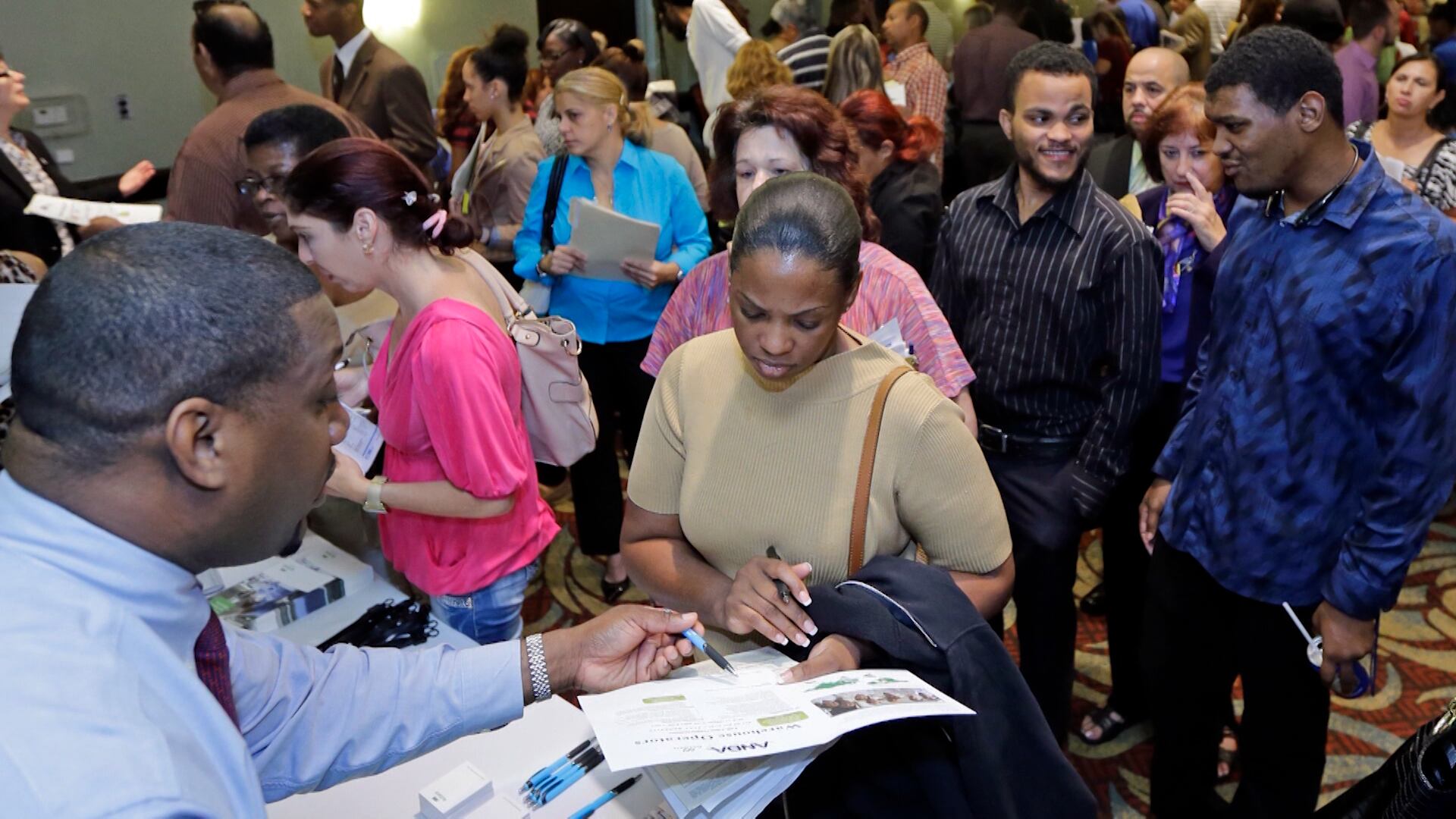
The relatively robust March jobs report showed that despite the low unemployment rate, Black, Hispanic, and women job seekers are still having difficulty finding work. William M. Rodgers III, the vice president and director of the Institute for Economic Equity at the Federal Reserve Bank of St. Louis noted that participation rates in the labor force ticked up for minorities, adding to other positive signs of growth. He also spoke to Cheddar News to discuss further the jobs figures, the state of the labor market, and rising inflation.
U.S. markets opened higher to kick off the second quarter, despite a miss on the March Jobs Report. The economy added $431,000 in the month, slightly lower than the $490,000 analysts had expected. The unemployment rate also ticked down to 3.6% from 3.8%. Kevin Simpson, Founder & Chief Investment Officer, Capital Wealth Planning joined Cheddar's Opening Bell to discuss.
President Biden is going after billionaires in his 2023 budget request to congress. The proposal would establish a 20% minimum tax rate on all households worth more than $100 million, as well as raise the corporate tax rate from 21% to 28%. Rhett Buttle, Small Business for America's Future Senior Advisor, Business Policy Expert & Biden Campaign Business Advisor, breaks down the proposal, what it aims to accomplish, and how small businesses might feel about it.
The Biden administration has announced the U.S. will accept up to 100,000 refugees fleeing the war in Ukraine and provide more than 1 billion dollars in new funding for the growing humanitarian crisis. The move comes as President Biden meets with his western counterparts in Europe to demonstrate a united front against Russia and show support for Ukraine. Altagracia Pierre-Outerbridge, Immigration Attorney for Outerbridge Law, explains how this is going to work.
The DOJ has endorsed an antitrust bill targeting tech giants like Apple, Amazon, Meta, and Google. The legislation would ban the companies from favoring their own products and services over their competitor's, making it more difficult them to dominate the marketplace. Greg Day, Assistant Professor of Legal Studies at the University of Georgia, breaks down the bill and its potential impact on anti-competition in the tech sector.
Catching you up with what you need to know on Apr 1, 2022, with Ukrainians hoping to flee the besieged city of Mariupol with a ceasefire is in place, President Biden orders the release of oil from U.S.reserves, LGBT activists suing Florida Governor Ron DeSantis over the "Don't Say Gay" Law, U.S. passports offering an "x" option for gender, and more.
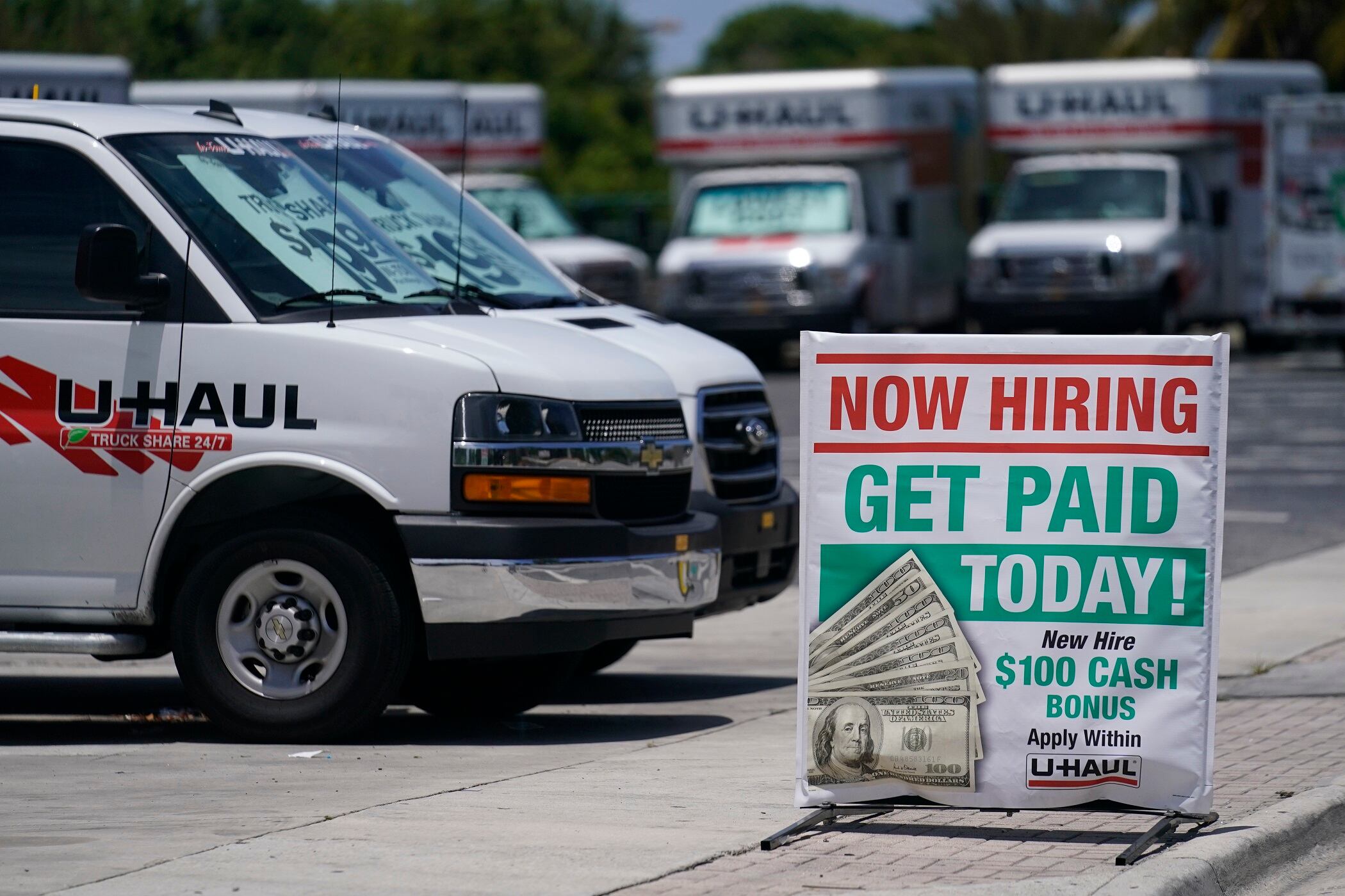
America’s employers extended a streak of robust hiring in March, adding 431,000 jobs in a sign of the economy’s resilience in the face of a still-destructive pandemic and the highest inflation in 40 years.