The U.S. economy added 136,000 jobs in September, indicating sustained — yet slowing — growth amid increasing concerns of an economic downturn.
In its monthly jobs report released Friday, the Bureau of Labor Statistics (BLS) also announced that unemployment in the U.S. declined to 3.5 percent — its lowest point in 50 years. The rate fell by 0.2 percent from the month prior, bringing the number of Americans without a job to 5.8 million.
“Today’s jobs report is consistent with our outlook of a gradually slowing growth path,” said Doug Duncan, the chief economist at Fannie Mae. “However, some of the underlying details paint a mixed picture.”
The total jobs added in September missed expectations, which analysts predicted would be roughly 145,000 jobs. Average monthly employment growth so far this year is now 161,000, which remains well below 223,000 average monthly gains in 2018, the BLS reported.
The industries with the most employment gains were health care and professional and business services, adding 39,000 and 34,000 jobs respectively. Other sectors, such as mining, construction, financial activities, and manufacturing, showed negligible change last month.
Average hourly wages across the economy decreased 1 cent in September, reversing a growth trend that saw an 11 cent hike in August and a 9 cent increase in July and June. Over the past year, the BLS said, average hourly wages have grown by 2.9 percent.
The September jobs report comes on the heels of multiple disappointing indicators released in recent days that point to an economic slowdown worldwide.
The Institute for Supply Management (ISM), a non-profit trade association, reported this week that the U.S. service industry fell to its lowest point in three years and that the manufacturing sector contracted for the second straight month.
“After the very weak ISM data, there was this anticipation built up that [the jobs report] could be much more negative than what we got,” said Matthew Luzzetti, the chief U.S. economist at Deutsche Bank. “Even though it missed expectations, I don't think it was as bad as feared.”
On Tuesday, moreover, the World Trade Organization warned that enduring trade tensions and weakening economies worldwide are causing a significant decline in global commerce. The instability led the Geneva-based organization to cut its forecast for trade volume growth to just 1.2 percent in 2019, more than 50 percent lower than an earlier estimate.
Friday’s jobs report also comes ahead of a Federal Reserve meeting later this month. The U.S. central bank has already slashed rates twice in recent months to spur growth and sustain expansion.
“The report does little to clarify the divergent views on the Federal Reserve about whether the economy is slowing or not,” Duncan said. “But we continue to believe the Fed will cut rates this quarter due to trade uncertainties and weak manufacturing data.”
President Trump lauded September’s unemployment figure, saying Friday morning that it is a “tremendous number.”
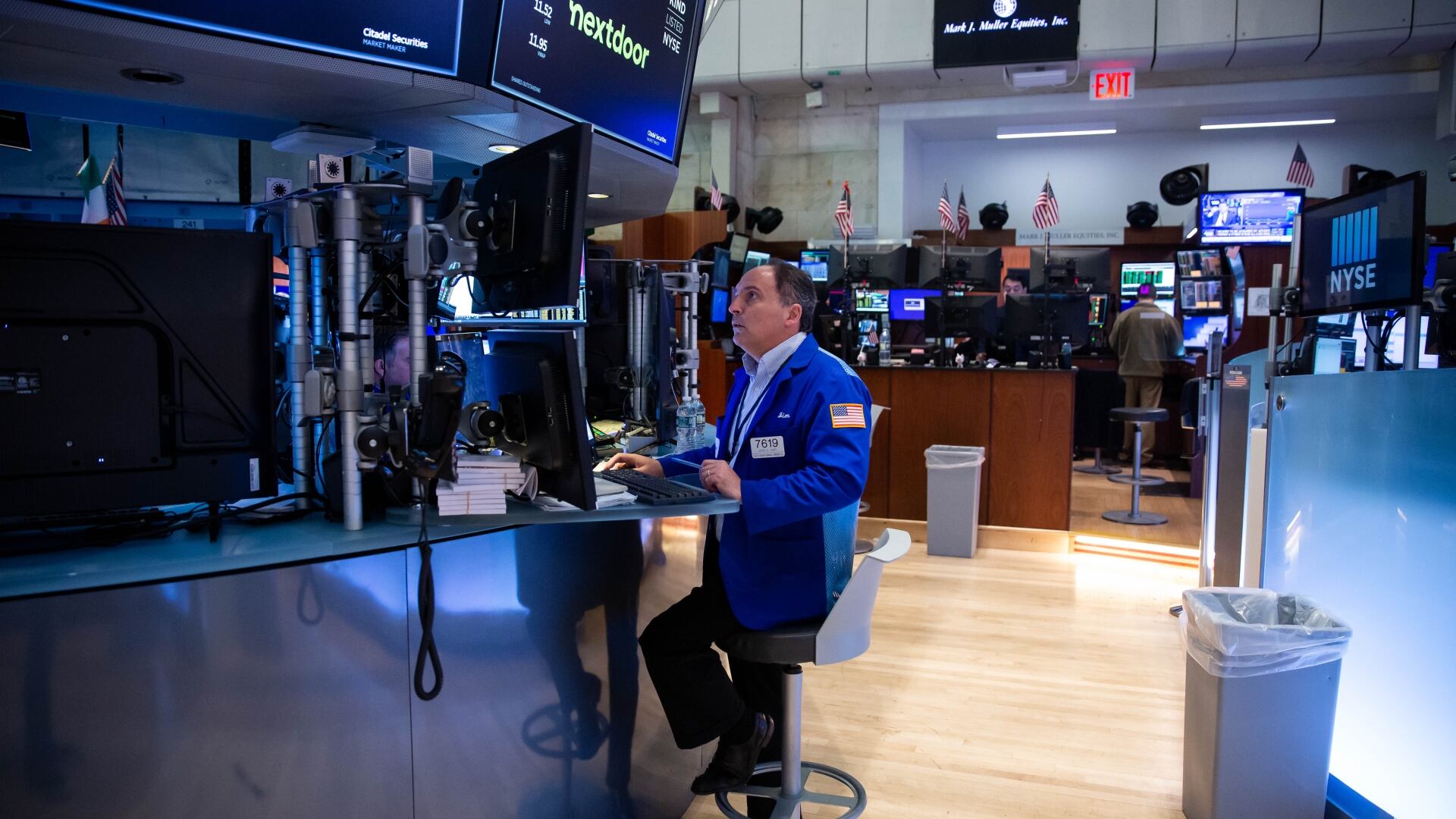
Next week will see several different events that will likely weigh on the markets. Cheddar News' Closing Bell dives in, from the continuation of third-quarter earnings season to Rivian's IPO and a 're-IPO' from Hertz, along with more inflation data.
Frank Lee, Managing Director at Miracle Mile Advisors, joins Cheddar News' Closing Bell, where he explains why markets are soaring after the Dow, S&P, Nasdaq, and the Russell 2000 all reached new record closes to begin the trading week.
Amid an ongoing labor shortage, more companies are turning to automation for processes like shipping and delivery in order to relieve supply chain pressures. But what does this mean for the wider labor market - will those jobs return? How will workers fare once supply chain issues ease? Sam Lurye, CEO and Founder of automation startup Kargo, joins Cheddar News' Closing Bell to discuss the pros and cons of automation, how workers can adapt alongside new technology, and how the pandemic led to the perfect storm for the rise of automation.
Ben McMillan, CIO at IDX Digital Assets, joins Cheddar News' Closing Bell, where he explains how the recent surge by Ethereum and Bitcoin can be connected to a play against inflation.
AI chipmaker Hailo raised $136 million in its latest funds round, representing one of the largest investments ever in the AI chip space. It comes amid the ongoing global chip shortage, and a surge in demand for the company's technology, which is used to power smart cities, cars and homes, and the next generation of retail. Hailo co-founder and CEO Orr Danon joined Cheddar News' Closing Bell to discuss.
The two biggest names in the ride-sharing industry reported earnings this week. Uber and Lyft both beat Wall Street expectations on their top and bottom lines, as the companies and the ride-sharing industry have recently faced several challenges like the pandemic, the supply chain crisis, and driver shortages. Johnson Research Group CEO Chris Johnson joined Cheddar News' Closing Bell to discuss.
The Biden administration is giving businesses a deadline to implement a vaccination mandate, saying companies can take until after the holiday season. Andew Noymer, Associate Professor of Population Health and Disease Prevention at the University of California, Irvine, joined Cheddar to discuss.
Gaming technology studio Mythical Games recently raised $150 million in a round led by Andreesen Horowitz, bringing Mythical's valuation to above unicorn status at $1.2 billion. Mythical Games' mission is to create a new generation of gaming with play-to-earn games that allow players to play to win actual cryptocurrency. Now the company is taking it to another level with NFT technology, allowing players to play with characters they can truly own. Mythical Games CEO John Linden joined Cheddar News' Closing Bell to discuss.
Tesla CEO Elon Musk posed a question to his Twitter followers over the weekend: 'Should I sell 10% of my Tesla shares in order to pay off a looming $15 billion tax bill?' Shares plummeted after he posed the question, and just over half of 3.5 million Twitter voters said Musk should sell a fraction of his shares. Dan Ives, Managing Director of Equity Research at Wedbush Securities, joins Cheddar News' Closing Bell to discuss whether or not Musk's Twitter poll was significant amid his looming tax bill, and how investors are feeling after yet another controversial tweet from the Tesla chief.