The U.S. economy added 136,000 jobs in September, indicating sustained — yet slowing — growth amid increasing concerns of an economic downturn.
In its monthly jobs report released Friday, the Bureau of Labor Statistics (BLS) also announced that unemployment in the U.S. declined to 3.5 percent — its lowest point in 50 years. The rate fell by 0.2 percent from the month prior, bringing the number of Americans without a job to 5.8 million.
“Today’s jobs report is consistent with our outlook of a gradually slowing growth path,” said Doug Duncan, the chief economist at Fannie Mae. “However, some of the underlying details paint a mixed picture.”
The total jobs added in September missed expectations, which analysts predicted would be roughly 145,000 jobs. Average monthly employment growth so far this year is now 161,000, which remains well below 223,000 average monthly gains in 2018, the BLS reported.
The industries with the most employment gains were health care and professional and business services, adding 39,000 and 34,000 jobs respectively. Other sectors, such as mining, construction, financial activities, and manufacturing, showed negligible change last month.
Average hourly wages across the economy decreased 1 cent in September, reversing a growth trend that saw an 11 cent hike in August and a 9 cent increase in July and June. Over the past year, the BLS said, average hourly wages have grown by 2.9 percent.
The September jobs report comes on the heels of multiple disappointing indicators released in recent days that point to an economic slowdown worldwide.
The Institute for Supply Management (ISM), a non-profit trade association, reported this week that the U.S. service industry fell to its lowest point in three years and that the manufacturing sector contracted for the second straight month.
“After the very weak ISM data, there was this anticipation built up that [the jobs report] could be much more negative than what we got,” said Matthew Luzzetti, the chief U.S. economist at Deutsche Bank. “Even though it missed expectations, I don't think it was as bad as feared.”
On Tuesday, moreover, the World Trade Organization warned that enduring trade tensions and weakening economies worldwide are causing a significant decline in global commerce. The instability led the Geneva-based organization to cut its forecast for trade volume growth to just 1.2 percent in 2019, more than 50 percent lower than an earlier estimate.
Friday’s jobs report also comes ahead of a Federal Reserve meeting later this month. The U.S. central bank has already slashed rates twice in recent months to spur growth and sustain expansion.
“The report does little to clarify the divergent views on the Federal Reserve about whether the economy is slowing or not,” Duncan said. “But we continue to believe the Fed will cut rates this quarter due to trade uncertainties and weak manufacturing data.”
President Trump lauded September’s unemployment figure, saying Friday morning that it is a “tremendous number.”
Things are expensive: both the important and the not-so-important stuff. October saw the largest year-to-year increase in the consumer price index in over 30 years. Inflation remains a top concern for the average American consumer as some stress over the price of everyday essentials like milk, beef, and gasoline.
But that doesn't seem to be affecting overall retail shopping.
U.S. retail sales rose by 1.7% in October, a sign that consumers are willing to spend more heading into the holidays despite rising inflation. The elevated spending levels suggest solid holiday sales this month and next. On top of that, major retailers like Target and Walmart have come out this week and said they're set to be fully stocked for the holiday season, easing any concerns customers might have about supply chain issues leaving empty shelves before the holidays.
Brittain Ladd, retail strategist and consultant, joins None of the Above to discuss.
Tanya Snyder, transportation reporter at Politico, joins None of the Above with J.D. Durkin to discuss the bipartisan infrastructure law, what it means for the electric vehicle industry and whether Democrats will be able to capitalize on the legislative victory ahead of the 2022 midterms.
Twitter announced a partnership with S&P Dow Jones Indices on Thursday to build the S&P 500 Sentiment Index for monitoring the performance of 200 S&P members based on tweets with company $cashtags. Jared Podnos, strategic market development lead at Twitter, and Peter Roffman, global head of innovation and strategy at S&P Dow Jones Indices, joined Cheddar to provide some background on the partnership and to explain exactly how monitoring companies through public opinion will work. "[The S&P] taps into this conversation. They understand the real-time conversation as well as the historical trends, and then we can analyze that and understand the consumer sentiment and really build these innovative products around that conversation," Podnos added.
Cognitive healthcare platform BrainCheck recently raised $10 million in a Series B round. The platform offers neurologists a new way to detect and care for brain disorders like Alzeheimer's, and brain injuries like concussions. BrainCheck CEO Yael Katz joined Cheddar News' Closing Bell to discuss.
Stocks closed mixed today, with the S&P 500 and the Nasdaq both notching record closing highs. Veronica Willis, investment strategy analyst at the Wells Fargo Investment Institute, joins Cheddar News' Closing Bell to discuss today's close, recent inflation data, rising oil prices, and more.
Jean-Denis Mariani, the chief digital officer at COTY, the parent company for major brands like Bottega Veneta, Burberry, and Kylie Skin, joined Cheddar to talk about the impact of the pandemic on the beauty industry and the rapid shift to e-commerce sales. "There is no digital strategy anymore, only strategy in a digital world," he said. Mariani also talked about personalized makeup selection for consumers as the beauty sector begins to incorporate technology like artificial intelligence.
Amid an ongoing global semiconductor chip shortage, American automaker Ford has decided to open up supply chains of its own. Karl Brauer, an executive analyst at iSeeCars.com, joined Cheddar to discuss Ford's new partnership with multinational semiconductor maker GlobalFoundries to build those chips domestically. Brauer praised Ford for the move both for ongoing supply woes and the future of automobile manufacturing. "It's not just the supply chain," he said. "It's not just about getting chips, but maybe getting chips that are more customized and specific to your needs."
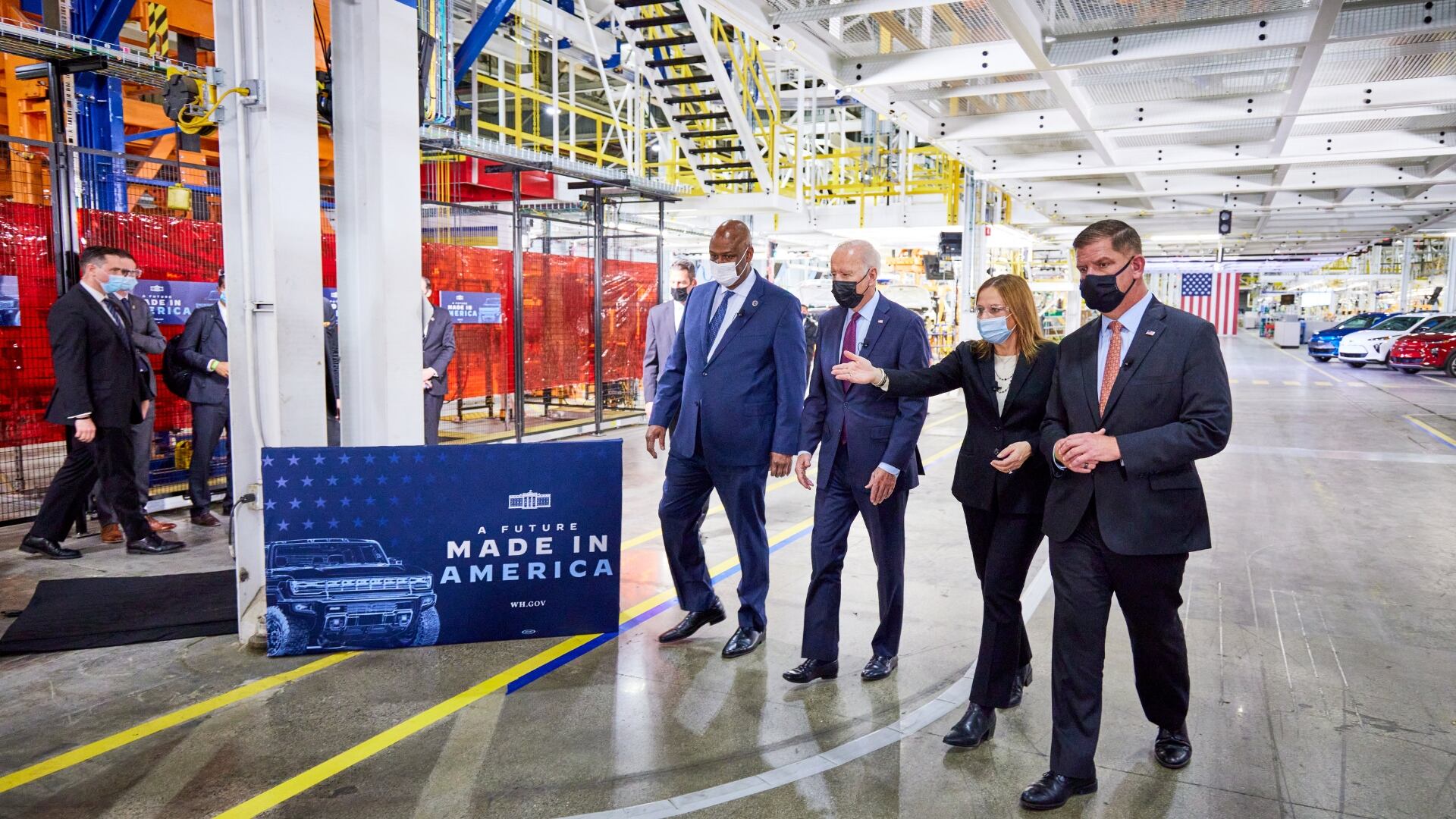
Gerald Johnson, Executive VP, Global Manufacturing and Sustainability at General Motors, joins Cheddar News to break down what Factory ZERO signifies for GM's all-electric future and why the auto manufacturer will be a leader in the growing EV industry.
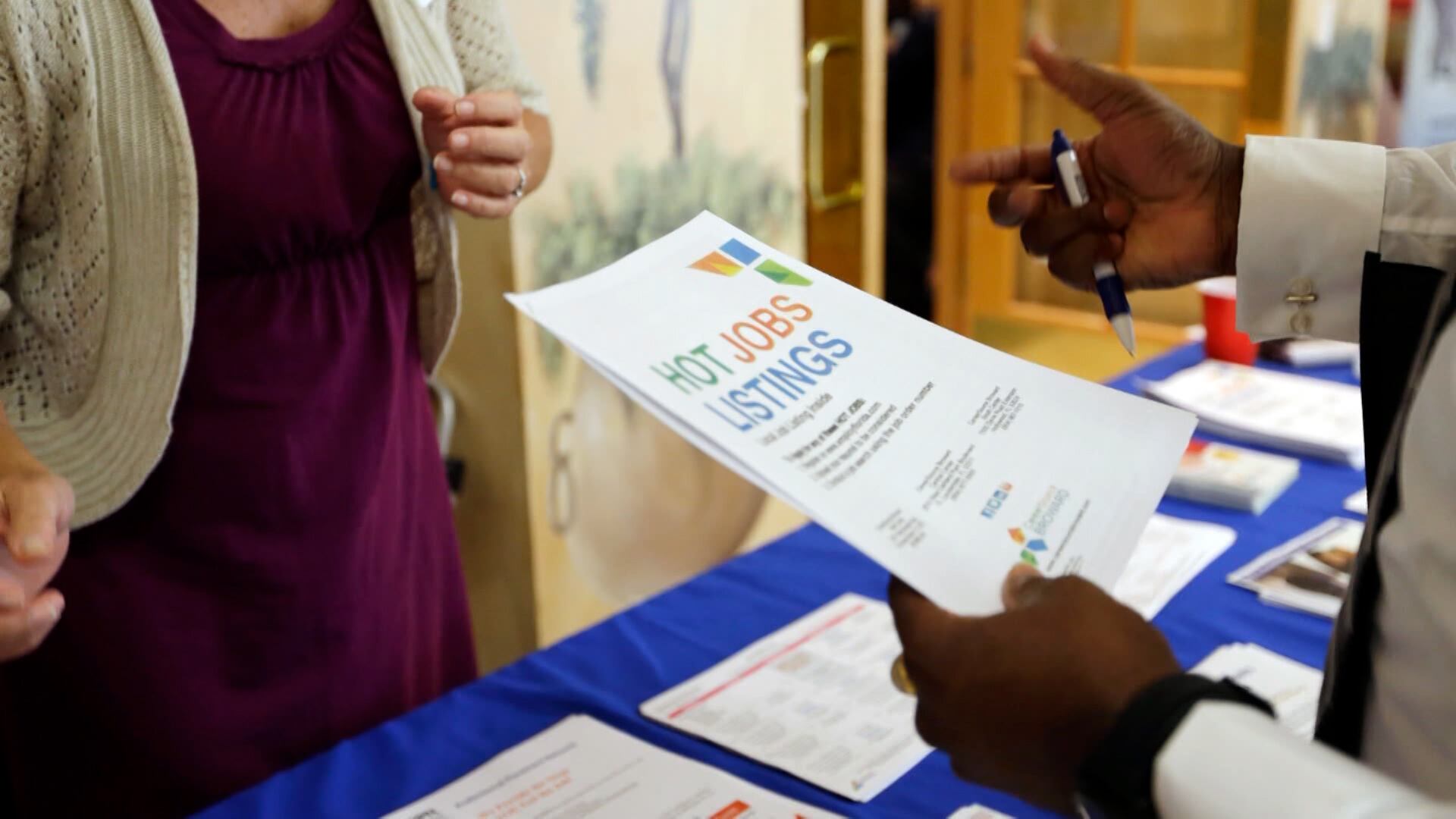
According to the U.S. Labor Department, a record 4.4-million people quit their job in September, with data showing there are seven unemployed workers for every ten job openings.
However, Americans aren't just quitting their jobs for more suitable ones, many are embracing their entrepreneurial side, leaving to start their own business. Dick Schulze, founder of Best Buy joined Cheddar's Opening Bell to discuss.