Fortnite Frenzy Propels Turtle Beach to Record Earnings
*By Bridgette Webb*
Turtle Beach is on a roll.
The headset producer unveiled a new line of gaming gear called Atlas that's specifically designed for PC gamers.
"We are doing the same thing in the PC segment that we are doing in the console headset gaming segment for many years," said Turtle Beach CEO Juergen Stark in an interview Thursday on Cheddar. "We've put a lot of effort in making sure the build quality, the audio quality and the mic quality is the best you can get."
The new headset was introduced after the company reported second-quarter results that blew away analysts' expectations. Net revenue, net income, and earnings were higher than any second quarter since the company's 2014 IPO. Turtle Beach reported $60.8 million in revenue for the quarter ー up from $19.1 million the year before.
Stark attributed Turtle Beach's success to cost cutting on one side of its balance sheet and the booming demand for headsets generated by the popularity of battle royale games Fortnite and PUBG.
As promising a year as it's been so far, Stark said international tariffs could hurt sales of the imported Turtle Beach headsets.
"It will effect retail pricing for us, and for everyone in the category if what people are threatening goes through," he said. "I'm hopeful that it doesn't happen, I don't see how increasing the prices for consumers for everything you buy that's electronic is going to help anybody."
When asked how tariffs would affect the price of gaming headsets, Stark offered a matter-of-fact outlook.
"If there is a 10 percent tariff and you are building a product in China, the retail price point is going to go up 10 percent. If it's a 25 percent tariff that's being threatened, the retailer is it going to go up 25 percent."
For more on this story, [click here](https://cheddar.com/videos/turtle-beach-expands-further-into-pc-gaming).
U.S. stocks close Tuesday at session highs after a subpar start to the trading day. Tim Chubb, Chief Investment Officer at the wealth advisory firm, Girard, joins Cheddar News' Closing Bell to discuss. 'We're starting to see the moderation of three core things -- we've seen the moderation of prices, we've seen the moderation of wage growth we've seen in the labor market, and we've also seen a moderation of job openings,' he says.
CreditCards.com senior industry analyst Ted Rossman compares the Apple Pay Later offering to similar four-step processes at Affirm and Klarna, and says this is a way for the tech giant to dive deeper into the financial industry.
Tech analyst Rene Ritchie discusses new EU legislation that will force iPhones to use a USB-C charger in fall 2024 and what that means for Apple's strategy in Europe.
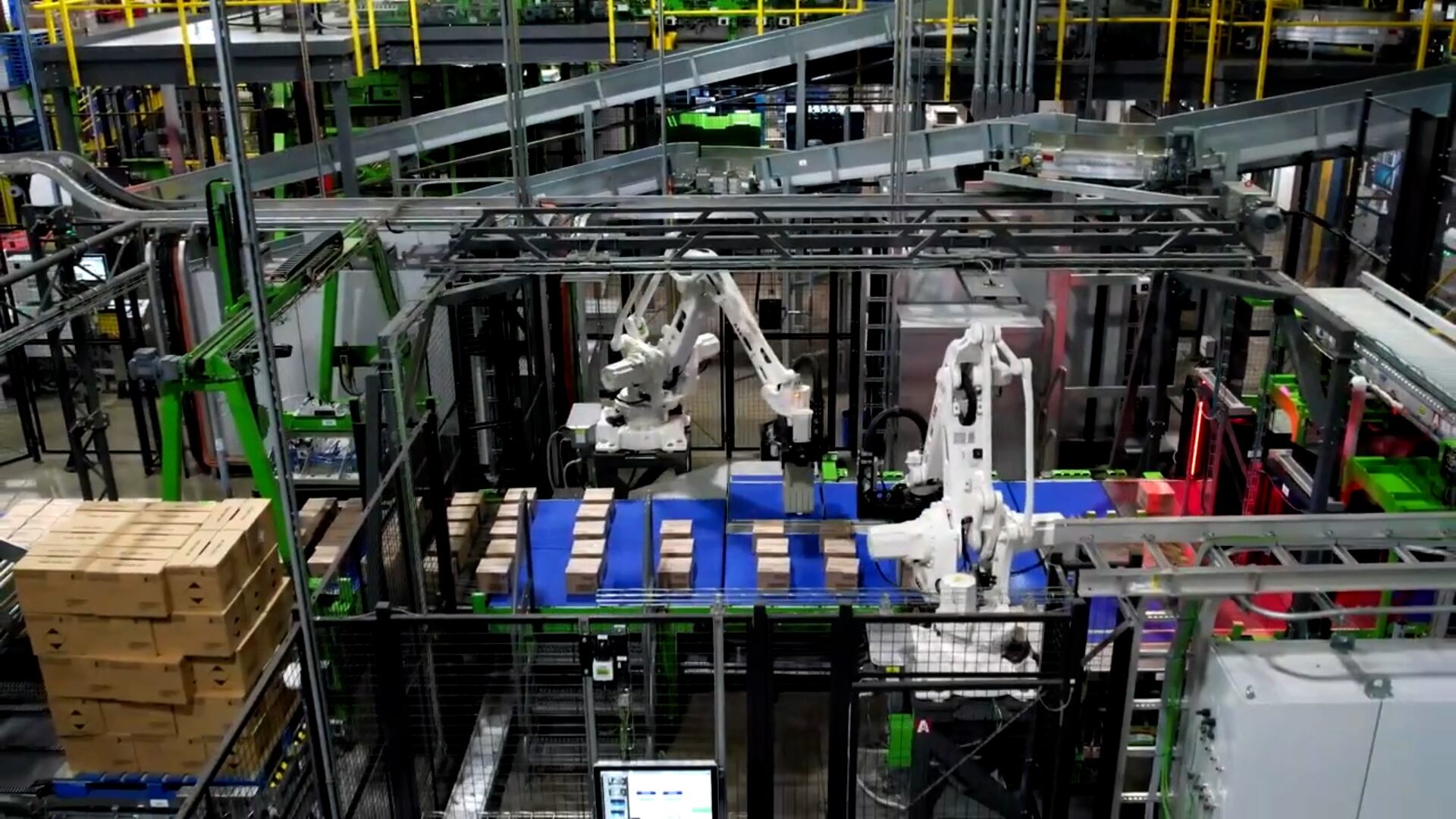
Robotics automation technology company Symbotic made its market debut on the Nasdaq via a SPAC merger with SVF Investment Corp. 3, a special purpose acquisition company sponsored by an affiliate of SoftBank Investment Advisers. Symbotic rang the Opening Bell at the Nasdaq to celebrate the occasion this morning. Its debut on Wall Street comes amid an urgent need for logistics solutions, as it aims to reimagine supply chains with its A.I.-powered robotic and software platform. Tom Earnst, CFO of Symbotic, and Vikas Parekh, managing partner at Softbank Investment Advisors, join Cheddar News' Closing Bell to discuss.
Michelle Castillo joined Closing Bell to break down Elon Musk's announcement to SpaceX employees that the Starlink internet business might not see itself as an IPO until 2025, Twitter planning to hand over the user data he requested as a condition of the acquisition, and Warren Buffet-backed Chinese EV company BYD stating it will be supplying batteries to Tesla "very soon."
Meta announced its plans to join the Cannes Lions International Festival of Creativity. This is leaving businesses and customers wondering what the tech giant has in store for the event. Nicola Mendelsohn, the vice president of the global business group at Meta, joined Cheddar News to preview what the tech giant will discuss at this year's festival. "We're going to be showcasing more about reels. We're going to be talking about our commerce solutions, are messaging solutions, and of course, the method of us speaking of new ways to kind of connect with customers," she said.