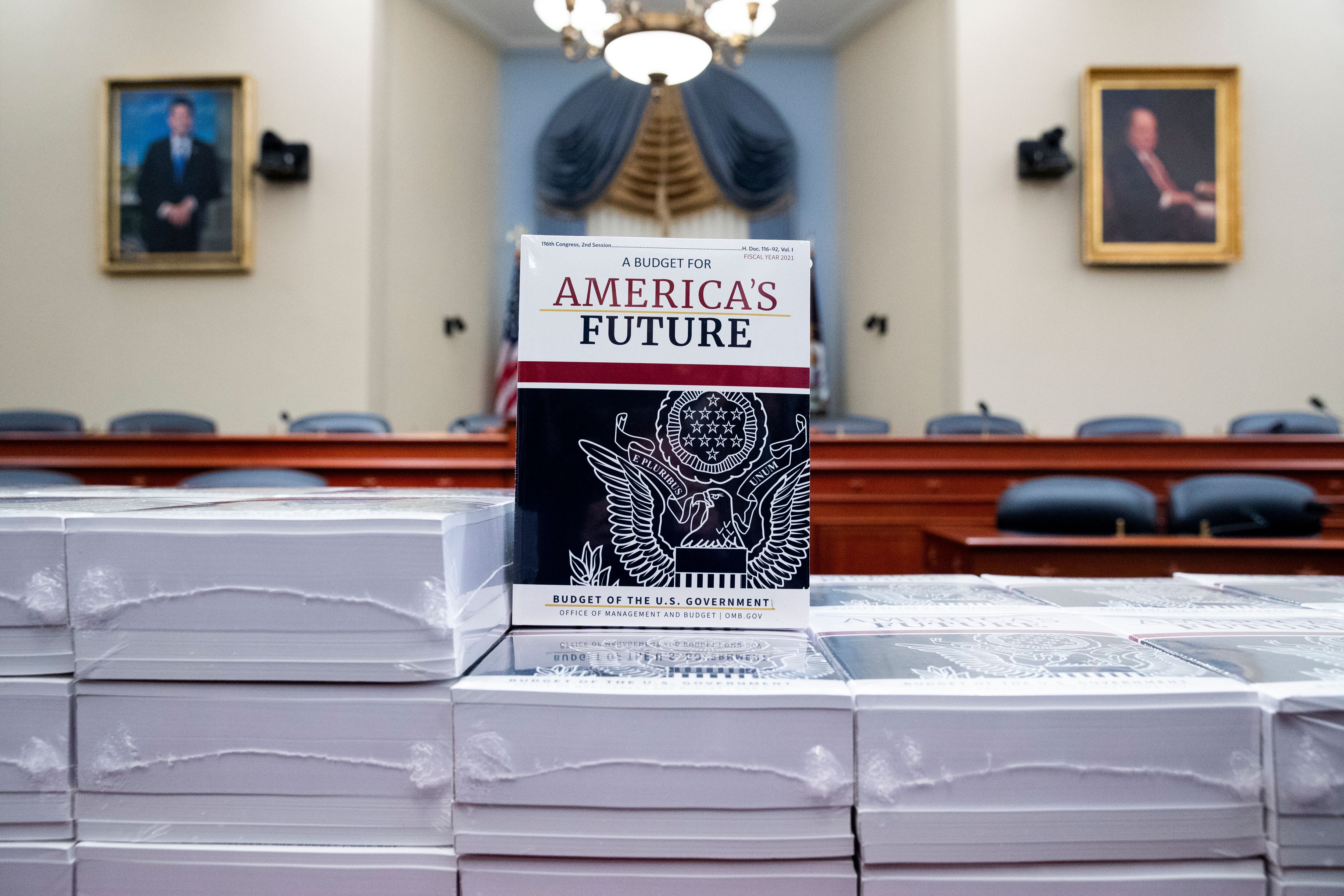
President Trump unveiled a $4.8 trillion budget proposal for the 2021 fiscal year, thought to be a taste of his re-election strategy, notable for steep reductions in social services like Medicaid, disability insurance, and higher budgets for defense, including the president’s promised southern border wall. The plan seeks to reduce deficits by $4.6 trillion in the next 10 years.
The plan, which needs Congressional approval, proposes increasing military spending slightly and lowering non-defense spending by nearly 5 percent, which seems to buck the agreement made by Congressional leaders and the White House this summer that passed both chambers with bipartisan support.
Trump’s budget proposal cuts spending on federal disability benefits, student loan forgiveness, foreign aid spending, and eliminates funding for the Corporation for Public Broadcasting. It will also further extend the income tax cuts that are currently set to expire in 2025. Other departments receiving a big cut: the Environmental Protection Agency, whose budget would be slashed by 26 percent, and a 9 percent reduction for the Health and Human Services department, which includes the National Institutes for Health and the Centers for Disease Control and Protection. CDC cuts would not be expected to include funding for infectious disease activities
Senator Mike Enzi (R-Wyo.), Chairman of the Senate Budget Committee, said in a statement that “presidents’ budgets are a reflection of Administration priorities, but in the end, they are just a list of suggestions, as the power of the purse rests with Congress. Bipartisan consensus will be necessary to bring our debt and deficits under control.”
The plan would also cut more than $5.5 billion in spending for the Education Department, which is slightly less than what was proposed last year. Those domestic spending slashes will likely be rejected by lawmakers and stand in contrast to messaging from the eventual 2020 Democratic nominee.
Trump also promised to send astronauts to the moon by 2024, a promise he presumably hopes to fill with a 12 percent budget increase in NASA funding.
Congressman John Yarmuth (D-Ky. 3rd District) who chairs the House Committee on the Budget said in a statement that the plan, by a “destructive and irrational president,” is backpedaling on a bipartisan deal. “He has broken his promises to the American people. Defaulted on the bipartisan budget deal he made with Congress. And we will stand firm against this warped ‘vision’ for our nation’s future,” Yarmuth said.
Though the president’s budget plan sheds light on his policy ambitions, a Democrat-controlled House means a spending bill in the Senate would require bipartisan support, which looks unlikely.
Senate Minority Leader Chuck Schumer tweeted, “With his latest budget proposal, it’s hard to imagine that President Trump could do any more to double-cross the very American workers and middle-class families he promised to help just last week in his State of the Union address.” He noted that by proposing “severe cuts to Medicaid and Medicare, President Trump’s latest budget is simply a continuation of his war to rip away health care from millions of Americans.”
The budget plan carries weight for the president’s platform heading into an election year, although it’s a shift from his 2016 campaign when he promised to protect funding for Medicare and Medicaid. The president even stated via a tweet as recently as the Saturday that he would not be "touching" Medicare before the release of the proposed budget that does just that.
Peter Zalzal, associate vice president for clean air strategies at the Environmental Defense Fund, a nonprofit environmental advocacy group, joined Cheddar to discuss the Biden Administration's unveiling of stricter fuel-efficiency standards for new automobiles. "The administration estimated that these rules will reduce about 2.5 billion tons of climate pollution by 2050, and using less fuel also means that we have to go to the gas pump less often. And so it means we save money, thousands of dollars in avoided fuel costs each year for consumers," he noted.
The relatively robust March jobs report showed that despite the low unemployment rate, Black, Hispanic, and women job seekers are still having difficulty finding work. William M. Rodgers III, the vice president and director of the Institute for Economic Equity at the Federal Reserve Bank of St. Louis noted that participation rates in the labor force ticked up for minorities, adding to other positive signs of growth. He also spoke to Cheddar News to discuss further the jobs figures, the state of the labor market, and rising inflation.
U.S. markets opened higher to kick off the second quarter, despite a miss on the March Jobs Report. The economy added $431,000 in the month, slightly lower than the $490,000 analysts had expected. The unemployment rate also ticked down to 3.6% from 3.8%. Kevin Simpson, Founder & Chief Investment Officer, Capital Wealth Planning joined Cheddar's Opening Bell to discuss.
President Biden is going after billionaires in his 2023 budget request to congress. The proposal would establish a 20% minimum tax rate on all households worth more than $100 million, as well as raise the corporate tax rate from 21% to 28%. Rhett Buttle, Small Business for America's Future Senior Advisor, Business Policy Expert & Biden Campaign Business Advisor, breaks down the proposal, what it aims to accomplish, and how small businesses might feel about it.
The Biden administration has announced the U.S. will accept up to 100,000 refugees fleeing the war in Ukraine and provide more than 1 billion dollars in new funding for the growing humanitarian crisis. The move comes as President Biden meets with his western counterparts in Europe to demonstrate a united front against Russia and show support for Ukraine. Altagracia Pierre-Outerbridge, Immigration Attorney for Outerbridge Law, explains how this is going to work.
The DOJ has endorsed an antitrust bill targeting tech giants like Apple, Amazon, Meta, and Google. The legislation would ban the companies from favoring their own products and services over their competitor's, making it more difficult them to dominate the marketplace. Greg Day, Assistant Professor of Legal Studies at the University of Georgia, breaks down the bill and its potential impact on anti-competition in the tech sector.
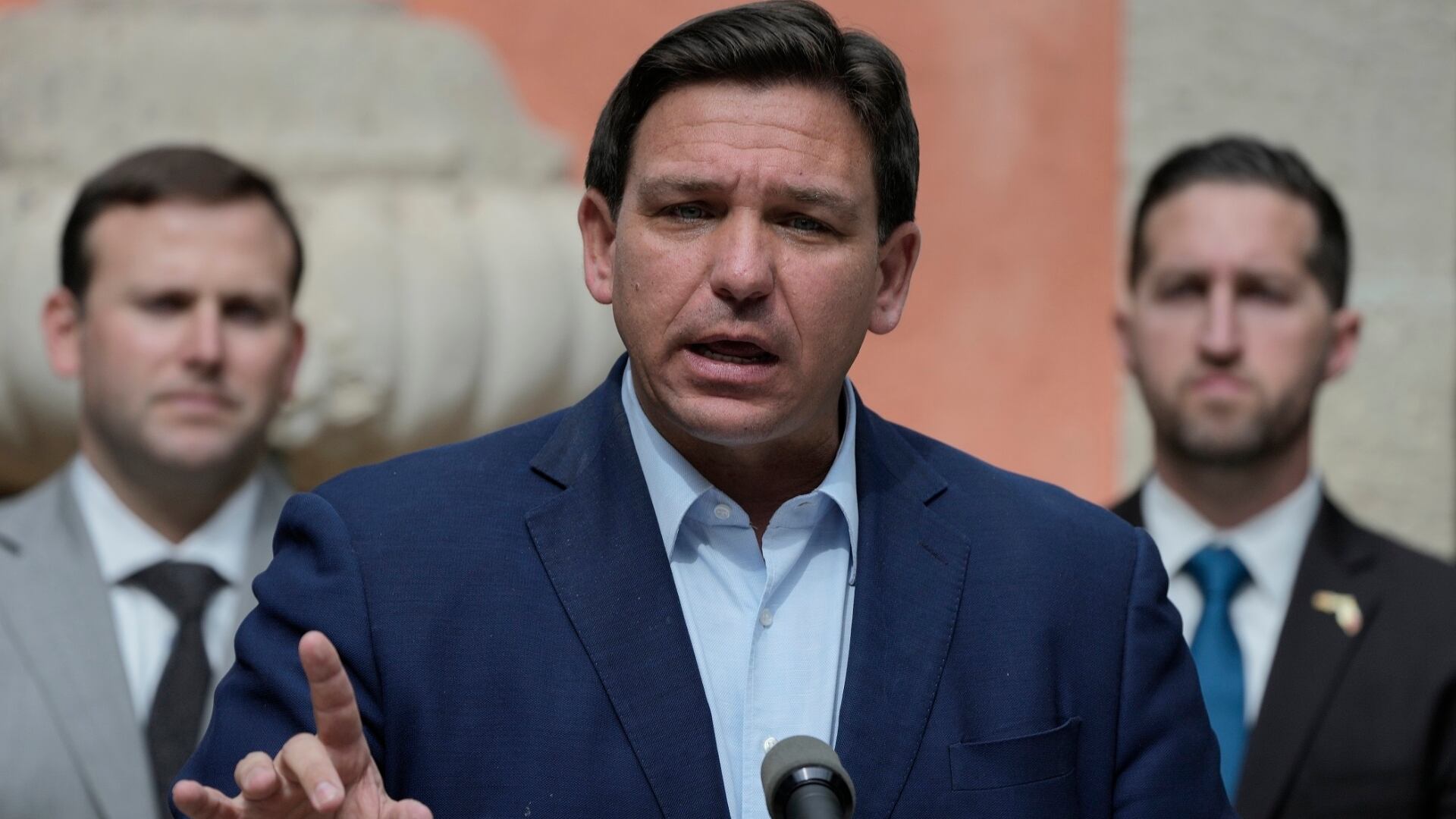
Catching you up with what you need to know on Apr 1, 2022, with Ukrainians hoping to flee the besieged city of Mariupol with a ceasefire is in place, President Biden orders the release of oil from U.S.reserves, LGBT activists suing Florida Governor Ron DeSantis over the "Don't Say Gay" Law, U.S. passports offering an "x" option for gender, and more.
America’s employers extended a streak of robust hiring in March, adding 431,000 jobs in a sign of the economy’s resilience in the face of a still-destructive pandemic and the highest inflation in 40 years.