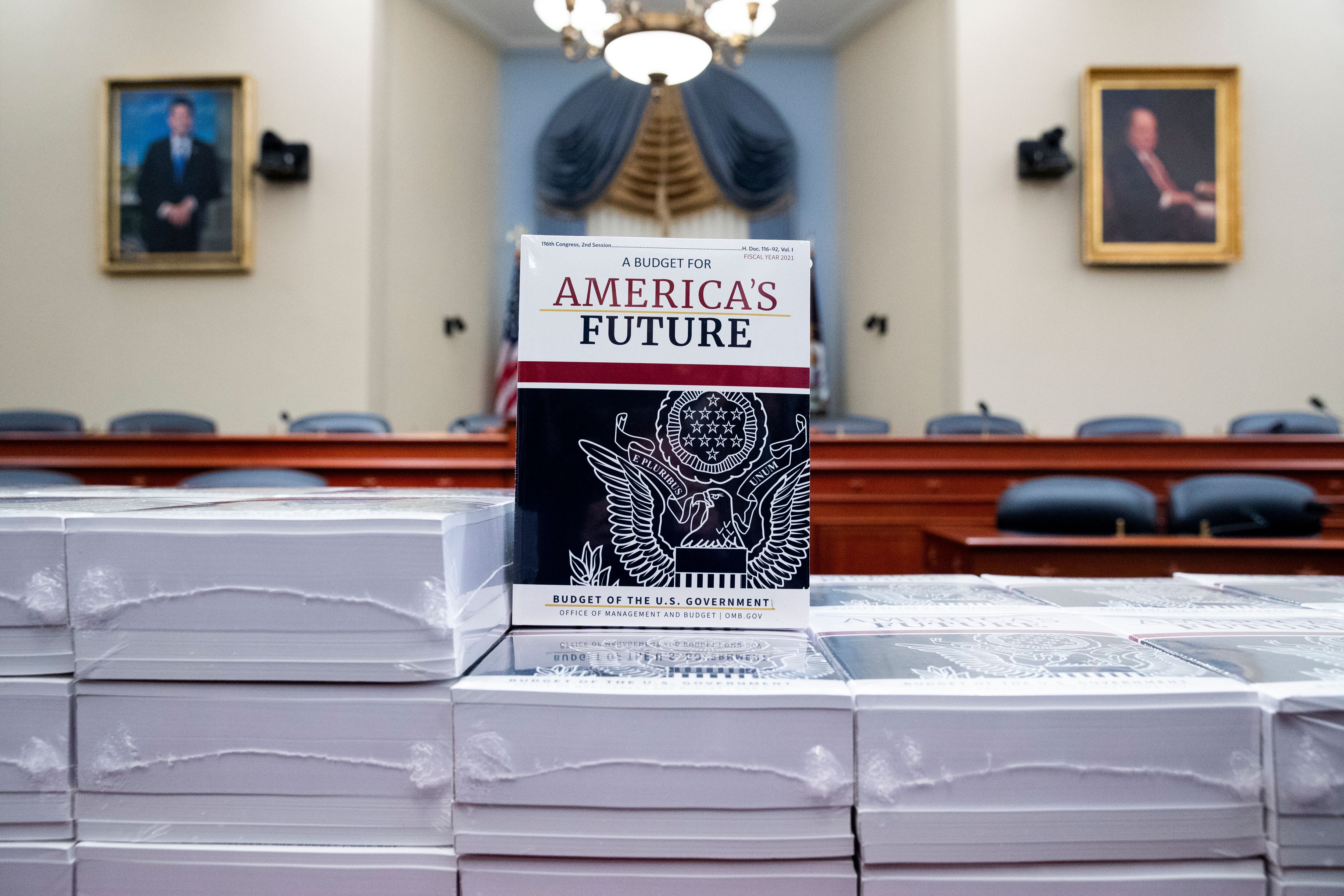
President Trump unveiled a $4.8 trillion budget proposal for the 2021 fiscal year, thought to be a taste of his re-election strategy, notable for steep reductions in social services like Medicaid, disability insurance, and higher budgets for defense, including the president’s promised southern border wall. The plan seeks to reduce deficits by $4.6 trillion in the next 10 years.
The plan, which needs Congressional approval, proposes increasing military spending slightly and lowering non-defense spending by nearly 5 percent, which seems to buck the agreement made by Congressional leaders and the White House this summer that passed both chambers with bipartisan support.
Trump’s budget proposal cuts spending on federal disability benefits, student loan forgiveness, foreign aid spending, and eliminates funding for the Corporation for Public Broadcasting. It will also further extend the income tax cuts that are currently set to expire in 2025. Other departments receiving a big cut: the Environmental Protection Agency, whose budget would be slashed by 26 percent, and a 9 percent reduction for the Health and Human Services department, which includes the National Institutes for Health and the Centers for Disease Control and Protection. CDC cuts would not be expected to include funding for infectious disease activities
Senator Mike Enzi (R-Wyo.), Chairman of the Senate Budget Committee, said in a statement that “presidents’ budgets are a reflection of Administration priorities, but in the end, they are just a list of suggestions, as the power of the purse rests with Congress. Bipartisan consensus will be necessary to bring our debt and deficits under control.”
The plan would also cut more than $5.5 billion in spending for the Education Department, which is slightly less than what was proposed last year. Those domestic spending slashes will likely be rejected by lawmakers and stand in contrast to messaging from the eventual 2020 Democratic nominee.
Trump also promised to send astronauts to the moon by 2024, a promise he presumably hopes to fill with a 12 percent budget increase in NASA funding.
Congressman John Yarmuth (D-Ky. 3rd District) who chairs the House Committee on the Budget said in a statement that the plan, by a “destructive and irrational president,” is backpedaling on a bipartisan deal. “He has broken his promises to the American people. Defaulted on the bipartisan budget deal he made with Congress. And we will stand firm against this warped ‘vision’ for our nation’s future,” Yarmuth said.
Though the president’s budget plan sheds light on his policy ambitions, a Democrat-controlled House means a spending bill in the Senate would require bipartisan support, which looks unlikely.
Senate Minority Leader Chuck Schumer tweeted, “With his latest budget proposal, it’s hard to imagine that President Trump could do any more to double-cross the very American workers and middle-class families he promised to help just last week in his State of the Union address.” He noted that by proposing “severe cuts to Medicaid and Medicare, President Trump’s latest budget is simply a continuation of his war to rip away health care from millions of Americans.”
The budget plan carries weight for the president’s platform heading into an election year, although it’s a shift from his 2016 campaign when he promised to protect funding for Medicare and Medicaid. The president even stated via a tweet as recently as the Saturday that he would not be "touching" Medicare before the release of the proposed budget that does just that.
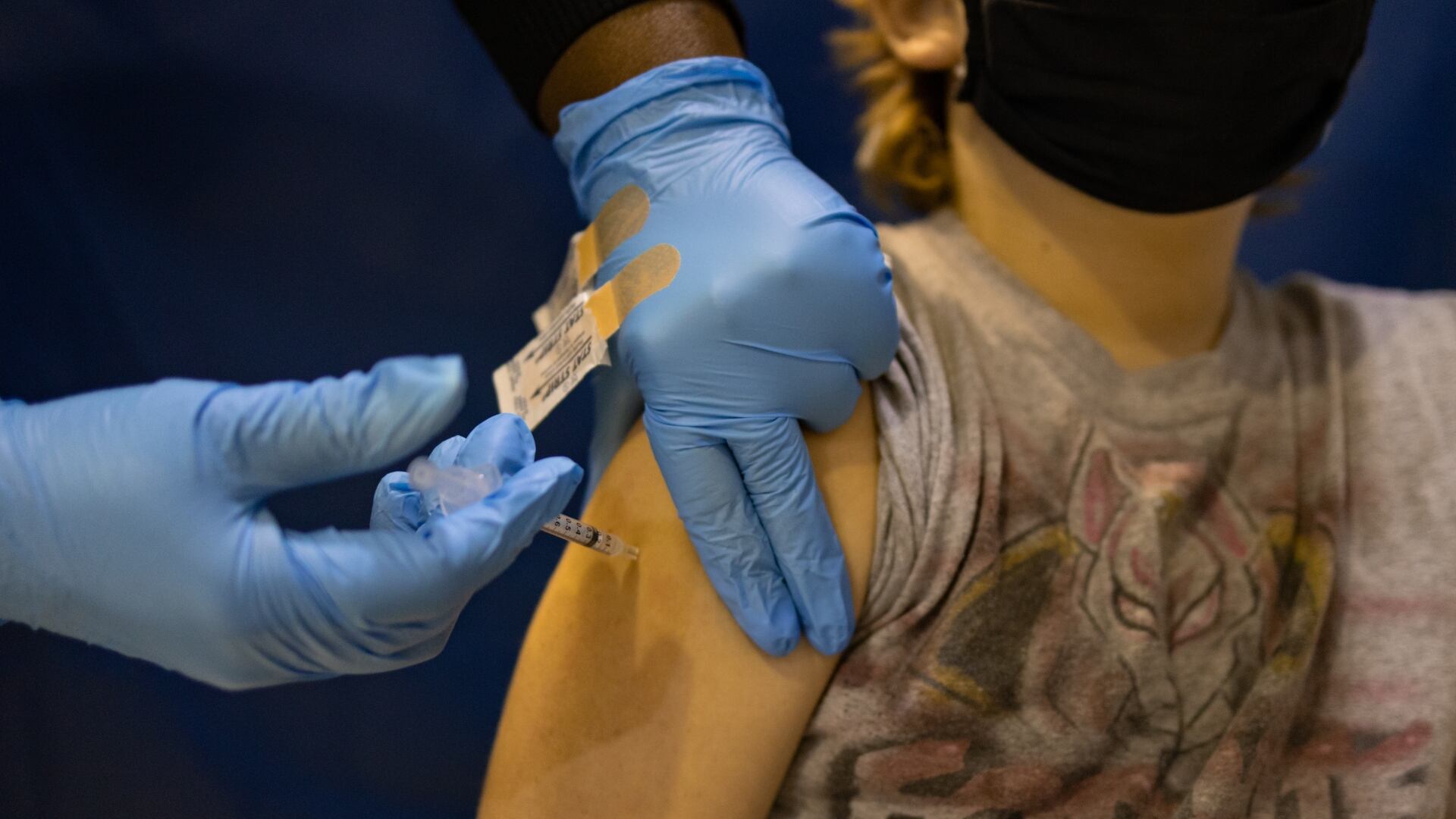
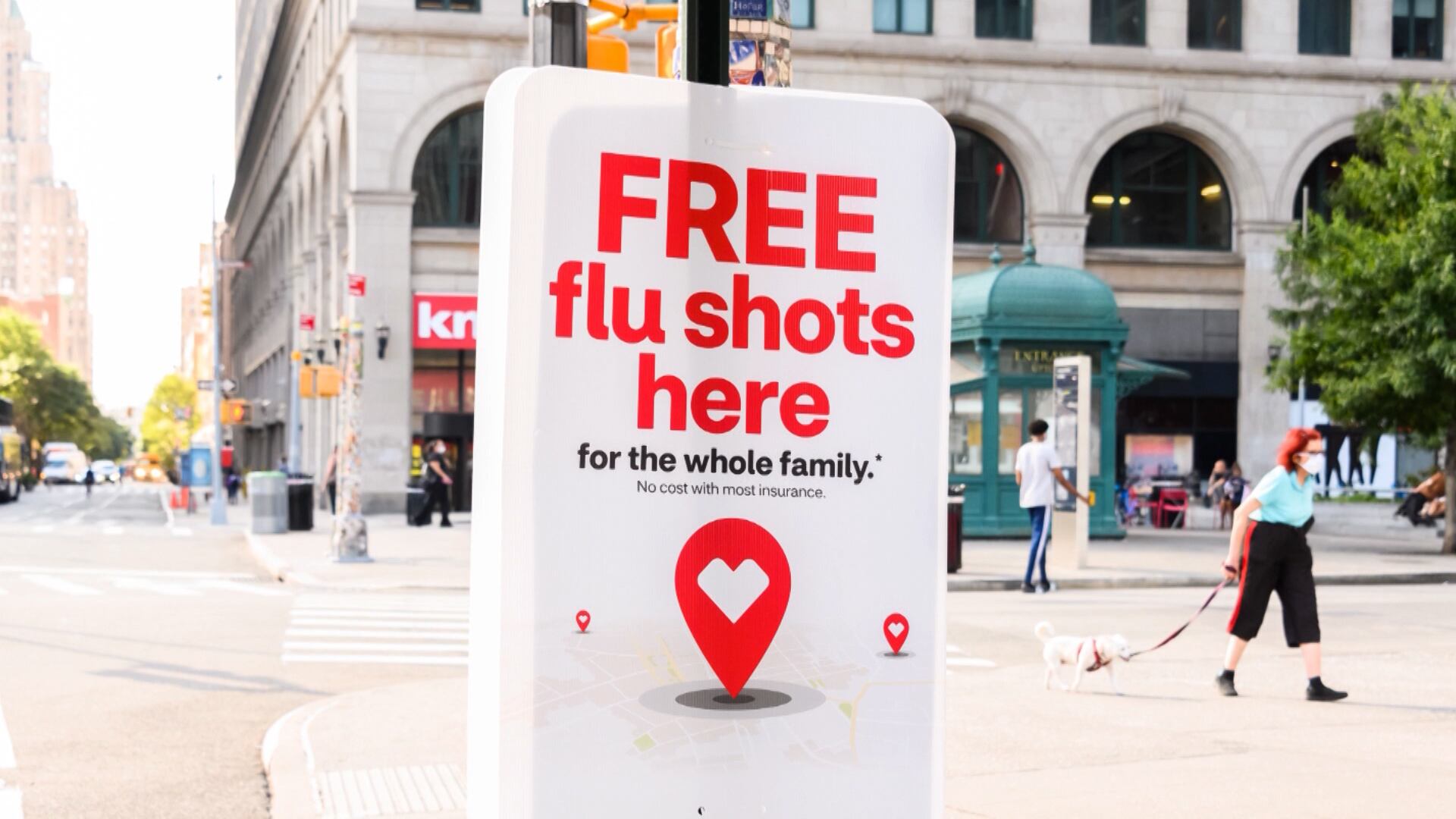
As we move into the colder months in the U.S., health experts are warning of a more active flu season than last year, sounding the alarm on what many are calling a 'twindemic.' Dr. Syra Madad, infectious disease epidemiologist, joined Cheddar's 'Search for the Cure' to discuss the intersection of the flu season with the Covid-19 pandemic.
Schools across the country could expect to see billions of dollars towards providing a more accessible Universal Pre-K program. Steven Barnett, Board of Governors Professor and Director of the National Institute for Early Education Research at Rutgers University, joined Cheddar News to discuss more.
The Fifth Circuit Court of Appeals court temporarily held up President Biden's vaccine mandate for workplaces with more than 100 employees as the various lawsuits challenging it are combined. Marjorie Mesidor, a partner at the law firm Phillips & Associates, PLLC, joined Cheddar to break down the arguments in play. "They [the Biden Administration] say we have the authority to do this under the broad powers that are given under OSHA," she said. "What the Republic side then is saying, no, this is overbroad."
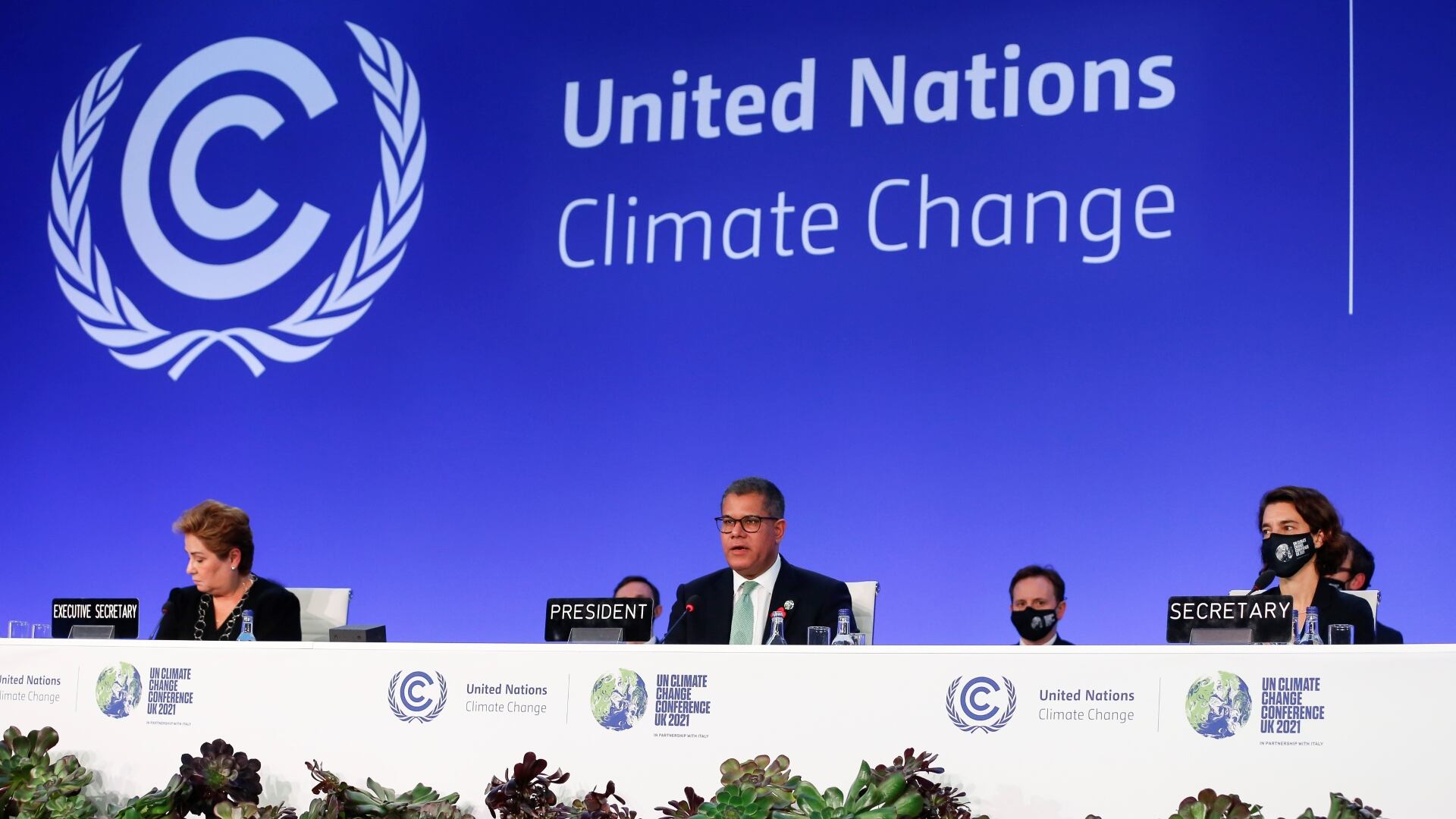
The UN climate summit wrapped up over the weekend after days of negotiations over the summit's final agreement. The agreement pushes countries to reassess their climate goals by the end of next year, do more for countries facing the worst effects of climate change, and also calls for a "phase down" of coal and other fossil fuel subsidies. The White House praised the agreement, but underscored the feelings of many world leaders by saying it isn't enough.
Deborah Brosnan, climate expert and president of Deborah Brosnan and Associates, joined Cheddar's News Wrap to discuss.
President Biden is under some pressure from members of his own party over rising gas prices. Senate Majority Leader Chuck Schumer has called for the president to utilize oil reserves to lower gas prices ahead of the holiday season, as gas prices are currently at a seven-year high. Energy Workforce & Technology Council CEO Leslie Beyer joins Cheddar News' Closing Bell to discuss.
The men's brand Harry's is teaming up with Stop Soldier Suicide and Headstrong to help provide mental health support with a $500,000 financial commitment. The withdrawal of troops from Afghanistan triggered a range of mental health responses from veterans and active service members, as well as displaced refugees who are now acclimating to a new way of life. Maggie Hureau, Harry's head of social impact, joined Cheddar News to talk about the partnership and why Harry's chose to get involved in mental health care.
Inflation has risen to its highest level in 31 years, sending consumer prices on everything from groceries to gas to rent surging. For many businesses, that's good news as inflation typically means better profit margins. According to data from FactSet, nearly two out of three of the biggest U.S. publicly traded companies have reported fatter profit margins so far this year compared to the same stretch of 2019, before the pandemic. Gregory Daco, chief U.S. economist for Oxford Economics, breaks down how the top businesses are reaping the benefits of inflation, and when consumers can expect inflation to ease.
Meta, the parent company of Facebook, is facing a lawsuit from Ohio's attorney general Dave Yost, who said the company misled the public about safety on the platform.
Cases of covid-19 are climbing in the Upper Midwest, Southwest, and parts of the Northeast. The seven-day national average is sitting at roughly 82,000 new cases which is an 11 percent jump from the week before. Dr. Amesh Adalja, Infectious Disease, Specialist, Sr. Scholar at Johns Hopkins Center for Health Security joined Cheddar's Opening Bell to discuss this recent uptick ahead of the holiday season.