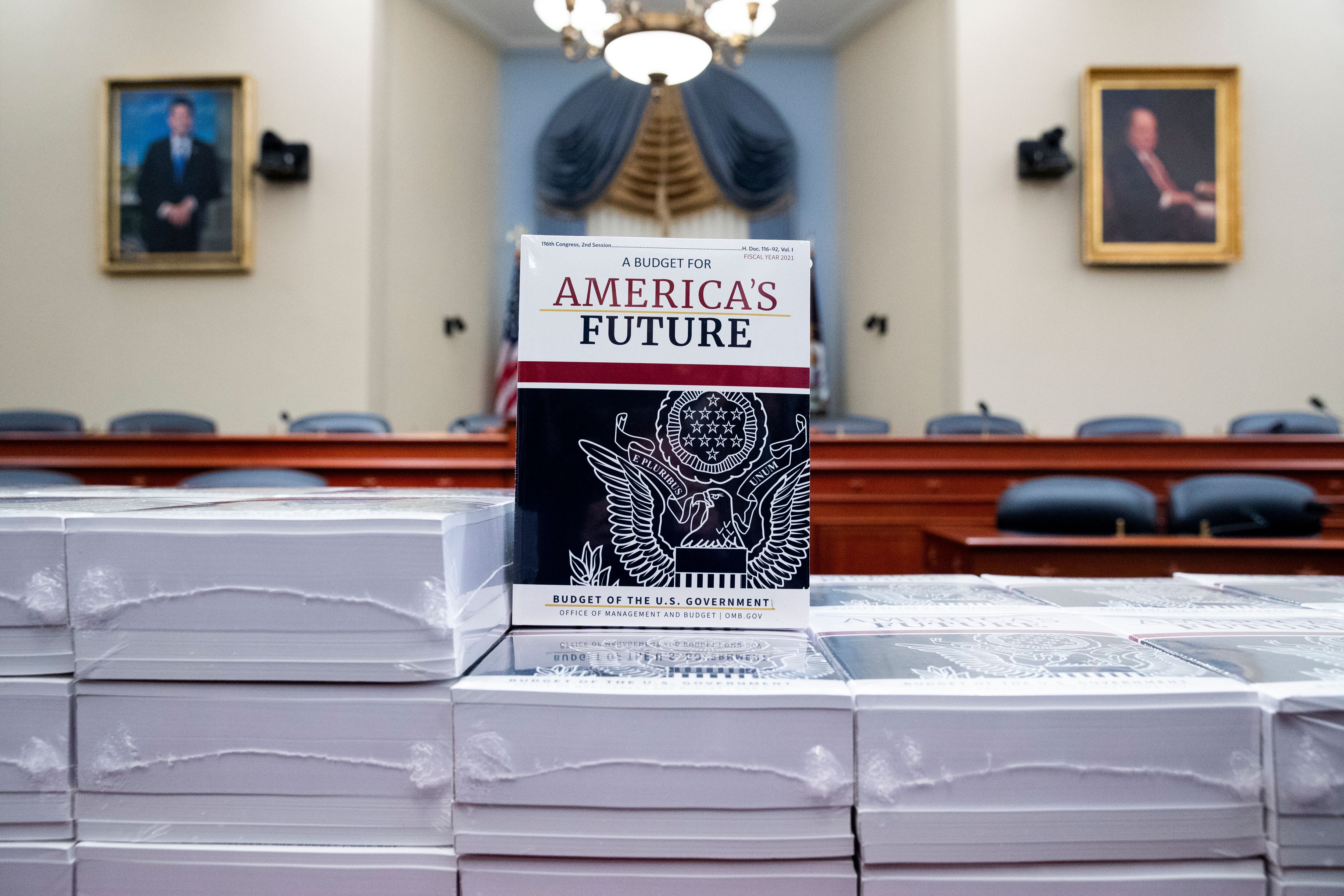
President Trump unveiled a $4.8 trillion budget proposal for the 2021 fiscal year, thought to be a taste of his re-election strategy, notable for steep reductions in social services like Medicaid, disability insurance, and higher budgets for defense, including the president’s promised southern border wall. The plan seeks to reduce deficits by $4.6 trillion in the next 10 years.
The plan, which needs Congressional approval, proposes increasing military spending slightly and lowering non-defense spending by nearly 5 percent, which seems to buck the agreement made by Congressional leaders and the White House this summer that passed both chambers with bipartisan support.
Trump’s budget proposal cuts spending on federal disability benefits, student loan forgiveness, foreign aid spending, and eliminates funding for the Corporation for Public Broadcasting. It will also further extend the income tax cuts that are currently set to expire in 2025. Other departments receiving a big cut: the Environmental Protection Agency, whose budget would be slashed by 26 percent, and a 9 percent reduction for the Health and Human Services department, which includes the National Institutes for Health and the Centers for Disease Control and Protection. CDC cuts would not be expected to include funding for infectious disease activities
Senator Mike Enzi (R-Wyo.), Chairman of the Senate Budget Committee, said in a statement that “presidents’ budgets are a reflection of Administration priorities, but in the end, they are just a list of suggestions, as the power of the purse rests with Congress. Bipartisan consensus will be necessary to bring our debt and deficits under control.”
The plan would also cut more than $5.5 billion in spending for the Education Department, which is slightly less than what was proposed last year. Those domestic spending slashes will likely be rejected by lawmakers and stand in contrast to messaging from the eventual 2020 Democratic nominee.
Trump also promised to send astronauts to the moon by 2024, a promise he presumably hopes to fill with a 12 percent budget increase in NASA funding.
Congressman John Yarmuth (D-Ky. 3rd District) who chairs the House Committee on the Budget said in a statement that the plan, by a “destructive and irrational president,” is backpedaling on a bipartisan deal. “He has broken his promises to the American people. Defaulted on the bipartisan budget deal he made with Congress. And we will stand firm against this warped ‘vision’ for our nation’s future,” Yarmuth said.
Though the president’s budget plan sheds light on his policy ambitions, a Democrat-controlled House means a spending bill in the Senate would require bipartisan support, which looks unlikely.
Senate Minority Leader Chuck Schumer tweeted, “With his latest budget proposal, it’s hard to imagine that President Trump could do any more to double-cross the very American workers and middle-class families he promised to help just last week in his State of the Union address.” He noted that by proposing “severe cuts to Medicaid and Medicare, President Trump’s latest budget is simply a continuation of his war to rip away health care from millions of Americans.”
The budget plan carries weight for the president’s platform heading into an election year, although it’s a shift from his 2016 campaign when he promised to protect funding for Medicare and Medicaid. The president even stated via a tweet as recently as the Saturday that he would not be "touching" Medicare before the release of the proposed budget that does just that.
Markets were pointing mostly lower to end the week as investors reacted to the threat of a Covid resurgence in Europe. Jeff Schulze, Investment Strategist at ClearBridge Investments joined Cheddar's Opening Bell to discuss Friday's pre-market activity.
A federal judge tossed out a lawsuit against financial services platform Robinhood following the meme stock saga that swept the investment world. The judge said it found no wrongdoing on Robinhood's part after the platform halted trading on popular meme stocks Gamestop and AMC.
Jill and Carlo are back to cover the latest in the Rittenhouse trial, new information on the origins of Covid, return-to-office and more.
JOIN US FOR THE YOUTUBE WATCH PARTY @ 9aET: http://www.youtube.com/cheddarnow
The U.S. Justice Department has filed a lawsuit against Uber after it was discovered that disabled people were being disproportionately affected by extra “wait time” fees. Attorney Jonathan Bell joined Cheddar to discuss.
Belarus President Alexander Lukashenko has been accused by the EU of manufacturing a migration crisis along his border with Poland. But, even as tensions appear to be stabilizing at the moment, Ali Noorani, the president and CEO of National Immigration Forum and the host of the "Only in America" podcast spoke to Cheddar about the ongoing danger to the migrants who hail from countries like Iraq and Afghanistan. "What is going to happen to folks who are in Belarus who came from these countries? Is Lukashenko going to provide them asylum and protection in Belarus, or are they going to continue to be political pawns in a geopolitical battle," he said. "Real people's lives are being put at great risk."
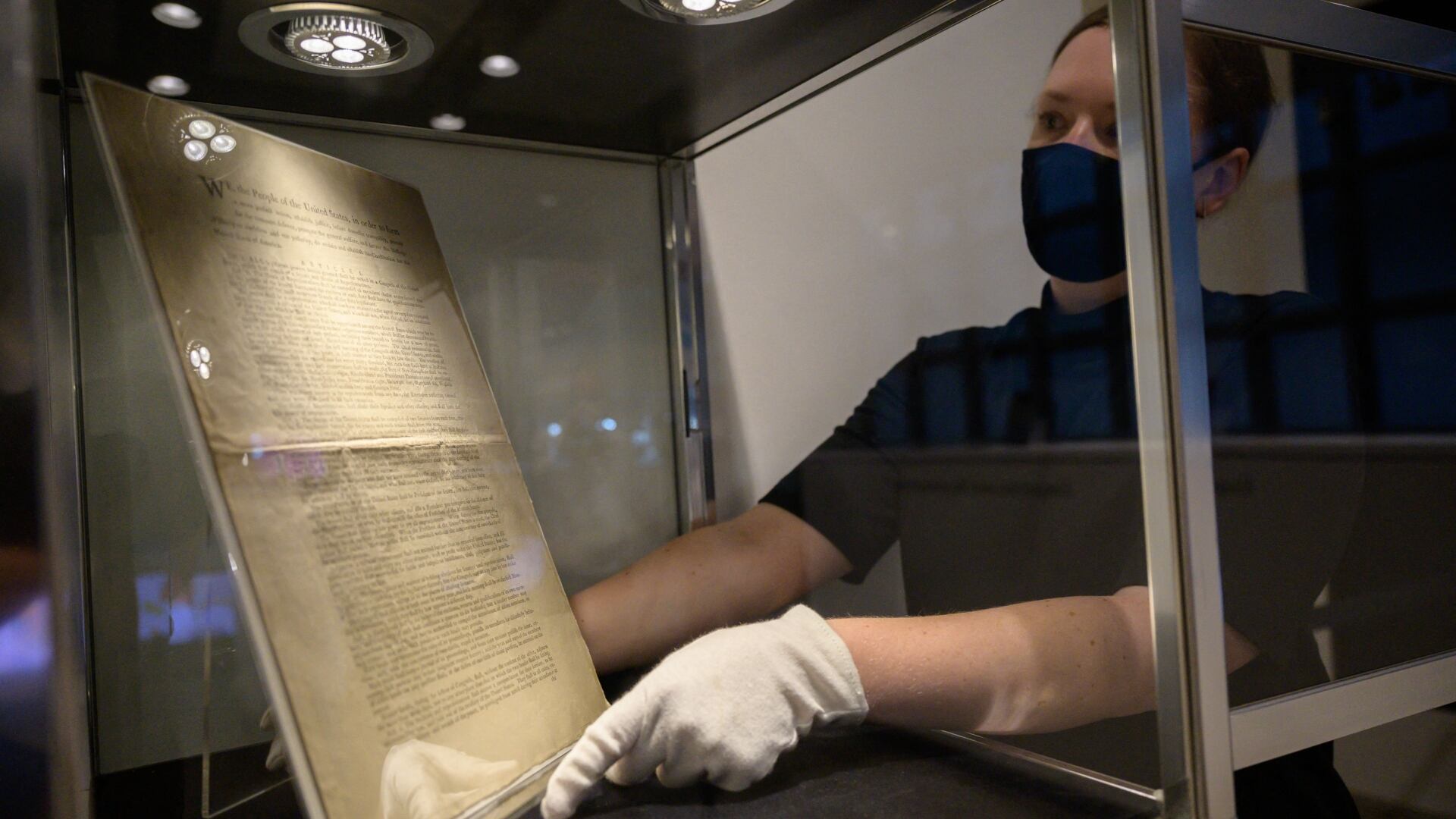
A group of crypto investors has come together to raise millions of dollars in the hopes of owning a rare piece of the U.S. Constitution. According to the crypto group, "Constitution DAO" It is time to put the constitution in the hands of the people. CEO and Founder of Metaversal Yossi Hasson, joined Cheddar to discuss more.
Polarization is among the defining traits of American politics in the 21st century. Sometimes it seems like the only thing we can all agree on is the fact that we don't really agree on anything. But those divisions don't just stop at whether you vote red or blue.
A new survey from the Pew Research Center finds that rather than just two political buckets, we have nine. The "2021 political typology" as it's called distinguishes between different ideological subsets in the Democratic and Republican party. It encompasses everyone from the loudest revolutionary lefties, to the loudest insurrection apologists on the right.
Andrew Daniller, research associate at the Pew Research Center, joins None of the Above to discuss.
Tanya Snyder, transportation reporter at Politico, joins None of the Above with J.D. Durkin to discuss the bipartisan infrastructure law, what it means for the electric vehicle industry and whether Democrats will be able to capitalize on the legislative victory ahead of the 2022 midterms.
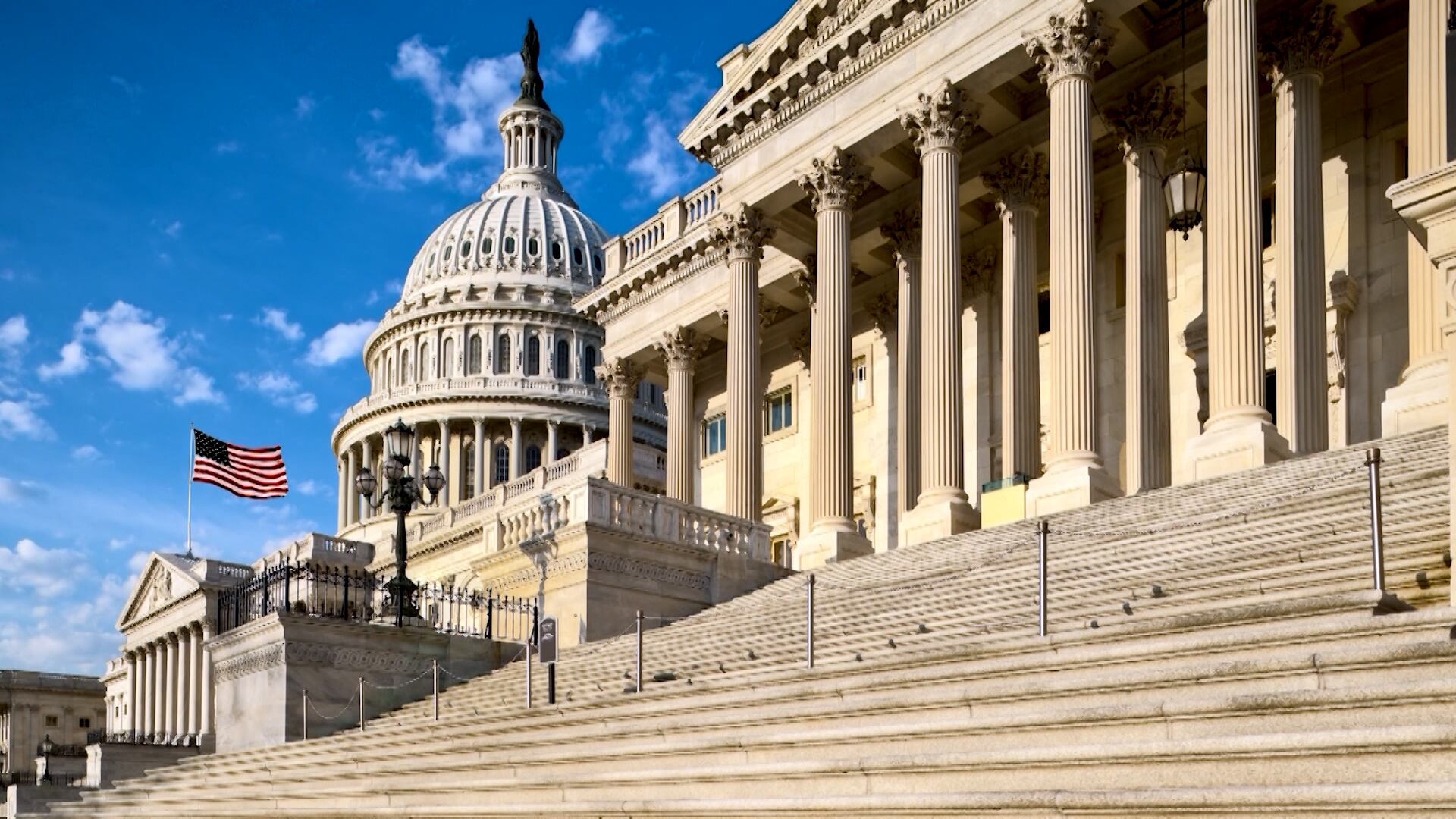
Heading into 2022, the eyes of political nerds like us are fixed on statehouses across the country. State legislatures are in the process of taking the data from the 2020 census and using it to draw new congressional districts. The process has major implications for midterms, as Republicans could retake the majority just by gerrymandering enough seats into their column. In Maryland, state level Democrats are considering several maps, one of which would completely draw out the only Republican from the state in Congress.
Bruce DePuyt, senior reporter at Maryland Matters, and Helen Brewer, legal analyst at Princeton's Electoral Innovation Lab, join Cheddar Politics to discuss.