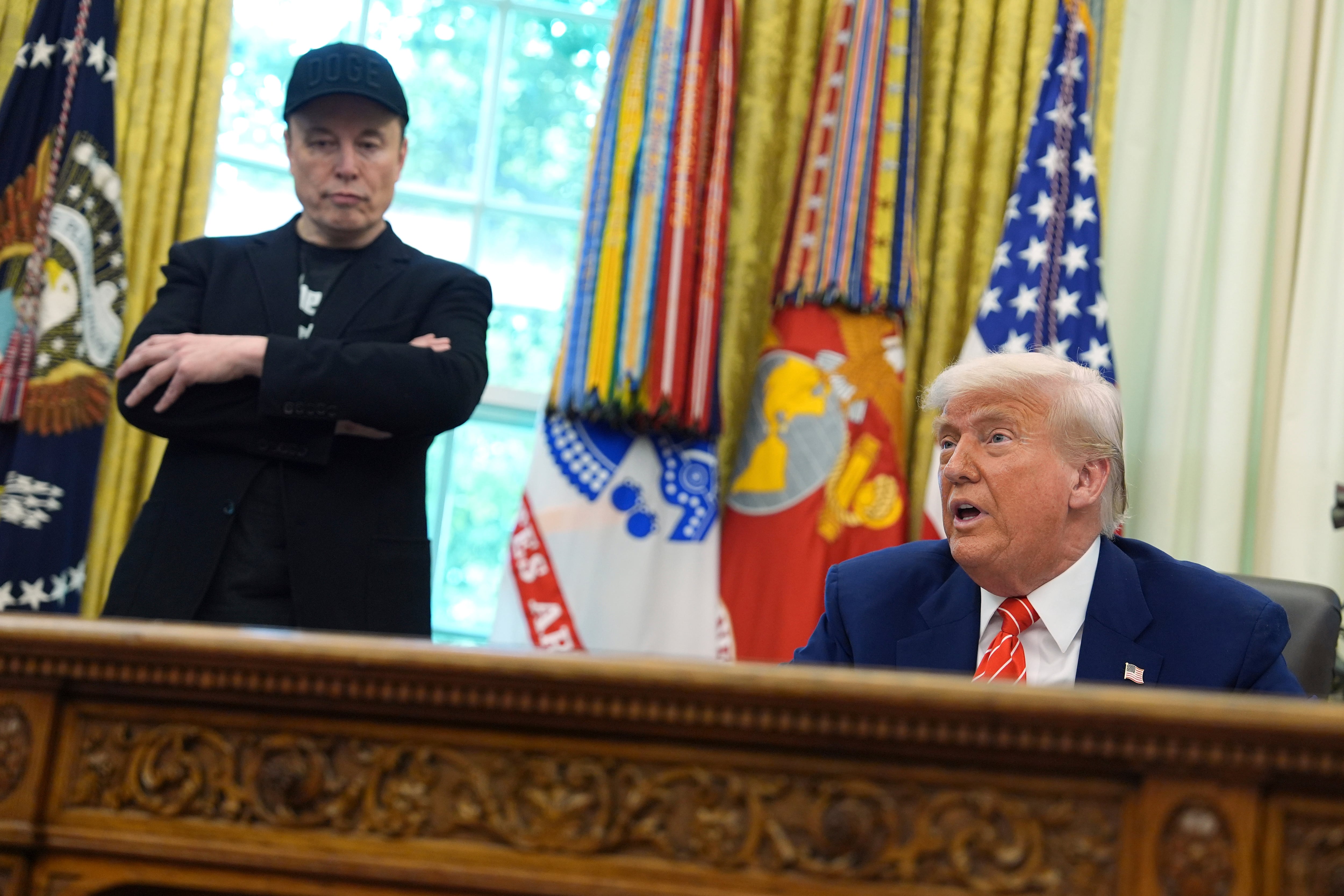
*By Hope King* CUPERTINO, Calif. -- Three big clouds loom over this year's Apple event. President Trump and the tariffs imposed against goods coming from China, China itself, and the overall slowdown in smartphone sales around the world. Let's start with that first point. President Trump on Friday threatened to levy import tariffs on another $267 billion worth of Chinese goods. That's on top of the $50 billion already in place and $200 billion on the docket. Before the latest threat, Apple took an unusual step, writing to U.S. Trade Rep Robert Lighthizer that the cost of products will go up if a new round of tariffs gets imposed. Among the products affected: adapters, cables, chargers, servers, hard drives, and ー more specifically ー AirPods, the Apple Pencil, Home Pod, and Mac Mini. The comments spiked the ire of President Trump, who [tweeted about Apple](https://twitter.com/realDonaldTrump/status/1038453273286664193) over the weekend saying, "Apple prices may increase because of the massive Tariffs we may be imposing on China - but there is an easy solution where there would be ZERO tax, and indeed a tax incentive. Make your products in the United States instead of China. Start building new plants now. Exciting! #MAGA" It's important to note that the iPhone was [not listed among the affected products](https://money.cnn.com/2018/09/07/technology/apple-china-tariffs-apple-watch-air-pods/index.html), but we're going to have to pay attention a little more this year to where the devices are priced. After all, Apple made more than a few waves last year when it debuted the $1,000 model X. If that's not enough, there's the overall risk coming from China, where Apple makes about 25% of its annual revenue. The company's main advantage in China is how much people love the Apple brand as a status and social symbol. But some analysts fear the broader trade war between the U.S. and China [may spill over into Apple's business](https://www.nytimes.com/2018/06/18/technology/apple-tim-cook-china.html.). That is, China could retaliate for how the U.S. has treated Huawei and ZTE by making it more difficult for Apple's suppliers to produce components for its products and promoting homegrown brands including Huawei, Xiaomi, Oppo, and Vivo. Speaking of those competitors, let's talk about that third cloud ー slowing smartphone growth. According to research firm Gartner, handset sales dropped 5.6 percent in the [last quarter of 2017 from the year before](https://www.cnet.com/news/smartphone-sales-fell-for-the-first-time-ever-in-q4-apple-samsung-gartner/), the first decline since analysts started tracking those numbers in 2004. Prices for the latest and greatest have actually increased at the same time U.S. carriers have gotten rid of subsidies. Pair that with the fact that what used to be the unveiling of vastly new products is now the roll-out of less revolutionary updates, and people are waiting longer to upgrade. Apple's share of the shrinking market has also fallen. At the end of the second quarter Samsung had about 21 percent of the market, Huawei rose to #2 at 16 percent. Apple was behind that with 12 percent. Xiaomi and Oppo round out the top five, [according to IDC](https://www.idc.com/getdoc.jsp?containerId=prUS44188018). So, is there a silver lining in these clouds for Apple? Yes ー services, services, services. The unit which includes iTunes, the App Store, and Apple Music, brought in revenue of [$9.5 billion in the latest quarter](https://www.apple.com/newsroom/pdfs/Q3FY18DataSummary.pdf), up 31 percent from the year before and outpacing growth of other non-iPhone units like Macs, and iPads. All of that will be in focus when CEO Tim Cook takes the stage in Cupertino, Calif., Wednesday, but I've got my eye on something else. My bold prediction? A surprise appearance by [Oprah Winfrey](https://twitter.com/lisahopeking/status/1039624629239738368). The multi-hyphenate CEO of OWN, a producer, actress and more, signed a multi-year deal with Apple, announced in June, to create original shows "that embrace her incomparable ability to connect with audiences around the world." We know how Oprah's involvement in anything can provide a boost ー her investment in Weight Watchers in 2015 caused that company's stock to soar. And Apple's focus on entertainment is clear. The company is building a 128,000 square foot headquarters for that business in Culver City, Calif., and plans to spend $1 billion on original content this year. That pales in comparison to Netflix, which has about $13 billion in its budget for 2018(. And plenty of questions remain for how Apple will deliver this content ー over Apple Music, Apple TV, or an entirely new app, like podcasts. The company's keynote event kicks off Wednesday at 1 pm ET.