President Donald Trump’s attempt to create U.S. jobs by taxing solar panel imports could backfire.
That’s according to the CEO of the Solar Energy Industries Association trade group, who says it’s domestic workers that will feel the pain.
“We have been the fastest growing form of new energy...and this is putting the brakes on that crazy growth,” Abigail Ross Hopper told Cheddar in an interview. “These are not people who are looking for what nationality the company they work for is. They just want to feed their families and pay their mortgages. And those are the people whose jobs are at risk.”
Earlier this week President Trump signed a law that would impose a 30 percent tariff on imported solar panel and sells, a move the administration says will encourage domestic manufacturing.
But the SEIA says the vast majority of the 260,000 Americans employed in the industry work in peripheral industries like installation. Ross Hopper says the bill will result in 23,000 layoffs this year and delay or cancel billions of dollars of investment in the sector.
She also says it might dissuade U.S. consumers from going green.
“Most [businesses and consumers] want to choose solar because it saves them money,” she said. “This decision changes that calculus.”
For full interview [click here](https://cheddar.com/videos/solar-power-in-america).
The House is scheduled to vote later Tuesday on a measure to keep the government funded.
Thousands of people are expected in Washington, DC Tuesday for a demonstration to support Israel, condemn anti-Semitism, and call for the release of the roughly 240 hostages held by Hamas.
Maryanne Trump Barry, a retired federal judge and former president Donald Trump 's oldest sister, has died at age 86 at her home in New York.
Supreme Court Adopts Code of Ethics Amid Scrutiny
Battles between Israel and Hamas around hospitals forced thousands of Palestinians to flee from some of the last perceived safe places in northern Gaza, stranding critically wounded patients, newborns and their caregivers with dwindling supplies and no electricity, health officials said Monday.
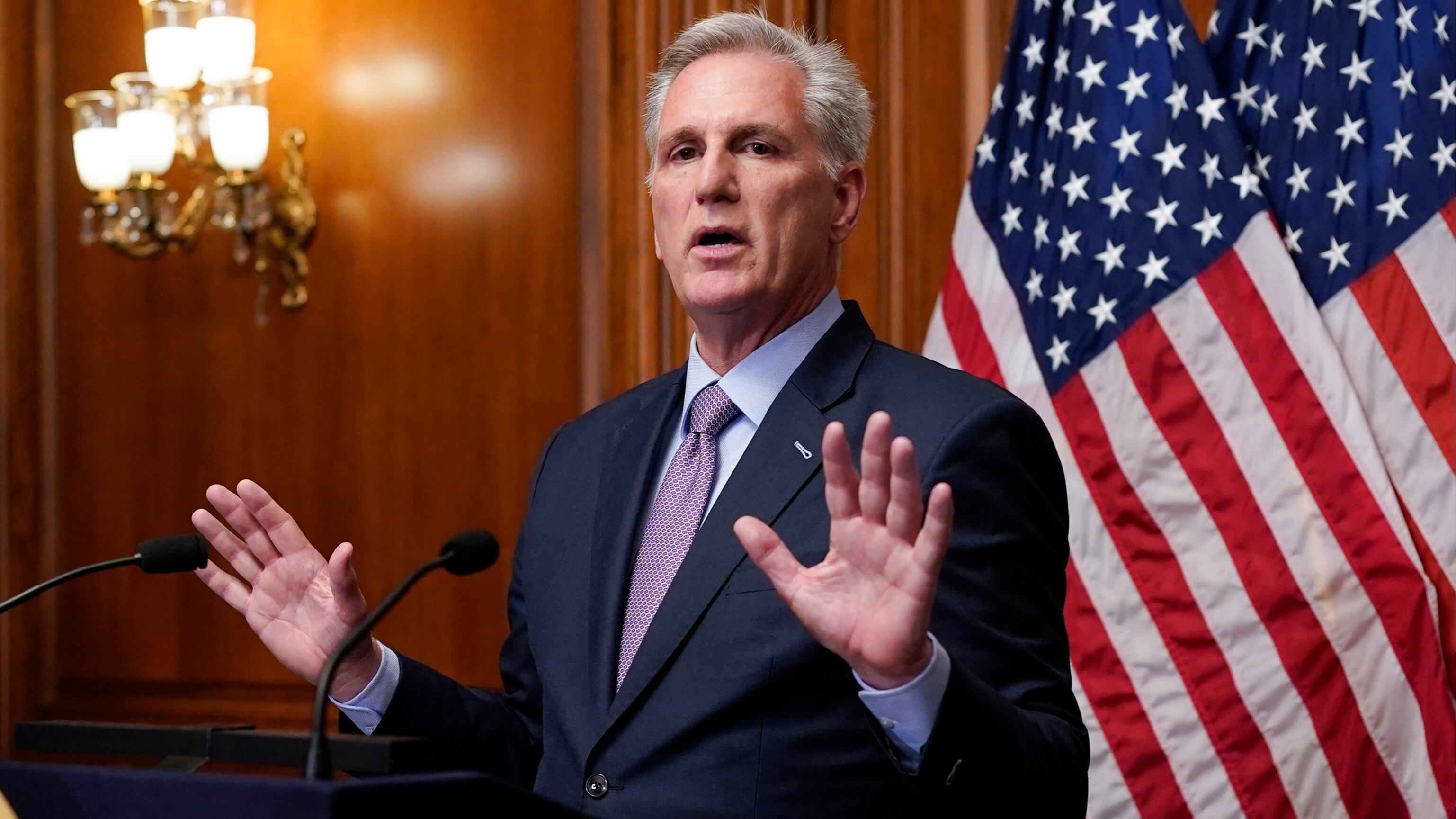
Former House Speaker Kevin McCarthy is still undecided about running for re-election.
Secret Service agents protecting President Joe Biden’s granddaughter opened fire after three people tried to break into an unmarked Secret Service vehicle in the nation’s capital, a law enforcement official told The Associated Press.
South Carolina Sen. Tim Scott has dropped out of the 2024 presidential race.
Former House Speaker Kevin McCarthy is undecided about running for re-election.
Thousands took to the streets in San Francisco to protest the kickoff of the Asia Pacific Economic Cooperations Summit.