By Michael R. Sisak
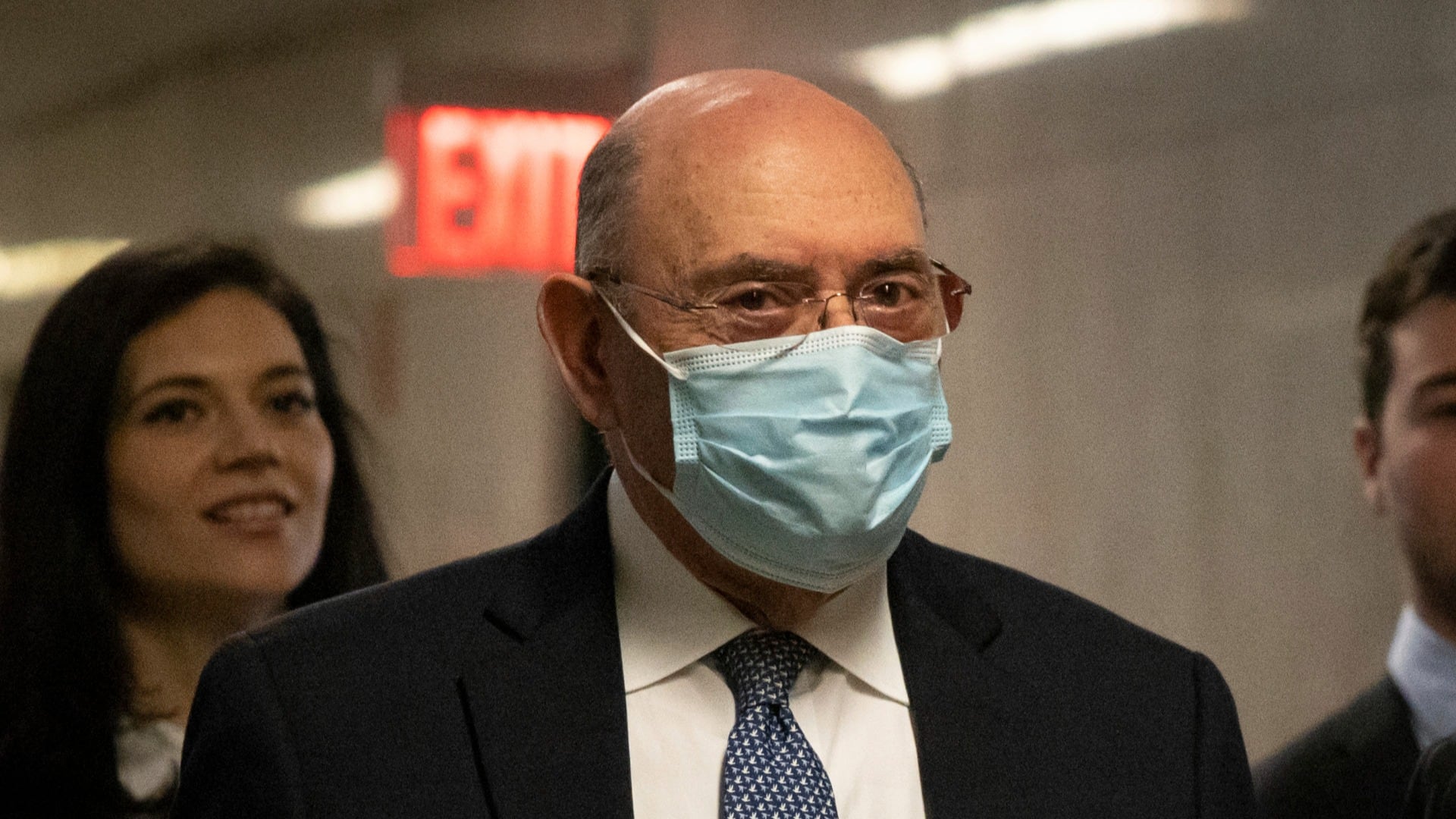
Allen Weisselberg, a longtime executive for Donald Trump ’s business empire whose testimony helped convict the former president’s company of tax fraud, was sentenced Tuesday to five months in jail for dodging taxes on $1.7 million in job perks.
Weisselberg, 75, was promised that sentence in August when he agreed to plead guilty to 15 tax crimes and to testify against the Trump Organization, where he’s worked since the mid-1980s and until his arrest, had served as chief financial officer.
He was handcuffed and taken into custody moments after the sentence was announced and was expected to be taken to New York City’s notorious Rikers Island jail complex. Weisselberg will be eligible for release after a little more than three months if he behaves behind bars.
As part of the plea agreement, Judge Juan Manuel Merchan also ordered Weisselberg to pay nearly $2 million in taxes, penalties and interest — which he has paid as of Jan. 3. Additionally, the judge ordered Weisselberg to complete five years of probation after his jail term is finished.
Weisselberg faced the prospect of up to 15 years in prison — the maximum punishment for the top grand larceny charge — if he were to have reneged on the deal or if he didn’t testify truthfully at the Trump Organization’s trial. He is the only person charged in the Manhattan district attorney’s three-year investigation of Trump and his business practices.
Weisselberg testified for three days, offering a glimpse into the inner workings of Trump’s real estate empire. Weisselberg has worked for Trump’s family for nearly 50 years, starting as an accountant for his developer father, Fred Trump, in 1973 before joining Donald Trump in 1986 and helping expand the family company's focus beyond New York City into a global golf and hotel brand.
Weisselberg told jurors he betrayed the Trump family’s trust by conspiring with a subordinate to hide more than a decade’s worth of extras from his income, including a free Manhattan apartment, luxury cars and his grandchildren’s private school tuition. He said they fudged payroll records and issued falsified W-2 forms.
A Manhattan jury convicted the Trump Organization in December, finding that Weisselberg had been a “high managerial” agent entrusted to act on behalf of the company and its various entities. Weisselberg’s arrangement reduced his own personal income taxes but also saved the company money because it didn’t have to pay him more to cover the cost of the perks.
Prosecutors said other Trump Organization executives also accepted off-the-books compensation. Weisselberg alone was accused of defrauding the federal government, state and city out of more than $900,000 in unpaid taxes and undeserved tax refunds.
The Trump Organization is scheduled to be sentenced on Friday and faces a fine of up to $1.6 million.
Weisselberg testified that neither Trump nor his family knew about the scheme as it was happening, choking up as he told jurors: “It was my own personal greed that led to this.” But prosecutors, in their closing argument, said Trump “knew exactly what was going on” and that evidence, such as a lease he signed for Weisselberg’s apartment, made clear “Mr. Trump is explicitly sanctioning tax fraud.”
A Trump Organization lawyer, Michael van der Veen, has said Weisselberg concocted the scheme without Trump or the Trump family’s knowledge.
Weisselberg said the Trumps remained loyal to him even as the company scrambled to end some of its dubious pay practices following Trump’s 2016 election. He said Trump’s eldest sons, entrusted to run the company while Trump was president, gave him a $200,000 raise after an internal audit found he had been reducing his salary and bonuses by the cost of the perks.
Though he is now on a leave of absence, the company continues to pay Weisselberg $640,000 in salary and $500,000 in holiday bonuses. It punished him only nominally after his arrest in July 2021, reassigning him to senior adviser and moving his office.
He even celebrated his 75th birthday at Trump Tower with cake and colleagues in August, just hours after finalizing the plea agreement that ushered his transformation from loyal executive to prosecution witness.
Rikers Island, a compound of 10 jails on a spit of land in the East River, just off the main runway at LaGuardia Airport in Queens, has been plagued in recent years by violence, inmate deaths and staggering staffing shortages.
Though just 5 miles (8 kilometers) from Trump Tower, it’s a veritable world away from the life of luxury Weisselberg schemed to build — a far cry from the gilded Fifth Avenue offices where he hatched his plot and the Hudson River-view apartment he reaped as a reward.
UPDATES: This story has been updated to combine new information.