By Lindsay Whitehurst
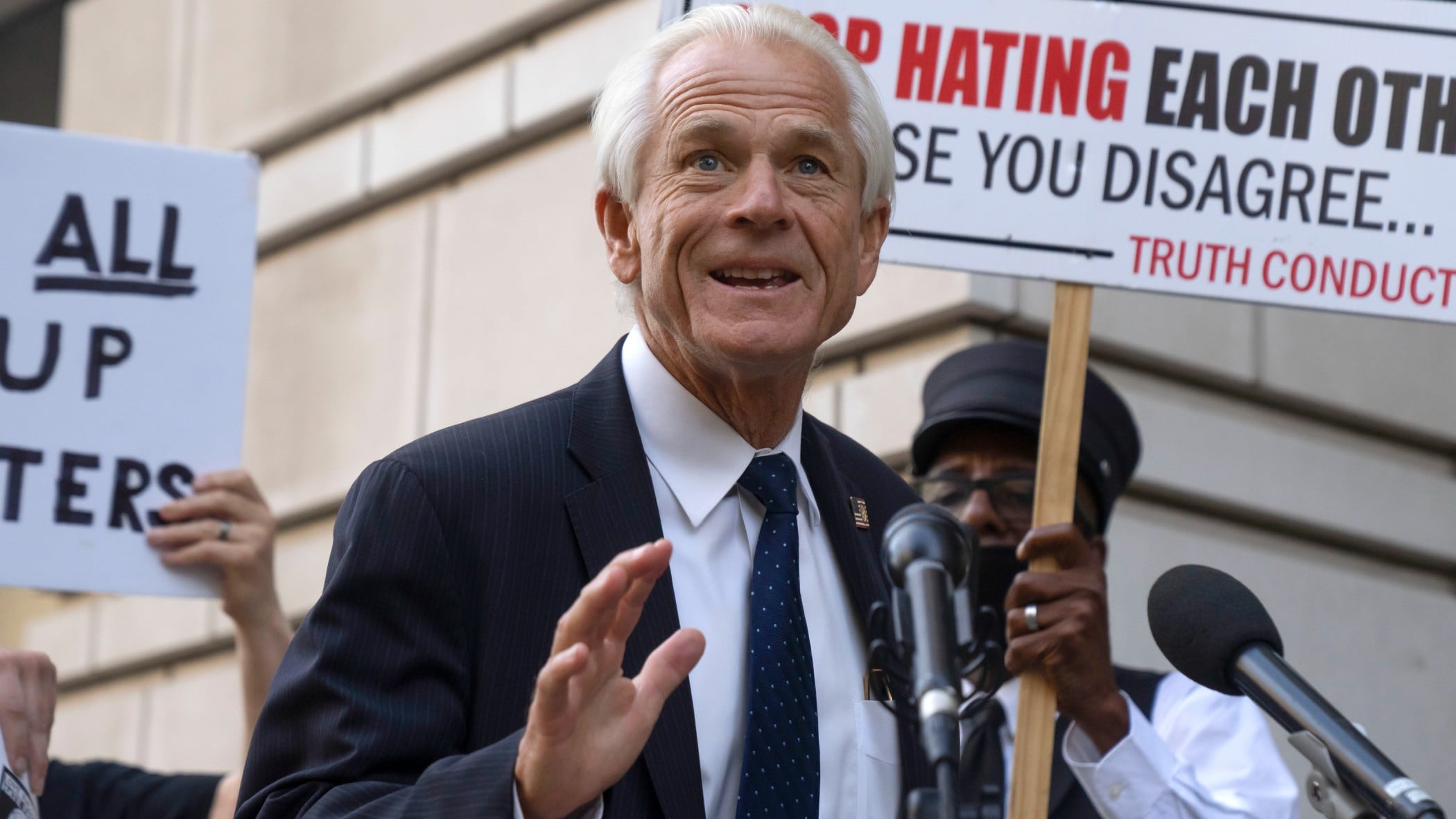
Trump White House official Peter Navarro was found guilty Thursday of contempt of Congress charges for refusing to cooperate with a congressional investigation into the Jan. 6, 2021, attack on the U.S. Capitol.
The verdict came after a short trial for Navarro, who served as a White House trade adviser under President Donald Trump and later promoted the Republican’s baseless claims of mass voter fraud in the 2020 election he lost.
Navarro was the second Trump aide to face contempt of Congress charges after former White House adviser Steve Bannon. Bannon was convicted of two counts and was sentenced to four months behind bars, though he has been free pending appeal.
Navarro vowed to appeal the verdict, saying the “die was cast” after a judge ruled that he couldn't fight the charges by arguing he couldn't cooperate with the committee because Trump had invoked executive privilege.
U.S. District Judge Amit Mehta found that Navarro didn't have enough evidence to show Trump had invoked it.
“This is a landmark case that’s bound for the Supreme Court,” Navarro said. Defense attorney John Rowley echoed that, saying “this case is not over by a long shot.”
Mehta scheduled Navarro's sentencing for Jan. 12. Navarro was convicted in Washington's federal courthouse of two misdemeanor counts of contempt of Congress, both punishable by up to a year behind bars.
The verdict came after a four-hour jury deliberation. After it was read, defense attorney Stanley Woodward moved for a mistrial, saying that the jurors had taken an outdoor break near where protesters and media regularly gather outside the courthouse and came back with a verdict shortly after. Mehta did not immediately rule, but said he would consider written arguments on the issue.
Prosecutors argued at trial that Navarro acted as if he were “above the law” when he defied a subpoena for documents and a deposition from the House Jan. 6 committee.
A defense attorney countered that Navarro didn’t purposely ignore the House Jan. 6 Committee. Navarro instead told staffers to contact Trump about what might be protected by executive privilege, something that didn’t happen, Woodward said.
Prosecutors, though, argued that even if Trump had invoked executive privilege, Navarro should have handed over what material he could and flagged any questions or documents believed to be protected. They said much of the material the committee sought was already publicly available.
“Peter Navarro made a choice. He chose not abide by the congressional subpoena,” prosecutor Elizabeth Aloi said. “The defendant chose allegiance to former President Donald Trump over compliance to the subpoena.”
Barred from relying on the executive privilege argument at trial, the defense argued that Navarro had not acted “willfully” or only out of loyalty to Trump.
“Do we know that his failure to comply beyond reasonable doubt wasn’t the result of accident, inadvertence or mistake?” Woodward said.
The House Jan. 6 committee finished its work in January, after a final report that said Trump criminally engaged in a “multi-part conspiracy” to overturn the lawful results of the 2020 election and failed to act to stop a mob of his supporters from attacking the Capitol.
Trump, meanwhile, faces a federal indictment in Washington, D.C., and a state indictment in Georgia over his efforts to overturn his 2020 election loss to Joe Biden, a Democrat. He has denied wrongdoing and has said he was acting within the law.