President Donald Trump answers questions from reporters during an event on protecting seniors with diabetes in the Rose Garden White House, Tuesday, May 26, 2020, in Washington. (AP Photo/Evan Vucci)
By Zeke Miller
President Donald Trump on Wednesday threatened social media companies with new regulations or even shuttering after Twitter added fact checks to two of his tweets.
The president can’t unilaterally regulate or close the companies, which would require action by Congress or the Federal Communications Commission. But that didn't stop Trump from angrily issuing strong warnings.
Claiming tech giants “silence conservative voices,” Trump tweeted early Wednesday, “We will strongly regulate, or close them down, before we can ever allow this to happen.” Later he tweeted without elaboration, “Big Action to follow.”
He repeated his unsubstantiated claim — which sparked his latest showdown with Silicon Valley — that expanding mail-in voting “would be a free for all on cheating, forgery and the theft of Ballots.”
There was no immediate reaction from Twitter or other social media companies to the president’s threats.
Trump and his campaign had lashed out Tuesday after Twitter added a warning phrase to two Trump tweets that called mail-in ballots “fraudulent” and predicted that “mail boxes will be robbed,” among other things. Under the tweets, there is now a link reading “Get the facts about mail-in ballots” that guides users to a Twitter “moments” page with fact checks and news stories about Trump’s unsubstantiated claims.
Trump replied on Twitter, accusing the platform of “interfering in the 2020 Presidential Election” and insisting that “as president, I will not allow this to happen.” His 2020 campaign manager, Brad Parscale, said Twitter’s “clear political bias” had led the campaign to pull “all our advertising from Twitter months ago.” Twitter has banned all political advertising since last November.
Trump did not explain his threat Wednesday, and the call to expand regulation appeared to fly in the face of long-held conservative principles on deregulation.
But some Trump allies, who have alleged bias on the part of tech companies, have questioned whether platforms like Twitter and Facebook should continue to enjoy liability protections as “platforms” under federal law — or be treated more like publishers, which can face lawsuits over content.
The protections have been credited with allowing the unfettered growth of the internet for more than two decades, but now some Trump allies are advocating that social media companies face more scrutiny.
“Big tech gets a huge handout from the federal government," Republican Sen. Josh Hawley told Fox News. “They get this special immunity, this special immunity from suits and from liability that’s worth billions of dollars to them every year. Why are they getting subsidized by federal taxpayers to censor conservatives, to censor people critical of China?”
There was no immediate reaction from Twitter or other social media companies to the president's threats.
Cryptocurrency platform Blockchain.com launched margin trading on its exchange earlier this month. The company's Chief Business Officer, Lane Kasselman, joins Cheddar News' Closing Bell, where he discusses how margin trading works in the crypto space and what users will be able to do on the platform.
Apple reported strong fourth quarter earnings, but sales fell below expectations. CEO Tim Cook said chip shortages and manufacturing delays cost the company $6 billion. The issues have led to the newly-launched iPhone 13 Pro being in short supply around the world, as well as to back orders for Apple's new Macbook Pro. Exponential Investment Partners Managing Partner Kevin Riley joined Cheddar News' Closing Bell to discuss.
Electric bike company Dance recently raised $19.4 million, just weeks after rolling out its e-bike subscription service in Berlin. Dance allows users to subscribe to use an e-bike for around €79, or about $91, a month. Dance says its subscription model allows the company to reuse and refurbish its products, and further its mission to build more sustainable and livable cities. Dance founder and CEO Eric Quidenus-Wahlforss joined Cheddar News' Closing Bell to discuss.
Project management platform ClickUp raised $400 million in Series C funding this week, and founder and CEO Zeb Evans joined Cheddar's "Closing Bell" to talk about taking the added funds to help make the workplace more efficient by being a one-stop-shop for office needs. He also discussed a growing demand for his company's services during the pandemic as companies seek solutions to keep their employees on the same page.
How much real money would you pay for a virtual plot of land? Developing technology is introducing everyone in the real world to new, virtual worlds, like Decentraland. In this metaverse economy, users are buying virtual real estate at high value – and it’s not just the average Joe that’s looking to invest. Company's like Facebook are betting big.
The dating app Hinge says it's taking online dating to the next level by introducing a voice prompt feature for profiles. Michelle Parsons, chief product officer, joined Cheddar to talk about providing the question prompts for users to make accounts more personable in their own voice. She also went into how much the pandemic has had an impact on engagement.
Evelyn Webster, CEO of SoulCycle, talked to Cheddar's Michelle Castillo about how the company, known for its beloved spin classes, has evolved during the pandemic. It now offers stationary bikes for at-home workouts, similar to Peloton, but as restrictions lift, the chain is seeing riders come back in "full force." Webster says that has been a boon as people realized that they want flexibility in their workout options. "I think we'll continue to see consumers, riders, want a blended fitness and well-being experience at their own convenience, and that's why this multi-channel strategy is such an important pillar of SoulCycle's growth strategy."
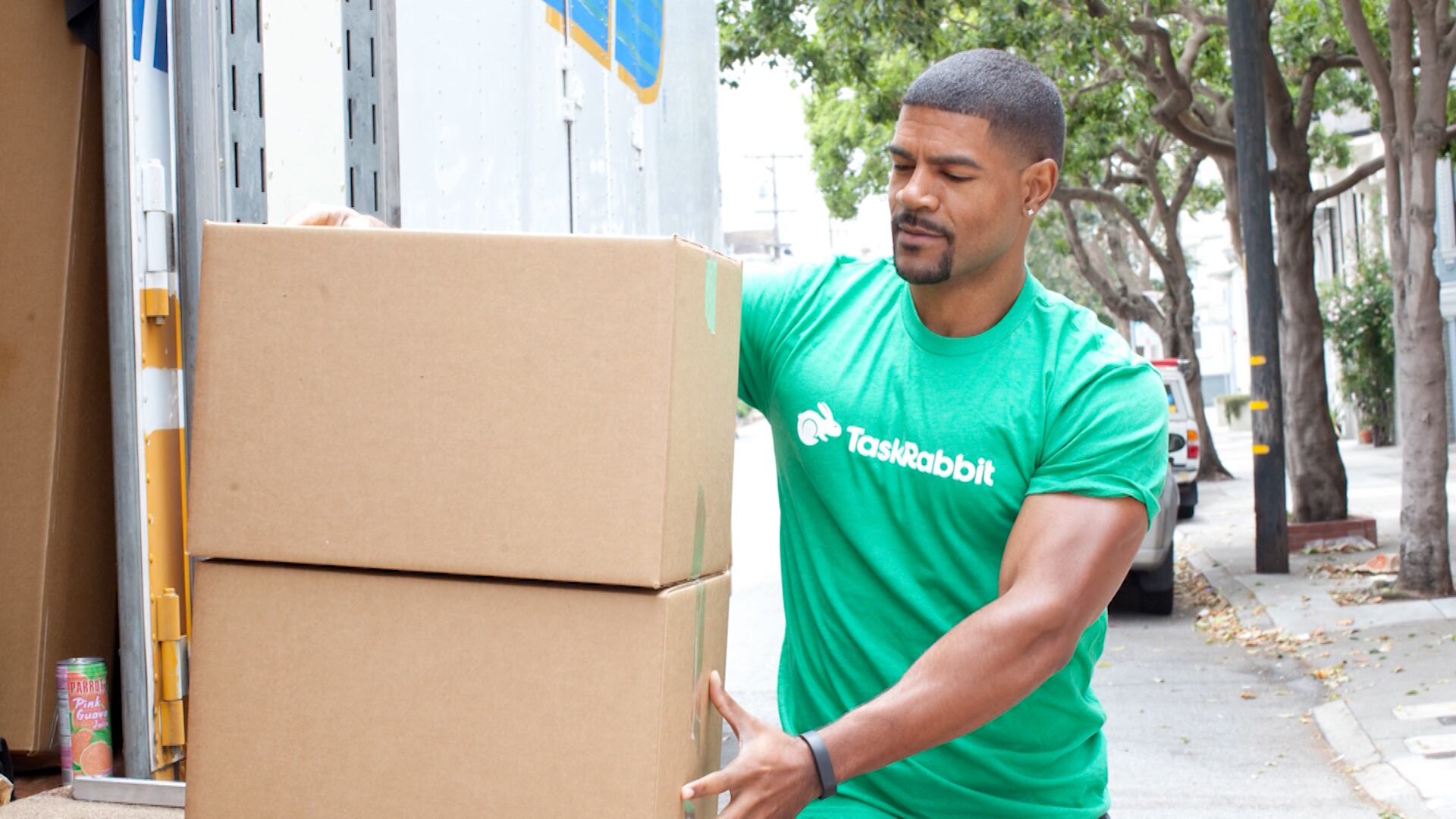
On this episode of 'Your Future Home', Ania Smith, TaskRabbit CEO, discusses TaskRabbit's recent revenue growth, how the company is increasing their taskers' earning potential, and its potential for greater global expansion.; Aaron Wagner, a former football player turned self-made real estate investor & Founder and Managing Partner of Wags Capital, breaks down the best first steps the average investor can take into the realm of real estate, and how wholesaling can be a smart investment.; Cheddar breaks down all the tips, tricks, and things to look out for when buying your first home.
Aaron Wagner, a former football player turned self-made real estate investor & Founder and Managing Partner of Wags Capital, joins 'Your Future Home' to help break down the best first steps the average investor can take into the realm of real estate, and how wholesaling can be a smart investment.
Ania Smith, TaskRabbit CEO, joins 'Your Future Home' to discuss TaskRabbit's recent revenue growth, how the company is increasing their taskers' earning potential, and its potential for greater global expansion.