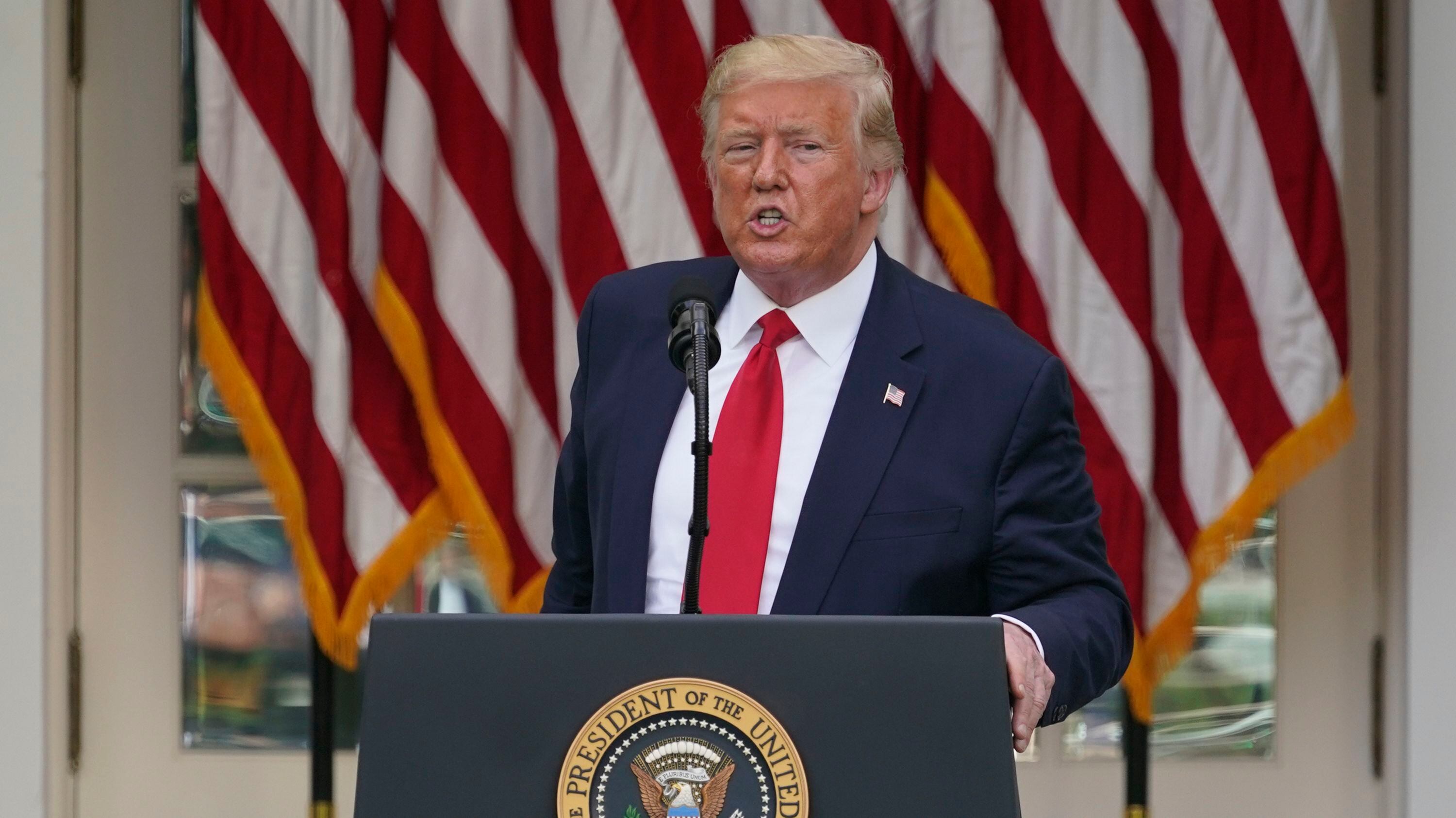
President Donald Trump answers questions from reporters during an event on protecting seniors with diabetes in the Rose Garden White House, Tuesday, May 26, 2020, in Washington. (AP Photo/Evan Vucci)
By Zeke Miller
President Donald Trump on Wednesday threatened social media companies with new regulations or even shuttering after Twitter added fact checks to two of his tweets.
The president can’t unilaterally regulate or close the companies, which would require action by Congress or the Federal Communications Commission. But that didn't stop Trump from angrily issuing strong warnings.
Claiming tech giants “silence conservative voices,” Trump tweeted early Wednesday, “We will strongly regulate, or close them down, before we can ever allow this to happen.” Later he tweeted without elaboration, “Big Action to follow.”
He repeated his unsubstantiated claim — which sparked his latest showdown with Silicon Valley — that expanding mail-in voting “would be a free for all on cheating, forgery and the theft of Ballots.”
There was no immediate reaction from Twitter or other social media companies to the president’s threats.
Trump and his campaign had lashed out Tuesday after Twitter added a warning phrase to two Trump tweets that called mail-in ballots “fraudulent” and predicted that “mail boxes will be robbed,” among other things. Under the tweets, there is now a link reading “Get the facts about mail-in ballots” that guides users to a Twitter “moments” page with fact checks and news stories about Trump’s unsubstantiated claims.
Trump replied on Twitter, accusing the platform of “interfering in the 2020 Presidential Election” and insisting that “as president, I will not allow this to happen.” His 2020 campaign manager, Brad Parscale, said Twitter’s “clear political bias” had led the campaign to pull “all our advertising from Twitter months ago.” Twitter has banned all political advertising since last November.
Trump did not explain his threat Wednesday, and the call to expand regulation appeared to fly in the face of long-held conservative principles on deregulation.
But some Trump allies, who have alleged bias on the part of tech companies, have questioned whether platforms like Twitter and Facebook should continue to enjoy liability protections as “platforms” under federal law — or be treated more like publishers, which can face lawsuits over content.
The protections have been credited with allowing the unfettered growth of the internet for more than two decades, but now some Trump allies are advocating that social media companies face more scrutiny.
“Big tech gets a huge handout from the federal government," Republican Sen. Josh Hawley told Fox News. “They get this special immunity, this special immunity from suits and from liability that’s worth billions of dollars to them every year. Why are they getting subsidized by federal taxpayers to censor conservatives, to censor people critical of China?”
There was no immediate reaction from Twitter or other social media companies to the president's threats.
JetBlue Travel Products is launching flight and cruise packages, making JetBlue the first domestic U.S. airline to offer customers the ability to book their flight, cruise and hotel all in one place. The new cruise packages with Royal Caribbean International, Celebrity Cruises and Carnival Cruise Line offer customers a chance to save time and money by bundling their travel purchases, with all parts of their journey backed by JetBlue’s signature service. Andres Barry, president of JTP, joined Cheddar to discuss these new offerings and how it will help establish the airline as a broader travel company.
Amazon plans to launch its first prototype satellites for Project Kuiper, an internet-from-space venture, in 2022. It's the first major step in the e-commerce giant's plan to rival SpaceX by building a network of satellites in space, providing internet to rural, underserved communities around the world. Loren Grush, senior science reporter for the Verge, discusses the project and how it could transform internet access moving forward.
While Facebook didn't unveil a name change in its Q3 results, it did reveal a new reporting structure, separating its revenue into two separate businesses: its slate of social networking apps, and Facebook reality labs.
This distinction comes as Facebook continues to ramp up its augmented and virtual reality efforts as it plots its foray into the metaverse. Angelo Zino, Senior Industry Analyst, CFRA Research, joined Cheddar's Opening Bell to discuss.
Logitech reported a record quarter, with sales up 82 percent since the same period two years ago. It comes as the company continues to benefit from current market trends including working and learning from anywhere, video everywhere, and the popularity of gaming. Bracken Darrel, CEO, Logitech, joined Cheddar's Opening Bell.
President Biden expected to unveil details on a Covid-19 vaccine mandate for businesses in coming days.
This comes just days after The White House issued separate vaccine mandates for federal contractors across the country. Mark Kluger, Founding Partner, employment law firm Kluger Healey joined Cheddar's Opening Bell to discuss.
Christie's has announced the sale of Beeple's first ever physical artwork and video NFT called 'Human One.' The hybrid piece is expected to fetch over $15 million at its upcoming auction. Noah Davis, Christie's Head of Digital Art joined Cheddar's Opening Bell.
The U.S. is introducing a new travel system on November 8, opening up our borders to millions of international visitors. But, it will make reentry more difficult for unvaccinated Americans and reinforce the Biden administration's efforts to increase vaccinations. Adit Damodaran, economist at the travel app Hopper, lays out the new policy and what travelers can expect to pay for airfare this holiday season.
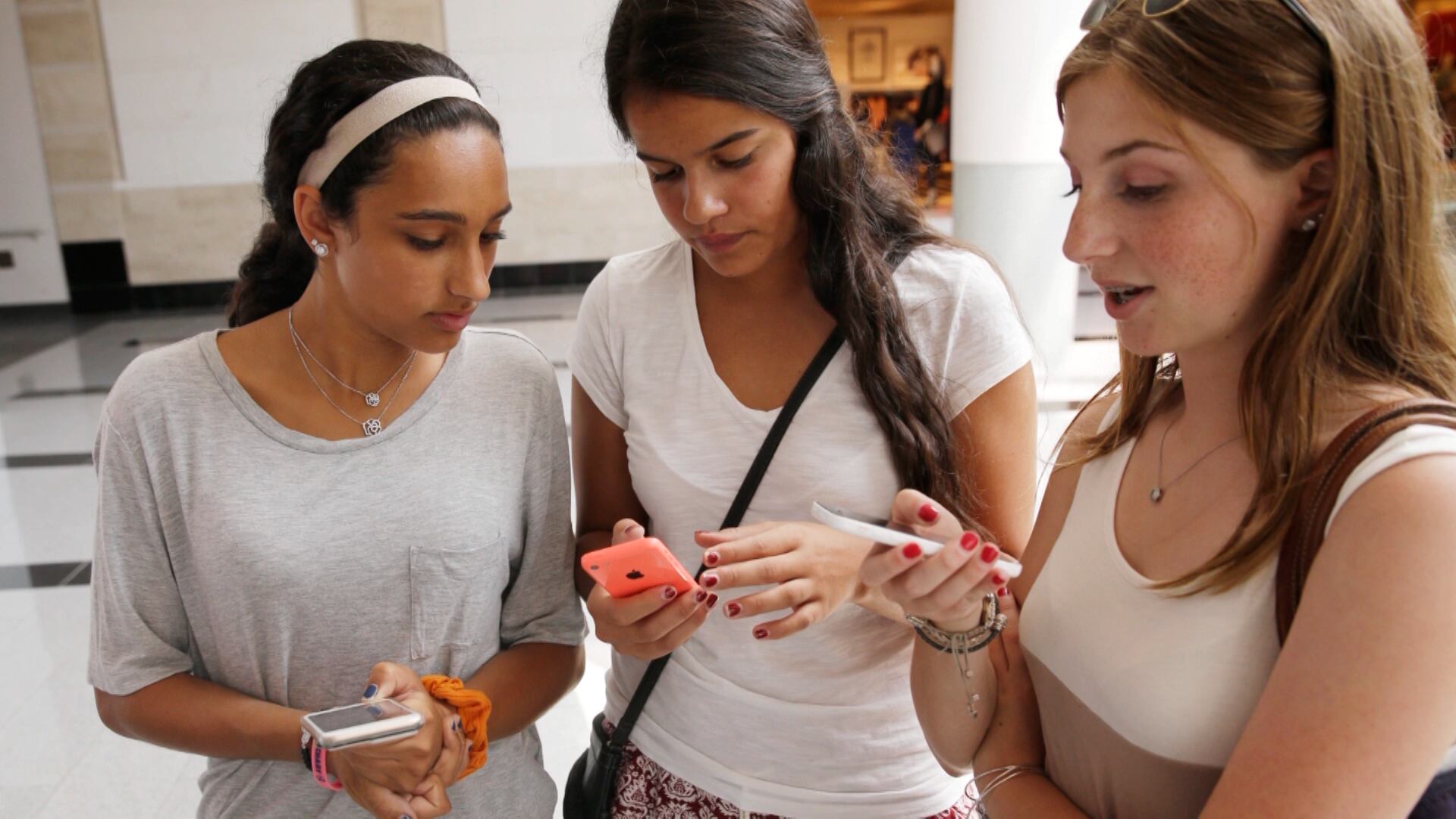
Later today House Republicans will grill Snap, Tiktok and Youtube on how their products affect the mental health of teenagers. It comes after a report revealed that Facebook's photo sharing platform, Instagram, can be harmful to teen's mental health. Rishi Bharwani, Director of Partnerships and Policy, Accountable Tech joined Cheddar's Opening Bell to discuss.
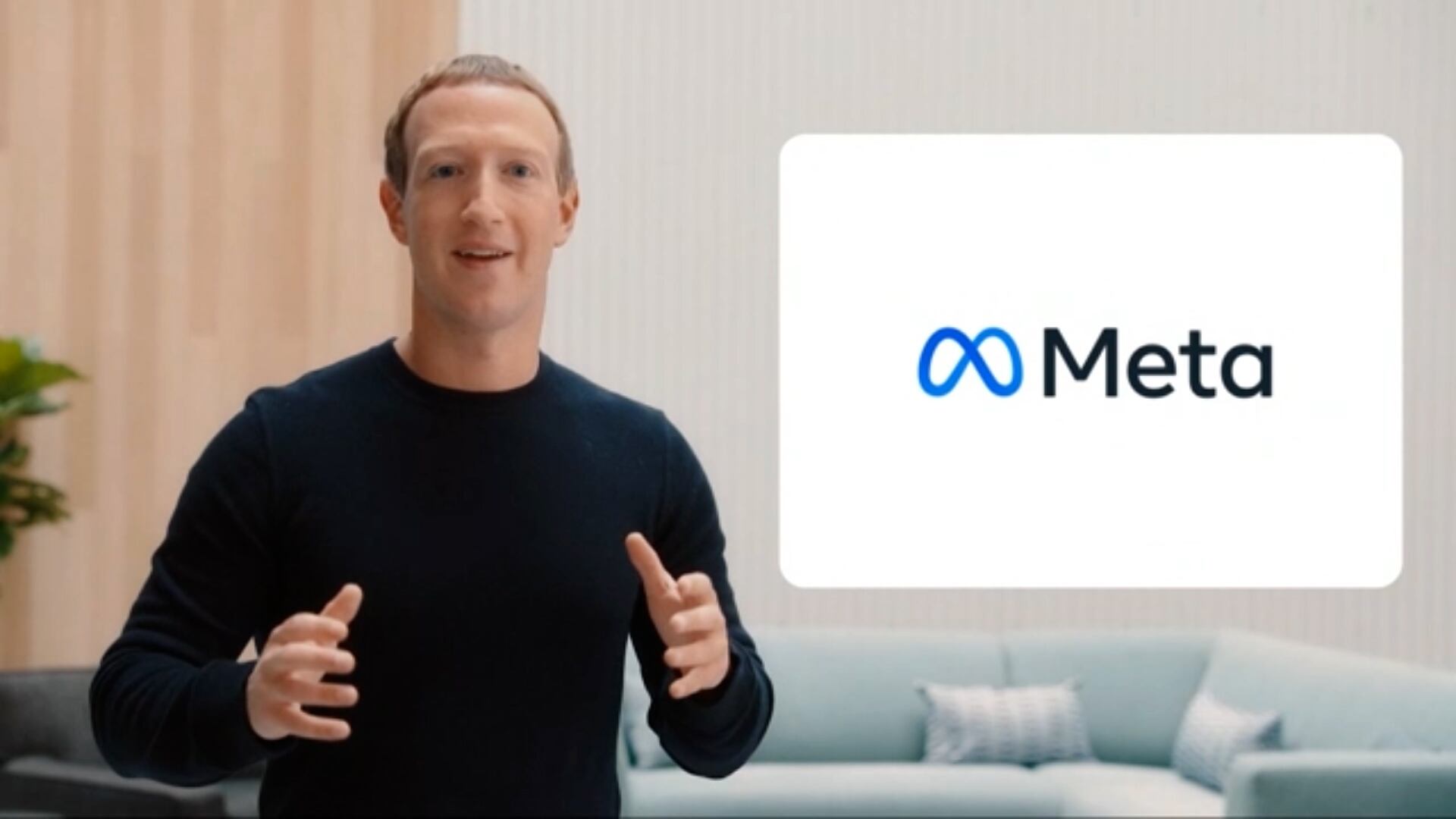
Facebook is changing its company name to Meta. The social media giant is rebranding itself to focus on building the metaverse, a futuristic, immersive experience that would allow people to interact virtually on a daily basis. Steve Sosnick, Interactive Brokers' Chief Strategist, joined Cheddar to discuss the implications of the metaverse and why Facebook is making the move now.
As the White House and Congressional leaders work towards finalizing the legislative framework of the Build Back Better budget deal, paid family leave, one of the hallmarks of President Joe Biden's Social Safety Net agenda, still stands in flux. Molly Day, Executive Director, Paid Leave for the U.S. joined Cheddar's Opening Bell to discuss why the finalization of this bill is imperative.