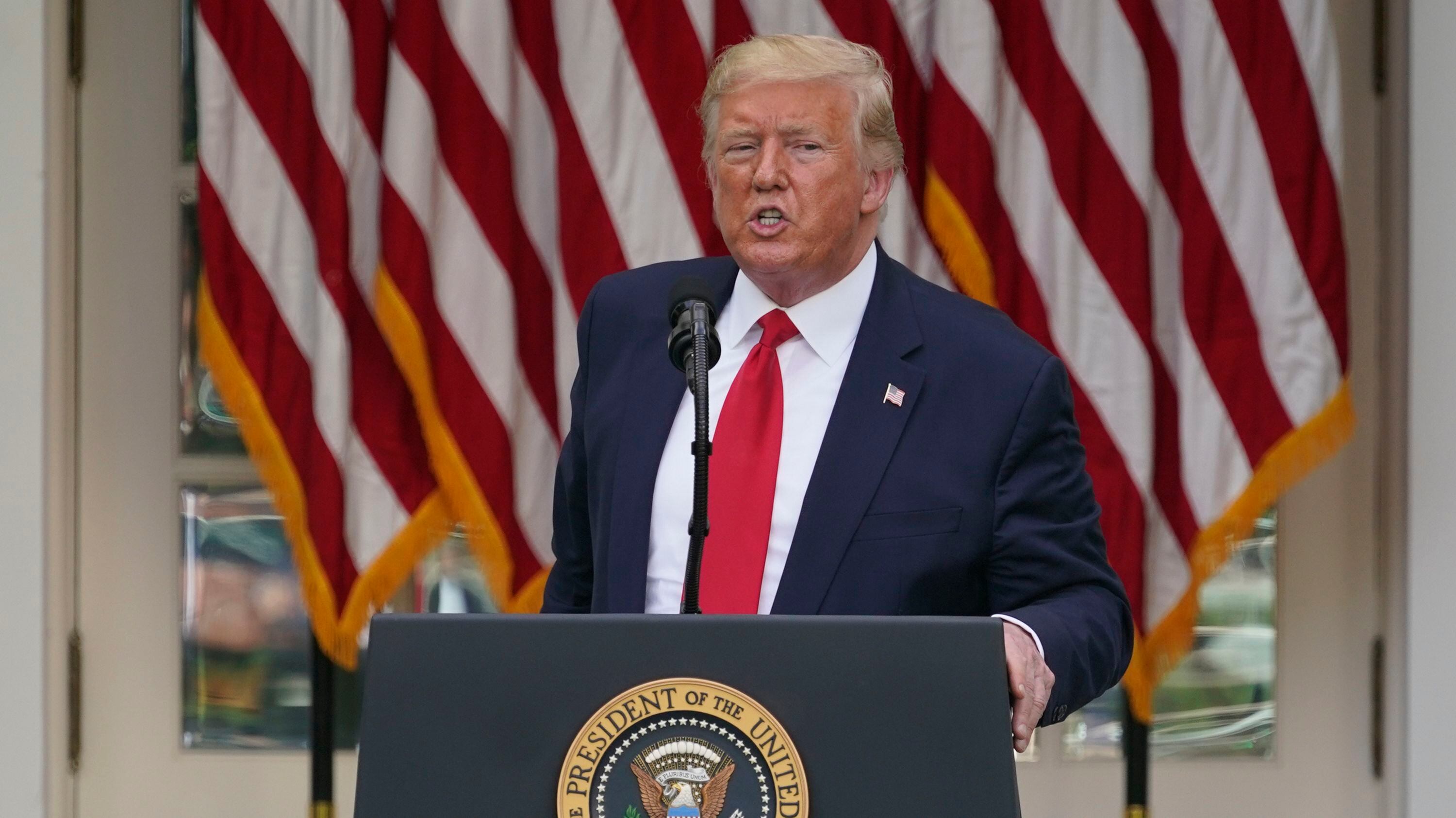
President Donald Trump answers questions from reporters during an event on protecting seniors with diabetes in the Rose Garden White House, Tuesday, May 26, 2020, in Washington. (AP Photo/Evan Vucci)
By Zeke Miller
President Donald Trump on Wednesday threatened social media companies with new regulations or even shuttering after Twitter added fact checks to two of his tweets.
The president can’t unilaterally regulate or close the companies, which would require action by Congress or the Federal Communications Commission. But that didn't stop Trump from angrily issuing strong warnings.
Claiming tech giants “silence conservative voices,” Trump tweeted early Wednesday, “We will strongly regulate, or close them down, before we can ever allow this to happen.” Later he tweeted without elaboration, “Big Action to follow.”
He repeated his unsubstantiated claim — which sparked his latest showdown with Silicon Valley — that expanding mail-in voting “would be a free for all on cheating, forgery and the theft of Ballots.”
There was no immediate reaction from Twitter or other social media companies to the president’s threats.
Trump and his campaign had lashed out Tuesday after Twitter added a warning phrase to two Trump tweets that called mail-in ballots “fraudulent” and predicted that “mail boxes will be robbed,” among other things. Under the tweets, there is now a link reading “Get the facts about mail-in ballots” that guides users to a Twitter “moments” page with fact checks and news stories about Trump’s unsubstantiated claims.
Trump replied on Twitter, accusing the platform of “interfering in the 2020 Presidential Election” and insisting that “as president, I will not allow this to happen.” His 2020 campaign manager, Brad Parscale, said Twitter’s “clear political bias” had led the campaign to pull “all our advertising from Twitter months ago.” Twitter has banned all political advertising since last November.
Trump did not explain his threat Wednesday, and the call to expand regulation appeared to fly in the face of long-held conservative principles on deregulation.
But some Trump allies, who have alleged bias on the part of tech companies, have questioned whether platforms like Twitter and Facebook should continue to enjoy liability protections as “platforms” under federal law — or be treated more like publishers, which can face lawsuits over content.
The protections have been credited with allowing the unfettered growth of the internet for more than two decades, but now some Trump allies are advocating that social media companies face more scrutiny.
“Big tech gets a huge handout from the federal government," Republican Sen. Josh Hawley told Fox News. “They get this special immunity, this special immunity from suits and from liability that’s worth billions of dollars to them every year. Why are they getting subsidized by federal taxpayers to censor conservatives, to censor people critical of China?”
There was no immediate reaction from Twitter or other social media companies to the president's threats.
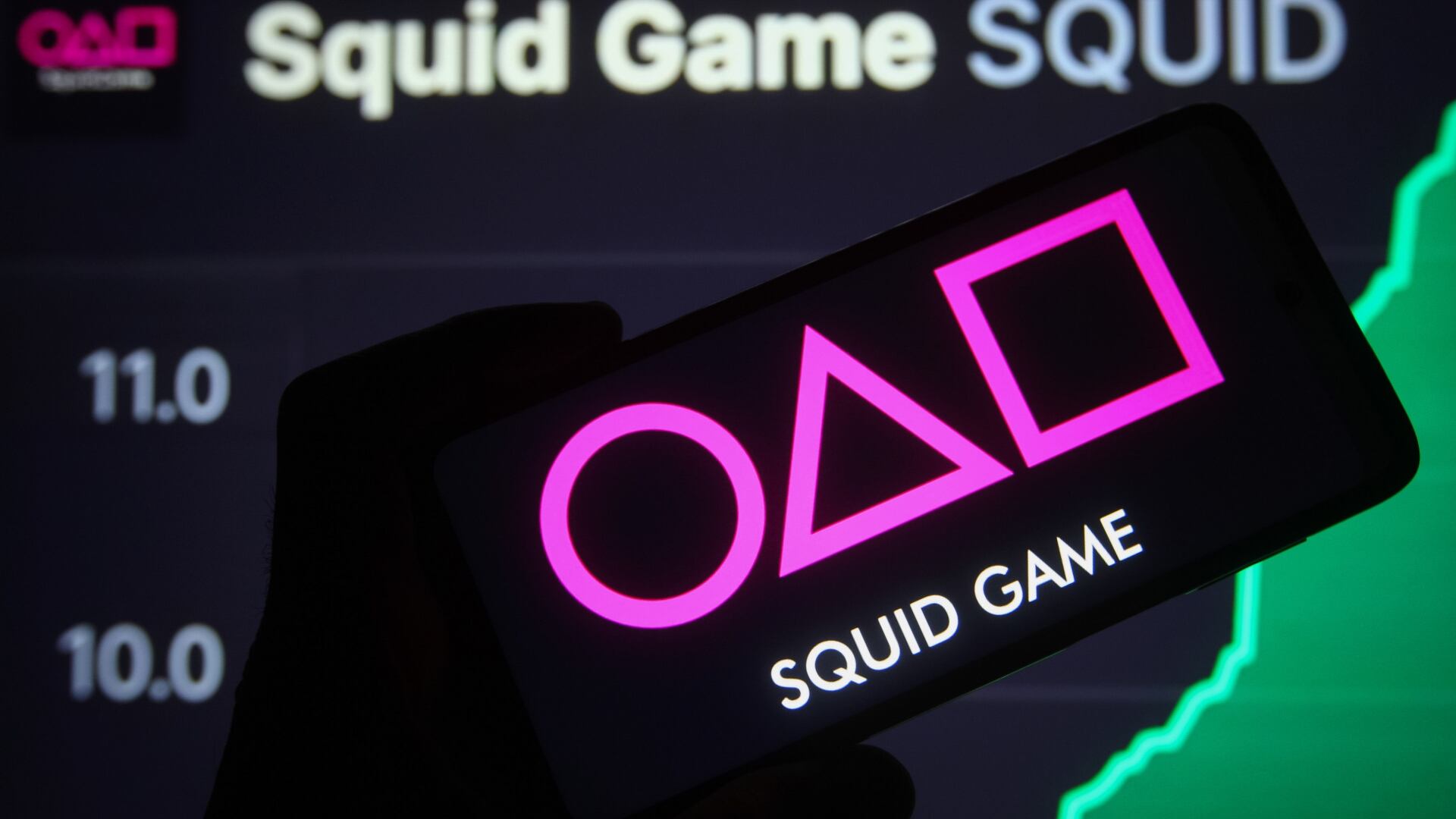
Earlier this week, crypto investors who got in on a 'Squid Game'-inspired coin were shocked when the asset turned out to be part of a scam. The people involved made off with close to $3 million after the Netflix-inspired coin's valuation went from $0.01 to $3,000 and back down to $0 within several days. CoinDesk Anchor Christine Lee joins Cheddar News' Closing Bell to discuss the pump-and-dump scheme, how investors can be on the lookout for similar scams, and what crypto platform Binance is doing to investigate the incident.
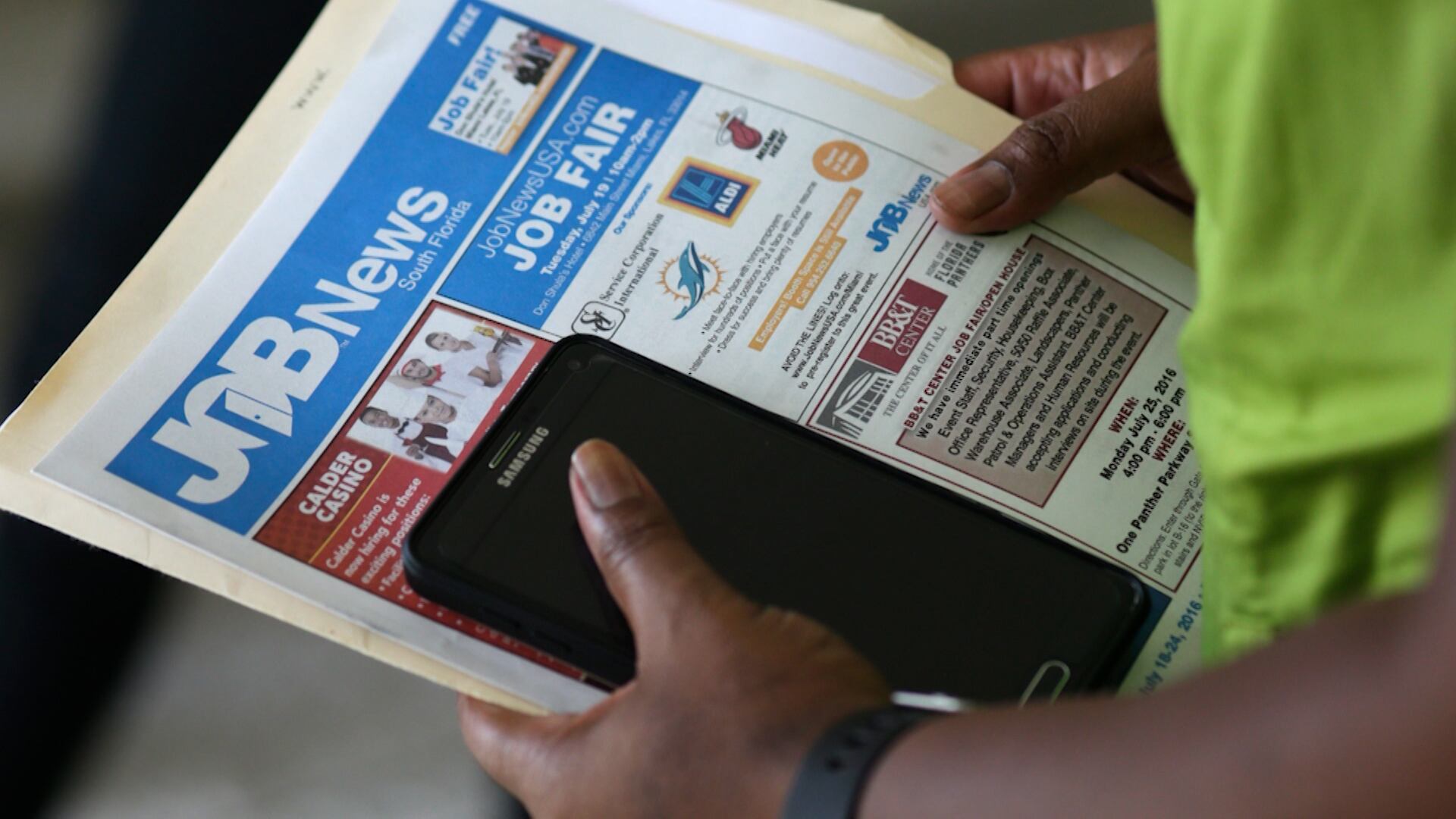
Nela Richardson, Chief Economist at ADP, joins Cheddar News' Closing Bell, where he discusses the sector growth in the October Jobs report, and how labor shortages and wage growth will impact the economy going forward.
More American tech companies continue to pull their businesses out of China as the Communist Party cracks down on firms — both foreign and domestic. Yahoo and Fortnite have become the latest companies to withdraw from the country, and the withdrawals come just days after Microsoft announced it would take LinkedIn offline. Shehzad Qazi, managing director at China Beige Book International, joined Cheddar to provide some insight into how the crackdowns in China would also impact the tech companies at home in the United States.
Yelp reported Q3 earnings on Thursday, matching its best quarterly performance in company history, according to CFO David Schwarzbach who joined Cheddar's "Between Bells" to break down the report and business forecast. He also talked about the impact that the pandemic has had on marketing campaigns on the platform and noted that while service pros are doing well, campaigns for restaurants, retail, and other sectors continue to face challenges.
Beatriz Acevedo, CEO of Suma Wealth, discusses the challenges in building financial habits among Hispanic youths and talks about how the company will be prioritizing funds from its recent $2 million raise.
Sian Morson, founder and editor of The Blkchain, talks about the challenges digital artists of color face getting opportunities to advance their careers and ways NFTs are redistributing wealth.
Planet Fitness CEO Chris Rondeau joined Cheddar's "Opening Bell" to talk about the gym chain's Q3 earnings beat. He said while home workouts have sufficed for people amid the pandemic, they are not a substitute for in-person workouts in facilities such as their own. "Now that people can get out and go about their day as their normal life, I think we're now reaping the benefits of people getting out to being normal again," he said.
A new report out by the Center for Countering Digital Hate shows how just ten publishers are responsible for the bulk of climate change misinformation on social media--and companies like Facebook and Google are making money off them. Imran Ahmed, CEO of the Center for Countering Digital Hate, joined Cheddar to discuss.
Many are celebrating Marvel's 'Eternals,' the most diverse film the company has ever made. CAPE has teamed up with other nonprofits to launch the #oneopen campaign, tied to the Eternals, which aims to support and amplify films led by diverse talent. Michelle Sugihara, the Executive Director of CAPE, joined Cheddar to discuss.
A recent token called 'SQUID' which was developed after the Netflix series Squid Games has now cost several investors to lose their investments. According to Gizmodo, the developers have now walked off with $3.3 Million thanks to them not allowing buyers to sell any of their coins. The question now is: How can one protect themselves from being caught up in any crypto scams? The Host of the O Show Wendy O, joined Cheddar to discuss more.