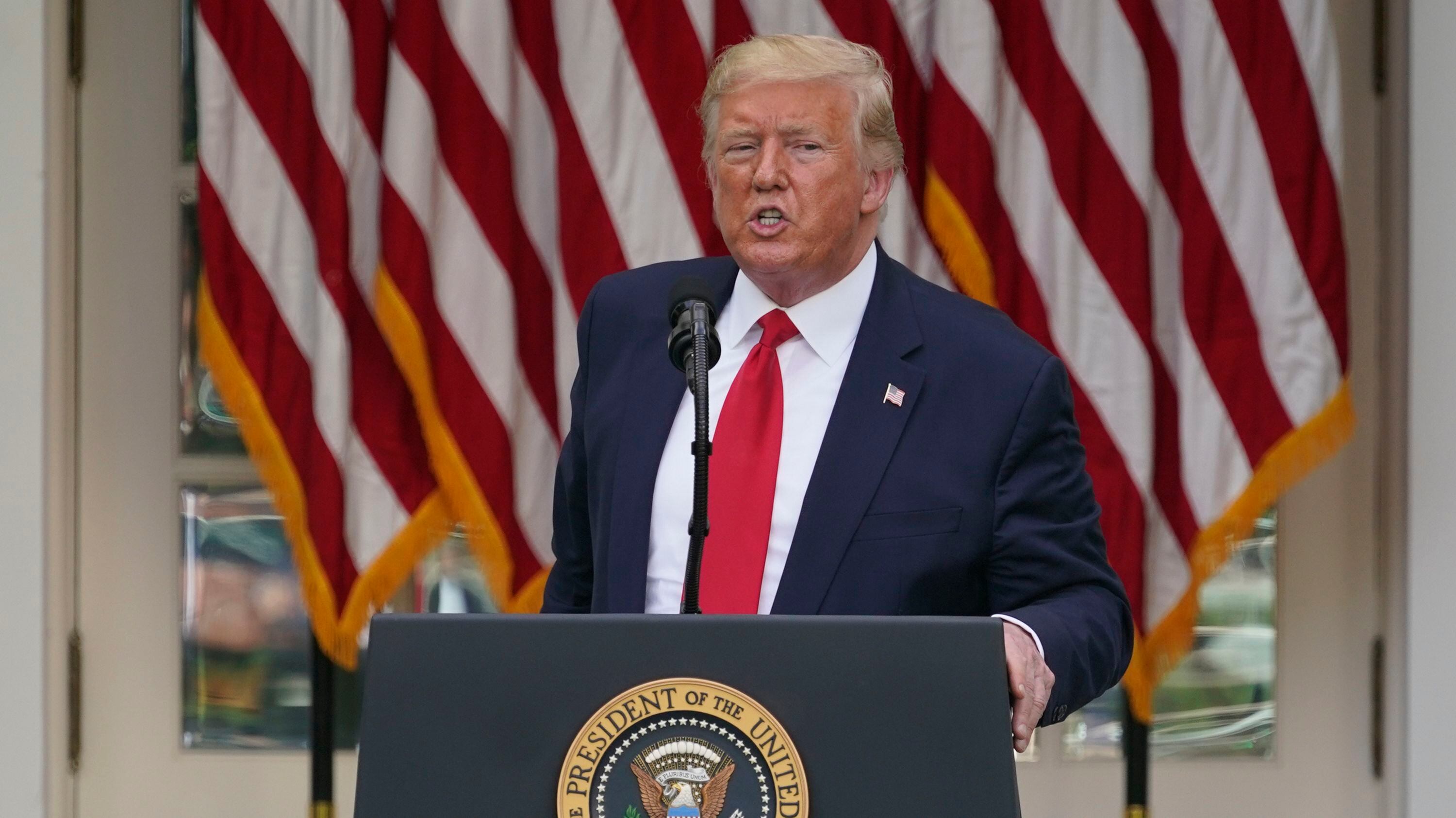
President Donald Trump answers questions from reporters during an event on protecting seniors with diabetes in the Rose Garden White House, Tuesday, May 26, 2020, in Washington. (AP Photo/Evan Vucci)
By Zeke Miller
President Donald Trump on Wednesday threatened social media companies with new regulations or even shuttering after Twitter added fact checks to two of his tweets.
The president can’t unilaterally regulate or close the companies, which would require action by Congress or the Federal Communications Commission. But that didn't stop Trump from angrily issuing strong warnings.
Claiming tech giants “silence conservative voices,” Trump tweeted early Wednesday, “We will strongly regulate, or close them down, before we can ever allow this to happen.” Later he tweeted without elaboration, “Big Action to follow.”
He repeated his unsubstantiated claim — which sparked his latest showdown with Silicon Valley — that expanding mail-in voting “would be a free for all on cheating, forgery and the theft of Ballots.”
There was no immediate reaction from Twitter or other social media companies to the president’s threats.
Trump and his campaign had lashed out Tuesday after Twitter added a warning phrase to two Trump tweets that called mail-in ballots “fraudulent” and predicted that “mail boxes will be robbed,” among other things. Under the tweets, there is now a link reading “Get the facts about mail-in ballots” that guides users to a Twitter “moments” page with fact checks and news stories about Trump’s unsubstantiated claims.
Trump replied on Twitter, accusing the platform of “interfering in the 2020 Presidential Election” and insisting that “as president, I will not allow this to happen.” His 2020 campaign manager, Brad Parscale, said Twitter’s “clear political bias” had led the campaign to pull “all our advertising from Twitter months ago.” Twitter has banned all political advertising since last November.
Trump did not explain his threat Wednesday, and the call to expand regulation appeared to fly in the face of long-held conservative principles on deregulation.
But some Trump allies, who have alleged bias on the part of tech companies, have questioned whether platforms like Twitter and Facebook should continue to enjoy liability protections as “platforms” under federal law — or be treated more like publishers, which can face lawsuits over content.
The protections have been credited with allowing the unfettered growth of the internet for more than two decades, but now some Trump allies are advocating that social media companies face more scrutiny.
“Big tech gets a huge handout from the federal government," Republican Sen. Josh Hawley told Fox News. “They get this special immunity, this special immunity from suits and from liability that’s worth billions of dollars to them every year. Why are they getting subsidized by federal taxpayers to censor conservatives, to censor people critical of China?”
There was no immediate reaction from Twitter or other social media companies to the president's threats.
After a year hiatus due to COVID, the LA Auto Show is back in-person from November 19-28. The event will feature automakers from around the world as they introduce their latest concepts and production vehicles. David Fortin, head of consumer marketing for the LA Auto Show, joins Cheddar News to preview the event.
The major markets took a breather Tuesday, with the Dow, S&P, Nasdaq, and Russell 2000 all finishing lower after notching record closes on Monday. Rhys Williams, Chief Strategist at Spouting Rock Asset Management, joins Cheddar News' Closing Bell, where he provides his biggest takeaways from the day's activity.
As major social media and tech companies like Facebook and Microsoft announce plans for metaverse technology, chipmakers like Nvidia, AMD, Intel, and more stand to benefit as the technology rolls out and evolves. But who will take the lead and benefit the most? Paul Meeks, Portfolio Manager at Independent Solutions Wealth Management, joins Cheddar News' Closing Bell to discuss the metaverse chipmaker race, who could come out on top, the timeline of how this sector will heat up, and more.
Jason Moser, Senior Analyst at The Motley Fool, breaks down AMC's third quarter earnings and discusses the future of the theater chain despite low ticket sales.
IBM's spinoff, Kyndryl, is officially an independent public company. The $19 billion business is now listed on the NYSE under the ticker KD, becoming one of the largest players in the IT services market. David Wyshner, CFO of Kyndryl, joined Cheddar to discuss what this milestone means for the company moving forward.
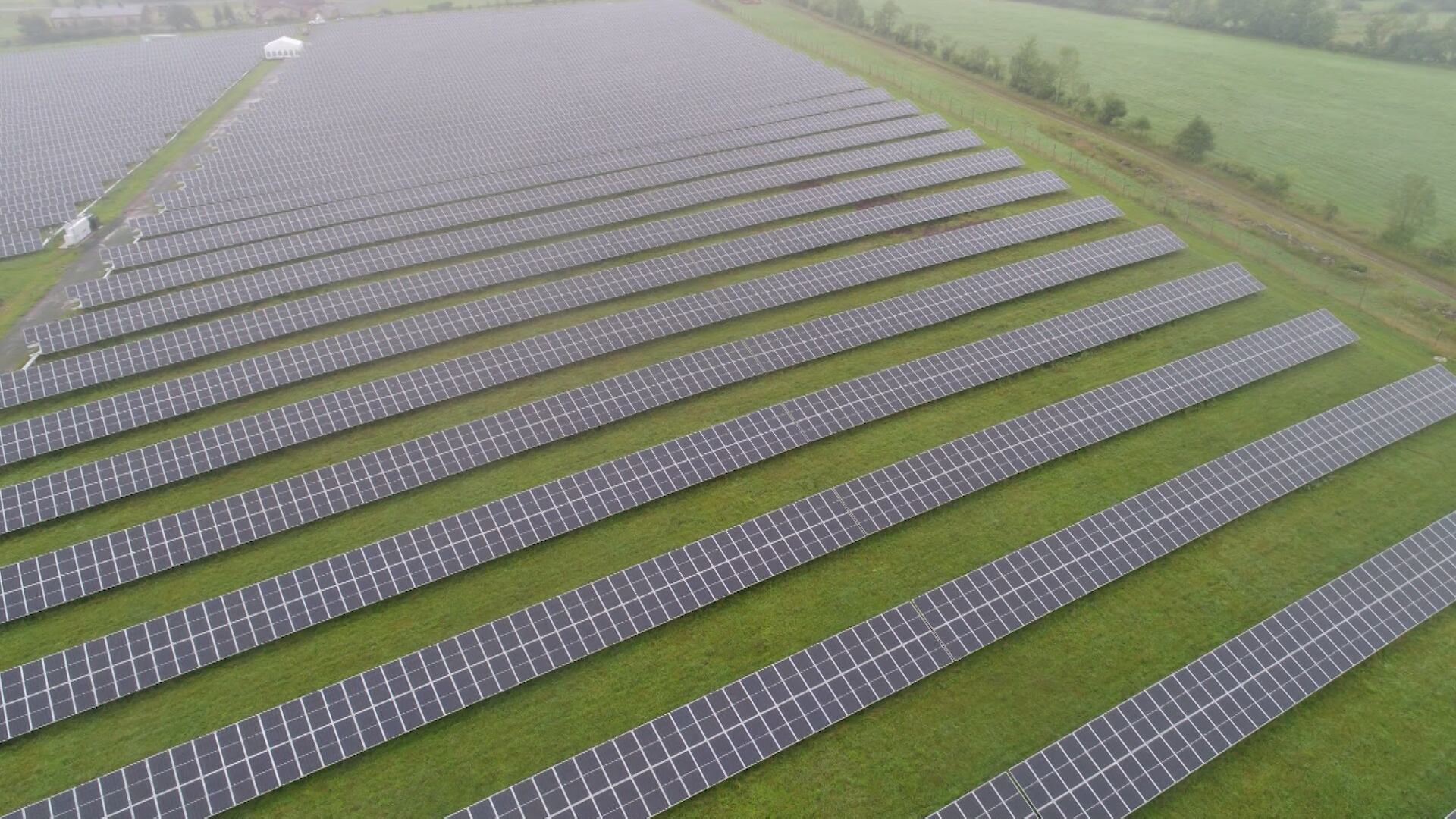
Emma Searson, an author on the just-released Renewables on the Rise report and the director, 100% Renewable Campaign at Environment America, joined Cheddar to discuss the rapidly growing renewable energy sector. Between 2011 and 2020, the report shows that wind, solar, and geothermal energy production grew about 15 percent annually and that wind and solar alone account for 11 percent of electricity in the country. "There are a few really important drivers of the renewable energy progress that we're seeing all across the country," Searson said, highlighting falling prices, technology improvements, and supportive policies.
Wendy O, host of 'The O Show' joins Cheddar News to discuss the recent rally from cryptocurrency, Ether. She also discussed incoming New York City mayor Eric Adams wanting to teach kids crypto in schools.
Professional sports is facing a reckoning right now over several stories painting an ugly picture of a toxic work environment, encompassing multiple teams in multiple leagues and dealing with different issues.
This week, the NHL's Chicago Blackhawks ousted their general manager and senior director of hockey operations after an investigation confirmed former player Kyle Beach's claims that the team's former video coach Brad Aldrich sexual assaulted him back in 2010, with upper management ignoring his claims until after the team won the Stanley Cup that season. Last night, Joel Quenneville, now the coach of the Florida Panthers but Chicago's coach that season, stepped down from his post.
This comes just a few weeks after the NFL was rocked by leaked emails showing now-former Las Vegas Raiders Head Coach Jon Gruden using racist, sexist and homophobic language. He resigned soon after the emails came to light. We can't forget, though, that those emails come from a much broader investigation of the toxic work environment in the offices of the Washington Football Team. NFL Commissioner Roger Goodell said this week the league wouldn't publicly release anything from its investigation of the team, but lawyers for many of the women interviewed in the case say they want a public report.
And last January, just one month after hiring him, the New York Mets had to fire then-General manager Jared Porter, who admitted to sending explicit, unsolicited texts and images to a female reporter in 2016 when he worked for the Chicago Cubs. ESPN had been in possession of the texts since 2017, but the woman in question asked the network not to run the story out of fear her career would be harmed. She only reached back out to ESPN after she left the field of journalism altogether. Porter has been banned from the sport through next season.
If you believe in the phrase "where there's smoke, there's fire," professional sports is a five-alarm blaze.
Julie DiCaro, senior writer and editor at Deadspin, joins None of the Above to discuss.
Curaleaf CEO Joe Bayern joined Cheddar's "Closing Bell" to discuss the cannabis company's Q3 earnings report, which came in under expectations and included widening losses. Bayern discussed taking a hit on profitability based on the slower-than-expected expansion in some Northeast markets. While the company reduced its fiscal guidance for 2021 due to a general slowing of the cannabis market, he did note that he still sees much room for growth in 2022 and beyond.