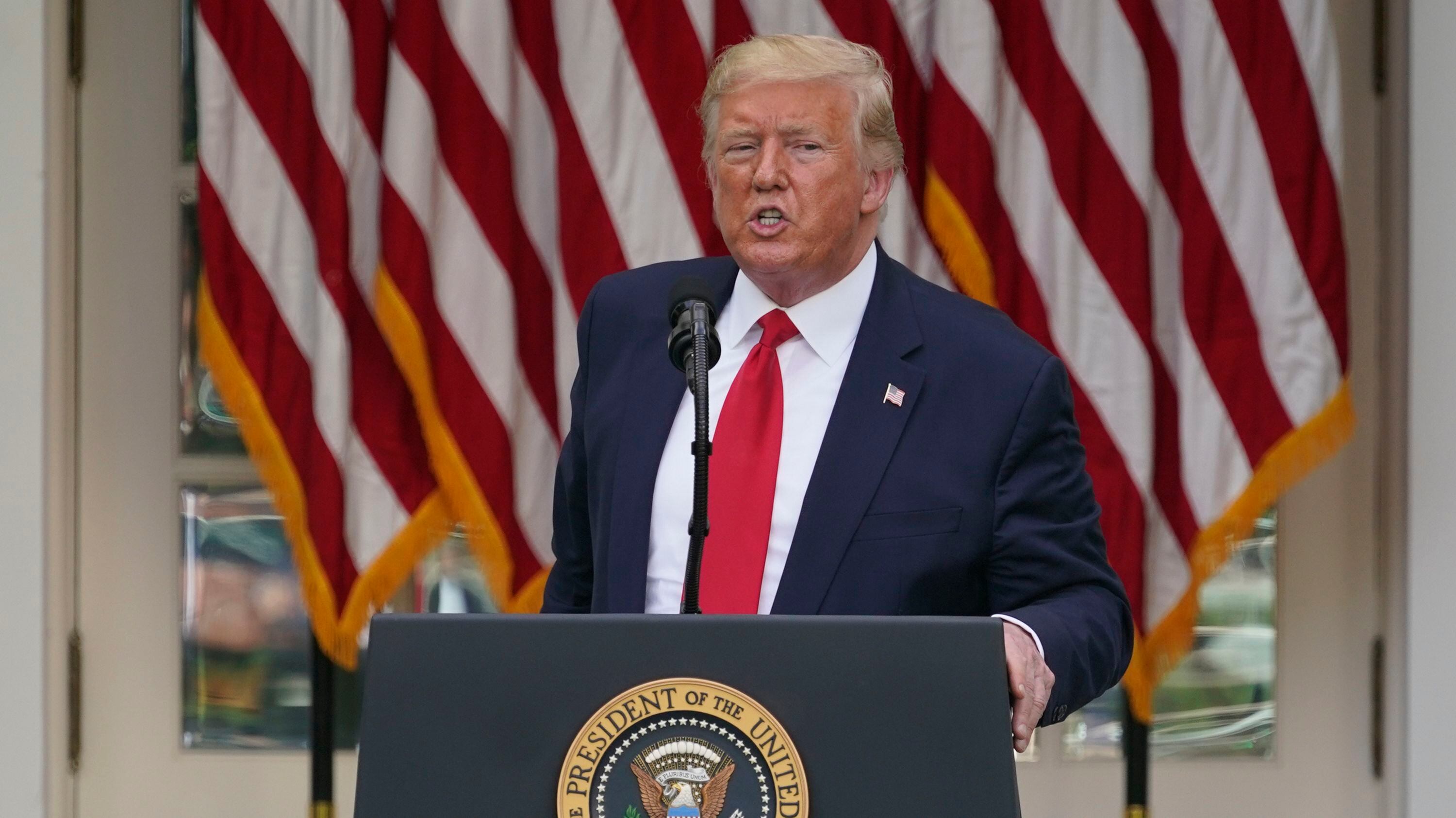
President Donald Trump answers questions from reporters during an event on protecting seniors with diabetes in the Rose Garden White House, Tuesday, May 26, 2020, in Washington. (AP Photo/Evan Vucci)
By Zeke Miller
President Donald Trump on Wednesday threatened social media companies with new regulations or even shuttering after Twitter added fact checks to two of his tweets.
The president can’t unilaterally regulate or close the companies, which would require action by Congress or the Federal Communications Commission. But that didn't stop Trump from angrily issuing strong warnings.
Claiming tech giants “silence conservative voices,” Trump tweeted early Wednesday, “We will strongly regulate, or close them down, before we can ever allow this to happen.” Later he tweeted without elaboration, “Big Action to follow.”
He repeated his unsubstantiated claim — which sparked his latest showdown with Silicon Valley — that expanding mail-in voting “would be a free for all on cheating, forgery and the theft of Ballots.”
There was no immediate reaction from Twitter or other social media companies to the president’s threats.
Trump and his campaign had lashed out Tuesday after Twitter added a warning phrase to two Trump tweets that called mail-in ballots “fraudulent” and predicted that “mail boxes will be robbed,” among other things. Under the tweets, there is now a link reading “Get the facts about mail-in ballots” that guides users to a Twitter “moments” page with fact checks and news stories about Trump’s unsubstantiated claims.
Trump replied on Twitter, accusing the platform of “interfering in the 2020 Presidential Election” and insisting that “as president, I will not allow this to happen.” His 2020 campaign manager, Brad Parscale, said Twitter’s “clear political bias” had led the campaign to pull “all our advertising from Twitter months ago.” Twitter has banned all political advertising since last November.
Trump did not explain his threat Wednesday, and the call to expand regulation appeared to fly in the face of long-held conservative principles on deregulation.
But some Trump allies, who have alleged bias on the part of tech companies, have questioned whether platforms like Twitter and Facebook should continue to enjoy liability protections as “platforms” under federal law — or be treated more like publishers, which can face lawsuits over content.
The protections have been credited with allowing the unfettered growth of the internet for more than two decades, but now some Trump allies are advocating that social media companies face more scrutiny.
“Big tech gets a huge handout from the federal government," Republican Sen. Josh Hawley told Fox News. “They get this special immunity, this special immunity from suits and from liability that’s worth billions of dollars to them every year. Why are they getting subsidized by federal taxpayers to censor conservatives, to censor people critical of China?”
There was no immediate reaction from Twitter or other social media companies to the president's threats.
Disney saw misses on both its top and bottom lines for its fourth quarter. The entertainment giant also fell just short of Wall Street expectations for new Disney+ subscribers. CFRA Research media and entertainment analyst Tuna Amobi joined Cheddar News' Closing Bell to break down what this means for the future of Disney.
Johnson & Johnson is the latest company to announce this week it is splitting into two companies, separating its consumer operations from its pharmaceutical and medical devices unit. Electronics firm Toshiba also made a similar announcement today, and General Electric earlier this week also said it would be spinning off its aviation, healthcare, and power businesses. What does this mean for investors - and will this become a trend among conglomerates? Barron's Senior Writer Al Root joins Cheddar News' Closing Bell to discuss why Johnson & Johnson is splitting up, what this strategy means for conglomerates, and why they might pursue a break-up.
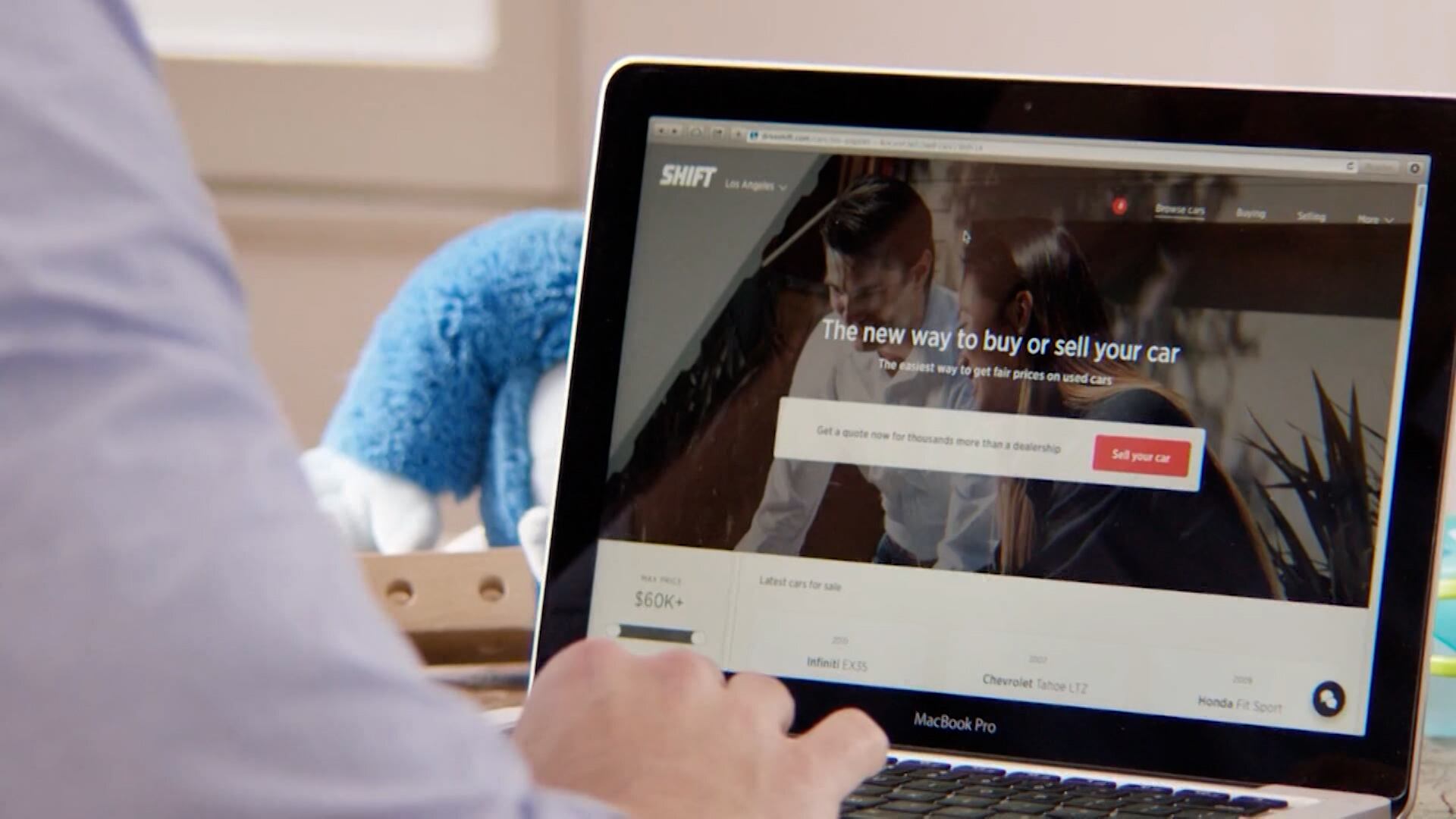
Business is booming for the used car marketplace Shift while the automotive industry as a whole struggles with demand and supply chain issues stemming from the global semiconductor shortage. Co-CEO and co-founder George Arison joined Cheddar's "Closing Bell" to talk about the company's stellar Q3 earnings and how it was able to meet demand.
Disney+ miss on new subscribers in Q3 and the growing momentum for moviegoers returning to brick-and-mortar theaters has brought the streaming business into question. Seth Schachner, managing director at Strat Americas, joined Cheddar to discuss the state of streaming and the growing number of options consumers have. "Streaming is for sure here to stay and I think more robust than ever," he said. "The real thing that's happening, not just to Hollywood but to lots of verticals from music to sports, is just that there's tons and tons of consumer choice."
Peter Weber, author and star of ABC's The Bachelor, joined Cheddar to talk about his new children's book, "The Adventures of Pilot Pete," scheduled for release on Nov. 23. Weber, a real commercial pilot, said that while fellow Bachelor Nation contestants tend to write books following their experience on the small screen, one of the reasons he opted to write a children's book instead was the prospect of the longevity it could provide.
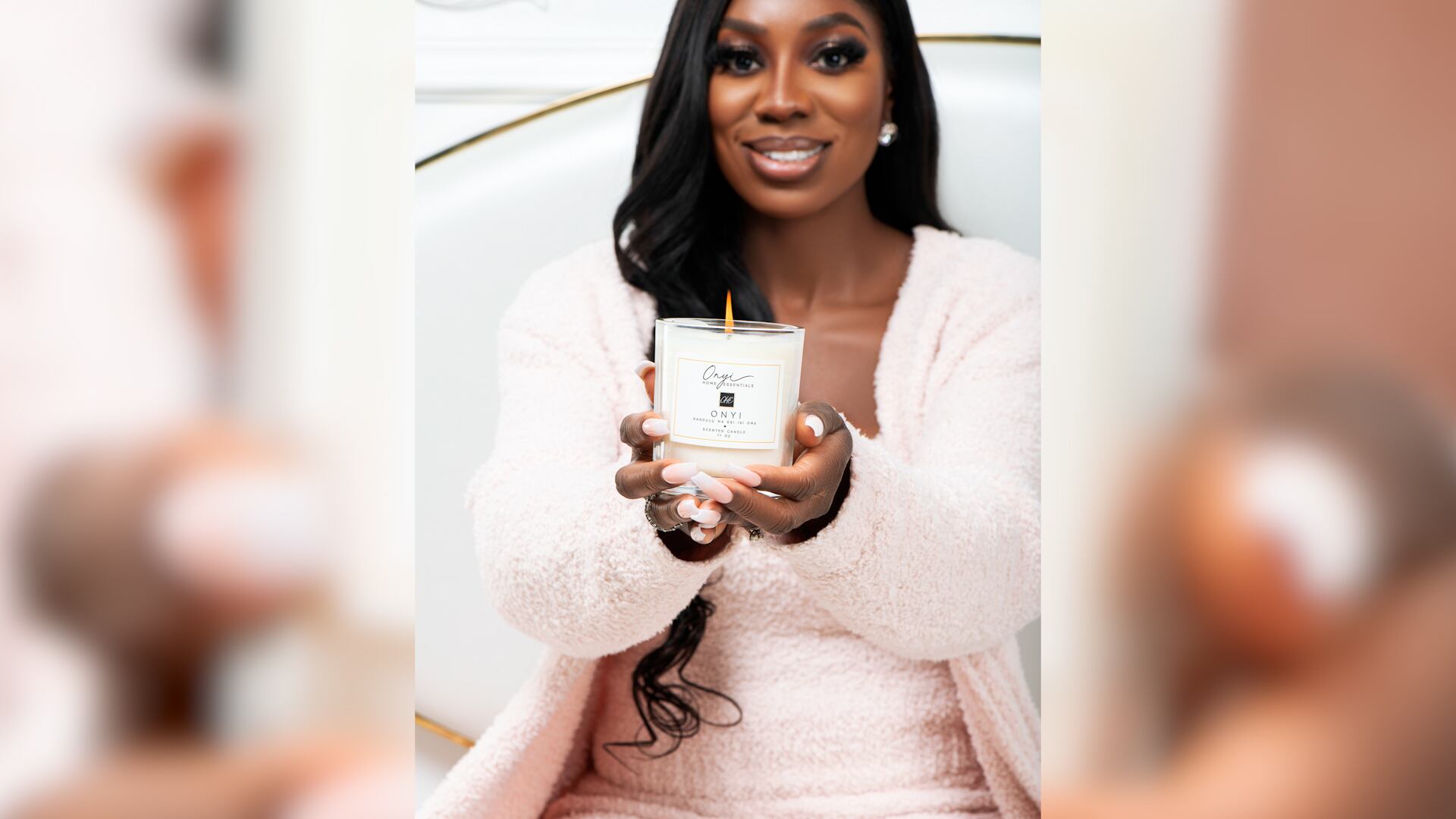
Dr. Wendy Osefo, Entrepreneur, Professor & Cast Member of Bravo's 'Real Housewives of Potomac', joins 'Your Future Home' to discuss her popular new Onyi Home Essentials line and how ideas of family and legacy helped shape it.
David Girouard, CEO of Upstart, an artificial intelligence lending platform, joined Cheddar to discuss Q3 earnings, noting growth in revenue and profits as more banks, credit unions, and car dealerships use Upstart tech. He also reflected on how his fintech company is working to help people with low credit or no credit secure access to credit and loans.