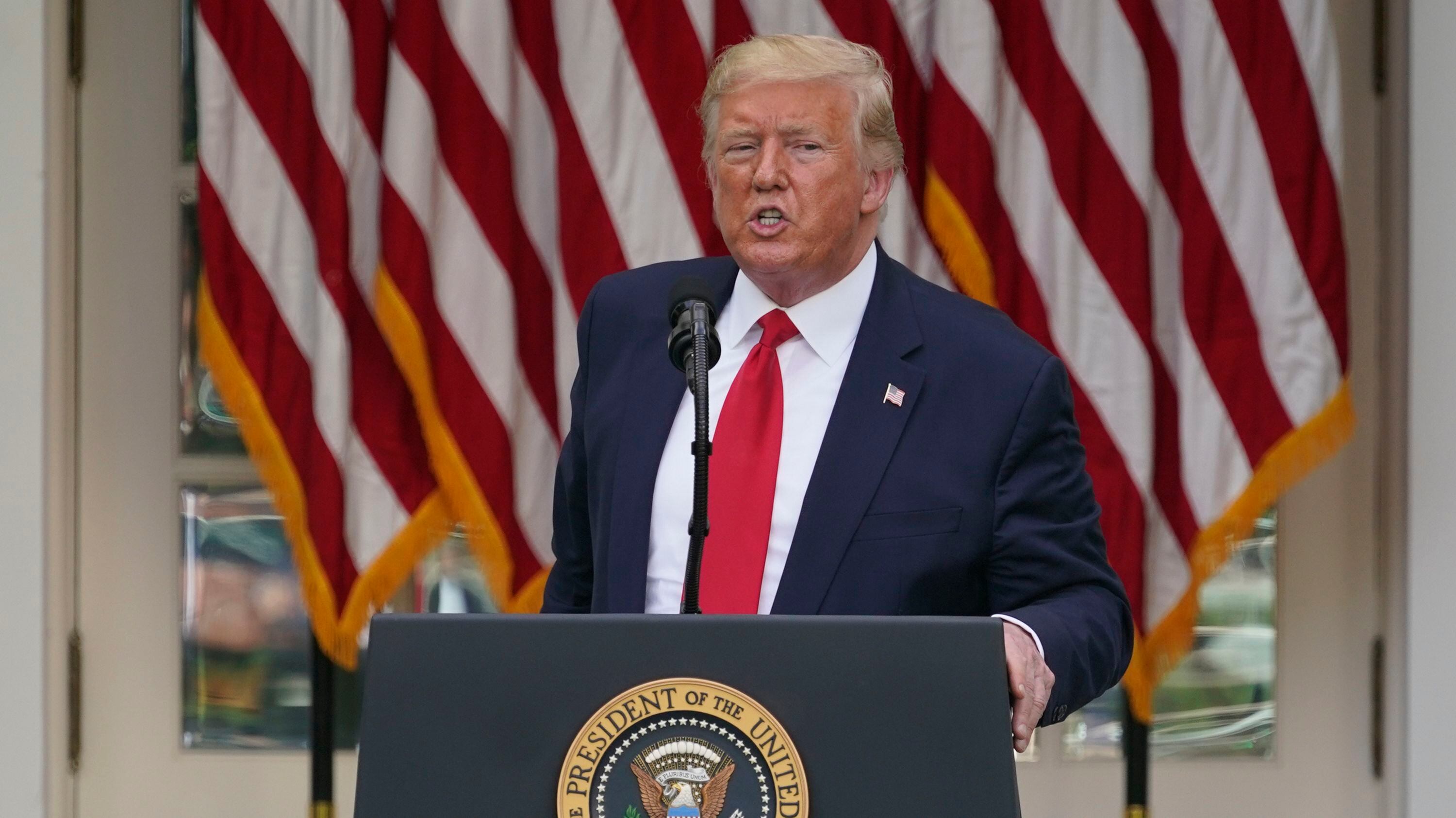
President Donald Trump answers questions from reporters during an event on protecting seniors with diabetes in the Rose Garden White House, Tuesday, May 26, 2020, in Washington. (AP Photo/Evan Vucci)
By Zeke Miller
President Donald Trump on Wednesday threatened social media companies with new regulations or even shuttering after Twitter added fact checks to two of his tweets.
The president can’t unilaterally regulate or close the companies, which would require action by Congress or the Federal Communications Commission. But that didn't stop Trump from angrily issuing strong warnings.
Claiming tech giants “silence conservative voices,” Trump tweeted early Wednesday, “We will strongly regulate, or close them down, before we can ever allow this to happen.” Later he tweeted without elaboration, “Big Action to follow.”
He repeated his unsubstantiated claim — which sparked his latest showdown with Silicon Valley — that expanding mail-in voting “would be a free for all on cheating, forgery and the theft of Ballots.”
There was no immediate reaction from Twitter or other social media companies to the president’s threats.
Trump and his campaign had lashed out Tuesday after Twitter added a warning phrase to two Trump tweets that called mail-in ballots “fraudulent” and predicted that “mail boxes will be robbed,” among other things. Under the tweets, there is now a link reading “Get the facts about mail-in ballots” that guides users to a Twitter “moments” page with fact checks and news stories about Trump’s unsubstantiated claims.
Trump replied on Twitter, accusing the platform of “interfering in the 2020 Presidential Election” and insisting that “as president, I will not allow this to happen.” His 2020 campaign manager, Brad Parscale, said Twitter’s “clear political bias” had led the campaign to pull “all our advertising from Twitter months ago.” Twitter has banned all political advertising since last November.
Trump did not explain his threat Wednesday, and the call to expand regulation appeared to fly in the face of long-held conservative principles on deregulation.
But some Trump allies, who have alleged bias on the part of tech companies, have questioned whether platforms like Twitter and Facebook should continue to enjoy liability protections as “platforms” under federal law — or be treated more like publishers, which can face lawsuits over content.
The protections have been credited with allowing the unfettered growth of the internet for more than two decades, but now some Trump allies are advocating that social media companies face more scrutiny.
“Big tech gets a huge handout from the federal government," Republican Sen. Josh Hawley told Fox News. “They get this special immunity, this special immunity from suits and from liability that’s worth billions of dollars to them every year. Why are they getting subsidized by federal taxpayers to censor conservatives, to censor people critical of China?”
There was no immediate reaction from Twitter or other social media companies to the president's threats.
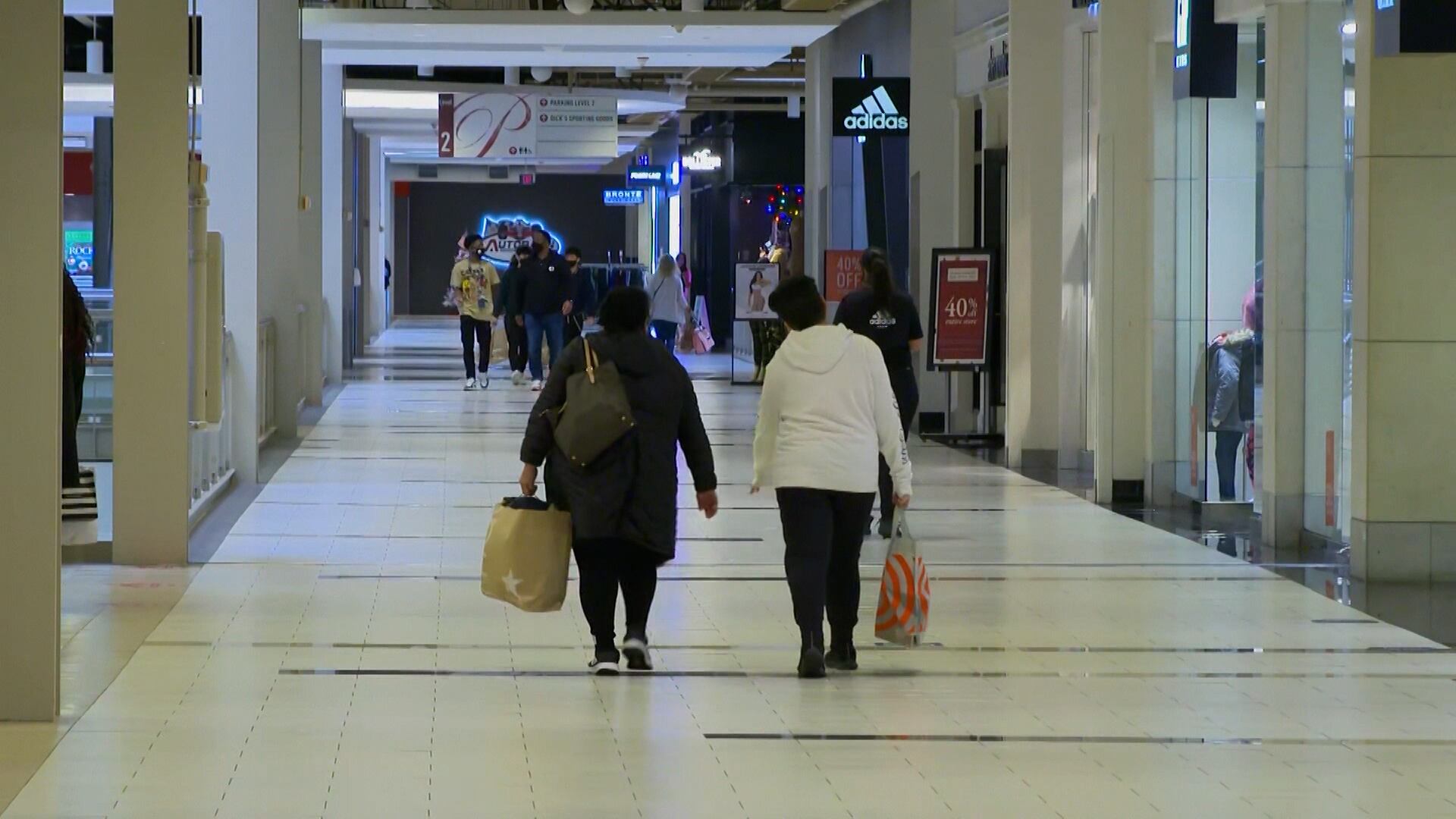
Despite challenges like inflation, labor and product shortages, and the Omicron variant, holiday sales saw record levels of growth this year, according to a new report from Mastercard SpendingPulse. The group reports on national retail sales across all payment types, finding that holiday sales rose at the fastest pace in 17 years this year. Mastercard senior advisor and former chariman and CEO of Saks Incorporated Steve Sadove joined Cheddar News' Closing Bell to discuss.
Keith Fitz-Gerald, chief investment officer at Fitz-Gerald Group, spoke to Cheddar about the growing competition for Tesla's electric cars in China as tech giant Huawei enters the race. "There's a lot of legacy worry, but that does not discount the possibility that Elon might have a contender on his hands," he said about the sometimes troubled telecom company. Fitz-Gerald also gave a nod to two other local rivals, Nio and XPeng, noting the latter as having something of an edge with its CEO He Xiopeng being lauded by Chinese state media.
Ariel Kaye, founder and CEO of home goods business Parachute, joined Cheddar to discuss the company's sales success over the holidays as it navigated supply chain issues. She also expects a strong showing in 2022 with the continuation of 2021 trends. "The hybrid work model is going to be here for a long time," Kaye said. The business, which currently has 12 physical locations, plans to expand to 30 brick-and-mortar shops by the end of 2022.
Nikola announced that it delivered its first electric semi trucks last week, sending the embattled EV company's stock soaring. There is a lot of competition in this space, though, said Lauren Fix, an automotive analyst with Car Coach Reports. While every country has companies racing to dominate the electric trucking industry, she explained, a shortage of graphite, used in batteries, and a dearth of convenient charging stations will still keep growth slow in 2022. "You really have to be very careful when you're investing in this marketplace," Fix said. "That's great that [Nikola was] able to deliver one, but can they deliver more?"
It looks like the supply chain didn't steal Christmas this year after all. Retail sales jumped 8.5 percent between November 1 and December 24, compared with the same period last year, according to a report from Mastercard. That's the strongest growth in 17 years. Jharonne Martis, director of consumer research at Refinitiv, joined Cheddar to discuss how retailers were able to do so well despite inflation, supply chain issues, and the COVID-19 omicron variant but gave a subdued outlook for the retail sector at the beginning of 2022. "Consumers are not just completely isolated from the inflation issues," she said. "This is definitely going to continue into the first half of the year, as per our IFR data."
Hotel cancellations are on the rise ahead of the holidays as the omicron variant spreads around the world. Online hotel search site Trivago noted a 35 percent jump in cancellations since November. Axel Hefer, managing director and CEO at Trivago, joined Cheddar to discuss this worrying trend. Hefner said it is important for both travelers and businesses to watch how the 2021-2022 winter travel season unfolds as it will help them prepare for next year as the pandemic will likely be ongoing.
Markets opened slightly higher to kick off the final trading week of the year as investors continue to watch the Omicron variant in the U.S. Sean O'Hara, President, Pacer ETFs joined Cheddar's Opening Bell to discuss what drove early market activity.