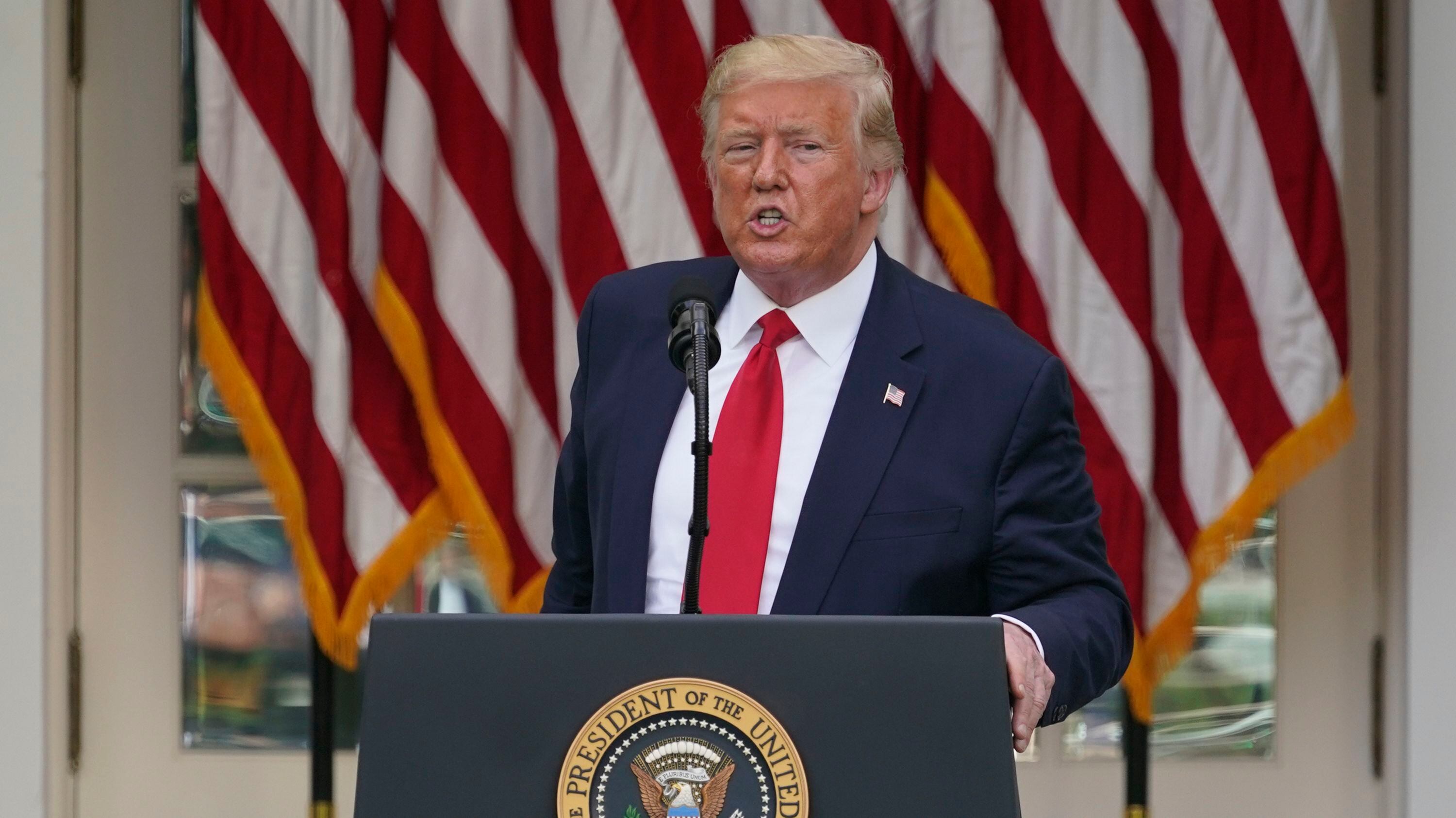
President Donald Trump answers questions from reporters during an event on protecting seniors with diabetes in the Rose Garden White House, Tuesday, May 26, 2020, in Washington. (AP Photo/Evan Vucci)
By Zeke Miller
President Donald Trump on Wednesday threatened social media companies with new regulations or even shuttering after Twitter added fact checks to two of his tweets.
The president can’t unilaterally regulate or close the companies, which would require action by Congress or the Federal Communications Commission. But that didn't stop Trump from angrily issuing strong warnings.
Claiming tech giants “silence conservative voices,” Trump tweeted early Wednesday, “We will strongly regulate, or close them down, before we can ever allow this to happen.” Later he tweeted without elaboration, “Big Action to follow.”
He repeated his unsubstantiated claim — which sparked his latest showdown with Silicon Valley — that expanding mail-in voting “would be a free for all on cheating, forgery and the theft of Ballots.”
There was no immediate reaction from Twitter or other social media companies to the president’s threats.
Trump and his campaign had lashed out Tuesday after Twitter added a warning phrase to two Trump tweets that called mail-in ballots “fraudulent” and predicted that “mail boxes will be robbed,” among other things. Under the tweets, there is now a link reading “Get the facts about mail-in ballots” that guides users to a Twitter “moments” page with fact checks and news stories about Trump’s unsubstantiated claims.
Trump replied on Twitter, accusing the platform of “interfering in the 2020 Presidential Election” and insisting that “as president, I will not allow this to happen.” His 2020 campaign manager, Brad Parscale, said Twitter’s “clear political bias” had led the campaign to pull “all our advertising from Twitter months ago.” Twitter has banned all political advertising since last November.
Trump did not explain his threat Wednesday, and the call to expand regulation appeared to fly in the face of long-held conservative principles on deregulation.
But some Trump allies, who have alleged bias on the part of tech companies, have questioned whether platforms like Twitter and Facebook should continue to enjoy liability protections as “platforms” under federal law — or be treated more like publishers, which can face lawsuits over content.
The protections have been credited with allowing the unfettered growth of the internet for more than two decades, but now some Trump allies are advocating that social media companies face more scrutiny.
“Big tech gets a huge handout from the federal government," Republican Sen. Josh Hawley told Fox News. “They get this special immunity, this special immunity from suits and from liability that’s worth billions of dollars to them every year. Why are they getting subsidized by federal taxpayers to censor conservatives, to censor people critical of China?”
There was no immediate reaction from Twitter or other social media companies to the president's threats.
Breakthrough Energy Catalyst, a private-public fund backed by Bill Gates, is planning to invest up to $15 billion in clean technology initiatives across the U.S., UK, and European Union. It will target four key areas and help fund large projects that otherwise would not be financially possible. Bobby Hollis, Director of Breakthrough Energy Catalyst, joins Cheddar News' Closing Bell to discuss.
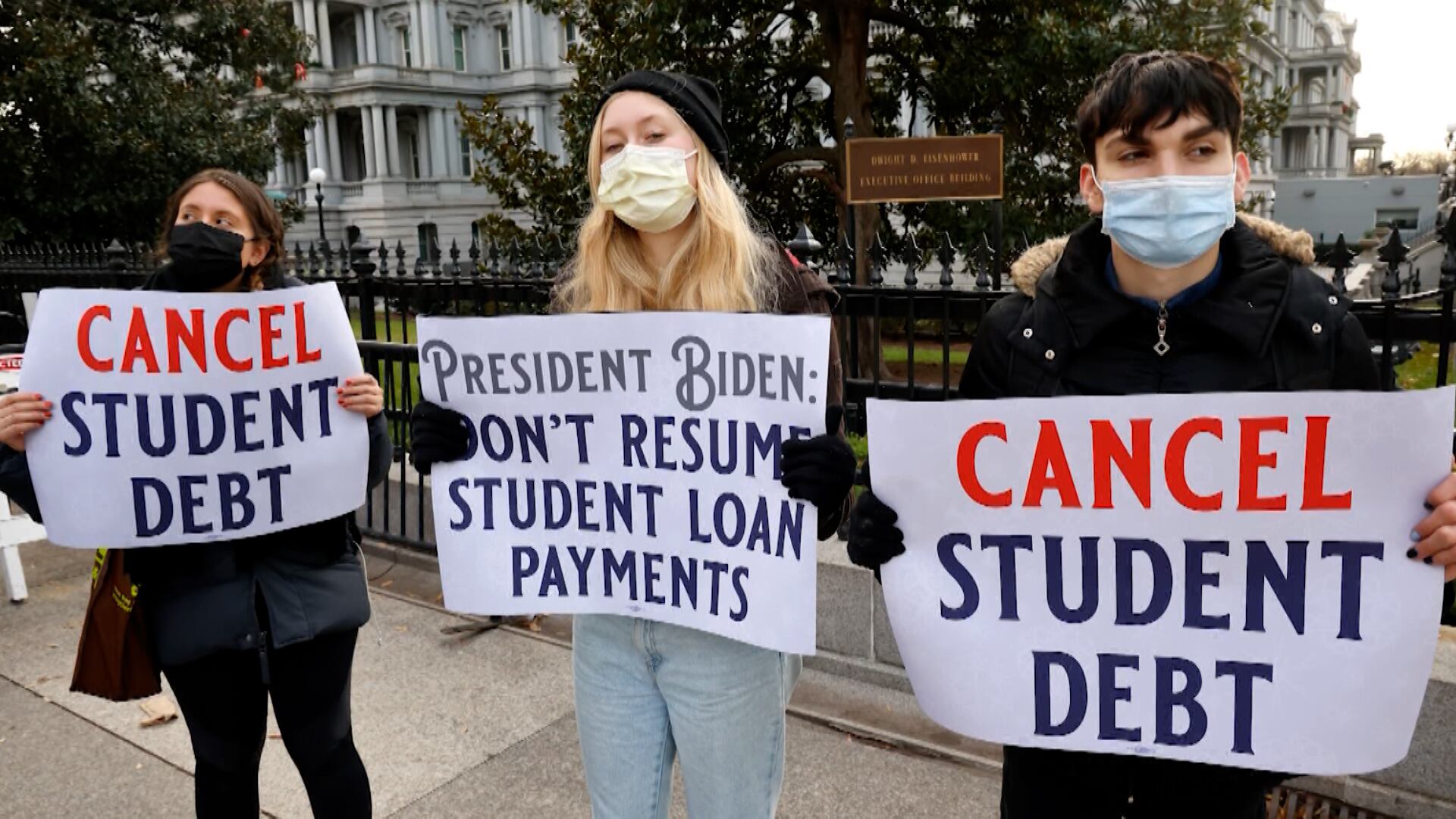
Student loan collection company Navient agreed to cancel $1.7 billion in debt and paid more than $140 million in other penalties to settle a lawsuit over abusive lending practices. Josh Shapiro, the attorney general of Pennsylvania who led negotiations in the settlement, joined Cheddar to go over the details of the company's predatory lending. "What Navient would do is charge [borrowers] these exorbitantly high rates, even though they knew people couldn't pay them or they would likely default on them," he explained.
An economic development agency, the Northwest Arkansas Council, is looking to draw technology professionals to their region of the Southern state with incentives like $10,000 worth of Bitcoin and a new bicycle. Nelson Peacock, president and CEO of the private nonprofit made up of companies like Walmart and Tyson Foods, joined Cheddar to talk about the program to further power his local economy. "By offering the payment in Bitcoin, we're looking to identify those people with interest and expertise in the underlying technologies, the blockchain technologies," he said.
Stocks closed mixed Friday with big bank stocks dragging on the Dow after a few lackluster earnings reports. Both the Nasdaq and the S&P 500 gained, but overall, stocks notched a second losing week in a row to start 2022. Tom Kozlik, Head of Research and Analytics at Hilltop Securities, joins Cheddar News' Closing Bell to discuss today's close, expectations for 2022 earnings reports, whether or not the COVID-19 omicron variant is being properly priced into markets, and more.
After months of investors turning to crypto as a hedge against inflation, instead of the traditional hedge of gold, one crypto exchange is working with a token creator to launch a digital coin backed by a physical asset. GCOIN gives customers a digital title of ownership to 99.99% pure physical gold which is stored in a secured vault. Brent de Jong, GCoin's founder and Kristin Boggiano, Co-Founder and President of CrossTower, a cryptocurrency exchange, join Cheddar News' Closing Bell to discuss the GCOIN rollout, customer interest, why crypto is used as an inflation hedge, and more.
Retail platform operator and delivery company, Foxtrot,
raised $100 million in a Series C round led by D1 Capital Partners. Foxtrot bills itself as the modern convenience store that combines what it calls in-store curated discovery with 30-minute delivery and 5-minute pickup. Since launching first as a digital-only delivery service, the company has since grown into a popular local retailer, opening 16 brick and mortar locations across Chicago, Dallas, and Washington, DC. Foxtrot co-founder and CEO Michael LaVitola joined Cheddar News' Closing Bell to discuss.
As Meta and Microsoft ramp up their AR and VR tech futures, analysts have been waiting on word from Apple, but the consumer tech giant is reportedly delaying such an announcement. Doug Astrop, a managing partner at Exponential Investment Partners, joined Cheddar to dive into the rumors about the possibilities of a foray into the metaverse by Tim Cook's megacorp sometime in 2022 or 2023. "We can't really predict with a great deal of certainty how it's going to play out, but I'm confident Apple's going to be a big player and do very well in any scenario that unfolds," said Astrop.
Monster Beverage is charging into the beer and hard seltzer biz with its $330 acquisition of CANarchy Craft Brewery Collective. The energy drink finalized the deal a week after Constellation Brands Inc. made a deal with Coca-Cola to acquire the Fresca brand.