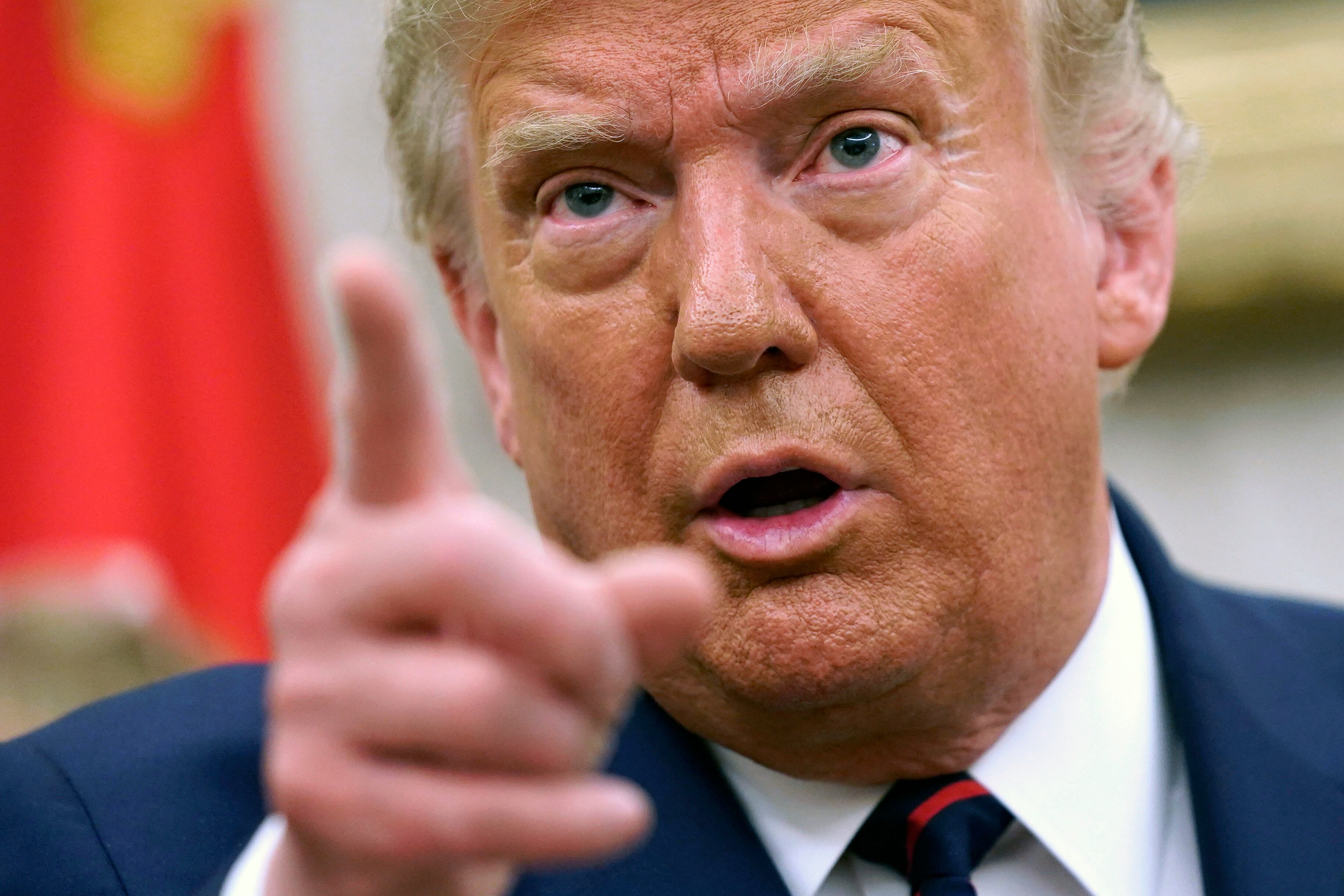
President Donald Trump speaks as he meets with Iraqi Prime Minister Mustafa al-Kadhimi in the Oval Office of the White House, Thursday, Aug. 20, 2020, in Washington. (AP Photo/Patrick Semansky)
By Mark Sherman
President Donald Trump is asking the Supreme Court to allow him to block critics from his personal Twitter account.
The administration said in a high-court filing Thursday that Trump's @realdonaldtrump account with more than 85 million followers is his personal property and blocking people from it is akin to elected officials who refuse to allow their opponents' yard signs on their front lawns.
"President Trump's ability to use the features of his personal Twitter account, including the blocking function, are independent of his presidential office," acting Solicitor General Jeffrey Wall wrote in urging the justices to review the case.
The federal appeals court in New York ruled last year that Trump uses the account to make daily pronouncements and observations that are overwhelmingly official in nature. It held that Trump violated the First Amendment whenever he blocked a critic to silence a viewpoint.
A decision about whether even to hear the case is not likely before the November election.
The case grew out of a challenge brought by the Knight First Amendment Institute at Columbia University, which sued on behalf of seven individuals blocked by Trump after criticizing his policies.
Jameel Jaffer, the Knight Institute's executive director, said the justices should decline to take up Trump's appeal.
"This case stands for a principle that is fundamental to our democracy and basically synonymous with the First Amendment: government officials can't exclude people from public forums simply because they disagree with their political views," Jaffer said in a statement.
The administration argued in its appeal that the Supreme Court, not lower courts, "should decide where to draw the line between the President's personal decisions and official conduct."
The pace of the case was slowed by the coronavirus pandemic as well as Trump's decision to ask the full 2nd U.S. Circuit Court of Appeals to review the ruling by a three-judge panel. The court refused to do so by a 7-2 vote in March. Two Trump appointees, Judges Michael H. Park and Richard J. Sullivan, were the only members of the court to side with the president.
The Supreme Court extended its deadline to file an appeal from 90 days to 150 days when it shut the building to the public and abandoned in-person meetings in favor of telephone conferences because of the virus outbreak.
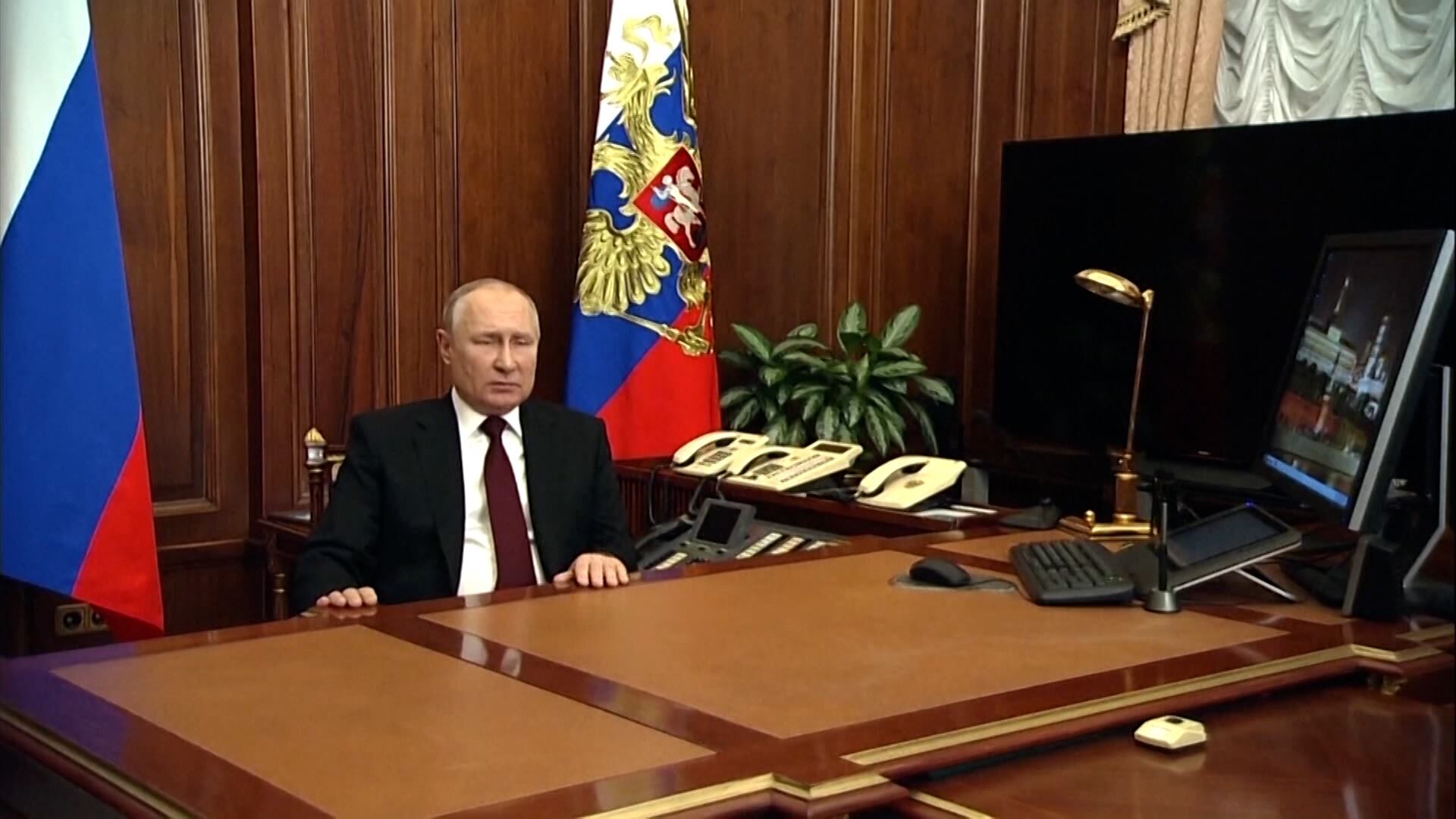
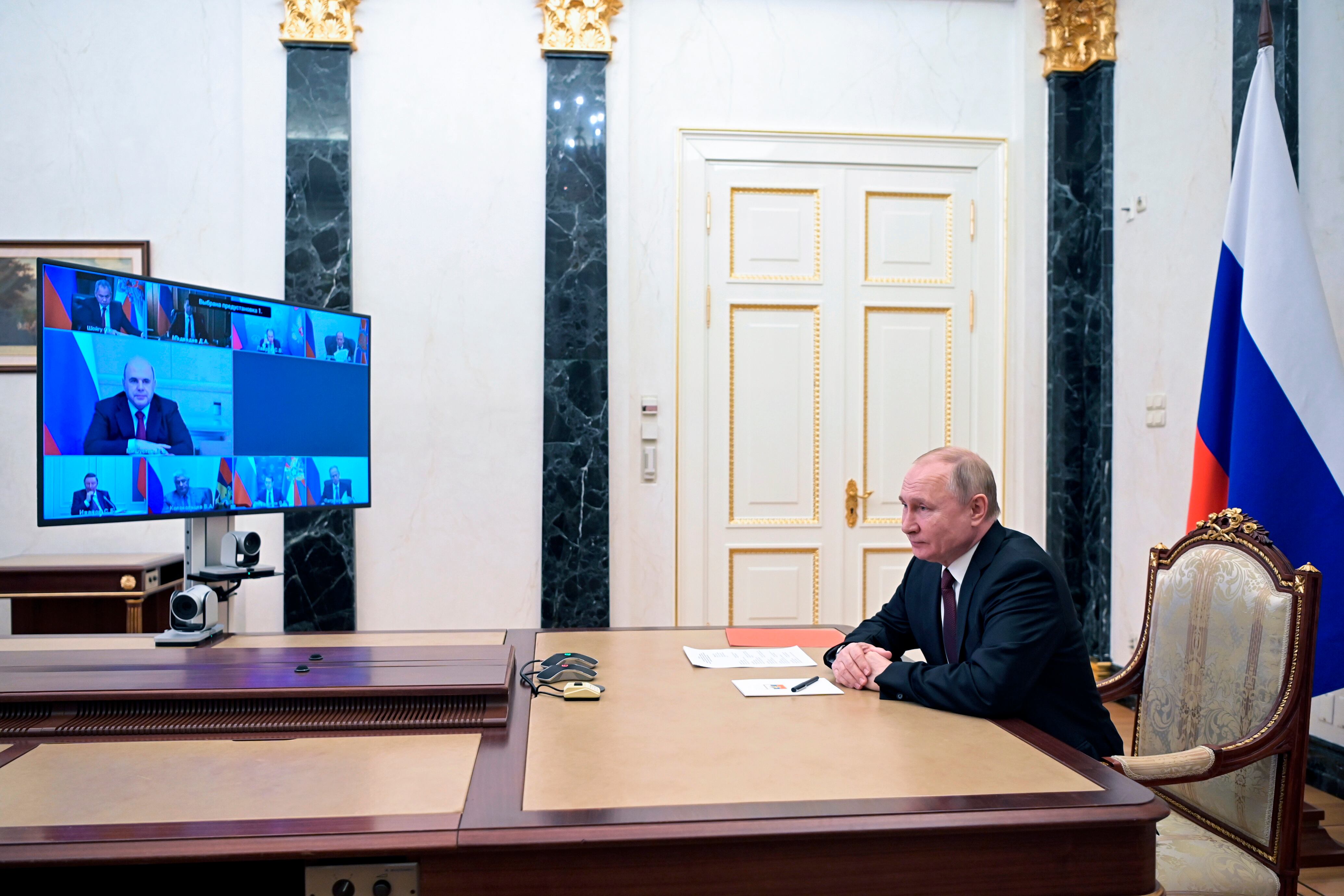
Officials from Ukraine and Russia have begun meeting along the Belarus border to discuss a potential end to the ongoing invasion, even as the fighting continues to drag on. Rep. Al Green (D-Texas 9th District) joined Cheddar's Opening Bell to discuss the conflict between Russia and Ukraine, what to expect from President Joe Biden's State of The Union Address, and the nomination of Ketanji Brown Jackson for the Supreme Court. "I'm still hopeful, and I hope that Mr. Putin will understand that he has united the world against him," Green said of the new round of peace talks.
Within hours of Russia's first attack on Ukraine, President Joe Biden addressed the nation by stating that the White House will impose wider sanctions on Russian banks. These sanctions could result in damage to the Russian economy. Host of "Oh My World" on Youtube and Former Spokesperson for the U. S. Mission to the U. N. Hagar Chemali, joined Cheddar to discuss more.
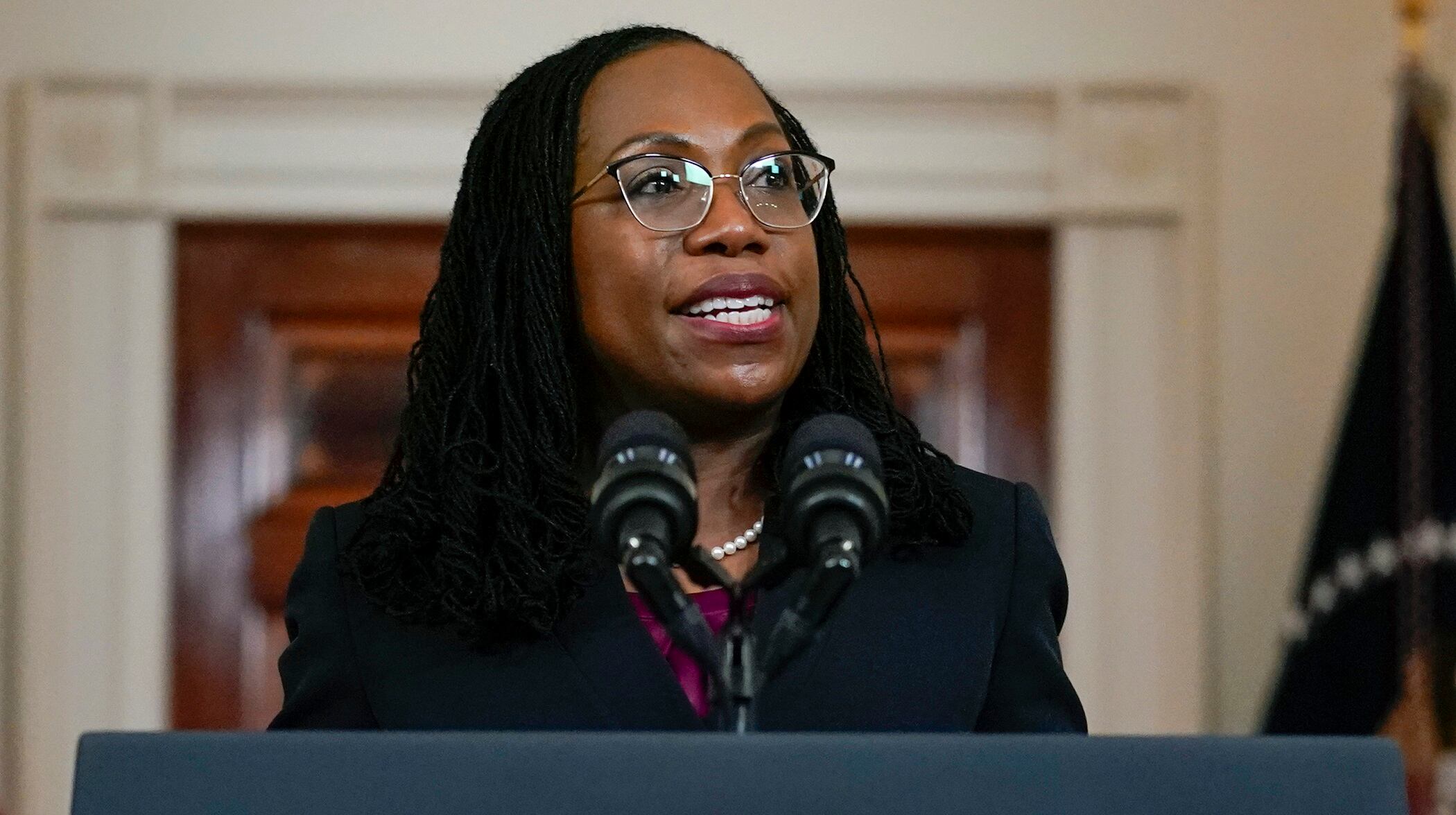
As we celebrate Black History Month, Cheddar is highlighting prominent Black Americans who are carving their own historic paths and trailblazing in their fields. Today we feature Ketanji Brown Jackson, the first Black woman SCOTUS nominee.
Russia's invasion of Ukraine went hand in hand with cyberattacks against Ukrainian government websites and financial institutions. Cheddar News speaks with cybersecurity expert Karim Hijazi, CEO of Prevaillon, on why the Russian cyberwarfare is concerning to other nations.
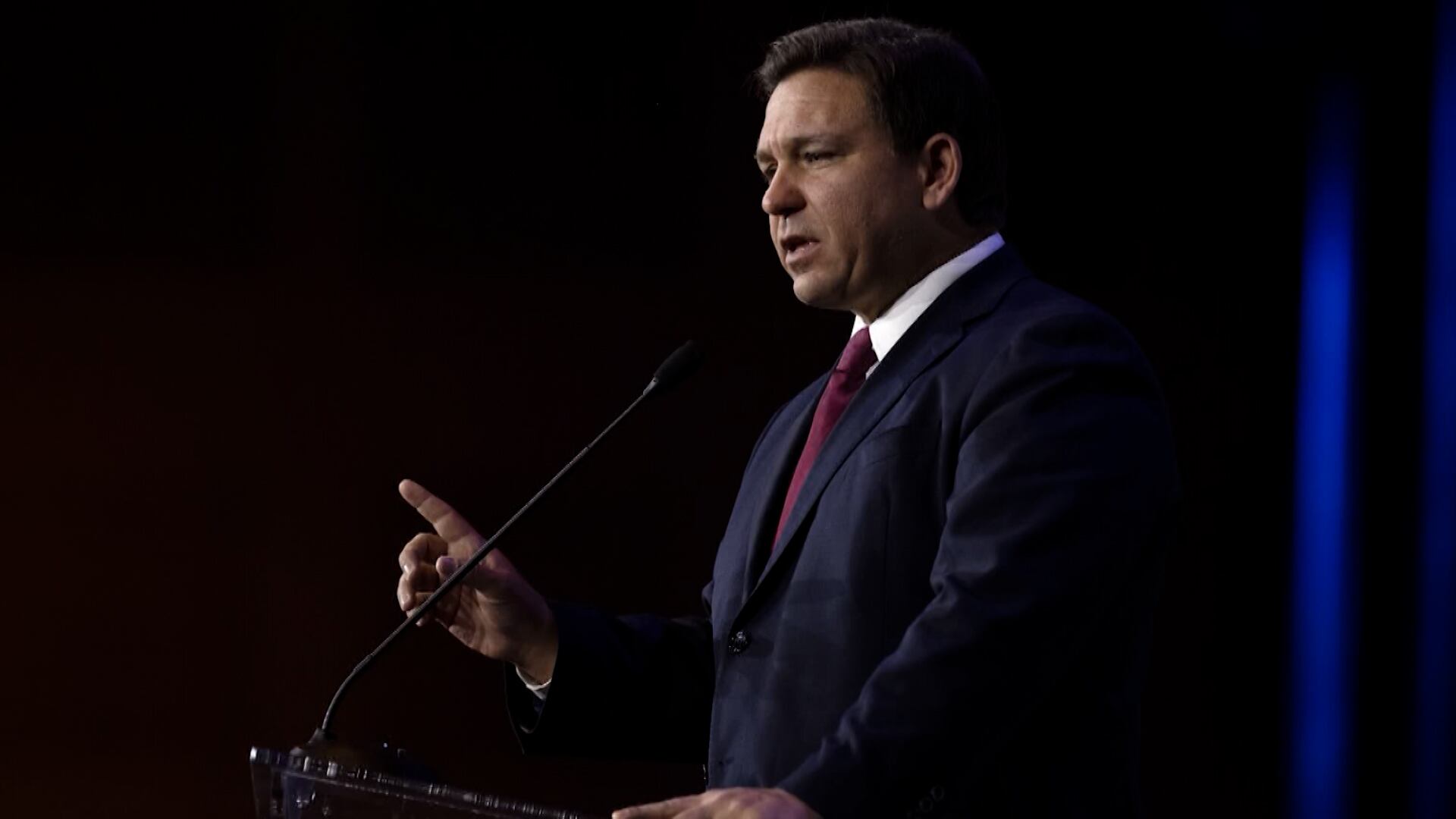
Florida legislation being called the 'Don't Say Gay' bill would restrict some discussion of sexual orientation and gender identity in classrooms with young students. Jon Harris Maurer, public policy director at Equality Florida, joins Cheddar News to discuss.
President Joe Biden promised during his campaign to focus on stable and ally-focused foreign policy, and the Russia-Ukraine crisis seems like an opportunity for him to focus on that tactic after last year's chaotic Afghanistan withdrawal. So far, Biden and western allies have banned together to sanction Russian banks, billionaires, and even President Vladimir Putin himself. Meanwhile, Biden has not deployed U.S. troops to intervene directly in Ukraine. Jack Detsch, national security reporter at Foreign Policy, joins Closing Bell to discuss why Biden is focusing on a sanctions-based, ally-focused strategy, what impact sanctions could have on Russia's economy, and more.
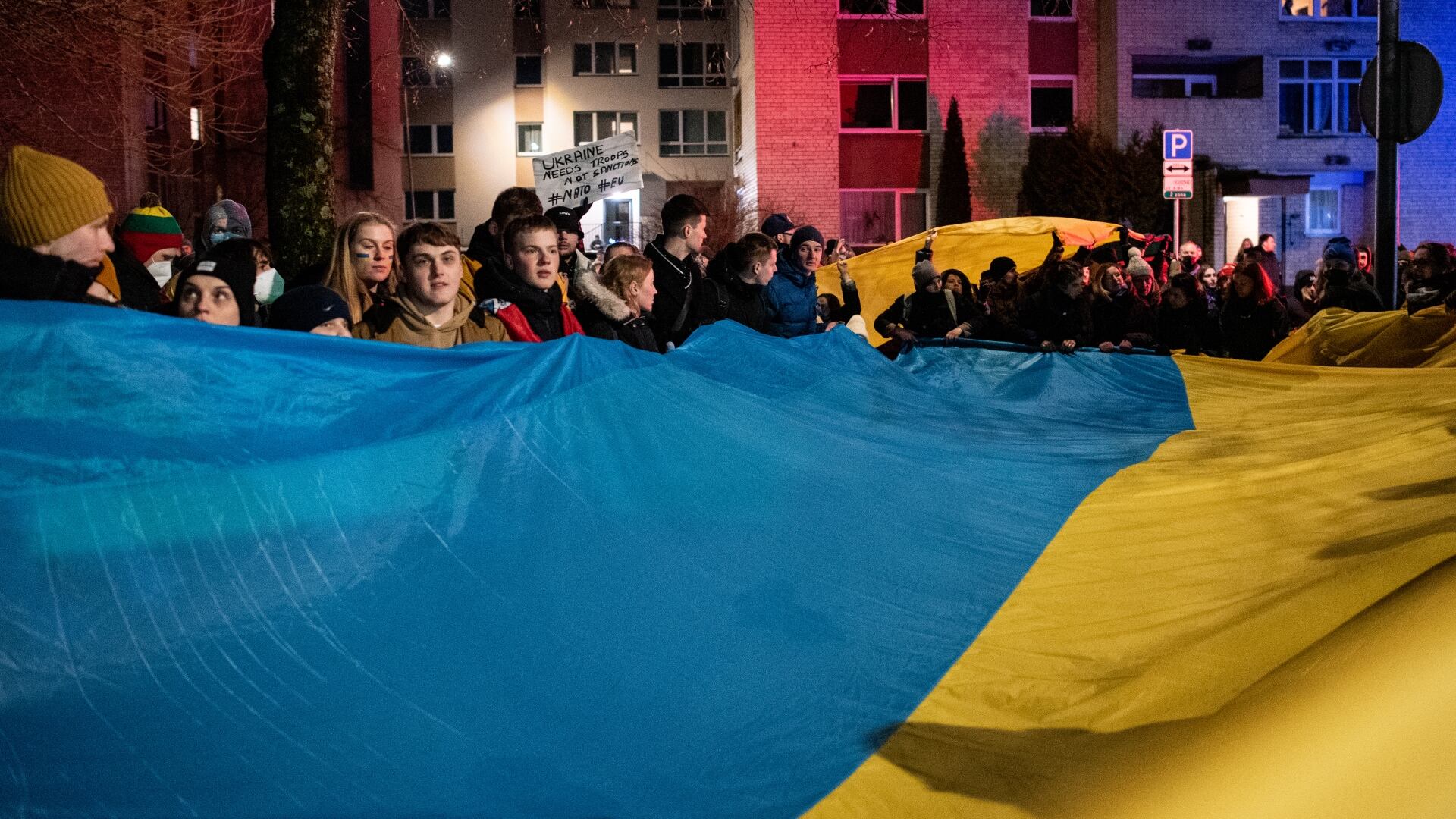
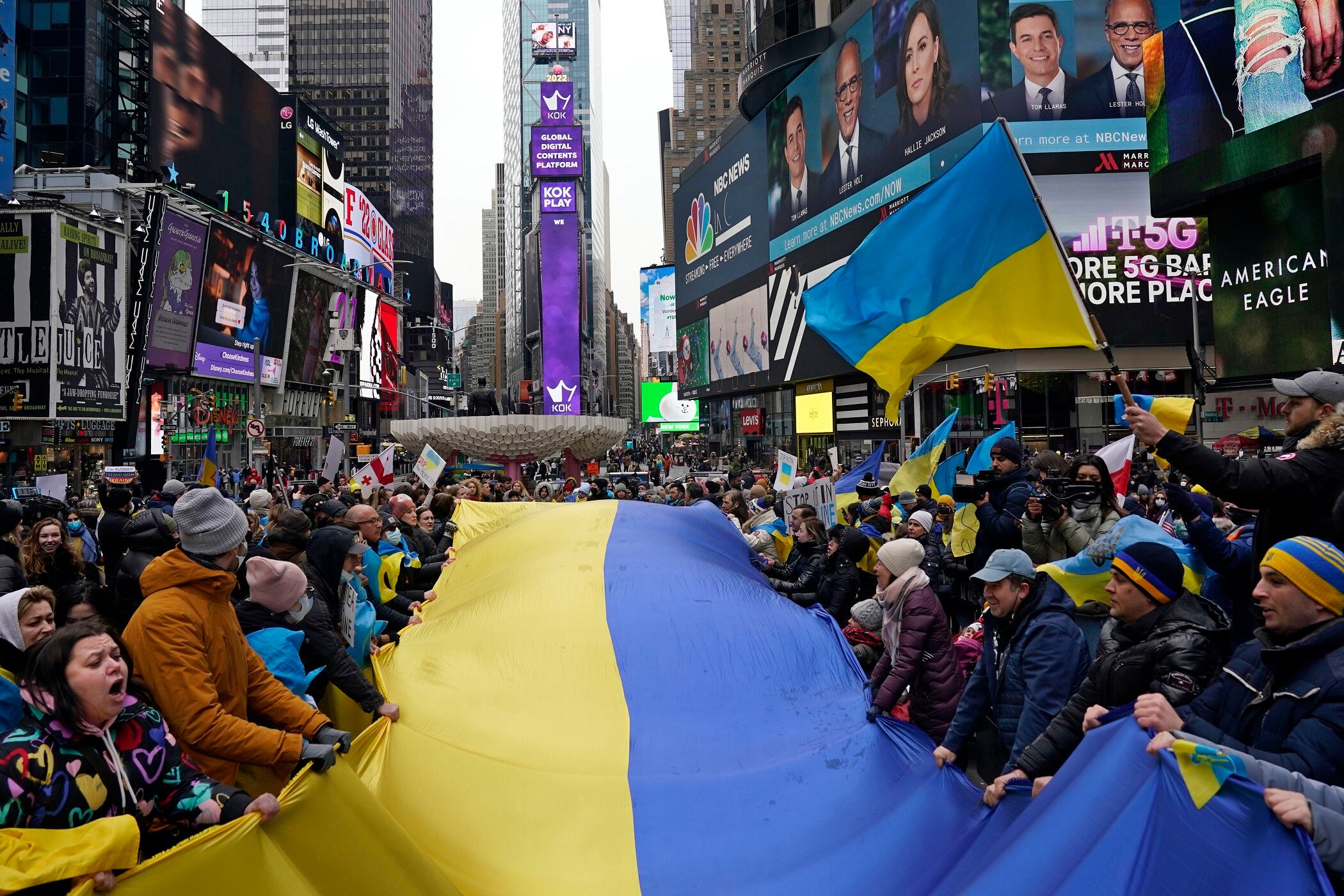
As Russia continues its attack on Ukraine, protests are popping up in major cities across the U.S., including across the street from the United Nations in New York City.. Chloe Aiello reports.