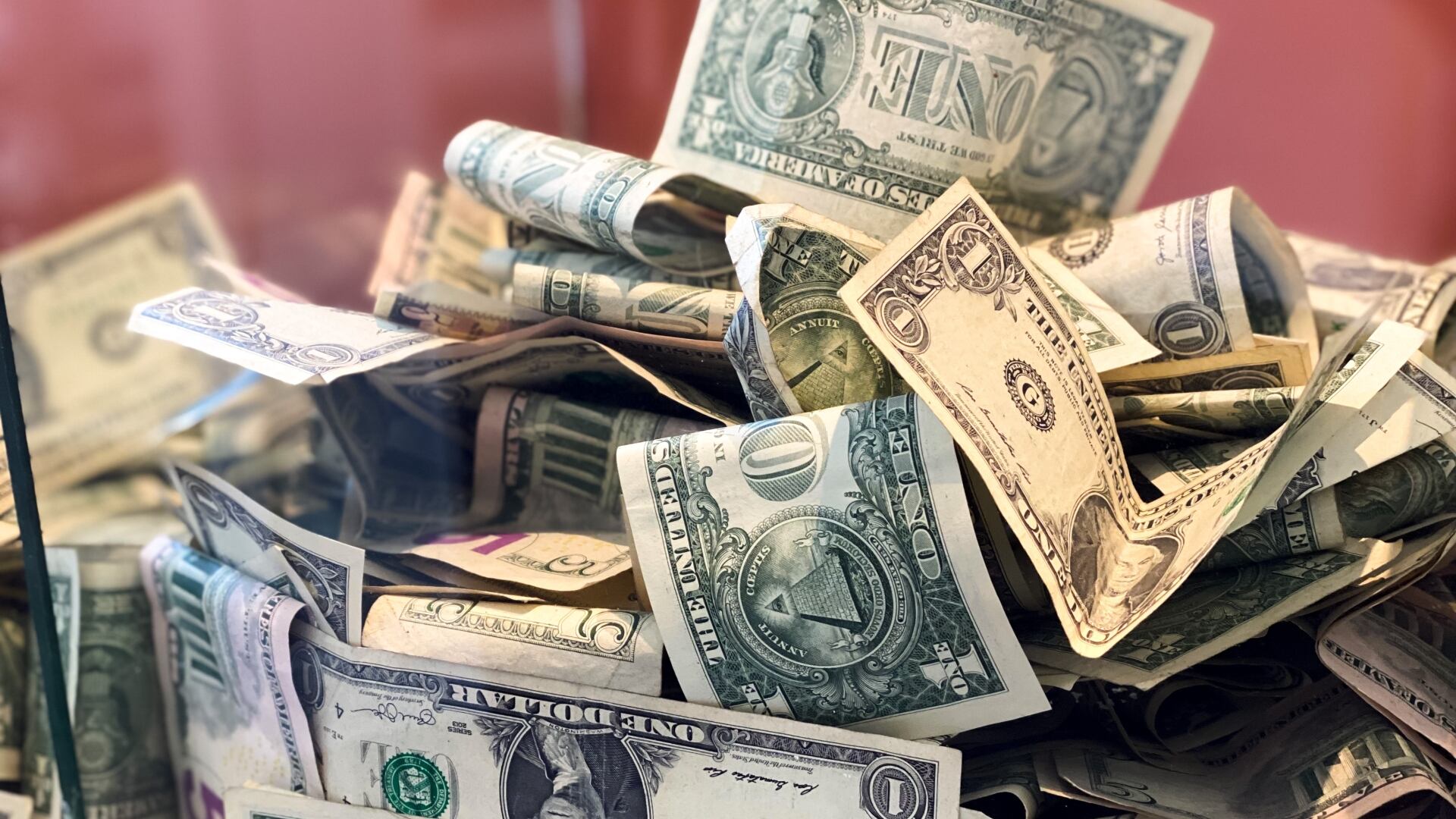
President Trump on Wednesday reversed his position on cutting payroll taxes to spur economic growth, telling reporters on the White House lawn that "we don't need it."
The reversal comes after days of mixed messages from the administration. The White House had first denied that it was considering a cut to payroll taxes since the economy, top officials claimed, was sound. However, on Tuesday, Trump said "payroll tax is something that we think about and a lot of people would like to see that."
In another about-face on Wednesday, Trump announced that he is "not looking at a tax cut now." The remarks follow a growing number of economists who have publicly warned that a recession in the U.S. is on the horizon.
"I don't think [Trump] is particularly concerned if what he says one day disagrees with what his advisors said the day before," said Brian Brenberg, the chair of the Program in Business and Finance at The King's College. "It's classic message testing by the president" to see how the media and markets react.
Recession concerns largely emerged last week after the U.S. Treasury's yield curve inverted; in other words, short-term investments in government bonds are now expected to pay more than long-term ones. The inversion — the first since the economic collapse of 2007-2008 — sent the markets plummeting.
A survey released this week by the National Association for Business Economics also found that 74 percent of U.S. economists believe the country will go into a recession by 2021.
"We don't need [a payroll tax cut]. We have a strong economy," Trump said Wednesday.
Payroll taxes, which apply to both employers and employees, are ubiquitous in the U.S. economy and fund major federal programs like social security and medicare. The taxes were lowered as part of the economic stimulus package following the Great Recession a decade ago, and the cut was extended by President Obama in 2012. Republicans initially opposed the cut at the time, citing concern over the federal deficit.
Yet today, many economists caution against cutting payroll taxes given the country's historically low unemployment, the current strain on social security spending, and the government's growing deficit, which has ballooned under Trump following policies like the 2017 tax cuts.
"Payroll taxes are a significant source of government revenue, and payroll tax cuts have been found to have little to no impact on long-term economic growth," the Tax Foundation said on Twitter.
On Wednesday, moreover, the Congressional Budget Office said that the federal budget deficit is accelerating faster than expected. The agency updated its deficit forecast to $960 billion in 2019 and over $1 trillion in 2020.
Cutting payroll taxes, experts say, will also not address the core concerns of investors: tariffs and trade.
"Most investors are unified in believing the only thing that's really going to meaningfully change the conversation around recession is doing something on trade," Brenberg said, noting that Trump's remarks on Tuesday did little to boost the markets.
Adam Michel, a tax policy analyst at the conservative Heritage Foundation, said that "high tariffs and trade uncertainty" were the main impediments to economic progress. "If the administration wants to boost the economy, they should start there," he said.
Stocks closed lower on the last trading day of 2021, but all three major indexes ended the year with double-digit growth. The S&P 500, in particular, marked its third straight positive year. What's in store for 2022 amid the Federal Reserve's plans to speed up asset tapering and raise interest rates, and how could COVID-19 continue to impact stocks? Steve Sosnick, Chief Strategist at Interactive Brokers, joins Cheddar News' Closing Bell to discuss movement on the last trading day of 2021, market predictions for 2022, and more.
As the pandemic continues to evolve, and cases of the omicron variant increase, how will this impact economic growth and movement in the new year? Consumer behavior continues to shift, labor issues linger, and questions about whether the pandemic will eventually become endemic are on economists' minds as we enter 2022. Jason Ware, Economist & Chief Investment Officer at Albion Financial Group, joins Cheddar News' Closing Bell to discuss.
Mike Draper, Founder and Owner of Raygun, joins Cheddar News' Closing Bell, where he discusses how increases to the minimum wage in several states next year will help his company and explains why he advocates for it nationally.
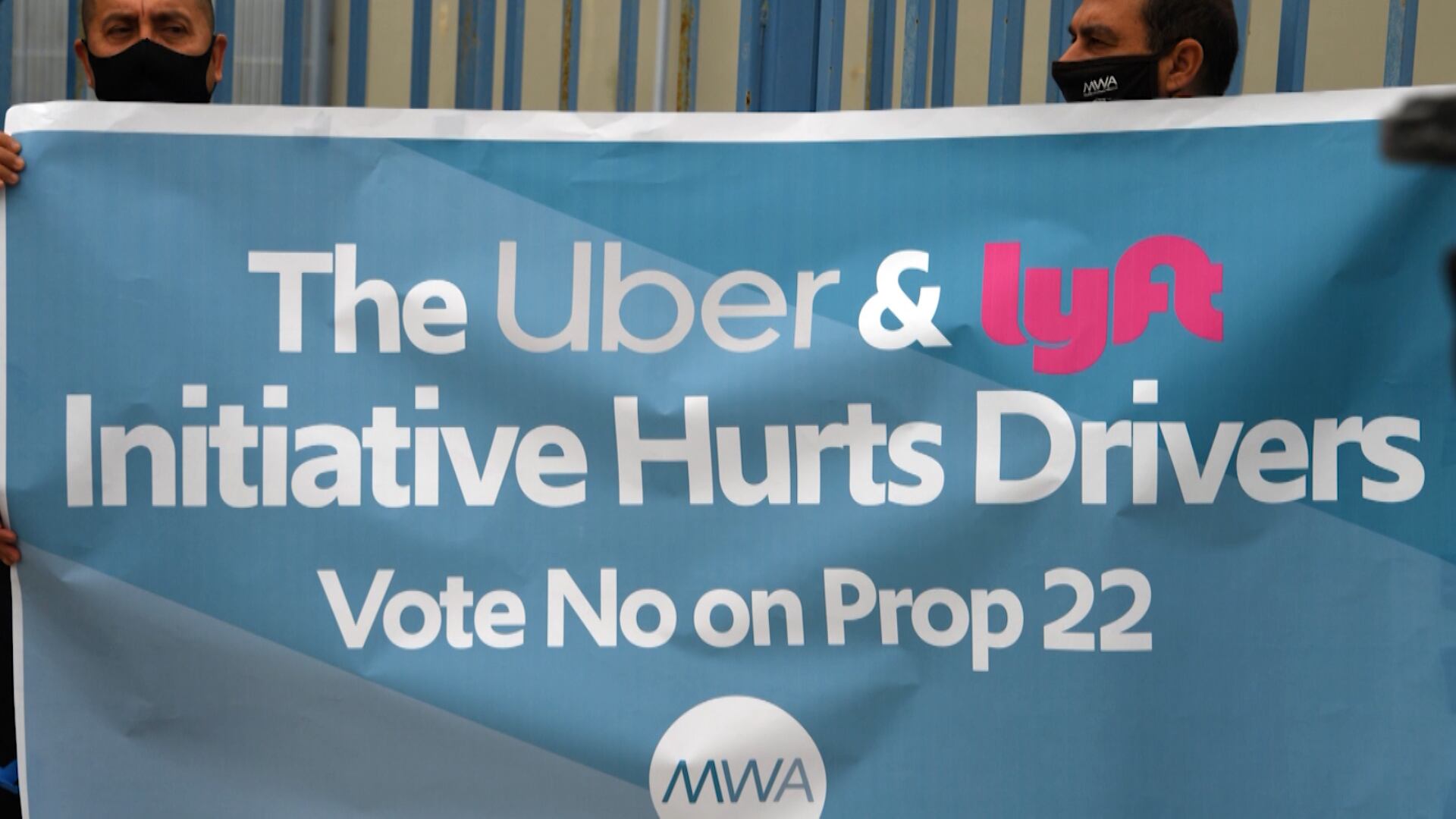
The push to regulate the gig worker economy is gaining steam as the share of workers who participate in freelancing through businesses like Uber and Lyft have also exponentially grown during the pandemic. Employment attorney Mark Kluger, founding partner at Kluger Healey, LLC, joined Cheddar to break down how the battle to reclassify gig workers will continue in the new year, and why the issue continues to generate conflict. "More and more workers are using gig work as their primary source of income and as a result of that they are not like employees in the sense that they don't have benefits like health insurance," Kluger noted.
Renewable energy company Heliogen has gone public via a SPAC merger with blank check company Athena Technology Acquisition Corp. on the NYSE. Joining Cheddar, founder and CEO Bill Gross went into why he felt the end of 2021 was the best time to get into the public markets. "If you think of the Industrial Revolution and the digital revolution, this renewable revolution is probably going to be as big or larger than that," he said. "So we're going to use this capital to scale our business, to meet more customer demand, to do more projects in parallel, and to scale our research and development to continue to drive down the price to be competitive with fossil fuels."
Carl "The Moon" Runefelt, a Bitcoin investment expert, recently made a hefty purchase of a $2 million Bugatti sports car at a Dubai dealership. The Swedish crypto evangelist joined Cheddar to talk about how he made the big acquisition of a luxury item he had long had his eye on and why he chose the dealership, The Car Vault, to make the unprecedented transaction. "They accepted crypto directly, and that was important to me," he said. "I am not going to go to any car dealership that don't accept crypto, and that's kind of a principle I have today."
Marjorie Mesidor, Partner at Phillips & Associates, joined Wake Up With Cheddar to break down the latest trends in the job market, as the demand for labor has recovered, but as the number of people willing to fill positions remains relatively low.