President Trump on Wednesday reversed his position on cutting payroll taxes to spur economic growth, telling reporters on the White House lawn that "we don't need it."

The reversal comes after days of mixed messages from the administration. The White House had first denied that it was considering a cut to payroll taxes since the economy, top officials claimed, was sound. However, on Tuesday, Trump said "payroll tax is something that we think about and a lot of people would like to see that."

In another about-face on Wednesday, Trump announced that he is "not looking at a tax cut now." The remarks follow a growing number of economists who have publicly warned that a recession in the U.S. is on the horizon.

"I don't think [Trump] is particularly concerned if what he says one day disagrees with what his advisors said the day before," said Brian Brenberg, the chair of the Program in Business and Finance at The King's College. "It's classic message testing by the president" to see how the media and markets react.

Recession concerns largely emerged last week after the U.S. Treasury's yield curve inverted; in other words, short-term investments in government bonds are now expected to pay more than long-term ones. The inversion — the first since the economic collapse of 2007-2008 — sent the markets plummeting.

A survey released this week by the National Association for Business Economics also found that 74 percent of U.S. economists believe the country will go into a recession by 2021.

"We don't need [a payroll tax cut]. We have a strong economy," Trump said Wednesday.

Payroll taxes, which apply to both employers and employees, are ubiquitous in the U.S. economy and fund major federal programs like social security and medicare. The taxes were lowered as part of the economic stimulus package following the Great Recession a decade ago, and the cut was extended by President Obama in 2012. Republicans initially opposed the cut at the time, citing concern over the federal deficit.

Yet today, many economists caution against cutting payroll taxes given the country's historically low unemployment, the current strain on social security spending, and the government's growing deficit, which has ballooned under Trump following policies like the 2017 tax cuts.

"Payroll taxes are a significant source of government revenue, and payroll tax cuts have been found to have little to no impact on long-term economic growth," the Tax Foundation said on Twitter.

On Wednesday, moreover, the Congressional Budget Office said that the federal budget deficit is accelerating faster than expected. The agency updated its deficit forecast to $960 billion in 2019 and over $1 trillion in 2020.

Cutting payroll taxes, experts say, will also not address the core concerns of investors: tariffs and trade.

"Most investors are unified in believing the only thing that's really going to meaningfully change the conversation around recession is doing something on trade," Brenberg said, noting that Trump's remarks on Tuesday did little to boost the markets.

Adam Michel, a tax policy analyst at the conservative Heritage Foundation, said that "high tariffs and trade uncertainty" were the main impediments to economic progress. "If the administration wants to boost the economy, they should start there," he said.


Share:
More In Business
Tesla Investor Believes Now is Great Opportunity to Buy Shares
Ross Gerber, Co-Founder, President, and CEO of Gerber Kawaski Wealth and Investment Management, joins Cheddar News' Closing Bell, where he says now is a great opportunity to buy low on Tesla after shares fell in light of the EV giant's latest earnings report.
Connectivity Solutions Provider Credo Goes Public on Nasdaq
High-speed connectivity solutions provider Credo went public on the Nasdaq on Thursday, raising $200 million in its IPO. CEO Bill Brennan, joined Cheddar to discuss its entry into the capital markets and the next chapter for the company. "We're going to be focused on what we have been focused on, which is really creating, creating innovative connectivity solutions that really pushed the edge on efficient power as well as very effective cost," he said.
BD Veritor Hopes to Take 'Guesswork' Out With Smartphone-Enabled COVID Test
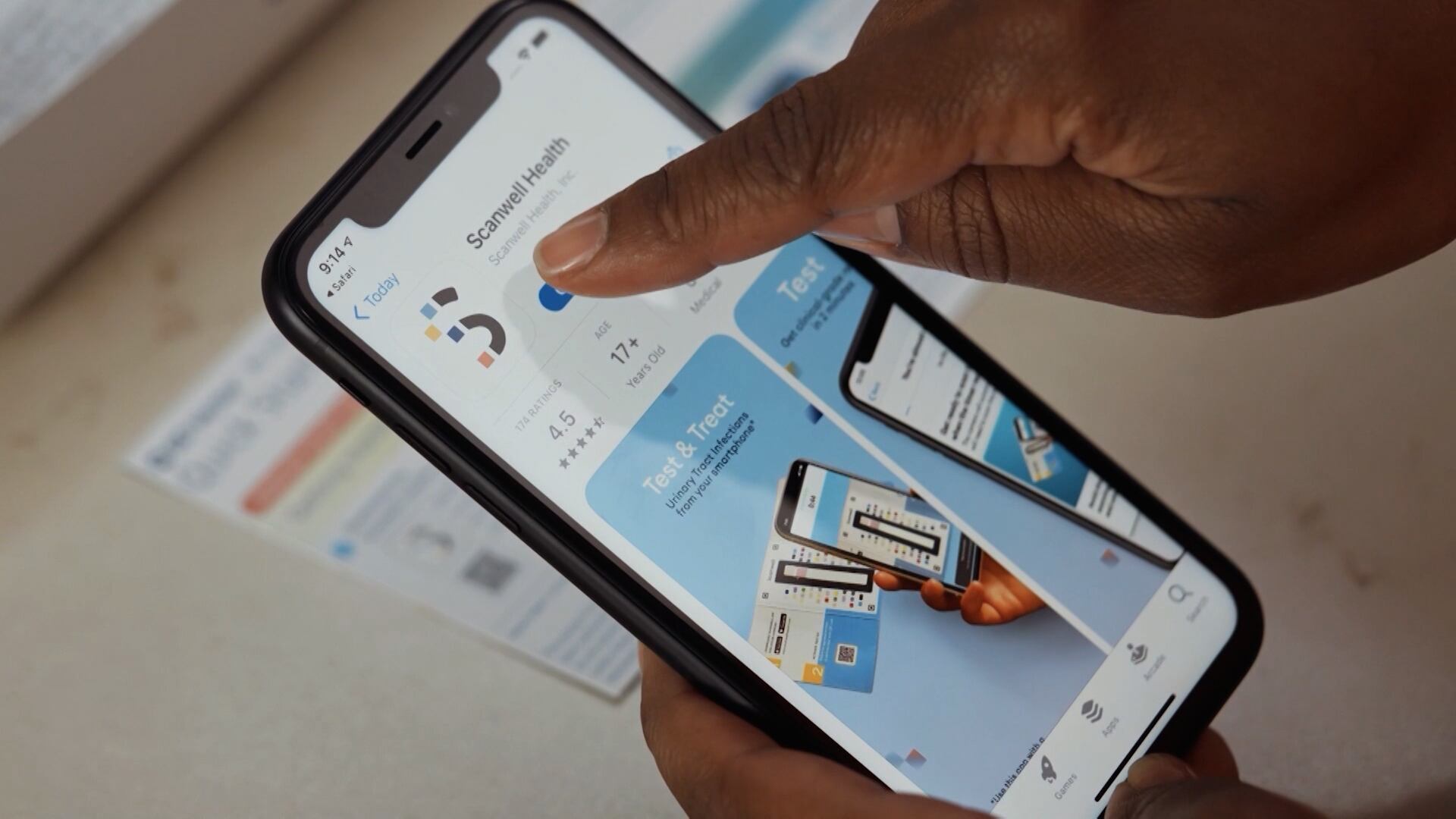
BD Veritor is a variation of the at-home COVID test that uses a smartphone to interpret the results. The test is taken via a nose swab test strip that is then scanned by your phone’s camera with the result clearly displayed as positive or negative. James Walker, vice president of integrated diagnostics USA for BD, joined Cheddar to discuss how the test hopefully takes the "guesswork out of testing." Walker also went into what BD is doing to deal with the surging demand for at-home tests amid the omicron spread. "While we don't disclose how much we produce, we have capacity to manufacture up to 12 million rapid antigen tests per month and are delivering on our commitments to distributors and retailers," he said.
Citi Teams Up With Tracy Anderson Method to Get Customers Cash Back on Fitness
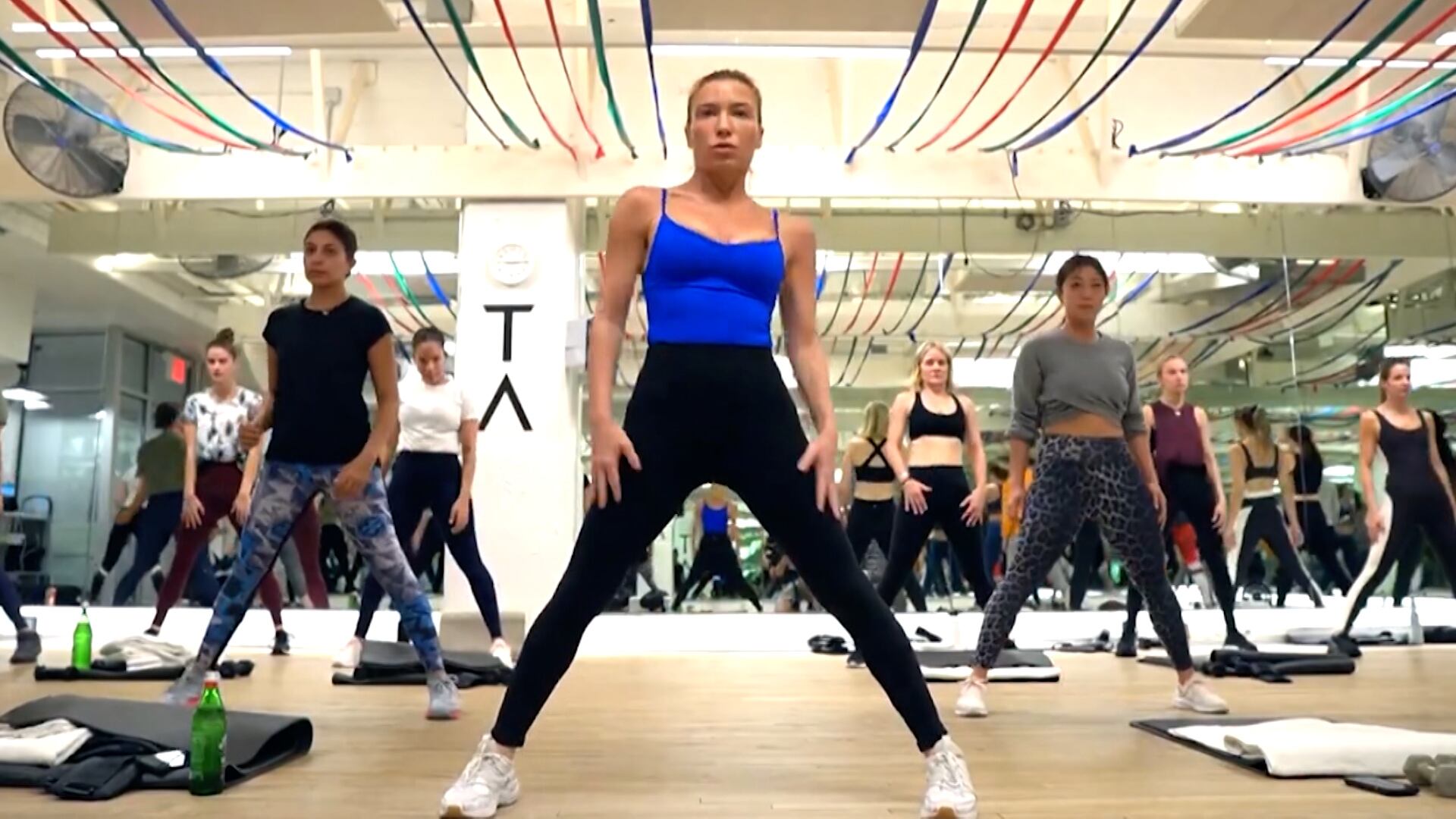
Citi recently began collaborating with fitness entrepreneur Tracy Anderson to promote its Custom Cash Credit card. Pam Habner, CEO of U.S. Branded Cards for Citi, along with Tracy Anderson, creator of The Tracy Anderson Method, joined Cheddar to discuss how health and fitness matched up with a cash back credit card. "The fact that Citi is going 'hey if you lead a healthy lifestyle, we're going to help you out. We understand that it's more expensive and we're going to give you cash back for living your best life,'" Anderson said about the partnership, which also includes a custom promotional Spotify playlist.
Stocks Close Lower As Investors Eye Fed Announcement, GDP, Earnings, & More
Stocks closed lower Thursday amid continued volatility. The S&P 500 was down 10% from its record high, the Dow was down 7%, and the Nasdaq was 4% away from bear market territory as it closed 16% below its record high. Investors are still processing this week's Federal Reserve announcement about a potential first rate hike in March. Chris Gaffney, President of World Markets at TIAA Bank, joins Cheddar News' Closing Bell to discuss today's close, the Fed's announcement, predictions about interest rate hikes, and more.
Crowdbotics Raises $22M Series A to Enable Anyone to Turn Ideas Into Apps
Low-code app development platform Crowdbotics raised $22 million in a Series A funding round led by Jackson Square Ventures. Crowdbotics has helped more than 14,000 customers launch apps without having to learn how to code. The company can offer a team of expert developers to help companies launch custom apps, or provide the means for companies to develop apps themselves. Crowdbotics CEO Anand Kulkarni joined Cheddar News' Closing Bell to discuss.
Load More