President Trump on Wednesday reversed his position on cutting payroll taxes to spur economic growth, telling reporters on the White House lawn that "we don't need it."
The reversal comes after days of mixed messages from the administration. The White House had first denied that it was considering a cut to payroll taxes since the economy, top officials claimed, was sound. However, on Tuesday, Trump said "payroll tax is something that we think about and a lot of people would like to see that."
In another about-face on Wednesday, Trump announced that he is "not looking at a tax cut now." The remarks follow a growing number of economists who have publicly warned that a recession in the U.S. is on the horizon.
"I don't think [Trump] is particularly concerned if what he says one day disagrees with what his advisors said the day before," said Brian Brenberg, the chair of the Program in Business and Finance at The King's College. "It's classic message testing by the president" to see how the media and markets react.
Recession concerns largely emerged last week after the U.S. Treasury's yield curve inverted; in other words, short-term investments in government bonds are now expected to pay more than long-term ones. The inversion — the first since the economic collapse of 2007-2008 — sent the markets plummeting.
A survey released this week by the National Association for Business Economics also found that 74 percent of U.S. economists believe the country will go into a recession by 2021.
"We don't need [a payroll tax cut]. We have a strong economy," Trump said Wednesday.
Payroll taxes, which apply to both employers and employees, are ubiquitous in the U.S. economy and fund major federal programs like social security and medicare. The taxes were lowered as part of the economic stimulus package following the Great Recession a decade ago, and the cut was extended by President Obama in 2012. Republicans initially opposed the cut at the time, citing concern over the federal deficit.
Yet today, many economists caution against cutting payroll taxes given the country's historically low unemployment, the current strain on social security spending, and the government's growing deficit, which has ballooned under Trump following policies like the 2017 tax cuts.
"Payroll taxes are a significant source of government revenue, and payroll tax cuts have been found to have little to no impact on long-term economic growth," the Tax Foundation said on Twitter.
On Wednesday, moreover, the Congressional Budget Office said that the federal budget deficit is accelerating faster than expected. The agency updated its deficit forecast to $960 billion in 2019 and over $1 trillion in 2020.
Cutting payroll taxes, experts say, will also not address the core concerns of investors: tariffs and trade.
"Most investors are unified in believing the only thing that's really going to meaningfully change the conversation around recession is doing something on trade," Brenberg said, noting that Trump's remarks on Tuesday did little to boost the markets.
Adam Michel, a tax policy analyst at the conservative Heritage Foundation, said that "high tariffs and trade uncertainty" were the main impediments to economic progress. "If the administration wants to boost the economy, they should start there," he said.
Solid-state battery maker Factorial Energy recently raised $200 million in a Series D round led by Mercedes-Benz and Stellantis. Factorial says the funding will be used to accelerate commercial production and deployment of its solid-state battery technology, which the company says is safer, and offers up to 50% more driving range than current lithium-ion technology. Factorial also has joint development agreements (announced in late 2021) with Mercedes-Benz, Stellantis, and Hyundai, three of the top 10 global automotive manufacturers, to commercialize its batteries. Factorial CEO Siyu Huang joined Cheddar News' Closing Bell to discuss.
Art Hogan, Chief Market Strategist at National Securities, joins Cheddar News' Closing Bell, where he says investors are paying more attention to earnings this week, which is leading to the Dow, S&P, and Nasdaq gaining this week. Hogan also breaks down Spotify and Meta's earnings, both of which came out after the bell.
Google's parent company Alphabet reported blockbuster fourth quarter earnings, boosted by better-than-expected Google ad revenue and Google Cloud revenue. The results sent Alphabet's stock soaring, and the company could come close to hitting a $2 trillion market valuation similar to other tech giants Apple and Microsoft. The company also announced a 20-for-1 stock split, which would make shares more accessible to would-be investors. Mark Lehmann, CEO at JMP Securities, a Citizens Company, joins Closing Bell to discuss Alphabet's earnings report, whether the company will reach a $2 trillion market cap, its stock split, and more.
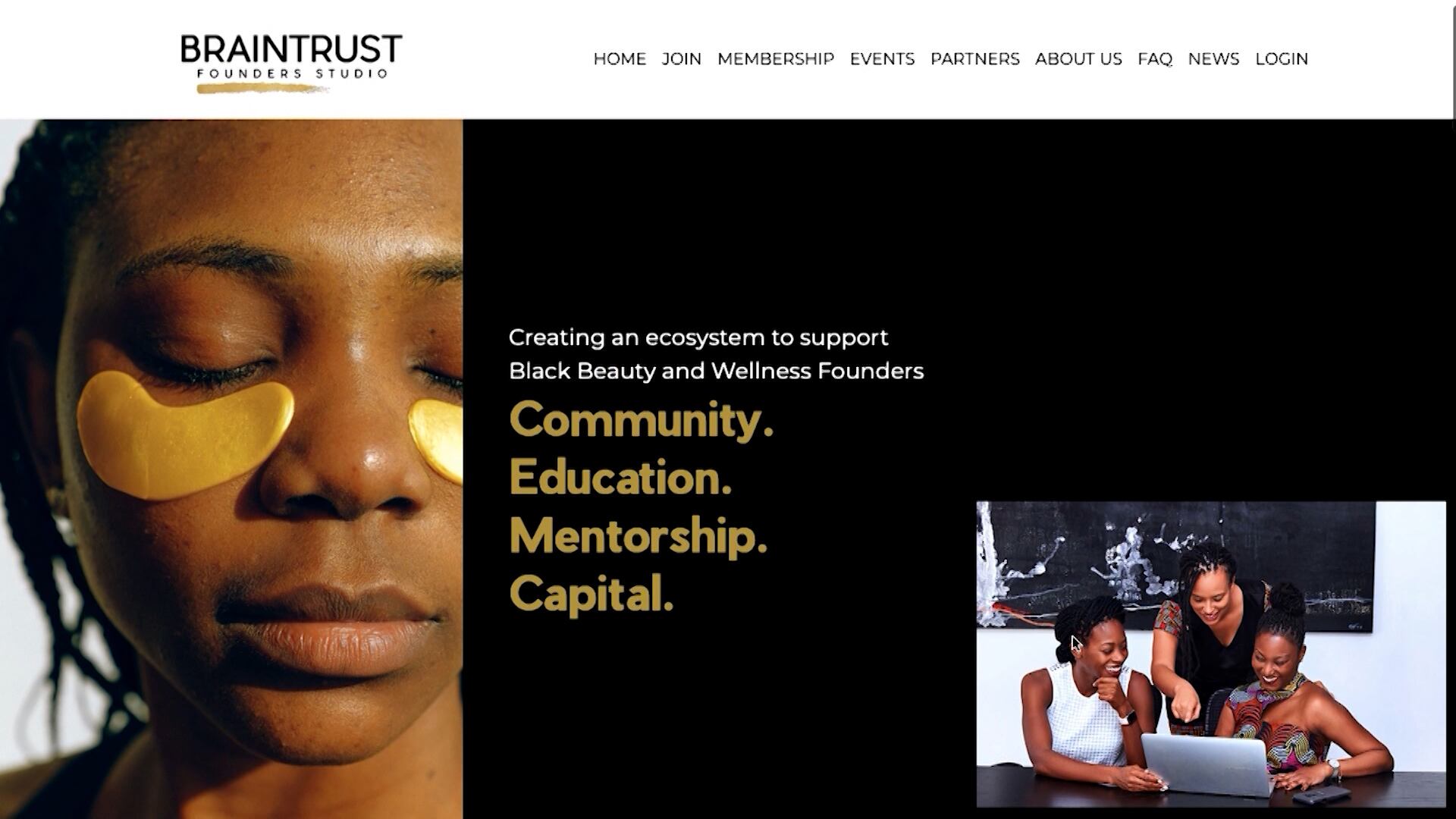
Kendra Bracken-Ferguson, founder of BrainTrust Founders Studio joins Cheddar News to talk about the importance of supporting Black beauty and wellness founders.
Damali Peterman, founder and CEO of Breakthrough ADR, joins Cheddar News to discuss what Black professionals are up against in the workplace this year.
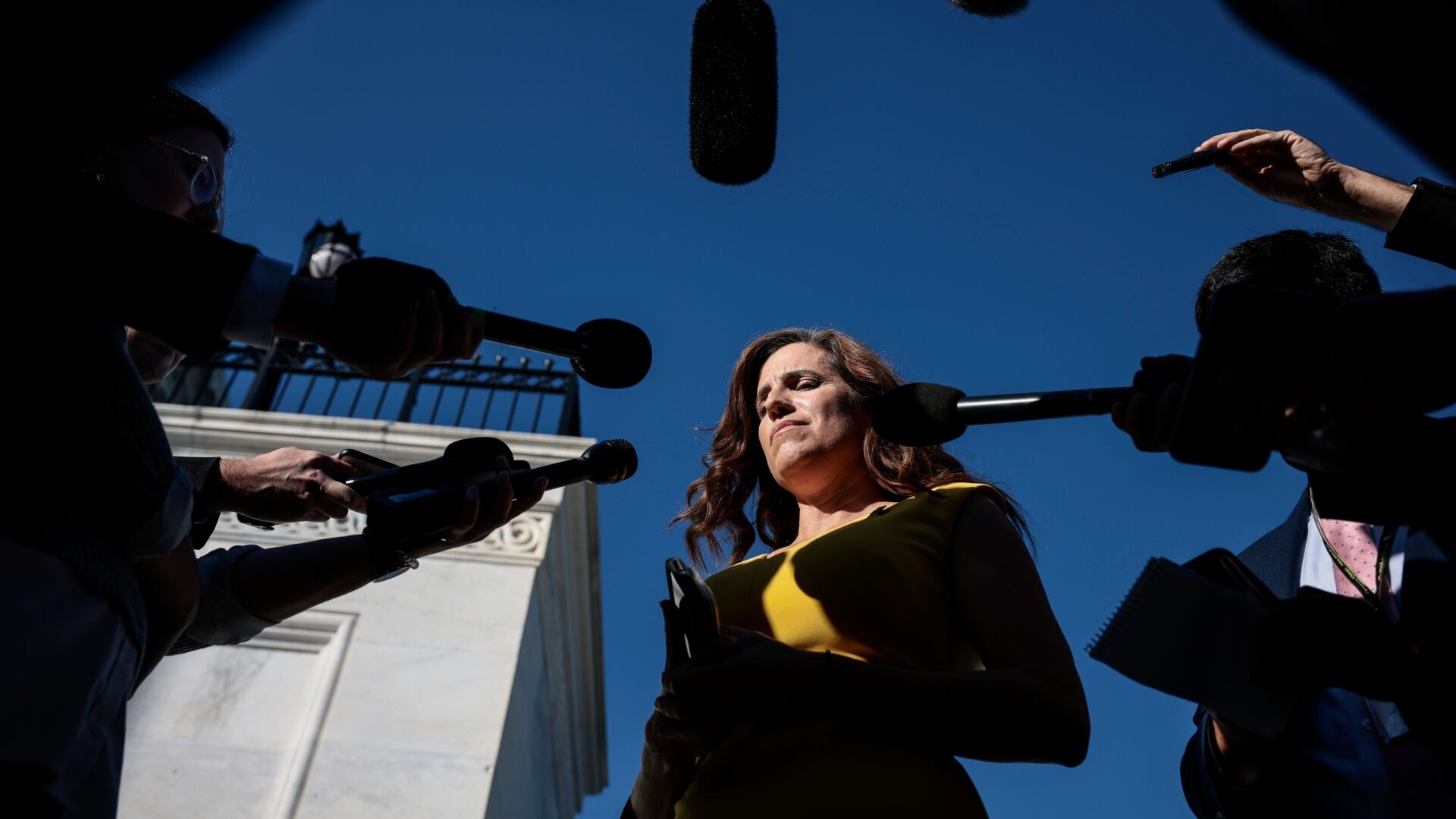
Rep. Nancy Mace (R-S.C. 1st District) joined Cheddar to discuss her cannabis legalization bill, the States Reform Act, and the prospects for gaining bipartisan support for a bill that has garnered the endorsement of e-commerce giant Amazon. This legislation is supported by businesses large and small, Amazon obviously being the most recent and largest business to support it," Mace said. "They don't want to sell pot. But what it does do is it affects their working employment pool." She stated that 10 percent of eligible new hires for Amazon are affected by restrictive marijuana laws. The representative also explained that the bill leaves equity provisions up to the states rather than mandating them on a federal level.
Jess Hunichen and Emily Ward, co-founder of Shine Talent Group join Cheddar News to talk about The BodCon conference and how it empowers men and women to feel confident.
FIT:MATCH is looking to change the game when it comes to the way retailers size clothes. The company's augmented reality technology takes a look at body shape data rather than generalized, traditional sizing parameters to determine how a piece of apparel will fit wearers. Haniff Brown, CEO and founder, joined Cheddar to discuss the patented ar-powered apparel technology and partnering with pop superstar Rihanna’s Savage X Fenty lingerie line. "We launched in Vegas with Savage on January 22 and we've been having goosebumps at some of the testimonials, where customers are saying this is such an easier process versus going into a fitting room and having an associate have to touch and get handsy with a cold tape measure," Brown said.