Facing Outrage, Trump Backtracks on Family Separation Policy
*By Alisha Haridasani*
President Trump signed an [executive order](https://www.whitehouse.gov/presidential-actions/affording-congress-opportunity-address-family-separation/) on Wednesday ending the practice of separating children from their parents while still detaining those who have illegally crossed the southern border.
"We're going to keep the families together," Trump said when he signed executive order. "At the same time we are keeping a very powerful border."
After widespread condemnation from elected officials, corporate leaders, former first ladies, and most recently, the Pope, President Trump directed Homeland Security to detain families together while they wait for their case to be processed.
Detaining families together, however, goes against a 1997 consent decree that prohibits the federal government from holding children for more than 20 days. In his executive order, Trump also directed the Attorney General Jeff Sessions to modify the decree in order to "detain alien families together throughout the pendency of criminal proceedings."
Trump's action was an extraordinary reversal for the president, who as recently as Tuesday night was defending his administration's "zero tolerance" police and blaming Congress for the crisis.
His about-face appears to have been driven by the [bipartisan national outrage](https://cheddar.com/videos/republicans-scramble-to-fix-border-crisis-as-trump-digs-in) towards the new policy, which was implemented by Sessions in April and which has so far separated more than 2,000 children from their parents.
“I think he probably expected he would have the support of Republicans to try to corner the Democrats and isolate them on this,” said Jack Crowe, news writer at the National Review.
“But what’s happened is actually a lot of his own party have turned against him on this,” he said. “He doesn’t have a lot of allies left in this.”
Trump's executive order also calls on Congress to draw up a broader package that would address immigration policy and fund his border wall.
In the days leading up to the executive order, the administration also faced condemnation from the private sector, as major companies weighed in on the issue and urged policy changes.
“It is a moral imperative to stop separating families,” said Goldman Sachs CEO Lloyd Blankfein, who rarely speaks out on political issues.
Apple, Microsoft, and Facebook chiefs have all also vehemently condemned Trump while Uber is reportedly exploring how its legal team can help the migrant families.
For the full interview, [click here](https://cheddar.com/videos/why-president-trump-says-hell-end-family-separation-at-the-border).
Terrell Jermaine Starr, senior fellow with the Atlantic Council and host of the Black Diplomats podcast joins Cheddar News to discuss Russia's attempt to invade Ukraine.
With an increasing number of teachers and staff calling out sick by the day, the state of Oklahoma is turning to an unusual solution. Republican Governor Kevin Stitt has issued an executive order that permits state employees to work as substitute teachers. Shaily Baranwal, founder and CEO of Elevate K-12, joins Cheddar News to discuss.
On Thursday, Secretary of State Antony Blinken addressed the stance of the U.S. and its allies should Russia make any forays into Ukraine, a seeming response to President Biden's remarks that should Putin engage in something short of a full invasion, there might be some indecision among allied nations regarding what to do. Ariel Cohen, a senior fellow at the think tank Atlantic Council, joined Cheddar to discuss the difficulty faced by Blinken wrangling unity as tensions run high in the region. "There'll be a smaller incursion, and the president implied, there'll be a weaker response because our European allies have created this horrible situation where they are dependent on Moscow for their gas supply," Cohen explained.
During a nearly two-hour press conference on Wednesday, President Biden spoke on his accomplishments and challenges from the first year of his presidency, and what his administration hopes to accomplish in the coming year. However, his approval ratings are underwater as COVID remains a big concern for voters — as does inflation, noted Tom Bevan, co-founder and president of polling aggregator RealClearPolitics. "The public thinks [inflation] is priority number one, and the administration is concerned about it, they talk about it, but they're not spending enough time on it as far as the public is concerned," said Bevan.
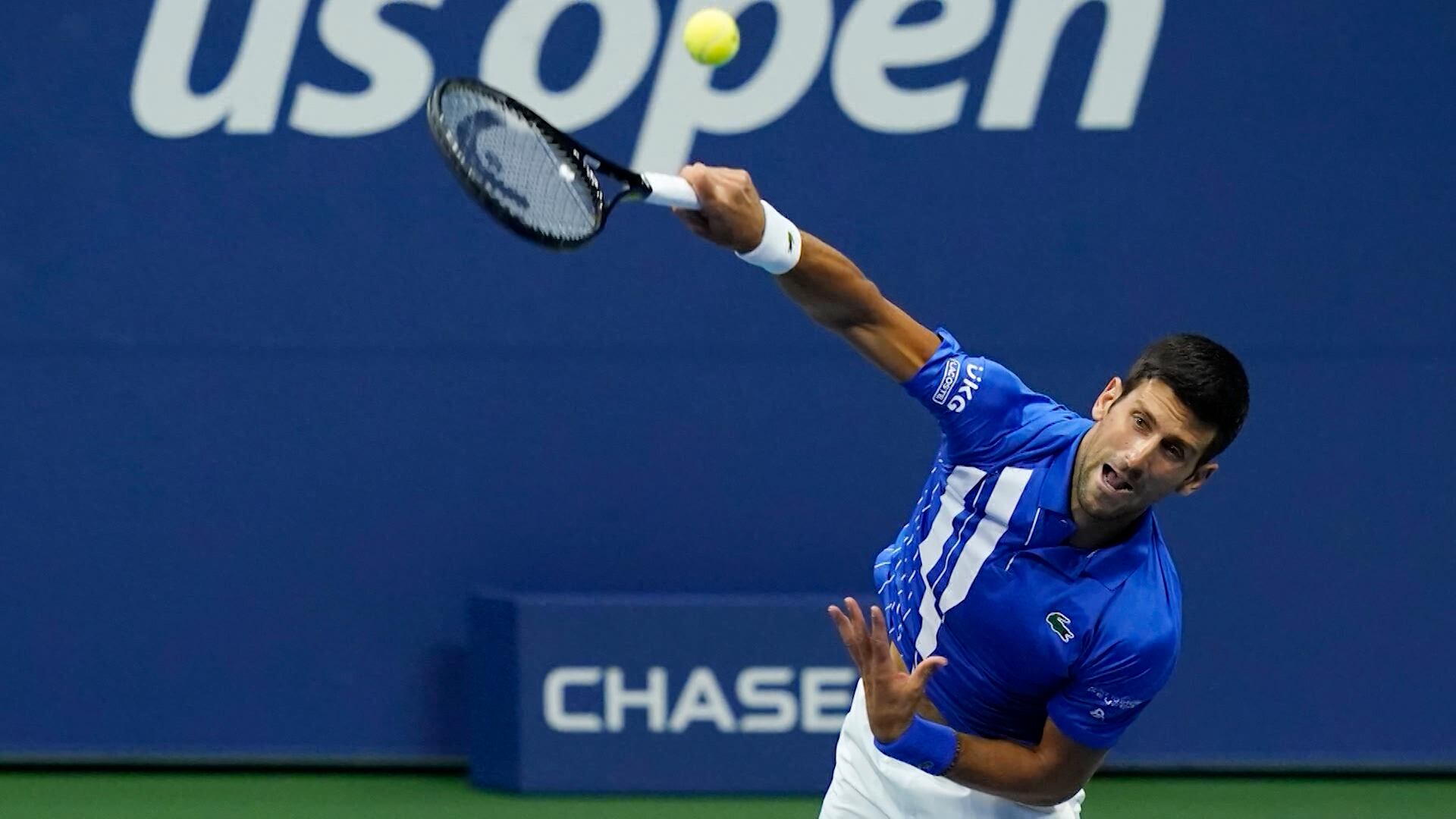
The drama surrounding tennis star Novak Djokovic continues after he was deported from Australia over the weekend due to the nation's COVID-19 vaccine requirements. Djokovic was forced to leave the country on the eve of what was to be his first match in defense of his Australian Open title after three judges ruled in favor of his removal and revealed their reasoning for doing so. Adding to his woes, a law recently passed in France is putting his chances of defending his French Open title in jeopardy. The director of Marist's Center for Sports Communication, Jane McManus, joined Cheddar to discuss the ongoing fallout.
As the midterm elections get ever closer, candidates have been getting creative with their campaigns to stick out and to connect with voters. Gary Chambers, a Democratic candidate for the U.S. Senate from Louisiana, has definitely attracted attention with an advertisement featuring him smoking a blunt, making a point about the inequity of anti-cannabis laws. "We wanted to bring the seriousness of the moment," he said of the ad. "But we also wanted to make sure that people understand that there are 19 states that are legal right now but Black people and brown people are being over-incarcerated in mostly Southern and Midwestern states in America for cannabis possession."
If some members of Congress have their way, there might finally be a 'TLDR' on sites' terms of service, introduced by the terms-of-service labeling, design, and readability act – or TLDR for short. With this act, users will actually understand what they're agreeing to or the many ways in which their data is being used before pressing 'accept.' J.D. sat down with co-sponsor of the bill and Senator Bill Cassidy, to discuss.
President Joe Biden's first year in office is wrapping up. What has he achieved, and what else remains on the table while the Democrats have control of Washington? Amid an ongoing pandemic and rising inflation, Biden's approval rating is at an all-time low and his party is plagued by infighting. Will he be able to continue pushing key parts of his agenda? Paul Glastris, former Bill Clinton speechwriter & Editor-in-chief of 'Washington Monthly,' joins Cheddar News' Closing Bell to discuss the president's achievements in his first year, where he's fallen short, and what he must do in order to get more of his agenda signed into law.
Tech giants Meta, Amazon, Alphabet, and Apple are faced with a bipartisan antitrust legislation effort underway in the Senate Judiciary Committee. The companies stand accused of promoting their own goods and services over smaller competitors on their platforms, holding too much monopolistic power via their app stores and services. Adam Kovacevich, founder and CEO of Chamber of Progress, a technology industry trade group, joined Cheddar to argue that the bills that are being debated currently could end up hurting consumers, rather than helping.