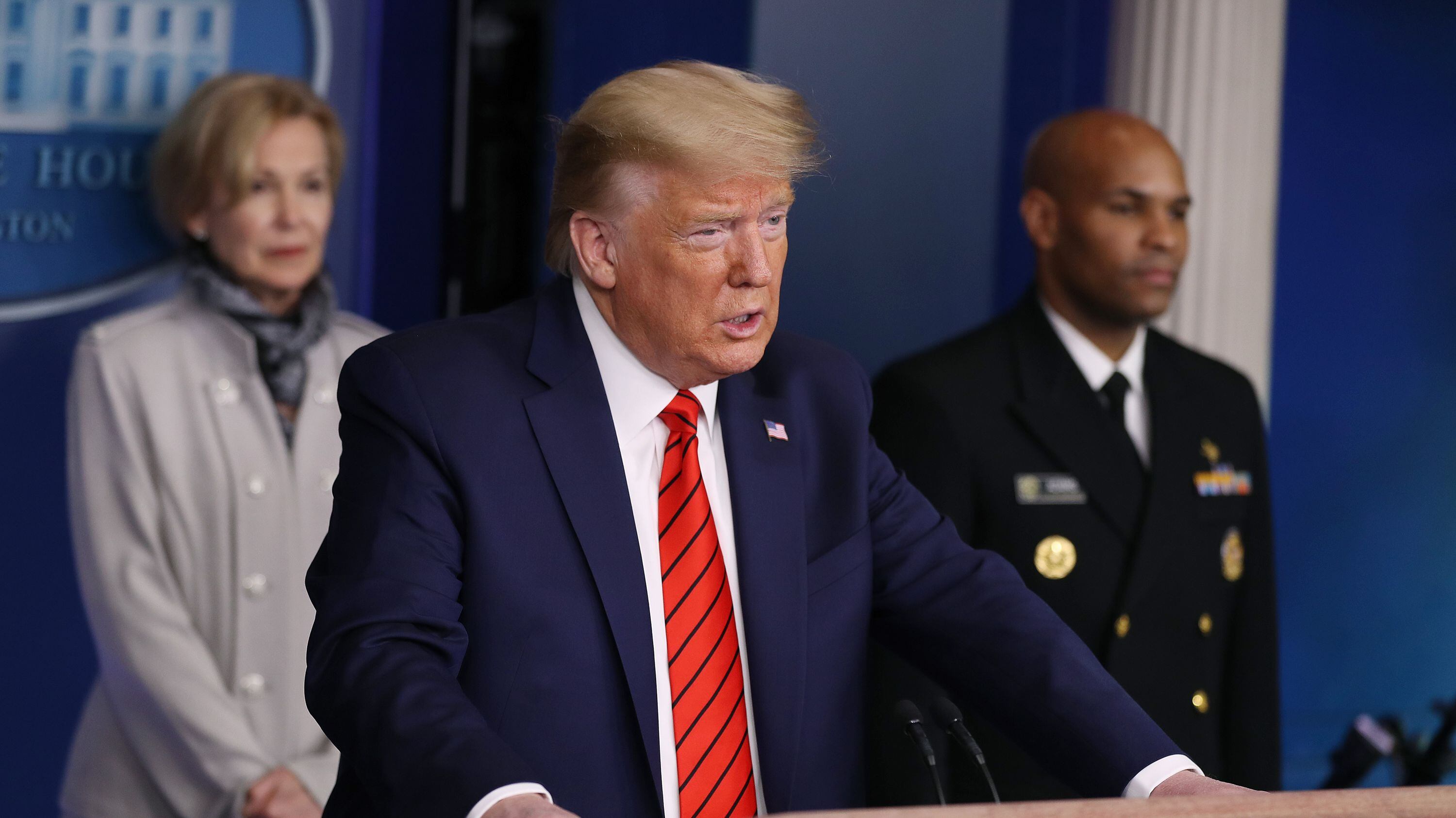
President Donald Trump speaks speaks on the latest developments of the coronavirus outbreak, while flanked by White House coronavirus response coordinator Debbie Birx (L), and U.S. Surgeon General Jerome Adams (R), in the James Brady Press Briefing Room at the White House March 19, 2020. (Photo by Chip Somodevilla/Getty Images)
President Donald Trump in a press conference on Thursday said the Food and Drug Administration is fast-tracking efforts to approve an antiviral therapy, best known for treating malaria, for use in coronavirus cases.
The drug, hydroxychloroquine, was developed more than a half-century ago and is approved for treating malaria, arthritis, and other ailments. Reports out of China and Italy suggest the drug may help, but there is no hard data yet.
"We're going to be able to make that drug available almost immediately," Trump said.
The FDA is working to conduct a "large, pragmatic clinical trial" quickly to confirm the drug's benefit to coronavirus patients, said Commissioner Dr. Stephen Hahn.
He also tempered the president's optimism about the still-untested solution.
"What's also important is not to provide false hope," he said. "We may have the right drug, but it might not be in the appropriate dosage form right now, and it might do more harm than good."
New antiviral therapies face a shorter and less arduous approval process than vaccines, several of which are under development with 12 to 18-month timelines.
"The therapies are something we could move on much faster potentially," Trump said.
He claimed the administration "slashed red tape" to develop new vaccines and therapies.
The president also held out on confirming whether he would invoke the Defense Production Act, which he signed on Wednesday, to mandate the production of needed medical supplies such as N95 respirators and surgical masks.
"If we find that we need something, then we will do that," he said.
Trump repeated that he was open to the federal government buying equity stakes in the airline, cruise, hospitality, and other industries hurt by the outbreak.
The press conference opened with more controversial language placing the blame squarely on China for the outbreak, despite concerns voiced about potentially exacerbating a backlash against Asian Americans.
"We continue our relentless effort to defeat the Chinese virus," Trump said.
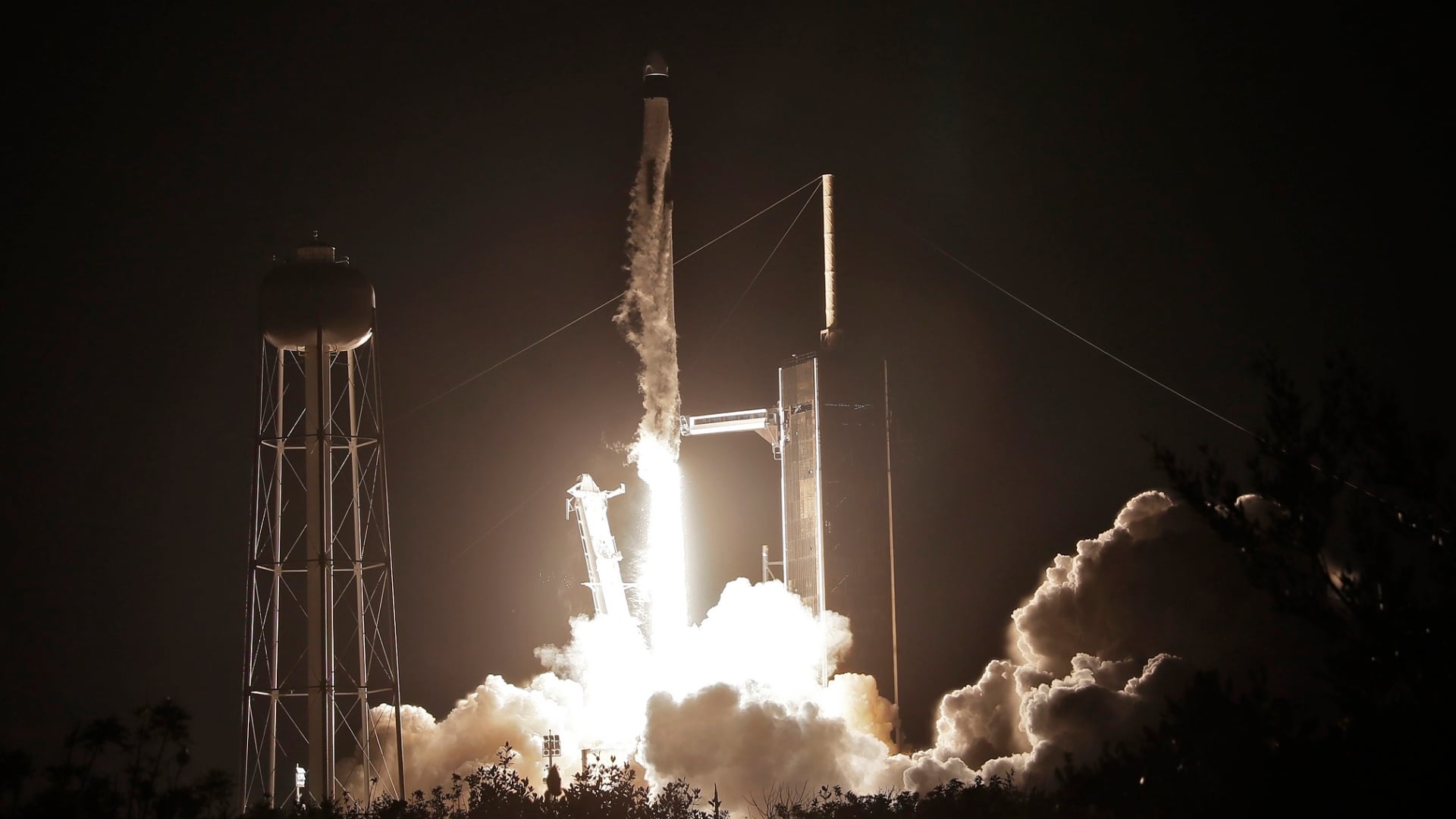
Catching you up on what you need to know on April 27, 2022, with Tesla stocks absorbing an initial hit following Elon Musk's purchase of Twitter, Russia pausing its natural gas supplies to Poland and Bulgaria, NASA's SpaceX Crew-4 mission taking off, and more.
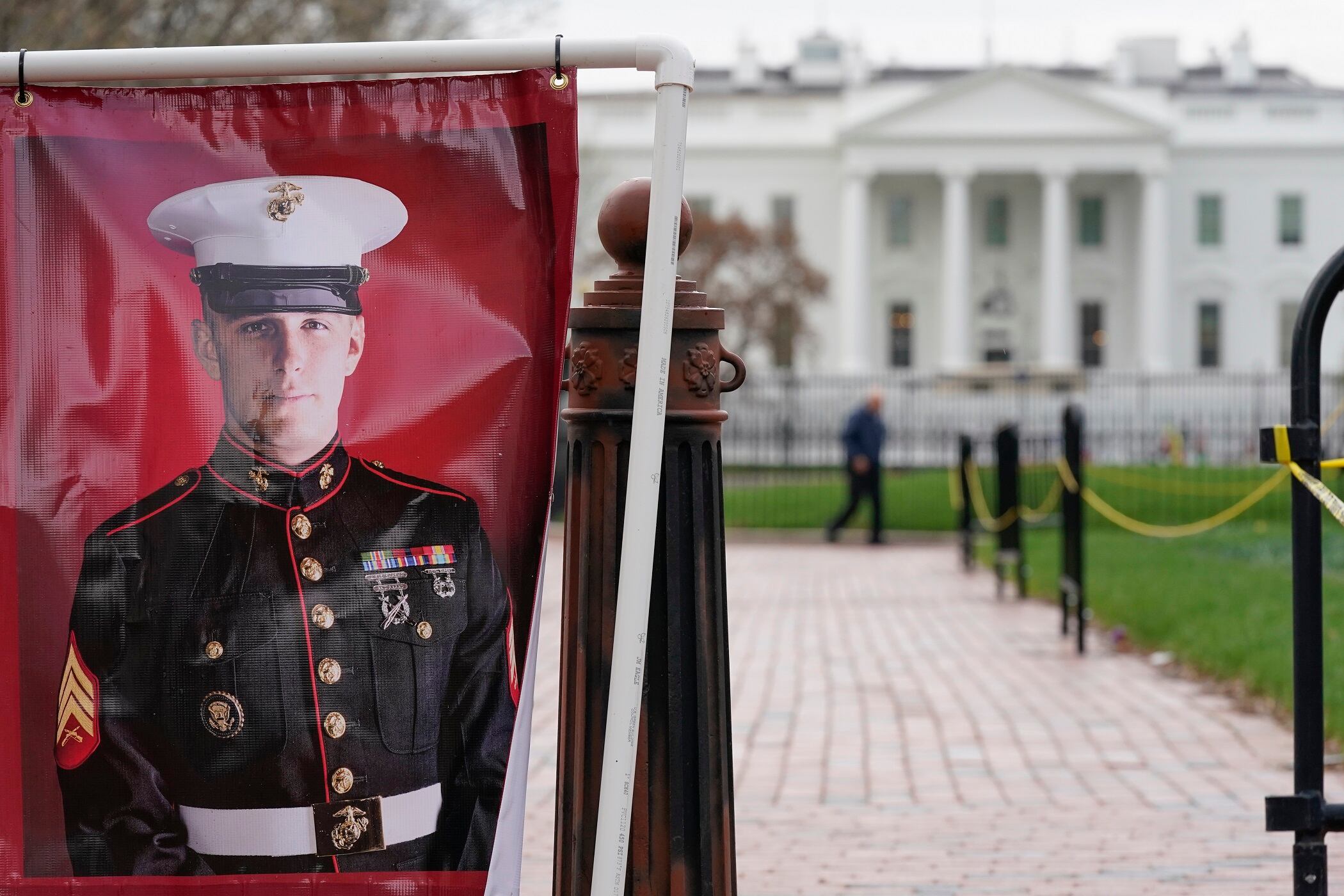
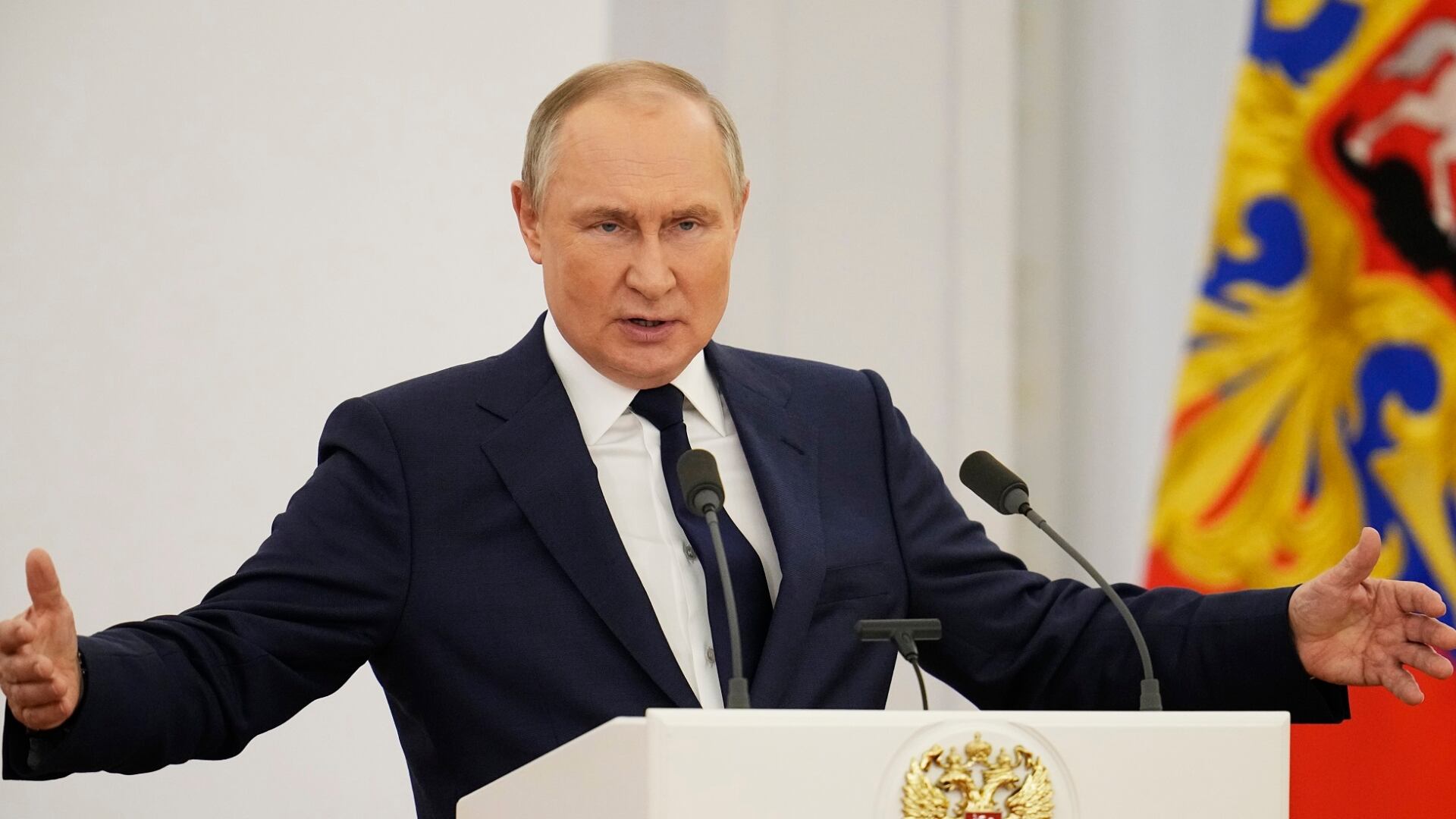
Russia and the United States have exchanged prisoners. Russia released a Marine veteran jailed in Moscow while the U.S. released a convicted Russian drug trafficker serving a prison sentence in Connecticut.
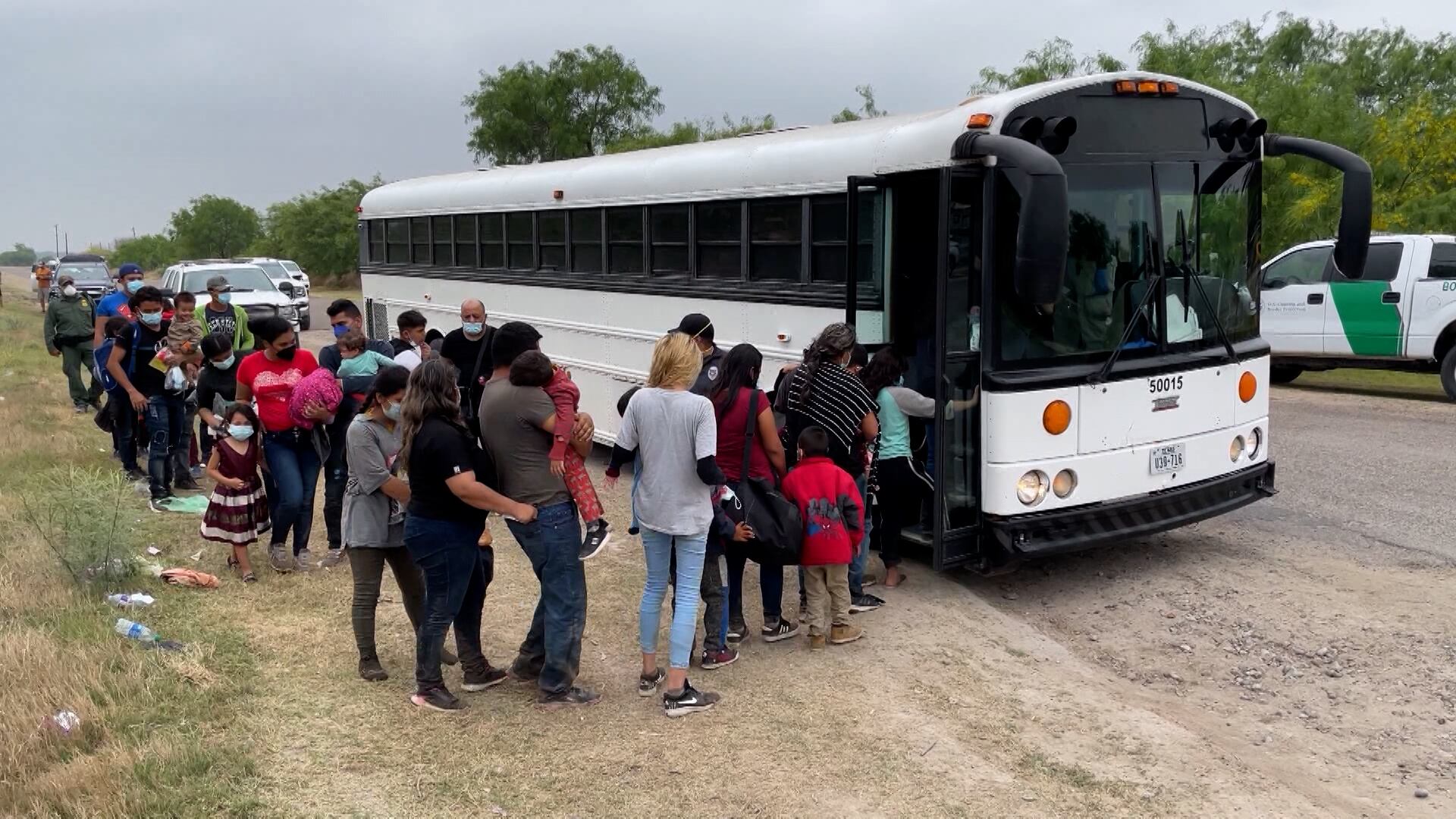
President Biden wants to repeal a Trump-era policy called Title 42, which makes it harder for migrants to seek asylum. A federal judge has temporarily blocked the administration from letting this happen. Cheddar News is joined by Maria Pabon, Dean Brian Bromberger Distinguished Professor of Law at Loyola University, to discuss.
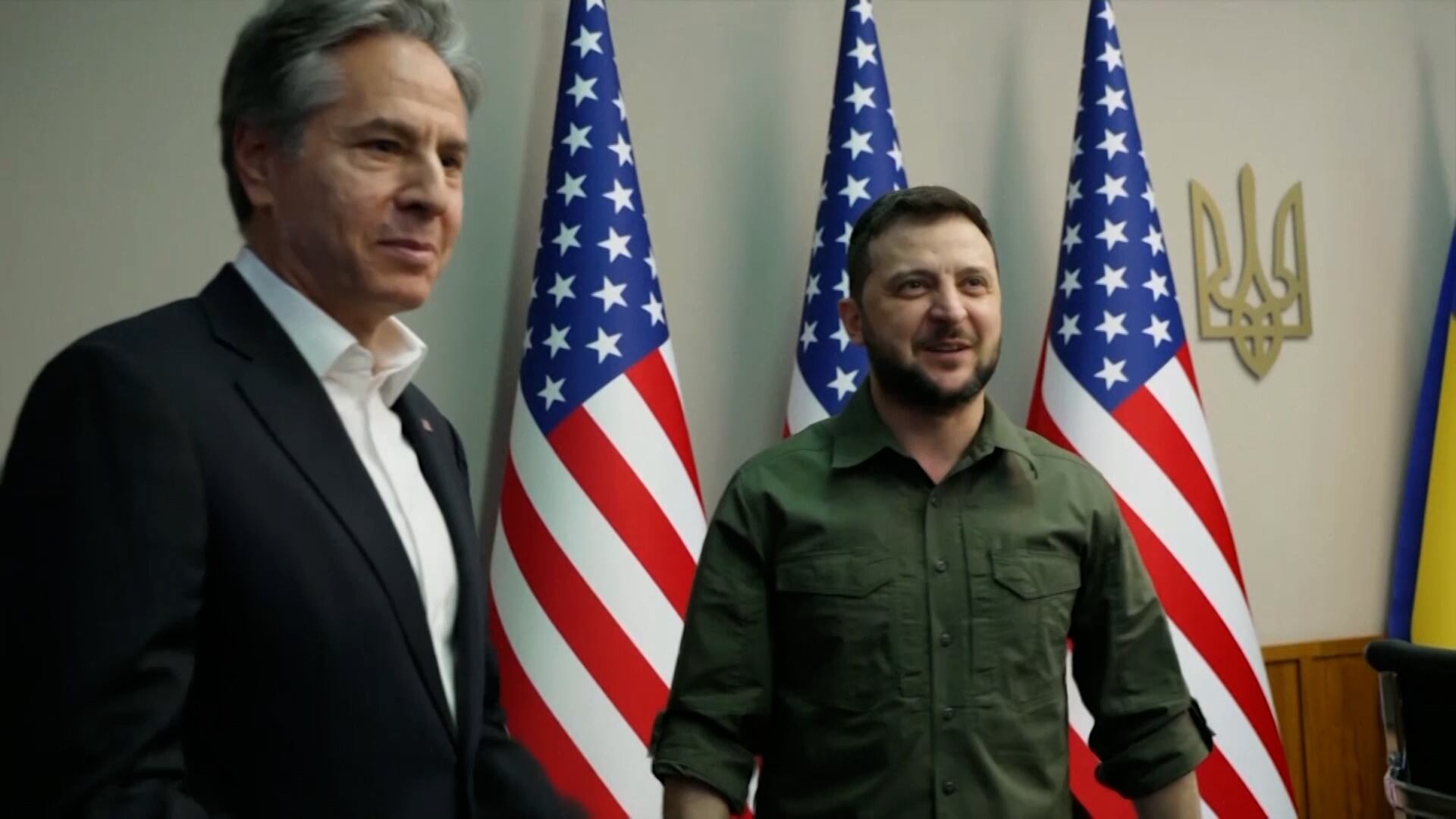
Politico's Defense Reporter Paul McLeary joined Cheddar News' Closing Bell to discuss the significance of cabinet members Secretary of State Antony Blinken and Defense Secretary Lloyd Austin's recent trip to Ukraine, and to break down how the U.S. is furthering its support for the besieged nation as Russian aggression intensifies.
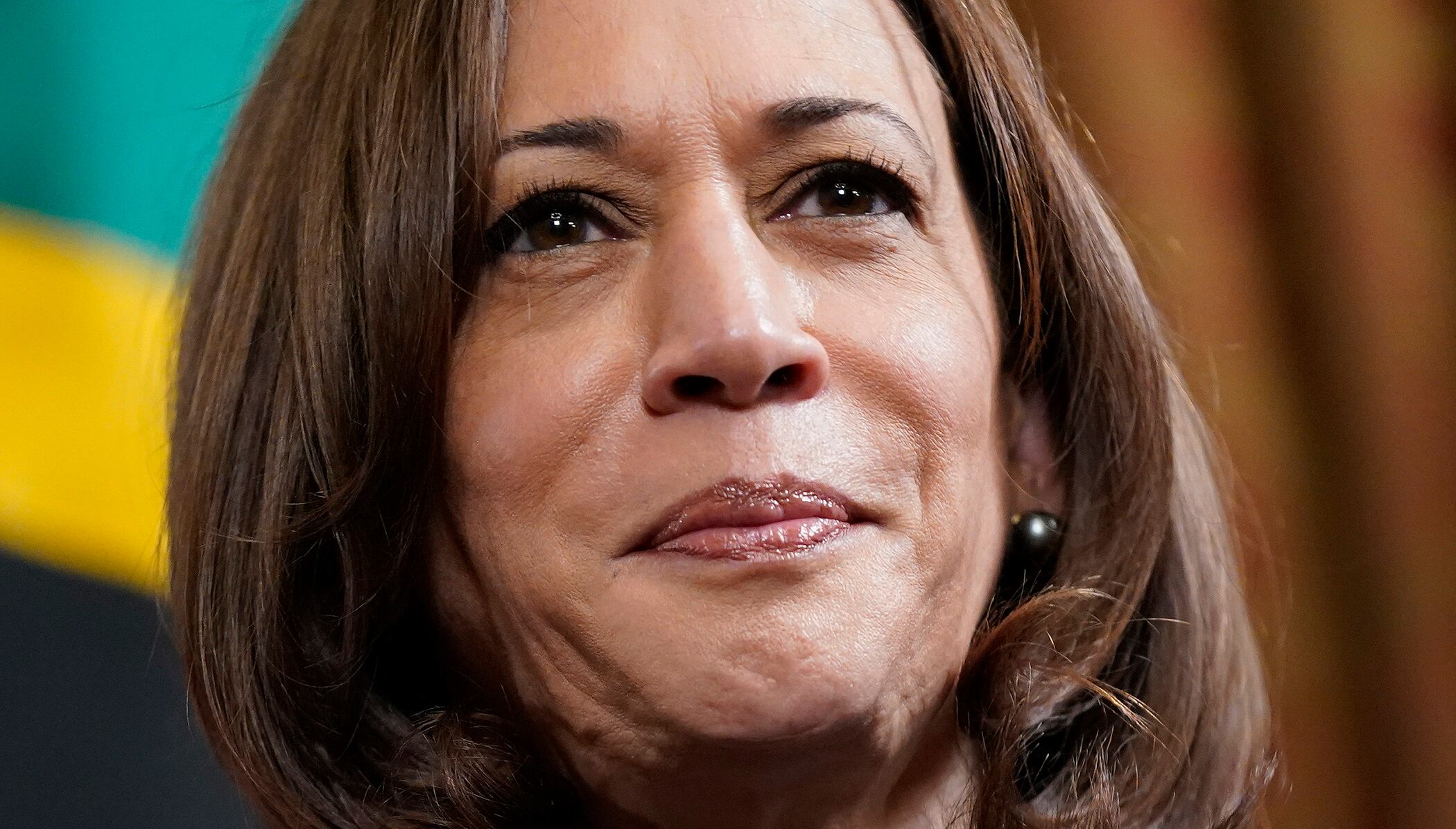
Vice President Kamala Harris tested positive for COVID-19 on Tuesday, the White House announced. That's underscoring the persistence of the highly contagious virus even as the U.S. eases restrictions in a bid to revert to pre-pandemic normalcy.
Catching you up on what you need to know on April 26, 2022, with Elon Musk’s purchase of Twitter for $44 billion, Russia warning of a possible threat of World War III, the FDA approving a COVID treatment for children under 12, and more.
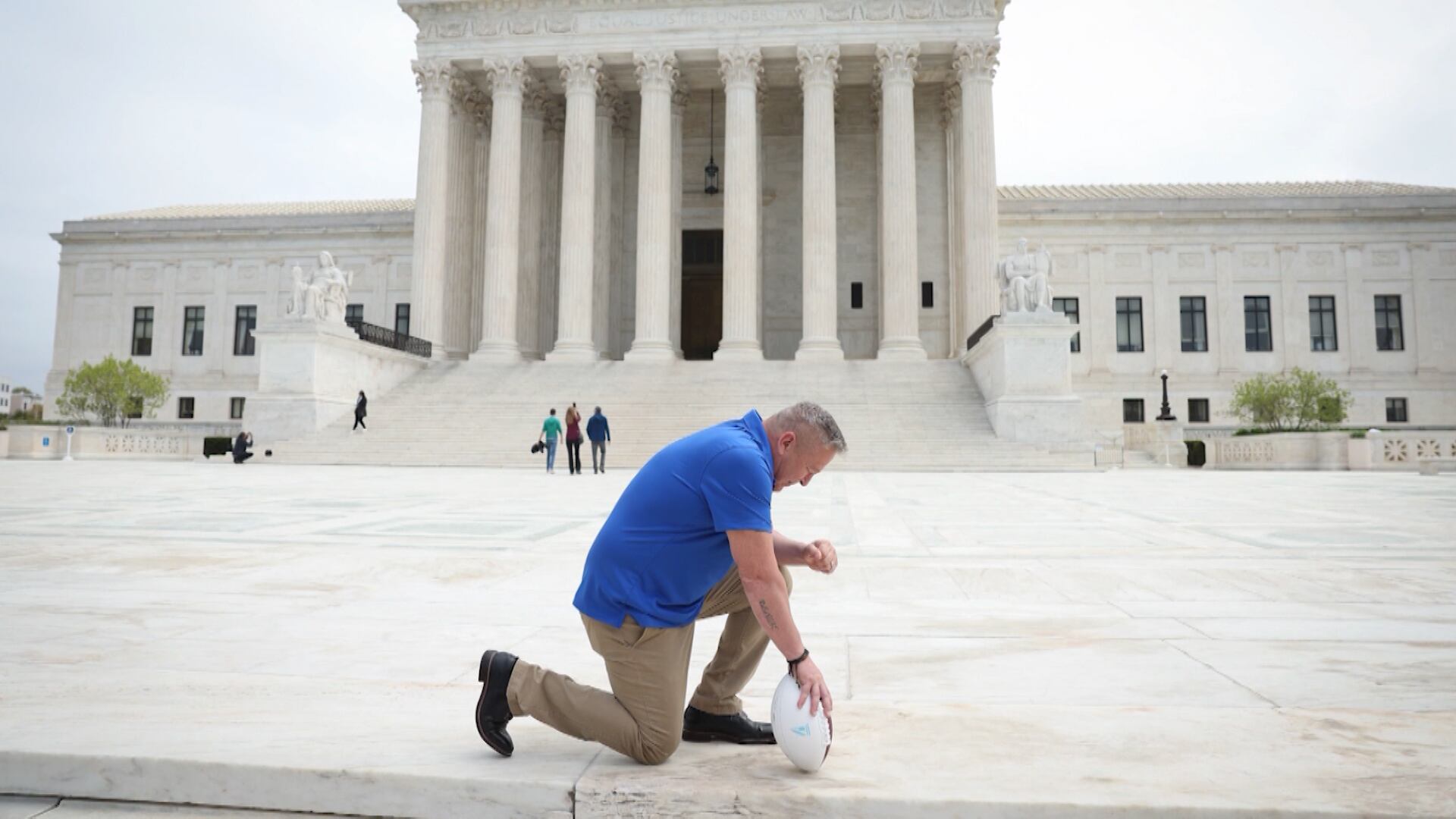
The Supreme Court is taking on the case of Joseph Kennedy, who was fired from his job as Bremerton High School assistant coach in Washington for his post-match prayers that were joined by students. Rachel Laser, President and CEO of Americans United for Separation of Church and State, joins Cheddar News to explain the possible implications of a ruling.
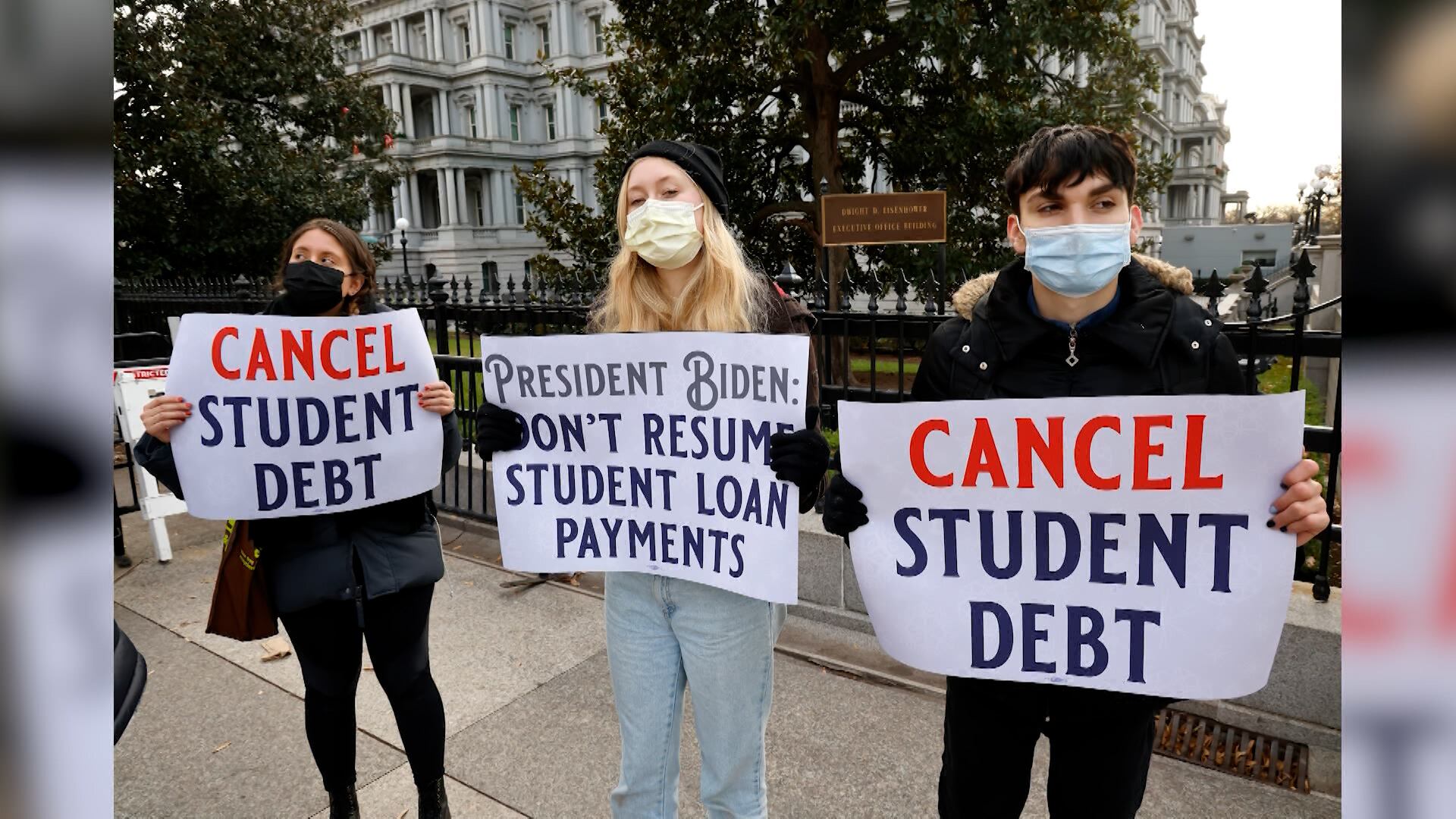
Student loans are affecting about 46 million Americans across the country, adding up to nearly $1.7 trillion of debt total. President Biden has announced a handful of actions designed to bring millions of borrowers a step closer to debt forgiveness. Katie Lobosco, writer for CNN Politics, joins Cheddar News to discuss.