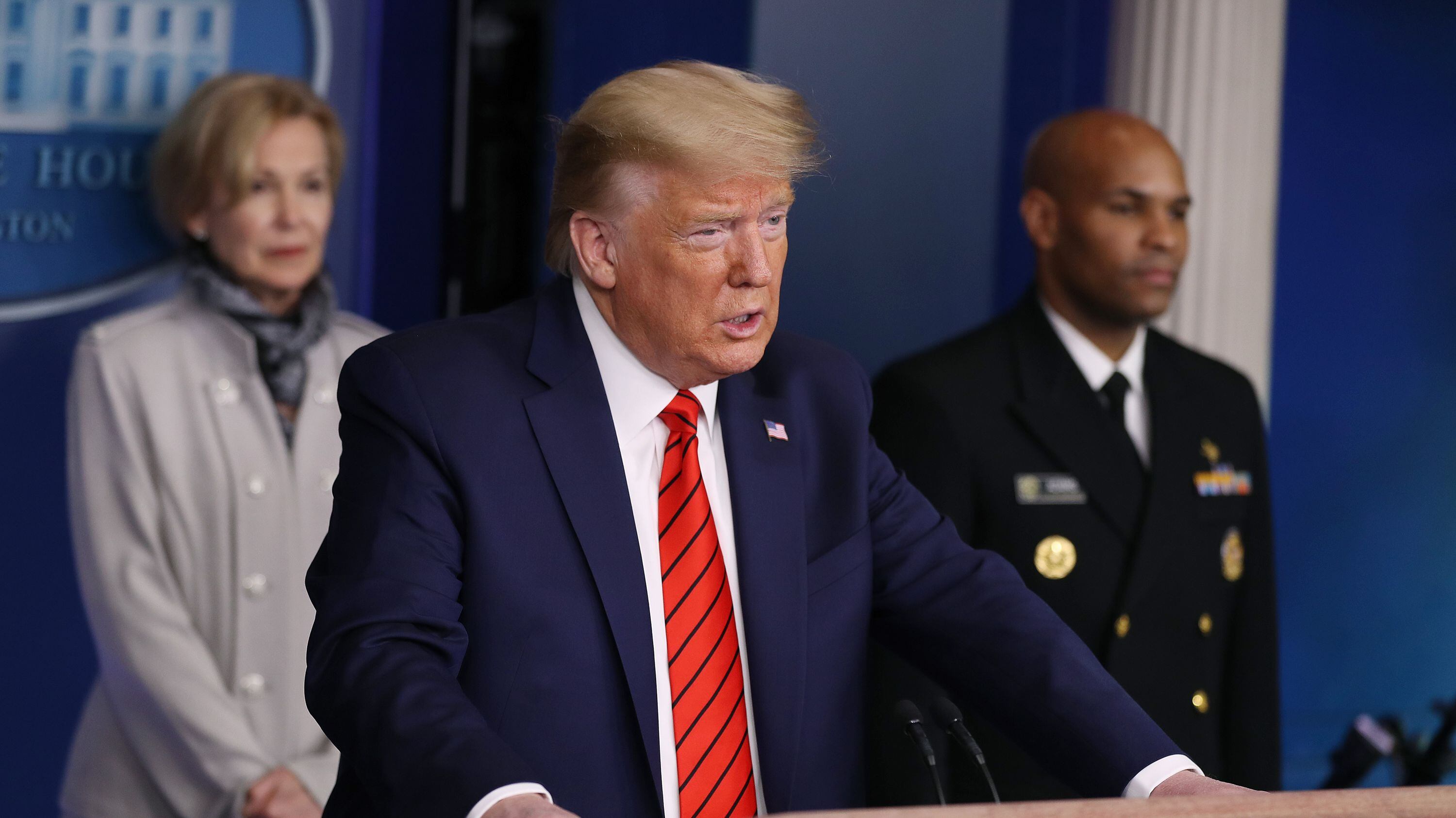
President Donald Trump speaks speaks on the latest developments of the coronavirus outbreak, while flanked by White House coronavirus response coordinator Debbie Birx (L), and U.S. Surgeon General Jerome Adams (R), in the James Brady Press Briefing Room at the White House March 19, 2020. (Photo by Chip Somodevilla/Getty Images)
President Donald Trump in a press conference on Thursday said the Food and Drug Administration is fast-tracking efforts to approve an antiviral therapy, best known for treating malaria, for use in coronavirus cases.
The drug, hydroxychloroquine, was developed more than a half-century ago and is approved for treating malaria, arthritis, and other ailments. Reports out of China and Italy suggest the drug may help, but there is no hard data yet.
"We're going to be able to make that drug available almost immediately," Trump said.
The FDA is working to conduct a "large, pragmatic clinical trial" quickly to confirm the drug's benefit to coronavirus patients, said Commissioner Dr. Stephen Hahn.
He also tempered the president's optimism about the still-untested solution.
"What's also important is not to provide false hope," he said. "We may have the right drug, but it might not be in the appropriate dosage form right now, and it might do more harm than good."
New antiviral therapies face a shorter and less arduous approval process than vaccines, several of which are under development with 12 to 18-month timelines.
"The therapies are something we could move on much faster potentially," Trump said.
He claimed the administration "slashed red tape" to develop new vaccines and therapies.
The president also held out on confirming whether he would invoke the Defense Production Act, which he signed on Wednesday, to mandate the production of needed medical supplies such as N95 respirators and surgical masks.
"If we find that we need something, then we will do that," he said.
Trump repeated that he was open to the federal government buying equity stakes in the airline, cruise, hospitality, and other industries hurt by the outbreak.
The press conference opened with more controversial language placing the blame squarely on China for the outbreak, despite concerns voiced about potentially exacerbating a backlash against Asian Americans.
"We continue our relentless effort to defeat the Chinese virus," Trump said.
Dems race for a deal on President Biden's economic agenda ahead of his big foreign trip. What to make of the latest threat assessment in Afghanistan. Plus, the meme cryptocurrency of the moment that's now worth more than many Fortune 500 companies.
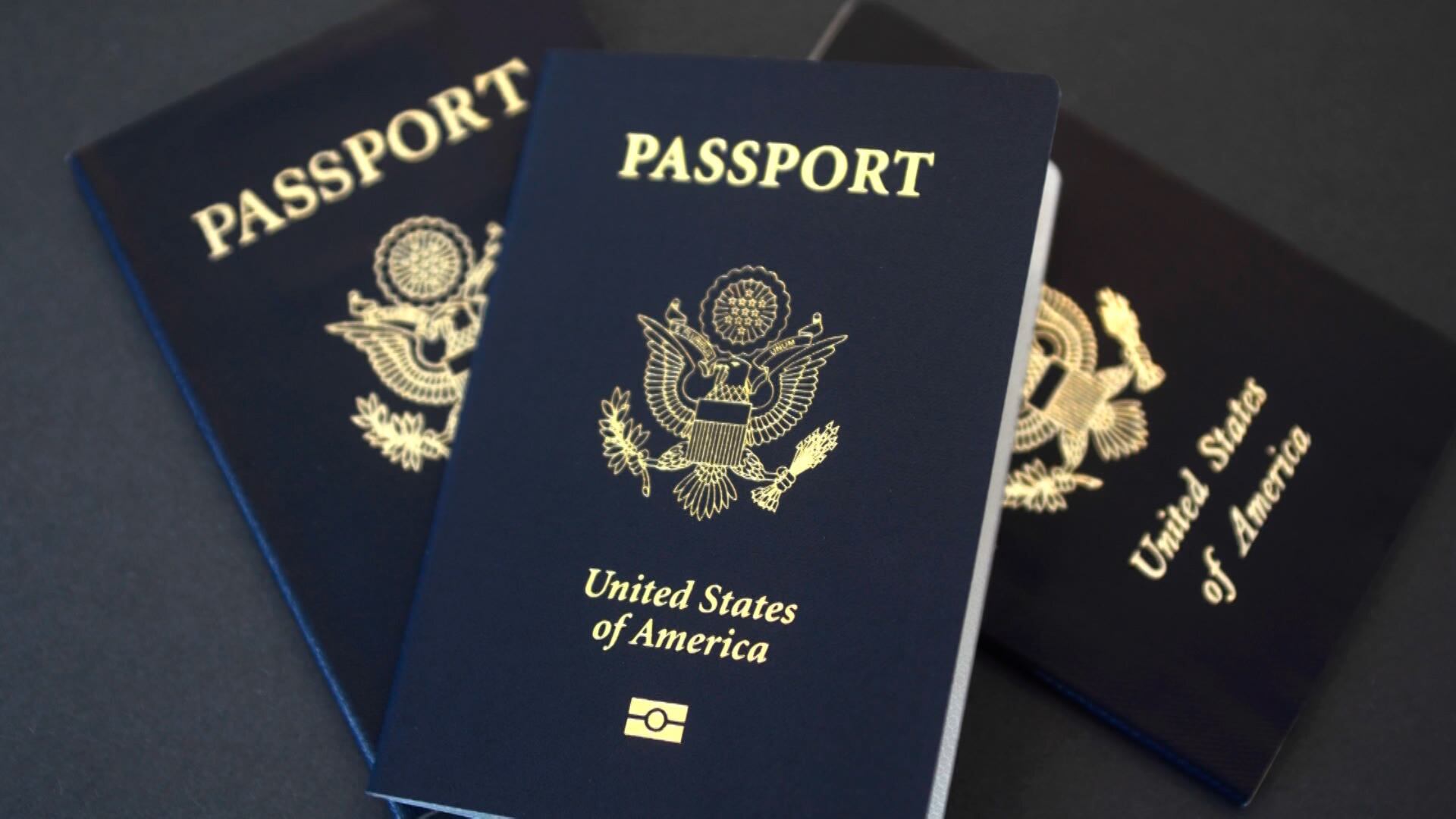
The U.S. has now joined a handful of countries that allow a gender designation other than 'male' or 'female' on passports. Chris Johnson, White House Reporter for the Washington Blade, joined Cheddar to discuss.
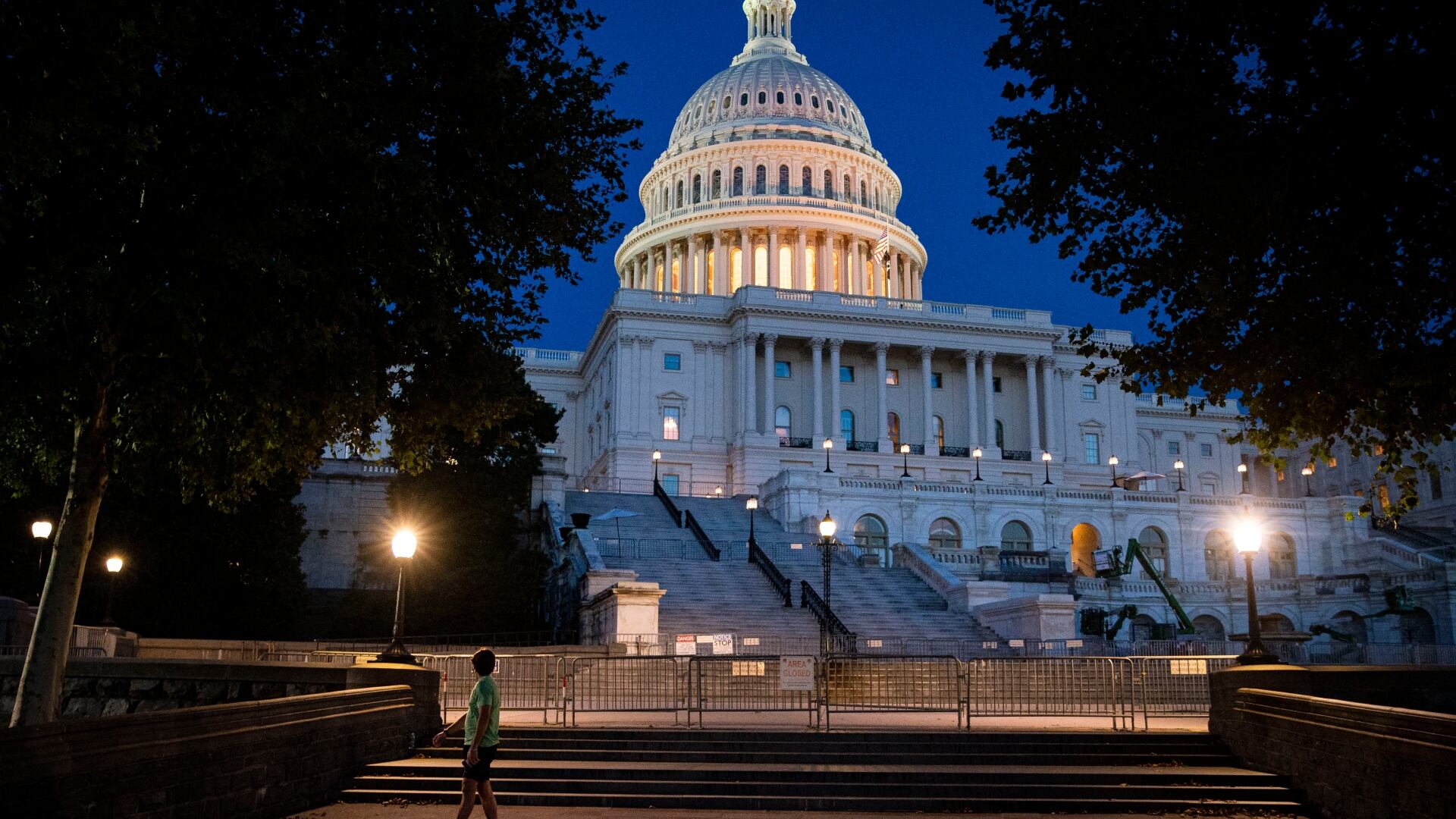
As negotiations drag on in Washington, DC over President Biden's social spending bills, Senate Democrats have introduced a new idea to fund Biden's plans: taxing the unrealized capital gains held by billionaires. Barron's reporter Sabrina Escobar joins Cheddar News' Closing Bell, where she explains what's in the billionaire tax proposal, who it will impact, and why it's on the table.
Hunter Walker joins Cheddar News to talk about his report in Rolling Stone that revealed how members of Congress and the White House helped plan the protest that turned violent on January 6.
Jill and Carlo discuss the pending approval for Pfizer's vaccine for kids, the state of anti-Semitism three years after Tree of Life, potential criminal charges in the 'Rust' prop gun shooting and more.
Texas Governor Greg Abbott, a Republican, signed a bill into law on Tuesday that restricts transgender students from playing on sports teams that correspond with their gender identity. Democratic State Representative Mary E. Gonzalez joined Cheddar to discuss the ramifications for transgender youth the new law represents. She also disputed the bill's proponents who argue that the measure is a matter of fairness for girls in sports, noting that various medical groups have affirmed that transgender athletes do not inherently hold an advantage over cisgender ones.
COP26 been dealt a blow as Chinese President Xi Jinping and Russian President Vladimir Putin, whose countries are responsible for a third of the world's annual greenhouse gas emissions, will not be in attendance. Bertrand Piccard, Chairman and Founder of the Solar Impulse Foundation, joins Cheddar Climate, where he discusses what he expects to see when the summit commences in Glasgow.