By Michael R. Sisak and Tom Hays
Donald Trump’s company and its longtime finance chief were charged Thursday in what a prosecutor called a “sweeping and audacious” tax fraud scheme that saw the Trump executive allegedly receive more than $1.7 million in off-the-books compensation, including apartment rent, car payments and school tuition.
It is the first criminal case New York authorities' two-year investigation into the former president has yielded. According to the indictment filed Wednesday and unveiled Thursday, from 2005 through this year, CFO Allen Weisselberg and the Trump Organization cheated the state and city out of taxes by conspiring to pay senior executives off the books.
Both Weisselberg and lawyers for the Trump Organization pleaded not guilty.
Prosecutor Carey Dunne described a 15-year scheme “orchestrated by the most senior executives."
Trump himself was not charged at this stage of the investigation, jointly pursued by Manhattan District Attorney Cyrus Vance Jr. and New York Attorney General Letitia James, both Democrats.
Weiiselberg, 73, was photographed walking into a building that houses both the criminal courts and the Manhattan district attorney’s office around 6:20 a.m. Thursday. He was led into court in the afternoon with his hands cuffed behind his back.
Weisselberg’s lawyers, Mary Mulligan and Bryan Skarlatos, said in a statement before his appearance that the executive would “fight these charges in court.” Skarlatos later said Dunne's remarks were misleading in regard to his client.
Weisselberg was ordered to surrender his passport after prosecutors called him a flight risk with access to private jets for foreign travel. He was released without bail, however, and left the courthouse without commenting to assembled reporters.
A lieutenant to generations of Trumps, Weisselberg has intimate knowledge of the former president's business dealings and the case could give prosecutors the means to pressure him into cooperating with an ongoing probe into other aspects of the company's business.
So far, though, there's no sign that the man regarded by Trump's daughter Ivanka as a “fiercely loyal” deputy who's "stood alongside my father and our family” for decades will suddenly turn on them.
In a Thursday statement before the charges were unveiled, the Trump Organization defended Weisselberg, saying the 48-year employee was being used by Vance's office as “a pawn in a scorched-earth attempt to harm the former president.”
Trump, a Republican, did not respond to reporters’ shouted questions about the case as he visited Texas on Wednesday. Earlier in the week, he blasted New York prosecutors as “rude, nasty, and totally biased” and said his company’s actions were “standard practice throughout the U.S. business community, and in no way a crime.”
He issued a press release after the not guilty pleas, once again excoriating the probe as a “political Witch Hunt.”
Dunne asserted politics played no role in the decision to bring charges.
“Politics has no role in the jury chamber and I can assure you it had no role here,” Dunne said.
In court, Trump Organization lawyer Alan Futerfas said Dunne’s remarks sounded like a “press release."
"If the name of the company was something else, these charges would not have been brought," Futerfas added outside court.
Vance declined to comment on the case as he arrived at the courthouse Thursday. He remained silent as he and James departed in the afternoon. James' office later released a statement calling the indictment “an important marker in the ongoing criminal investigation" into Trump's company and its CFO.
“This investigation will continue, and we will follow the facts and the law wherever they may lead,” the statement read.
Vance, who leaves office at the end of the year, has been conducting a wide-ranging investigation into a variety of matters involving Trump and the Trump Organization, such as hush-money payments paid to women on Trump’s behalf and truthfulness in property valuations and tax assessments, among other matters.
Vance fought a long battle to get Trump’s tax records and has been subpoenaing documents and interviewing company executives and other Trump insiders.
James assigned two lawyers from her office to work with Vance’s team on the criminal probe while continuing her own civil investigation.
Weisselberg came under scrutiny of Vance’s investigators, in part, because of questions about his son’s use of a Trump apartment at little or no cost.
Weisselberg’s son Barry — who managed a Trump-operated ice rink in Central Park — paid no reported rent while living in a Trump-owned apartment in 2018 and was charged just $1,000 per month — far below typical Manhattan prices — while living in a Trump apartment from 2005 to 2012, the indictment said.
Allen Weisselberg himself, an intensely private man who lived for years in a modest home on Long Island, continued to claim residency there despite living in a company-paid Manhattan apartment, prosecutors said. By doing so, Weisselberg concealed that he was a New York City resident and avoided paying more than $900,000 in federal, state and city income taxes and collected about $133,000 in refunds to which he was not entitled, prosecutors said.
According to the indictment, Weisselberg paid for rent on his Manhattan apartment with company checks and directed the company to pay for his utility bills and parking. The company also paid for private school tuition for Weisselberg’s grandchildren with checks bearing Donald Trump’s signature, for Mercedes-Benz cars driven by Weisselberg and his wife, and gave him cash to hand out tips around Christmas.
Such perks were listed on internal Trump company documents as part of Weisselberg’s employee compensation, but were not included on his W-2 forms or otherwise reported and the company did not withhold taxes on their value, prosecutors said.
Trump’s company also issued checks, at Weisselberg’s request, to pay for personal expenses and upgrades to his homes and an apartment used by one of his sons, such as new beds, flat-screen TVs, carpeting, and furniture for his Florida residence, prosecutors said.
Barry Weisselberg’s ex-wife, Jen Weisselberg, has been cooperating with both inquiries and given investigators reams of tax records and other documents. In March, she told The New Yorker that some compensation for Trump Organization executives came in the form of apartments and other items and that “only a small part of your salary is reported.”
The Trump Organization is the business entity through which the former president manages his many entrepreneurial affairs, including his investments in office towers, hotels and golf courses, his many marketing deals and his television pursuits. Trump's sons Donald Jr. and Eric have been in charge of the company’s day-to-day operations since he became president.
Two other Trump executives who were not identified by name also received substantial under-the-table compensation, including lodging and the payment of automobile leases, the indictment said.
James Repetti, a tax lawyer and professor at Boston College Law School, said a company like the Trump Organization would generally have a responsibility to withhold taxes not just on salary, but other forms of compensation.
Such perks wouldn’t be considered taxable income if they were required as a condition of employment, Repetti said, such as providing an apartment for the convenience of an employee who is required to be at the office or worksite at odd or frequent hours, or allowing the use of a car for business purposes.
Another prominent New York City real estate figure, the late Leona Helmsley, was convicted of tax fraud in a federal case that arose from her company paying to remodel her home without her reporting that as income.
“The IRS routinely looks for abuse of fringe benefits when auditing closely held businesses,” Repetti said. “The temptation for the business is that it claims a tax deduction for the expense, while the recipient does not report it in income.”
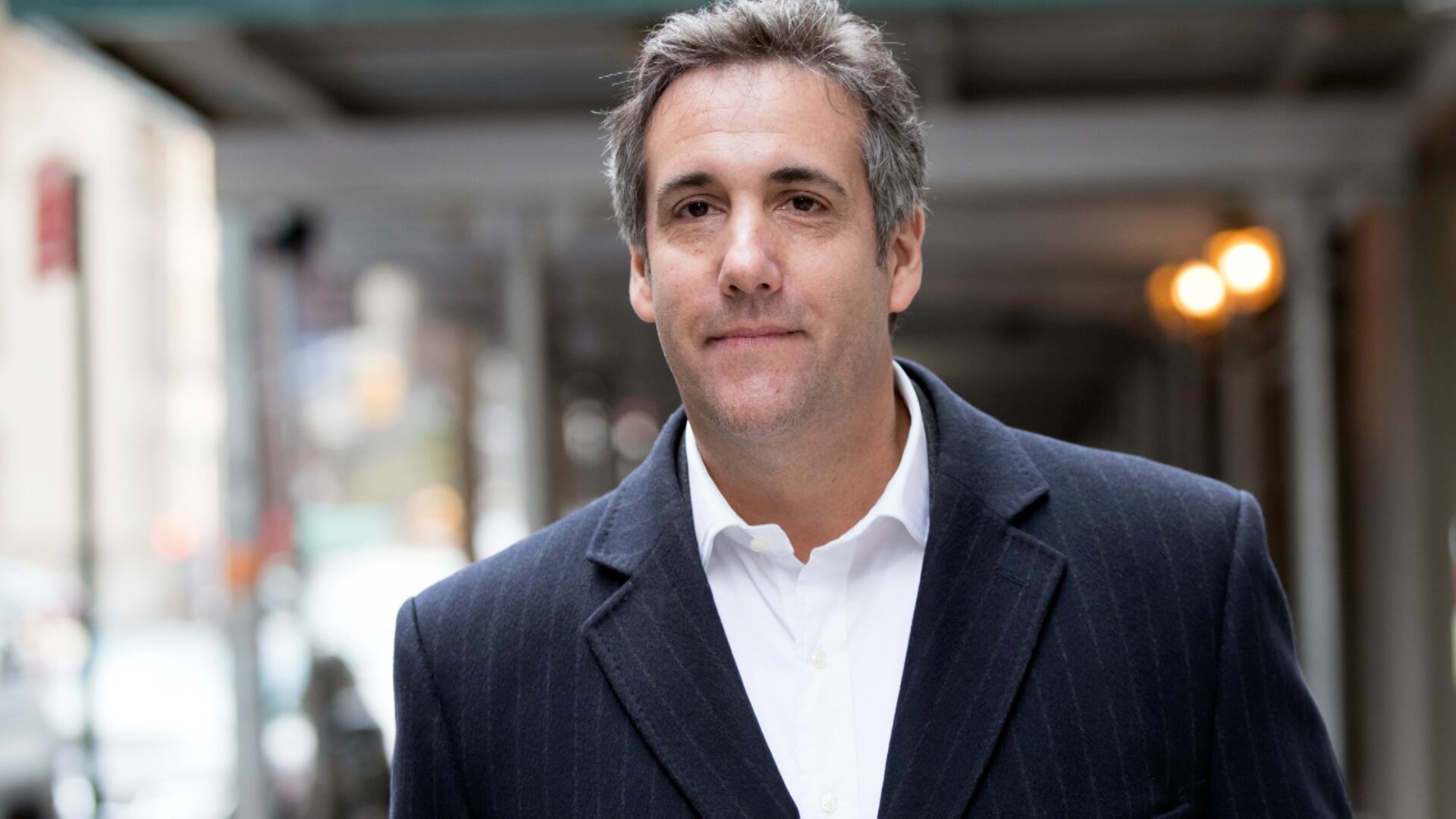
Michael Cohen, the former Trump lawyer who's been cooperating with Vance's investigation, wrote in his book “Disloyal,” that Trump and Weisselberg were “past masters at allocating expenses that related to non-business matters and finding a way to categorize them so they weren’t taxed."
Weisselberg first started working for Trump’s real estate-developer father, Fred, after answering a newspaper ad for a staff accountant in 1973, working his way up.
Keeping a low profile — aside from a 2004 appearance as a guest judge on Trump’s reality TV show “The Apprentice" — Weisselberg was barely mentioned in news articles before Trump started running for president and questions arose about the boss’ finances and charity.
Cohen said Weisselberg was the one who decided how to secretly reimburse him for a $130,000 payment to porn actress Stormy Daniels. The finance chief made headlines again when it was revealed that his signature appeared on one of the reimbursement checks.
Barbara Res, who oversaw the construction of Manhattan’s Trump Tower, says she was surprised to learn about the seemingly large role Weisselberg has played in Trump’s business. She recalls him years ago just collecting rent, paying bills and doing Trump’s taxes.
“He was the chief accountant, but he wasn’t in the inner circle. He would come in with his head down, ‘Yes, Mr. Trump. No, Mr. Trump,’” Res said. “He’s the only person I knew who would call him Mr. Trump. Now he’s a big shot.”
___
Sisak reported from New Jersey. Associated Press writers Bernard Condon in New York and Jill Colvin in Weslaco, Texas, contributed to this report.
Updated on July 1, 2021 at 3:32 p.m. ET with the latest details.