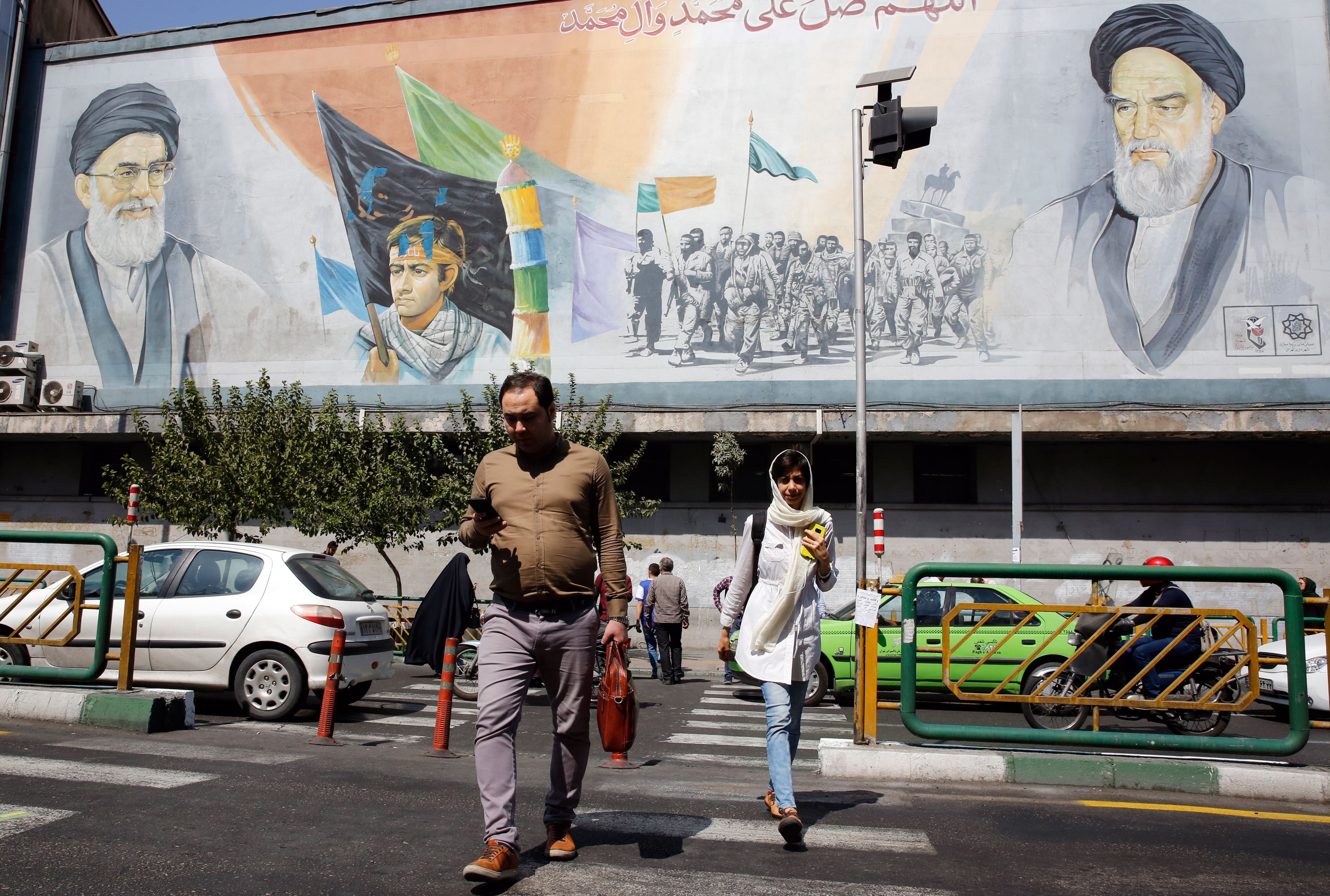
President Trump on Wednesday morning ordered the U.S. Treasury to "substantially increase" sanctions against Iran.
The escalating measure follows several days of heightened tensions between the two countries over the attack on oil facilities in Saudi Arabia over the weekend. Trump's instructions to Treasury Secretary Steve Mnuchin also come after several statements this week from Iranian leaders reiterating that Iran will not negotiate with the U.S. while sanctions are imposed.
"If the U.S. wants to have a seat at the negotiating table, it must return to its commitments and show that it's a reliable country," Iran's Foreign Minister Mohammad Javad Zarif said in Tehran on Wednesday, according to Iranian state media. "If we can't rely on it, it's not a country with which there can be an agreement."
Tensions first flared after the U.S. blamed Iran for the drone attacks on two Saudi state-owned oil installations on Saturday. Iran has repeatedly, and vehemently, denied the charge; even sending a formal letter to Trump via the Swiss Ambassador, who represents U.S. interests in Tehran, denying involvement, the Islamic Republic News Agency reported.
Diplomatic relations deteriorated last year after Trump made good on a campaign promise and withdrew the U.S. from the 2016 Iranian nuclear deal, formally called the Joint Comprehensive Plan of Action (JCPOA). In November 2018, the U.S. Treasury re-imposed harsh sanctions, which had been rescinded under the JCPOA, on "critical sectors of Iran's economy" including energy, transportation, and finance. The U.S. also imposed sanctions on over 700 individual Iranian officials.
Over the last year, Iran has refused to publicly engage with the Trump administration until the U.S. recommits to the nuclear pact, which it withdrew from despite objections from the other signatories and international monitoring groups that confirmed Iran was complying with the JCPOA. Trump, meanwhile, has repeatedly expressed a willingness to negotiate with Iran and meet with its top leaders.
"We'll see what happens … I think Iran has a tremendous, tremendous potential," Trump said last week — before the attack in Saudi Arabia — on whether he will meet with Iranian President Hassan Rouhani at the United Nations' General Assembly, which kicked off in New York this week.
Iranian Supreme Leader Ayatollah Ali Khamenei, however, said Tuesday that "there will be absolutely no negotiation between the officials of the Islamic Republic and the U.S. at any level; neither in New York and not anywhere else."
<i>Saudi military spokesman Col. Turki al-Malki displays what he described as an Iranian drones used in the attack this weekend on Saudi Arabia's oil industry. Photo Credit: Amr Nabil/AP/Shutterstock</i>
At a press conference in Riyadh on Wednesday, Saudi Arabia's Ministry of Defense presented the wreckage of drones that it claimed struck the two oil plants. Officials said the debris pointed to decisive evidence that Iran was directly involved in the attack, which briefly crippled one of the world's most important oil facilities and sent shockwaves through global energy markets.
The Houthi group in Yemen, which is backed by Iran and is currently at war with a Saudi-led coalition, had claimed responsibility for the attack but did not provide conclusive evidence for the claim.
Despite direct accusations against Iran from top U.S. officials, Trump on Sunday said that the U.S. was "waiting to hear from the Kingdom as to who they believe was the cause of this attack" before responding. Trump did not elaborate as to whether the sanction hike was a direct response to the attack in Saudi Arabia and the U.S. Treasury did not immediately respond to inquiries from Cheddar.
Stock trading app Robinhood already has been offering cryptocurrency investments but seems further excited about the asset class following President Biden's recent announcement of an executive order. Dan Gallagher, the chief legal and corporate affairs officer for Robinhood, joined Cheddar News to talk about the White House's tentative vision for digital currency. "I think this executive order firmly states that, yes, crypto is here to stay, which it talks about the important competitive issues around crypto and how the United States needs to be a leader, a global leader, in innovation and technology regarding crypto," he said. Gallagher also discussed having clarity around meme stocks going forward but worried about overregulation slowing down innovation.
As Russia’s attack on Ukraine, the latest inflation report showed the consumer price index rose 7.9 percent — a 40-year high. Heather Boushey, a member of the White House Council of Economic Advisers, joined Cheddar News to discuss what American consumers might be in store for as prices keep rising. "Forecasters at this point believe that the American economy will be resilient," she said. "They’re still predicting that the unemployment rate will continue to be lower at the end of the year than it is today, and we are still seeing folks believe that over time prices will come back down." Boushey did note that it would be dependent on how long the current situation lasts.
Simon Shuster, TIME's Moscow correspondent joins Cheddar to discuss how Ukraine could become part of the EU and what it would mean for politics in Europe.
President Biden has banned imports of Russian oil to the U.S. in retaliation for its invasion of Ukraine. The president warned of higher prices at the gas pump, leading some analysts to think it could propel the transition to clean, renewable energy. Michael Jones, chairman and CEO of investment solutions company Caravel Concepts, discussed how the ban is hitting green energy stocks as gas prices continue to surge. "I think the 10-year prospects for renewables just got a whole lot better because ultimately this is going to force a transition into renewables," he said.
Amid ongoing tensions in the Russia-Ukraine region, many American travelers are nervous about traveling to Europe.
It comes at a time when international travel was set to make a comeback, but uncertainty surrounding the conflict may delay the overall recovery. Francesca Page, Travel Expert, joined Cheddar's Opening Bell to discuss.
Russia's invasion of Ukraine is coming for the global food supply. Ongoing tensions in the region are threatening the supply of various agricultural products including wheat, barley and corn. Vladik Rikhter, CEO & Cofounder of Zenput joined Cheddar's Opening Bell to discuss how this could impact food prices overseas.
Chris Natividad, CIO of EquBot, joins Cheddar News' Closing Bell, where he elaborates on what ultimately dragged the Dow, S&P, and Nasdaq lower on Tuesday and discusses how investors are reacting to rising oil prices and February CPI data coming out later this week.
Adam Johnson, Portfolio Manager at Adviser Investments, joins Cheddar News' Closing Bell, where he explains why he believes we saw markets jump during Wednesday's session, and adds that investors have already priced in 'every possible kind of bad news we could have.'
Jennifer Klein, the White House Gender Policy Council's co-chair and executive director, spoke to Cheddar News about the economic impact of the pandemic showing the need for a group like the Gender Policy Council, and the need to address issues that have affected women the most,