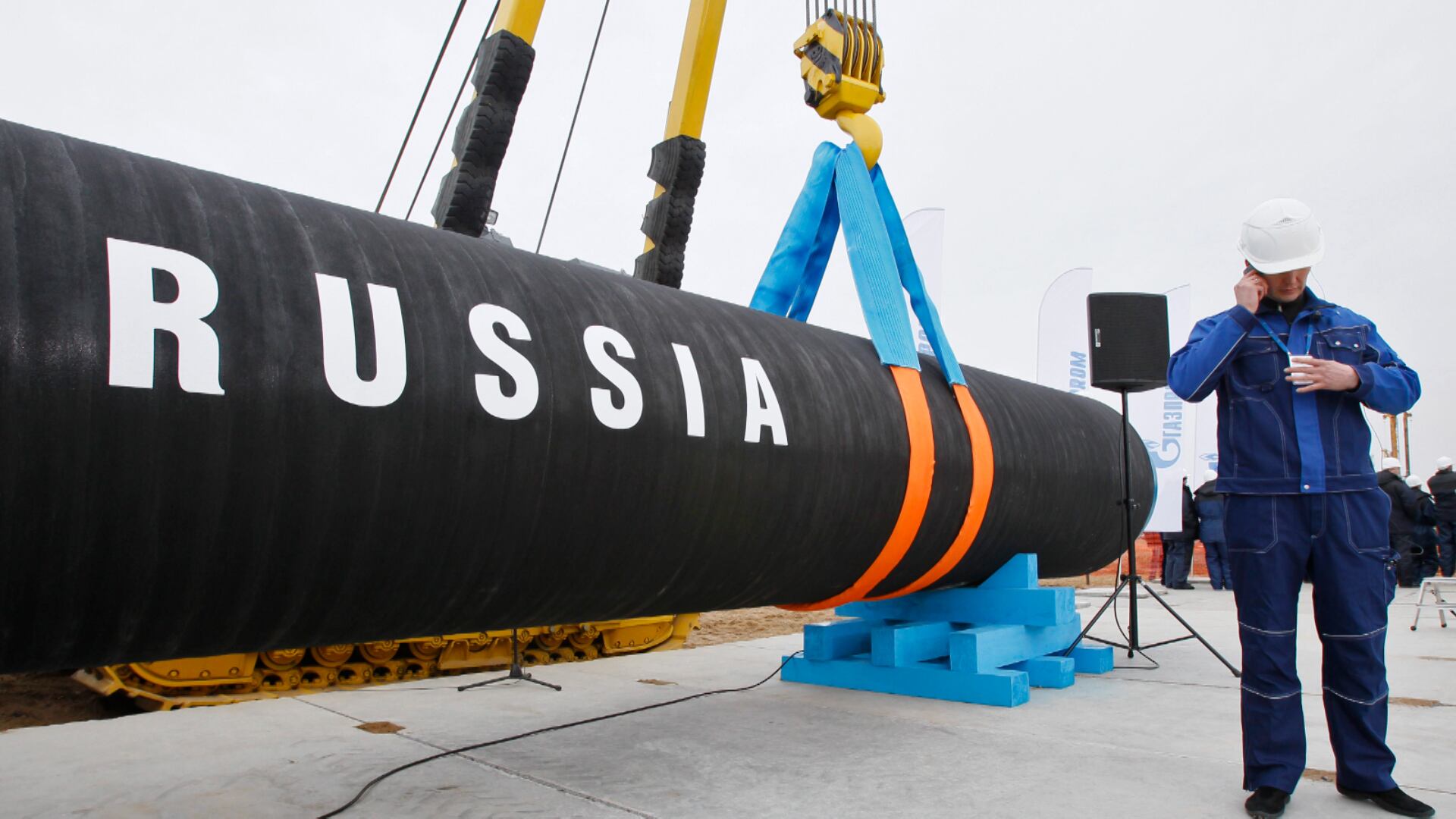
President Trump on Wednesday morning ordered the U.S. Treasury to "substantially increase" sanctions against Iran.
The escalating measure follows several days of heightened tensions between the two countries over the attack on oil facilities in Saudi Arabia over the weekend. Trump's instructions to Treasury Secretary Steve Mnuchin also come after several statements this week from Iranian leaders reiterating that Iran will not negotiate with the U.S. while sanctions are imposed.
"If the U.S. wants to have a seat at the negotiating table, it must return to its commitments and show that it's a reliable country," Iran's Foreign Minister Mohammad Javad Zarif said in Tehran on Wednesday, according to Iranian state media. "If we can't rely on it, it's not a country with which there can be an agreement."
Tensions first flared after the U.S. blamed Iran for the drone attacks on two Saudi state-owned oil installations on Saturday. Iran has repeatedly, and vehemently, denied the charge; even sending a formal letter to Trump via the Swiss Ambassador, who represents U.S. interests in Tehran, denying involvement, the Islamic Republic News Agency reported.
Diplomatic relations deteriorated last year after Trump made good on a campaign promise and withdrew the U.S. from the 2016 Iranian nuclear deal, formally called the Joint Comprehensive Plan of Action (JCPOA). In November 2018, the U.S. Treasury re-imposed harsh sanctions, which had been rescinded under the JCPOA, on "critical sectors of Iran's economy" including energy, transportation, and finance. The U.S. also imposed sanctions on over 700 individual Iranian officials.
Over the last year, Iran has refused to publicly engage with the Trump administration until the U.S. recommits to the nuclear pact, which it withdrew from despite objections from the other signatories and international monitoring groups that confirmed Iran was complying with the JCPOA. Trump, meanwhile, has repeatedly expressed a willingness to negotiate with Iran and meet with its top leaders.
"We'll see what happens … I think Iran has a tremendous, tremendous potential," Trump said last week — before the attack in Saudi Arabia — on whether he will meet with Iranian President Hassan Rouhani at the United Nations' General Assembly, which kicked off in New York this week.
Iranian Supreme Leader Ayatollah Ali Khamenei, however, said Tuesday that "there will be absolutely no negotiation between the officials of the Islamic Republic and the U.S. at any level; neither in New York and not anywhere else."
<i>Saudi military spokesman Col. Turki al-Malki displays what he described as an Iranian drones used in the attack this weekend on Saudi Arabia's oil industry. Photo Credit: Amr Nabil/AP/Shutterstock</i>
At a press conference in Riyadh on Wednesday, Saudi Arabia's Ministry of Defense presented the wreckage of drones that it claimed struck the two oil plants. Officials said the debris pointed to decisive evidence that Iran was directly involved in the attack, which briefly crippled one of the world's most important oil facilities and sent shockwaves through global energy markets.
The Houthi group in Yemen, which is backed by Iran and is currently at war with a Saudi-led coalition, had claimed responsibility for the attack but did not provide conclusive evidence for the claim.
Despite direct accusations against Iran from top U.S. officials, Trump on Sunday said that the U.S. was "waiting to hear from the Kingdom as to who they believe was the cause of this attack" before responding. Trump did not elaborate as to whether the sanction hike was a direct response to the attack in Saudi Arabia and the U.S. Treasury did not immediately respond to inquiries from Cheddar.
Wall Street saw another volatile day after the Federal Reserve left rates unchanged for now, with plans to raise rates in March at its next meeting in order to ease inflation. Fed Chair Jerome Powell said the Fed has not made decisions on the size of rate increases, adding that the Fed is not trying to get inflation below two-percent. Ken Johnson, CFA and Investment Strategy Analyst explains why Powell thinks that high inflation is a significant threat to the labor market.
Anu Gaggar, global investment strategist for Commonwealth Financial Network, joined Cheddar News to discuss how global supply chains could be disrupted even further by an armed conflict in Ukraine.
Solid-state battery maker Factorial Energy recently raised $200 million in a Series D round led by Mercedes-Benz and Stellantis. Factorial says the funding will be used to accelerate commercial production and deployment of its solid-state battery technology, which the company says is safer, and offers up to 50% more driving range than current lithium-ion technology. Factorial also has joint development agreements (announced in late 2021) with Mercedes-Benz, Stellantis, and Hyundai, three of the top 10 global automotive manufacturers, to commercialize its batteries. Factorial CEO Siyu Huang joined Cheddar News' Closing Bell to discuss.
A new report by the Foreign Correspondents Club of China warns that press freedom in the most populous country in the world is declining at an alarming speed. Cheddar News speaks with Steven Butler, Asia Program Coordinator at the Committee to Protect Journalists, about the hardships journalists face in China.
Rep. Nancy Mace (R-S.C. 1st District) joined Cheddar to discuss her cannabis legalization bill, the States Reform Act, and the prospects for gaining bipartisan support for a bill that has garnered the endorsement of e-commerce giant Amazon. This legislation is supported by businesses large and small, Amazon obviously being the most recent and largest business to support it," Mace said. "They don't want to sell pot. But what it does do is it affects their working employment pool." She stated that 10 percent of eligible new hires for Amazon are affected by restrictive marijuana laws. The representative also explained that the bill leaves equity provisions up to the states rather than mandating them on a federal level.
After a number of tragic subway incidents, the MTA is facing increased pressure to install subway platform screens to help prevent injury or death. However, according to an earlier report from the MTA, installing these prevented measures isn't feasible. New York City Council Member Keith Powers, joined Cheddar to discuss more.
Across the country, states are working to redraw their congressional lines in what is often known as gerrymandering. These news lines are expected to determine the balance of power between Democrats and Republicans within the next decade. Senior Counsel for the Brennan Center's Democracy Program, Michael Li, joined Cheddar to discuss more.
The state of California is officially planning to close its death row in the next two years. That state's governor Democrat Gavin Newsom says the plan is now to move all condemned inmates to other prisons and turn it into, as he calls it, a positive healing environment. Former U. S. Assistant Attorney and Legal Analyst, David Katz, joined Cheddar to discuss more.
Anthony Saccaro, Founder and President of Providence Financial, joins Cheddar News' Closing Bell, where he elaborates on why he is excited that the market is beginning to rebound and believes February has the potential to be a good month after a turbulent January.