By Michael R. Sisak
Donald Trump threw up his hands in frustration Tuesday as a judge scheduled his criminal trial for March 25, putting the former president and current candidate in a Manhattan courtroom in the heat of next year’s presidential primary season.
Trump, appearing by video conference at a pretrial hearing in the hush-money case, glowered at the camera as Judge Juan Manuel Merchan advised him to cancel all other obligations for the duration of the trial, which could last several weeks.
Trump, wearing a blue suit against a backdrop of American flags at his Florida estate, then turned to a lawyer by his side — their brief discussion inaudible on the video feed — before sitting with his arms folded for the remainder of the hearing.
Trump said little during the hearing, but lashed out afterward on social media, writing: “Just had New York County Supreme Court hearing where I believe my First Amendment Rights, ‘Freedom of Speech,’ have been violated, and they forced upon us a trial date of March 25th, right in the middle of Primary season."
“Very unfair, but this is exactly what the Radical Left Democrats wanted," Trump wrote on his Truth Social platform. "It’s called ELECTION INTERFERENCE, and nothing like this has ever happened in our Country before!!!”
Trump pleaded not guilty last month to 34 felony counts of falsifying business records related to hush-money payments made during the 2016 campaign to bury allegations that he had extramarital sexual encounters. He has denied wrongdoing.
Merchan said he arrived at the March 25 trial date after discussions with Trump’s lawyers and prosecutors. Trump’s lawyer, Susan Necheles, said Trump knew about the date prior to Tuesday’s hearing and said she didn't see his exasperated reaction.
Trump’s case is proceeding in state court even as his lawyers seek to have it moved to federal court because some of the alleged conduct occurred while he was president. The Manhattan district attorney's office has until next week to file paperwork stating why it should remain in state court, where the historic indictment was brought.
Trump has made the New York case and the long list of other investigations into his personal, professional and presidential conduct central to his campaign to reclaim the White House in 2024. The Republican has portrayed himself as the victim of a coordinated, politically motivated effort to sully his chances.
Trump often discusses the cases at his rallies, in speeches, TV appearances and on social media. He has repeatedly attacked prosecutors, accusers and judges by name, including Merchan, and has shown no willingness to back down — even after a recent $5 million verdict in a writer’s sexual abuse and defamation lawsuit against him.
The plaintiff in that case, writer E. Jean Carroll, filed a new claim Monday seeking an additional $10 million or more to hold Trump liable for remarks he made bashing her on CNN the day after the May 9 verdict.
Trump responded Tuesday by doubling down on his contention that Carroll’s allegations were a “Fake, Made Up Story” and a “TOTAL SCAM" and that her case is "part of the Democrats playbook to tarnish my name and person.”
Merchan spent the bulk of Tuesday’s 15-minute hearing reviewing an order he issued May 8 that sets ground rules for Trump’s behavior in the lead-up to the trial.
It's not a gag order and Trump is free to speak about the case and defend himself, Merchan said, but he can't use evidence turned over by prosecutors to attack witnesses or post sensitive documents to social media. If he violates the order, he risks being held in contempt.
Among concerns raised by prosecutors were that Trump could weaponize “highly personal information” found on witnesses' cellphones, such as personal photos and text messages with family and friends, as well as secret grand jury testimony and other material, to rile up anger amongst his supporters.
Nothing in the order prevents Trump from being able to speak “powerfully and persuasively” in his defense without the need to “start attacking individuals, disclosing names, addresses, cellphones' numbers, identity, dates of birth, or anything along those lines,” Merchan said. Certain sensitive material shared by prosecutors must be kept only by Trump’s lawyers, not Trump himself.
Prosecutors sought the order soon after Trump’s arrest, citing what they say is his history of making “harassing, embarrassing, and threatening statements” about people he’s tangled with in legal disputes.
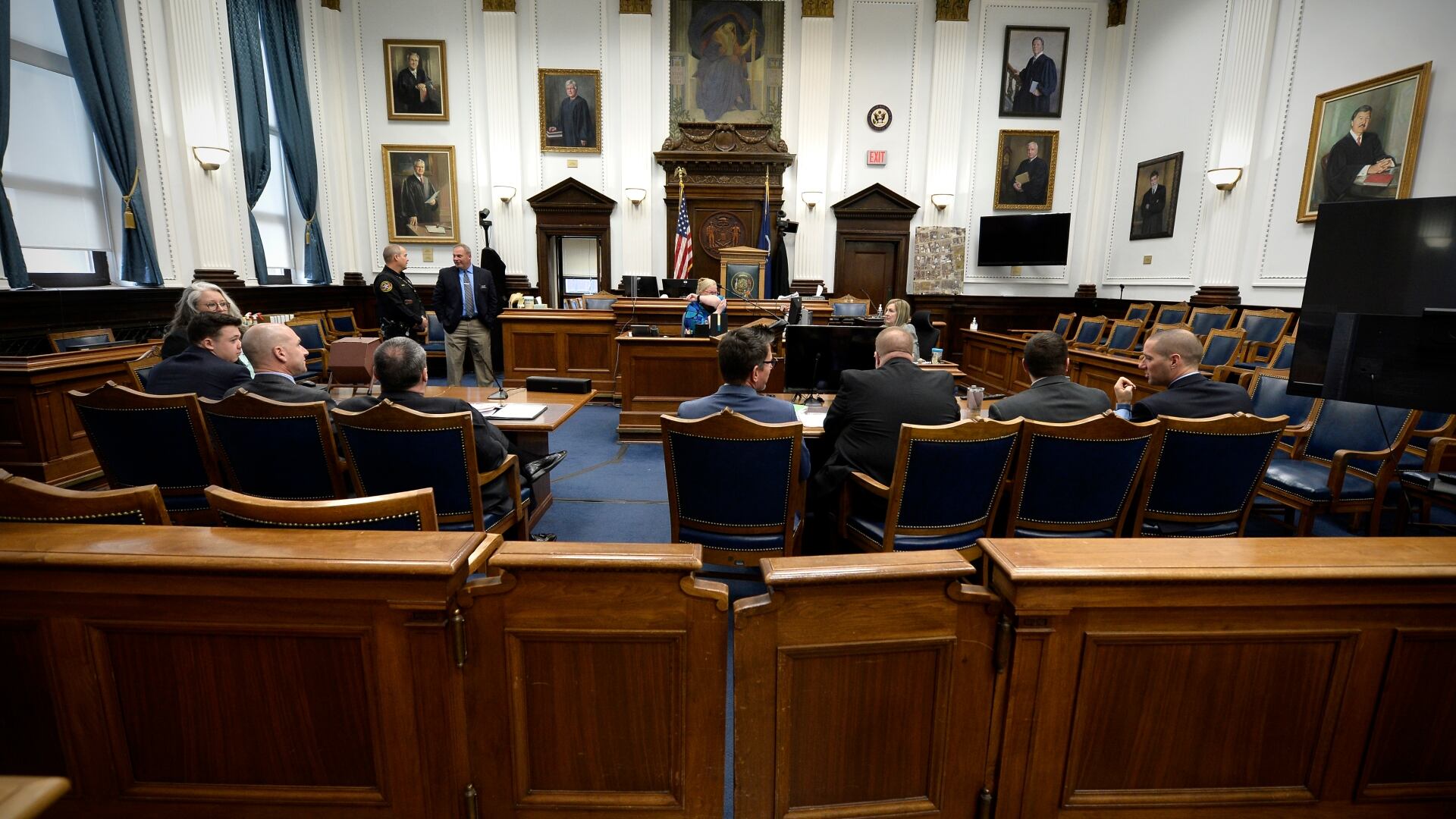
Trump was spared a personal appearance at the courthouse Tuesday, avoiding the mammoth security and logistical challenges that accompanied his arraignment last month. Instead, the Republican was connected by video conference, with his face beamed onto TV monitors positioned around the courtroom.
Trump isn't required to appear in court in person again until Jan. 4, just weeks before the first primary votes are expected to be cast.
Associated Press reporter Jill Colvin contributed to this report.