By Jill Colvin and Ben Fox
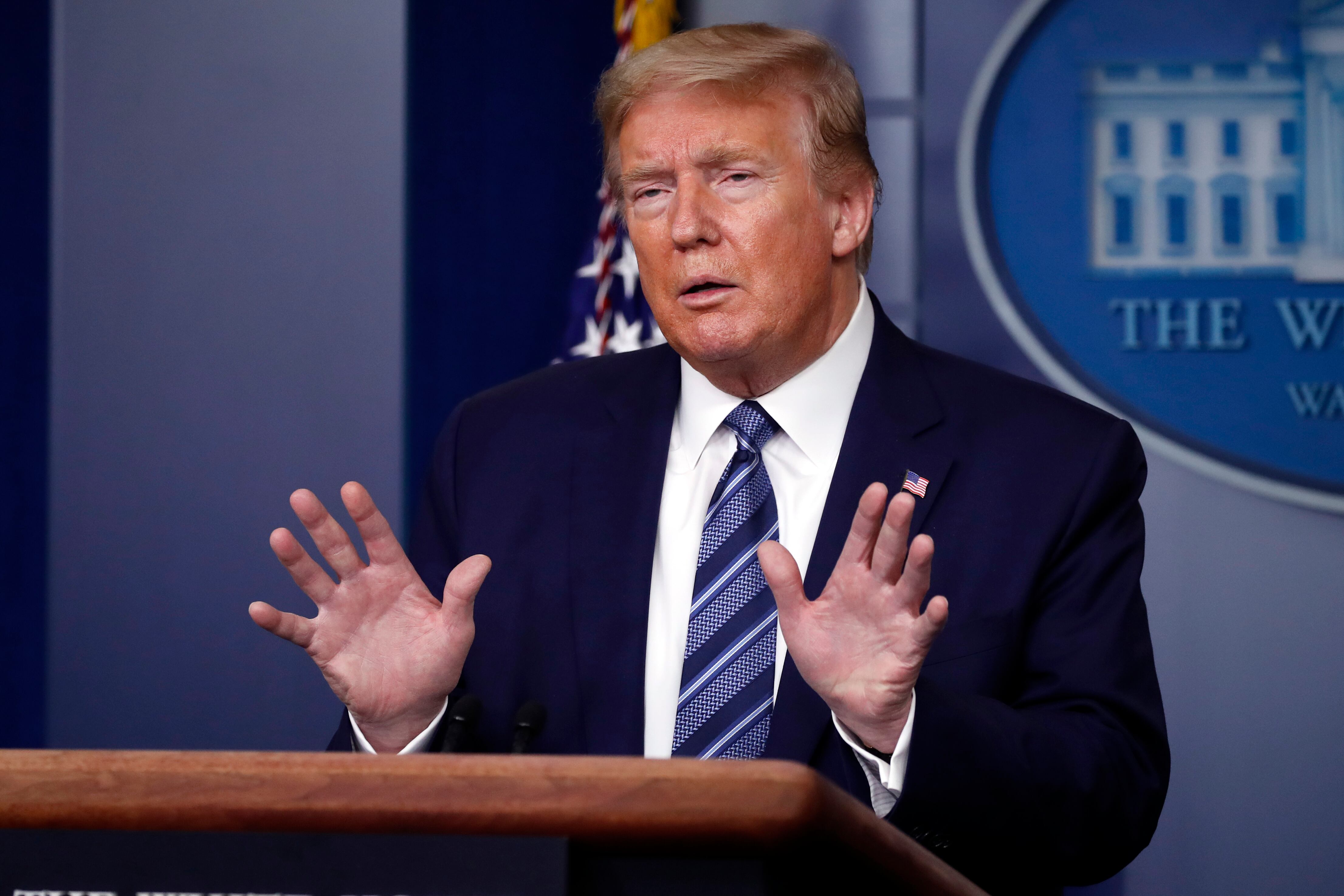
President Donald Trump announced what he described as a “temporary suspension of immigration into the United States” on Tuesday. But he said the executive order he plans to sign as soon as Wednesday would apply only to those seeking permanent residency and not temporary workers.
Trump said he would be placing a 60-day pause on the issuance of green cards in an effort to limit competition for jobs in a U.S. economy wrecked by the coronavirus. But he said there would be “certain exemptions” included in the order, which staff were still crafting Tuesday.
An administration official familiar with the plans had said earlier the order would be focused on preventing people from winning permission to live and work in the U.S. That would include those seeking employment-based green cards and relatives of green card holders who are not citizens. Americans who wish to bring immediate family to the country would still be able to do so, according to the official, who spoke on condition of anonymity before the plan was announced. About one million people were granted green cards last year.
While a hard stop on immigration would normally affect millions of people, much of the immigration system has already ground to a halt because of the pandemic. Almost all visa processing by the State Department has been suspended for weeks. Travel to the U.S. has been restricted from much of the globe. And Trump has used the virus to effectively end asylum at U.S. borders, including turning away children who arrive by themselves and putting a hold on refugee resettlement — something Congress, the courts and international law hadn't previously allowed.
Criticism of Trump's new announcement was swift, especially his timing during the pandemic. Ali Noorani, president of the National Immigration Forum, noted that thousands of foreign-born health care workers are currently treating people with COVID-19 and working in critical sectors of the economy.
Andrea Flores of the American Civil Liberties Union said Trump seemed "more interested in fanning anti-immigrant flames than in saving lives.”
But Jessica Vaughn, director of policy studies at the Center for Immigration Studies, which favors lower rates of immigration, said that eliminating millions of work permits and visas would “instantaneously create” new jobs for Americans and other legal workers — even though most businesses are shuttered because of social distancing dictates and stay-at-home orders.
Trump has often pivoted to his signature issue of immigration when he's under criticism. It's one he believes helped him win the 2016 election and one that continues to animate his loyal base of supporters heading into what is expected to be a brutal reelection fight. It has also served as a useful tool for distracting from news he'd prefer removed from the headlines.
As is often the case, Trump's late-night tweet caught many across the administration off-guard. Though ideas had been discussed at the State and Homeland Security departments, officials said they had received no heads-up that action was coming.
In a statement, White House press secretary Kayleigh McEnany described the order as aimed at protecting both the “health and economic well-being of American citizens as we face unprecedented times." She said, “At a time when Americans are looking to get back to work, action is necessary."
Though travel restrictions around the globe have dramatically reduced immigration, Trump could have used his executive authority to restrict it further, including slashing the number of foreign workers allowed to take seasonal jobs in the U.S. Before the outbreak, the administration had planned to increase the number of H-2B visas, but the Department of Homeland Security put that old in early April.
Sarah Pierce, a policy analyst at the Migration Policy Institute, said Trump could end the processing of immigrant and non-immigrant visa applications under the same legal authority he used to impose the travel ban that was upheld by the Supreme Court. But she said the State Department has largely stopped processing visas anyway.
Republican Rep. Matt Gaetz, who met with Trump at the White House Tuesday, said the president was looking at various carve-outs for people like agricultural workers, medical professionals and people with family in the United States.pose,” he said.
Across the country, those who could be impacted waited in suspense. Chicago immigration attorney Fiona McEntee said she has been inundated with calls, emails and social media messages since Trump’s tweet, including from company executives hoping to expand their business in the U.S., a person applying for a fiance visa and wondering about their wedding plans, artists seeking “extraordinary ability” visas and foreign students.
“It has created absolute panic,” said McEntee. “These are people’s lives...It is irresponsible and cruel to put out something like that without any consideration.”
The U.S. is now reporting more COVID-19 cases than any other country in the world, with almost 800,000 Americans infected, according to figures compiled by Johns Hopkins University. More than 42,000 have died.
Given the steps Trump has already taken, Mexico Foreign Relations Secretary Marcelo Ebrard said it was unclear what more he could do. Last month, the administration effectively ended asylum, relying on a rarely used 1944 law aimed at preventing the spread of communicable disease. U.S. borders with Mexico and Canada have also been closed to tourism and recreational travel. Commercial traffic and a wide range of “essential” workers are still allowed to travel freely.
The H-2B visa program is used by U.S. companies to fill tens of thousands of seasonal jobs in areas like landscaping, seafood processing and in service jobs at hotels and theme parks. In March, amid pressure by Congress and a tight job market, the administration raised the annual quota to its highest level under Trump. That move angered people who favor more restrictive immigration policies, including some supporters of the president who view foreign workers willing to accept lower wages as unfair competition to American labor.
Associated Press writers Colleen Long, Zeke Miller and Darlene Superville in Washington, Carlos Rodriguez in Mexico City and Sophia Tareen in Chicago contributed to this report.