By Darlene Superville

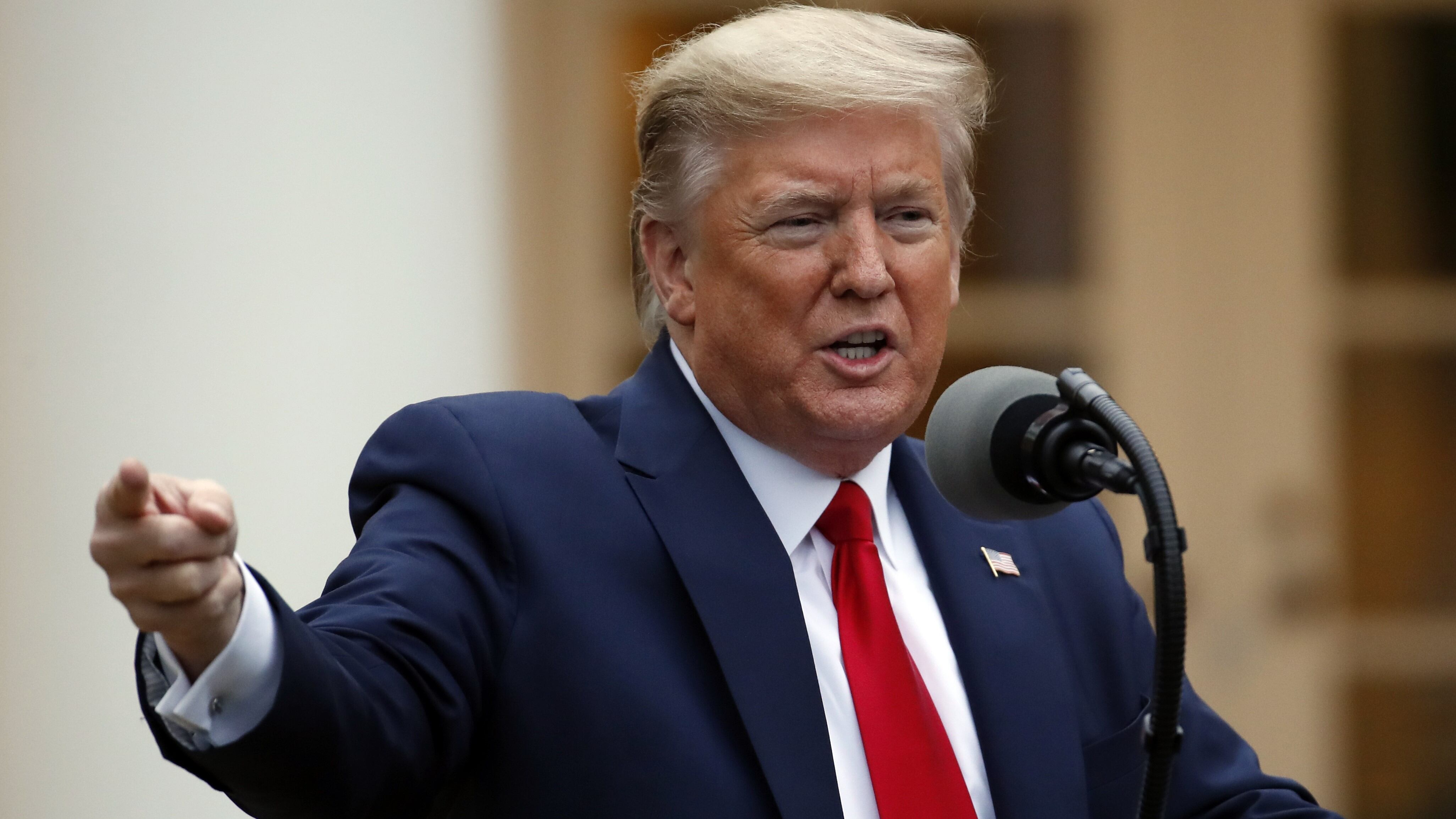
President Donald Trump said Tuesday that he was cutting off U.S. payments to the World Health Organization during the coronavirus pandemic, accusing the organization of failing to do enough to stop the virus from spreading when it first surfaced in China.

Trump, who had telegraphed his intentions last week, claimed the outbreak could have been contained at its source and that lives could have been saved had the U.N. health agency done a better job investigating the early reports coming out of China.

“The WHO failed in its basic duty and must be held accountable,” Trump said at a briefing. He said the U.S. would be reviewing the WHO's actions to stop the virus before making any decision on resuming aid.

There was no immediate comment from the Geneva-based organization on Trump's announcement. But when asked about possible U.S. funding cuts during a regular U.N. briefing earlier Tuesday, WHO spokeswoman Margaret Harris responded, “Regardless of any issues, our work will go on.”

Trump said the U.S. will continue to engage with the WHO in pursuit of “meaningful reforms.”

The United States contributed nearly $900 million to the WHO’s budget for 2018-19, according to information on the agency’s website. That represents one-fifth of its total $4.4 billion budget for those years. The U.S. gave nearly three-fourths of the funds in “specified voluntary contributions” and the rest in “assessed” funding as part of Washington’s commitment to U.N. institutions.

A more detailed WHO budget document provided by the U.S. mission in Geneva showed that in 2019, the United States provided $452 million, including nearly $119 million in assessed funding. In its most recent budget proposal from February, the Trump administration called for slashing the U.S. assessed funding contribution to the WHO to $57.9 million.

More than 125,000 deaths worldwide, including more than 25,000 in the U.S., have been blamed on the coronavirus, according to Johns Hopkins University.

Last week, Trump blasted the WHO for being “China-centric” and alleging that it had “criticized” his ban on travel from China as the COVID-19 outbreak was spreading from the city of Wuhan.

The WHO generally takes care not to criticize countries on their national policies, and it was not immediately clear what specific criticism Trump was alluding to.

Trump himself showed deference to China at the beginning stages of the outbreak.

“China has been working very hard to contain the Coronavirus," he tweeted Jan. 24. “The United States greatly appreciates their efforts and transparency. It will all work out well. In particular, on behalf of the American People, I want to thank President Xi!”

Asked Tuesday about the appropriateness of seeking to cut the WHO's funding in the middle of a worldwide viral outbreak, Trump said the review would last 60 to 90 days.

“This is an evaluation period, but in the meantime, we're putting a hold on all funds going to World Health," Trump said.

Trump has also complained that other countries give substantially less than the U.S., singling out China.

The American Medical Association immediately called on Trump to reconsider his decision.

“During the worst public health crisis in a century, halting funding to the World Health Organization is a dangerous step in the wrong direction that will not make defeating COVID-19 easier," AMA President Patrice A. Harris said in a statement.

Harris said international cooperation is needed to fight the virus, along with science and data.

"Cutting funding to the WHO, rather than focusing on solutions, is a dangerous move at a precarious moment for the world,” she said.

For most people, the coronavirus causes mild or moderate symptoms, such as fever and cough, that clear up in two to three weeks. But it can cause more severe illness, including pneumonia, and death for some people, especially older adults and people with existing health problems. The vast majority of people recover.

___

Associated Press writer Jamey Keaten in Geneva contributed to this report.
Share:
More In Politics
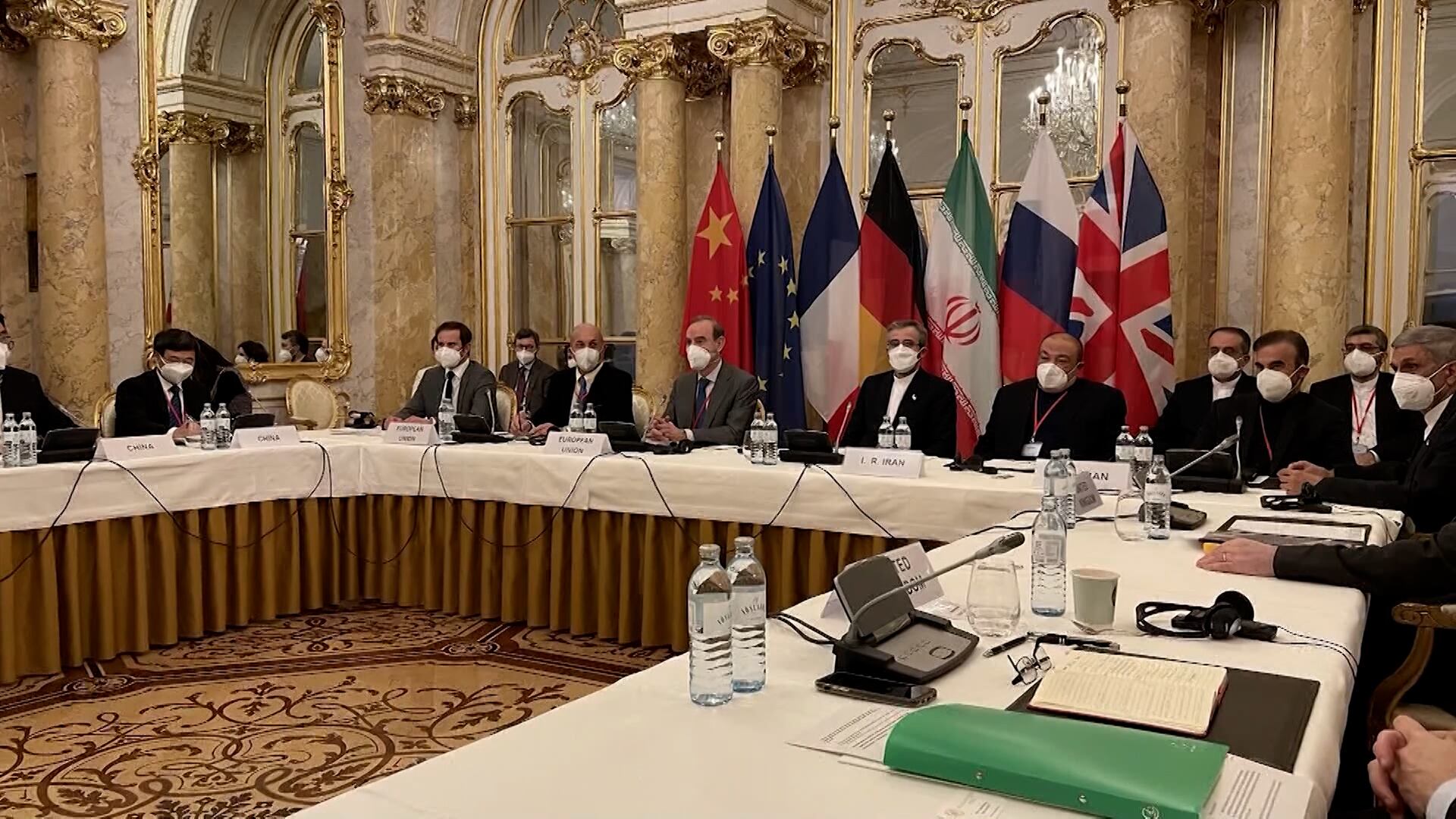
U.S. Back to Negotiating Iran Nuclear Deal After Trump Withdrew in 2018
The U.S. is back in negotiations for a nuclear deal with Iran, years after former President Donald Trump withdrew the country from the Joint Comprehensive Plan of Action (JCPOA), which had been meant to curtail the Middle Eastern nation's nuclear ambitions. Former State Department senior advisor to the George W. Bush and Trump administrations, Christian Whiton, joined Cheddar News Wrap to discuss. “It appears to be very similar to the original JCPOA, which does put some constraints on Iran's nuclear program, but also has sunset provisions, including some that in the original plan were expected to take effect in 2025," he said. "And so, if we just reenter that plan, really it just buys perhaps a few years of slowing down, stopping, whatever you want to say, Iran's nuclear program."
Russia Orders Troops Into Two Ukrainian Regions, White House Calls the Conflict an Invasion
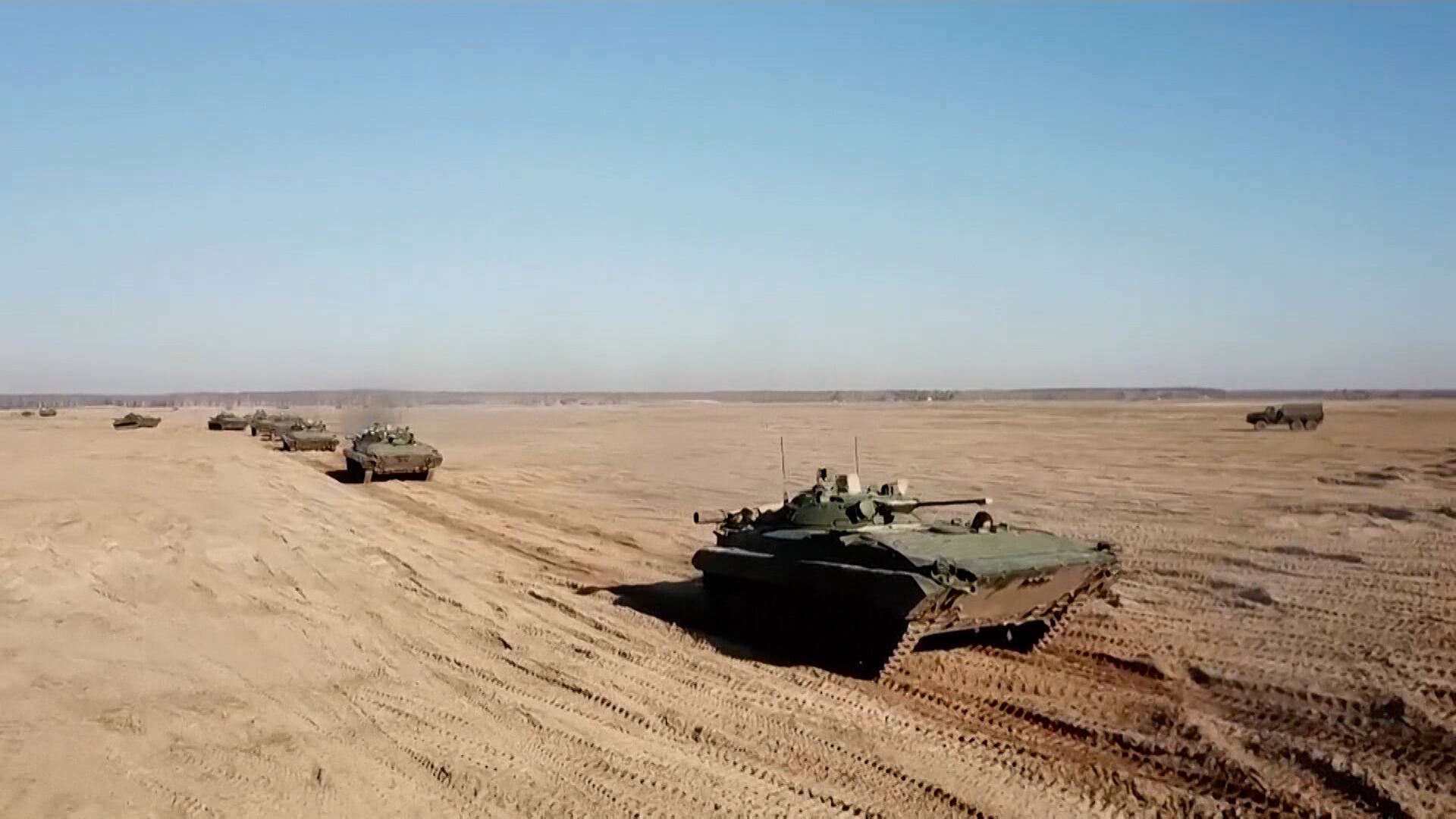
The U.S. has announced the first of what could be multiple levels of sanctions against Russia after Moscow recognized two regions of Ukraine as independent. This comes as Britain imposes sanctions on five Russian banks and two oligarchs, and Germany freezes the Nord Stream gas pipeline. Terrell Star, a foreign affairs reporter at The Atlantic Council, joins from Kyiv to discuss.
Price at the Pump Expected to Rise as Fear of Russian Invasion of Ukraine Grows
Growing tensions in Ukraine might soon be impacting consumers in the United States. With Russia on an invasion footing in the region, gas prices are predicted to go up 10 to 15 cents a gallon in the next coming weeks, according to Robert Sinclair, spokesperson for AAA. Sinclair joined Cheddar to break down what could happen even further. "We've been seeing prices go up, and there's been nothing that's happened to affect supplies," he said. "But it's something known as the fear tax where just the talk of something that might interfere with supplies leads to prices going up speculatively."
End of 3G Networks Expected to Impact Millions of Car Owners
The end of 3G is upon us. On Tuesday, AT&T became the first major provider to disable its 3G services, and T-Mobile and Verizon plan to follow suit later this year. The shutdowns are expected to impact millions of vehicles that use 3G networks for updates, remote connection, and certain emergency and convenience features. Lance Ulanoff, the U.S. Editor-in-Chief of TechRadar, joined Cheddar's Closing Bell to discuss the ramifications of the changeover.
Biden Imposes Economic Sanctions On Russia
President Biden unveiled new economic sanctions on Russia for what he called "the beginning of a Russian invasion". This came one day after Putin sent troops into two breakaway regions of eastern Ukraine. Alex Ward, national security reporter for POLITICO, explains what these sanctions might do to the global economy.
Stocks Close Sharply Lower Amid Russia-Ukraine Tensions
U.S. stocks ended today's session sharply lower on the heels of rising geopolitical tensions between Russia and Ukraine. Melissa Brown, Managing Director of Applied Research at Qontigo, joins Cheddar News' Closing Bell to discuss.
U.S. Will Impose Sanctions on Russia After Troops Entered Ukraine for Alleged Peacekeeping
President Joe Biden said Tuesday that the U.S. will begin to impose sanctions on Russia, calling recent troop movement into Ukraine an 'invasion.' Biden and other government officials including from the State Department have begun to classify the Russian troop movement as an invasion after Russian President Vladimir Putin ordered troops to two independent Ukrainian areas in an alleged "peacekeeping" mission — which the West considers an act of aggression. Biden said Russia will continue to pay 'an even steeper price' if it continues sending troops into Ukraine. What happens next? Will Putin find a way around these sanctions? Ariel Cohen, senior fellow at the Atlantic Council, joins Closing Bell to discuss Biden's remarks, how the West will protect Ukraine since it doesn't belong to NATO, and more.
Load More