Steve Bannon, a longtime ally of former President Donald Trump, appeared before a judge on Monday to face criminal contempt charges for defying a subpoena from a House committee investigating January’s insurrection at the U.S. Capitol.
Bannon surrendered earlier in the day to FBI agents. The 67-year-old was indicted on Friday on two counts of criminal contempt – one for refusing to appear for a congressional deposition and the other for refusing to provide documents in response to the committee’s subpoena.
Bannon did not enter a plea during the hearing. Magistrate Judge Robin Meriweather released him without bail but required him to check in weekly with court officials and ordered him to surrender his passport. He is due back in court on Thursday.
If convicted, Bannon faces a minimum of 30 days and a maximum of one year behind bars on each count, prosecutors said. Outside the courthouse, a large inflatable rat made to look like former President Trump was on the sidewalk as reporters waited for Bannon to leave the courthouse.
The indictment came as a second expected witness, former White House Chief of Staff Mark Meadows, defied a separate subpoena from the committee on Friday and as Trump has escalated his legal battles to withhold documents and testimony about the insurrection.
If the House votes to hold Meadows in contempt, that recommendation would also be sent to the Justice Department for a possible indictment.
Officials in both Democratic and Republican administrations have been held in contempt by Congress, but criminal indictments for contempt are exceedingly rare.
The indictment against Bannon comes after a slew of Trump administration officials – including Bannon – defied requests and demands from Congress over the past five years with little consequence, including during an impeachment inquiry. President Barack Obama’s administration also declined to charge two of its officials who defied congressional demands.
The indictment says Bannon didn’t communicate with the committee in any way from the time he received the subpoena on Sept. 24 until Oct. 7 when his lawyer sent a letter, seven hours after the documents were due.
Bannon, who worked at the White House at the beginning of the Trump administration and currently serves as host of the conspiracy-minded “War Room” podcast, is a private citizen who “refused to appear to give testimony as required by a subpoena,” the indictment says.
When Bannon declined to appear for his deposition in October, his attorney said the former Trump adviser had been directed by a lawyer for Trump citing executive privilege not to answer questions.
Updated on November 15, 2021, at 2:34 p.m. ET with the latest details.
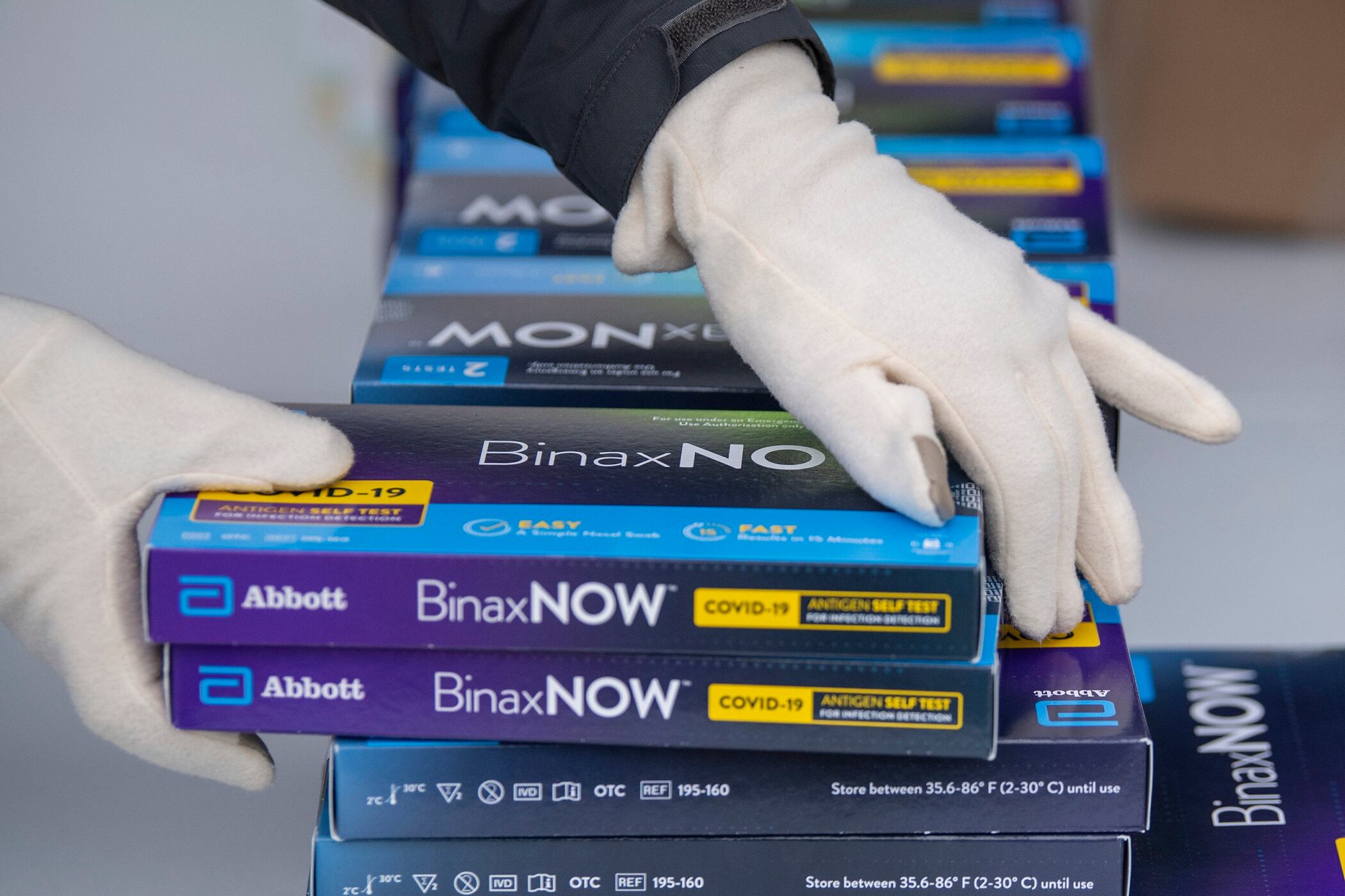
The Biden administration on Tuesday quietly launched its website for Americans to request free at-home COVID-19 tests, a day before the site was scheduled to officially launch.
Just 27% of voters aged 18-29 approve of the job Biden is doing as president, according to a survey from The Economist and YouGov late last year. Santiago Mayer, executive director of Voters of Tomorrow, joins Cheddar Politics to discuss why President Biden is losing support among young voters.
Jesse Lehrich, co-founder of Accountable Tech, joins Cheddar News to discuss it being one year since Trump was exiled from social media and the former President's new platform 'Truth Social.'
Cliff Albright, co-founder of the group Black Voters Matter, joins Cheddar Politics to discuss why he boycotted President Biden's voting rights speech this week, and the push from Senate Democrats to debate and vote on the Freedom to Vote Act and the John Lewis Voting Rights Advancement Act.
Senator Jon Ossoff (D-Ga.) has teamed up with fellow Democratic senator and former astronaut Mark Kelly to introduce the Ban Congressional Stock Trading Act, a bill to essentially end stock trading by sitting lawmakers. From the other side of the aisle, Senator Josh Hawley (R-Mo.) introduced his own legislation to enact something similar. The dueling bills come at a time when it's popular to constrain members of Congress from owning and trading stocks. Karl Evers-Hillstrom, a business and lobbying reporter at The Hill, spoke to Cheddar about the significance of the bills, and what they could mean for lawmakers, their families, and staffers moving forward.
A second Starbucks location in the U.S. has officially voted to unionize. On Monday, the National Labor Relations Board announced workers at the Starbucks store located in the Buffalo, NY suburb of Cheektowaga voted 15-9 in favor of being represented by Workers United, an affiliate of the Service Employees International Union. The New York Times reports votes were tallied in December but remained inconclusive as the union challenged the ballots of several employees it said did not work at the store. A Starbucks spokesperson has said that it may appeal the labor board's decision, which comes as several other Starbucks stores across the country are also pushing to form a union. Danka Dragic, shift supervisor for the second Starbucks store in the country to unionize, joined Cheddar News' Closing Bell to discuss.
Earlier today, Minnesota Republican Representative, Tom Emmer, introduced a bill that would prevent the Federal Reserve from issuing a central bank digital currency directly to American consumers. According to the Congressman from Minnesota, requiring Americans to open a fed account to access a digital currency, would "put the Fed on insidious path akin to China's digital authoritarianism." Rep. Tom Emmer joined Cheddar's None of The Above to discuss more.
Sixteen of the country's most prestigious universities have been hit with a lawsuit claiming those schools illegally conspired to eliminate competitive financial aid offers for students. Just some of the schools mentioned include Yale, Brown, Columbia, UPenn, and Cornell. Author of "Who Gets In and Why" and Professor of practice at Arizona State University, Jeff Selingo, joined Cheddar to discuss more.