Steve Bannon, a longtime ally of former President Donald Trump, appeared before a judge on Monday to face criminal contempt charges for defying a subpoena from a House committee investigating January’s insurrection at the U.S. Capitol.
Bannon surrendered earlier in the day to FBI agents. The 67-year-old was indicted on Friday on two counts of criminal contempt – one for refusing to appear for a congressional deposition and the other for refusing to provide documents in response to the committee’s subpoena.
Bannon did not enter a plea during the hearing. Magistrate Judge Robin Meriweather released him without bail but required him to check in weekly with court officials and ordered him to surrender his passport. He is due back in court on Thursday.
If convicted, Bannon faces a minimum of 30 days and a maximum of one year behind bars on each count, prosecutors said. Outside the courthouse, a large inflatable rat made to look like former President Trump was on the sidewalk as reporters waited for Bannon to leave the courthouse.
The indictment came as a second expected witness, former White House Chief of Staff Mark Meadows, defied a separate subpoena from the committee on Friday and as Trump has escalated his legal battles to withhold documents and testimony about the insurrection.
If the House votes to hold Meadows in contempt, that recommendation would also be sent to the Justice Department for a possible indictment.
Officials in both Democratic and Republican administrations have been held in contempt by Congress, but criminal indictments for contempt are exceedingly rare.
The indictment against Bannon comes after a slew of Trump administration officials – including Bannon – defied requests and demands from Congress over the past five years with little consequence, including during an impeachment inquiry. President Barack Obama’s administration also declined to charge two of its officials who defied congressional demands.
The indictment says Bannon didn’t communicate with the committee in any way from the time he received the subpoena on Sept. 24 until Oct. 7 when his lawyer sent a letter, seven hours after the documents were due.
Bannon, who worked at the White House at the beginning of the Trump administration and currently serves as host of the conspiracy-minded “War Room” podcast, is a private citizen who “refused to appear to give testimony as required by a subpoena,” the indictment says.
When Bannon declined to appear for his deposition in October, his attorney said the former Trump adviser had been directed by a lawyer for Trump citing executive privilege not to answer questions.
Updated on November 15, 2021, at 2:34 p.m. ET with the latest details.
The Biden administration will significantly loosen federal mask-wearing guidelines to protect against COVID-19 transmission on Friday, according to two people familiar with the matter.
Russian President Vladimir Putin openly invaded the neighboring country of Ukraine on Thursday following weeks of overtures and discussions on keeping an incursion from happening. David Salvo, the deputy director for the Alliance for Securing Democracy, joined Cheddar to go into the Russian leader's motivations. "What I'm sure he understands is that his invasion of Ukraine in 2014 probably ended the discussion of Ukraine joining NATO, even if publicly we won't admit that, that's just the reality. And I'm sure that President Putin understands that," he said, noting that Putin could be using the taking of Ukraine territory as leverage to gain more security concessions from the West.
Following Russia's incursion into Ukraine, the U.S. is warning businesses and major banks to brace themselves for cyberattacks. Lester Munson, a senior fellow at the National Security Institute, joined Cheddar News to break down what this means for financial institutions “So we need to be concerned about not just intentional Russian hacks against American entities but also what Russia is doing in Ukraine. Those things can impact us as well," he said
After weeks of talks and posturing in hopes of staving off an attack, Russia invaded Ukraine on Thursday, an incident that has already impacted the global economy, including the U.S.. Jason McMann, head of geopolitical risk analysis for Morning Consult, joined Cheddar’s Closing Bell to break down what investors might do to prepare themselves as the crisis continues. "I think there are a few things that we have our eye on over at Morning Consult that could cause the situation to become a bit more severe or unstable as far as market outcomes would be concerned," McMann said. "One of those things would be if the U.S. and the EU kind of moved in concerted fashion to block Russia from the SWIFT transaction system. So, I would say that's one thing that would be worth keeping an eye on."
Alex Walker, candidate for Colorado's 3rd Congressional District, joins Cheddar News to discuss why he's running against Lauren Boebert and the inspiration behind his viral campaign ad.
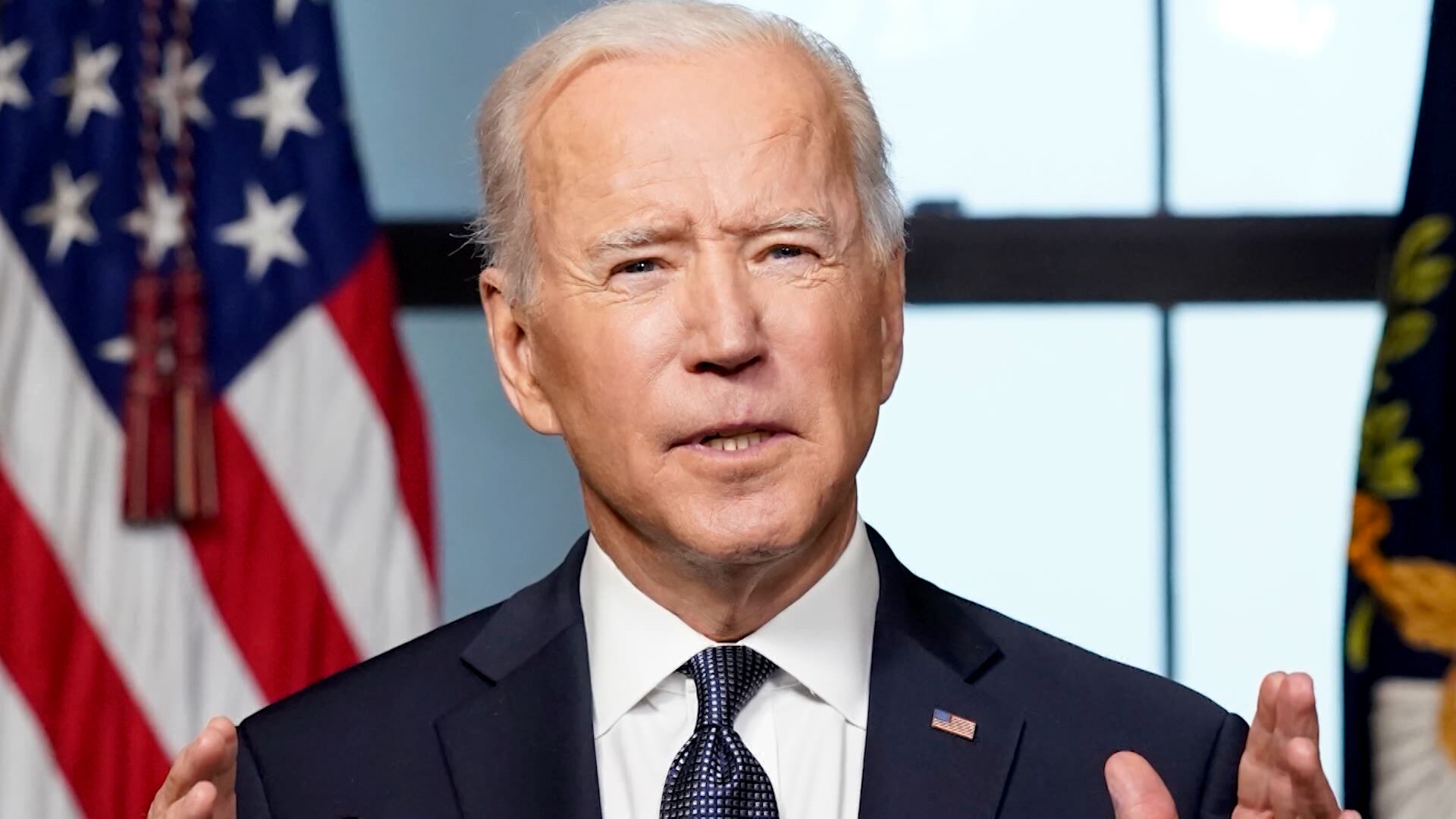
Lisa Hagen, politics reporter for U.S. News and World Report, joins Cheddar News to preview what to expect from President Biden's State of the Union Address on March 1.
Minh-Thu Pham, co-founder of New American Voices, joins Cheddar News to discuss the organization and why new citizens are key to defending U.S. democracy.
Joel Willett, a former CIA operative, joins Cheddar News to discuss Russian President Vladimir Putin officially launching a "special military operation" in Ukraine