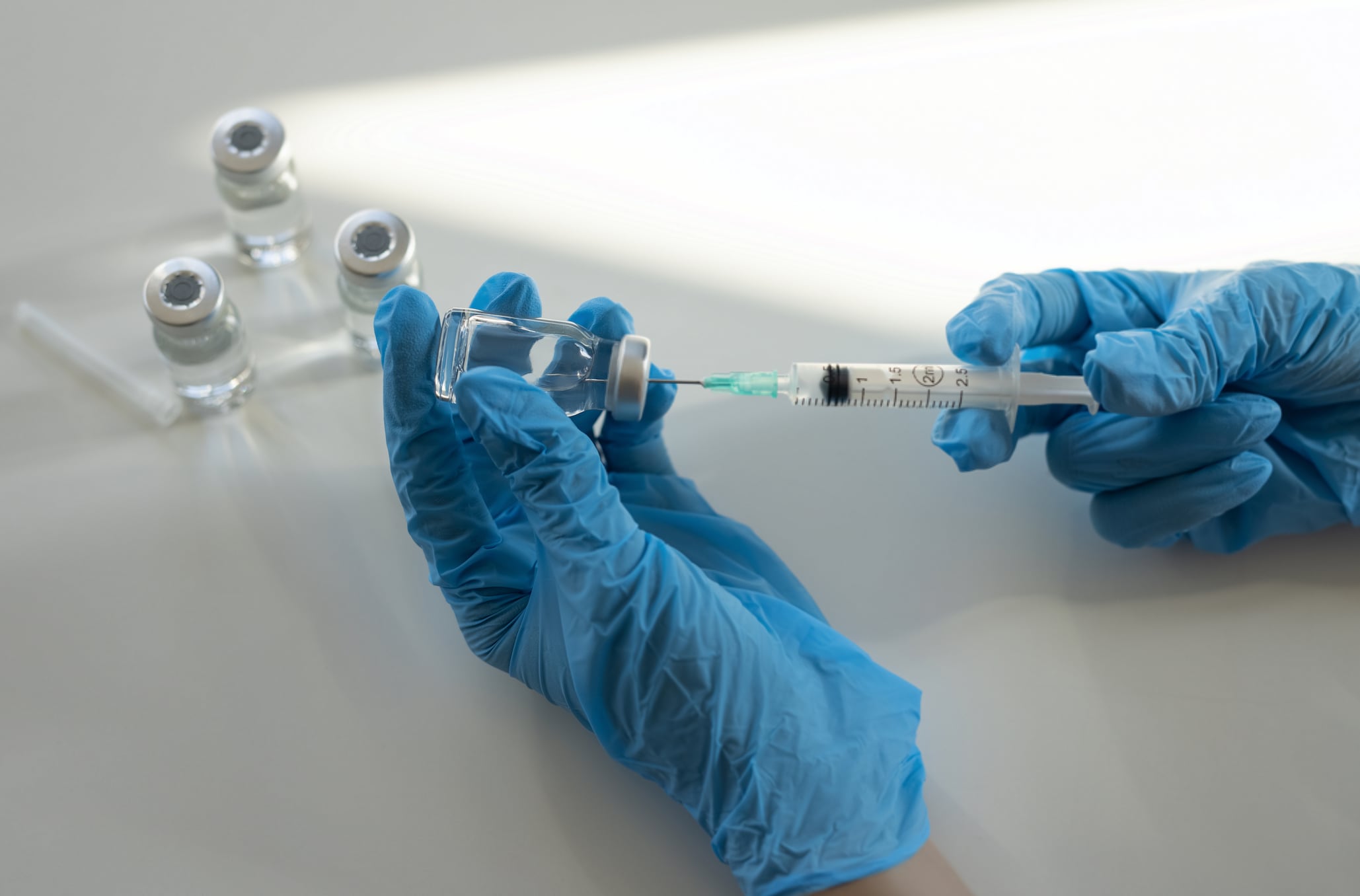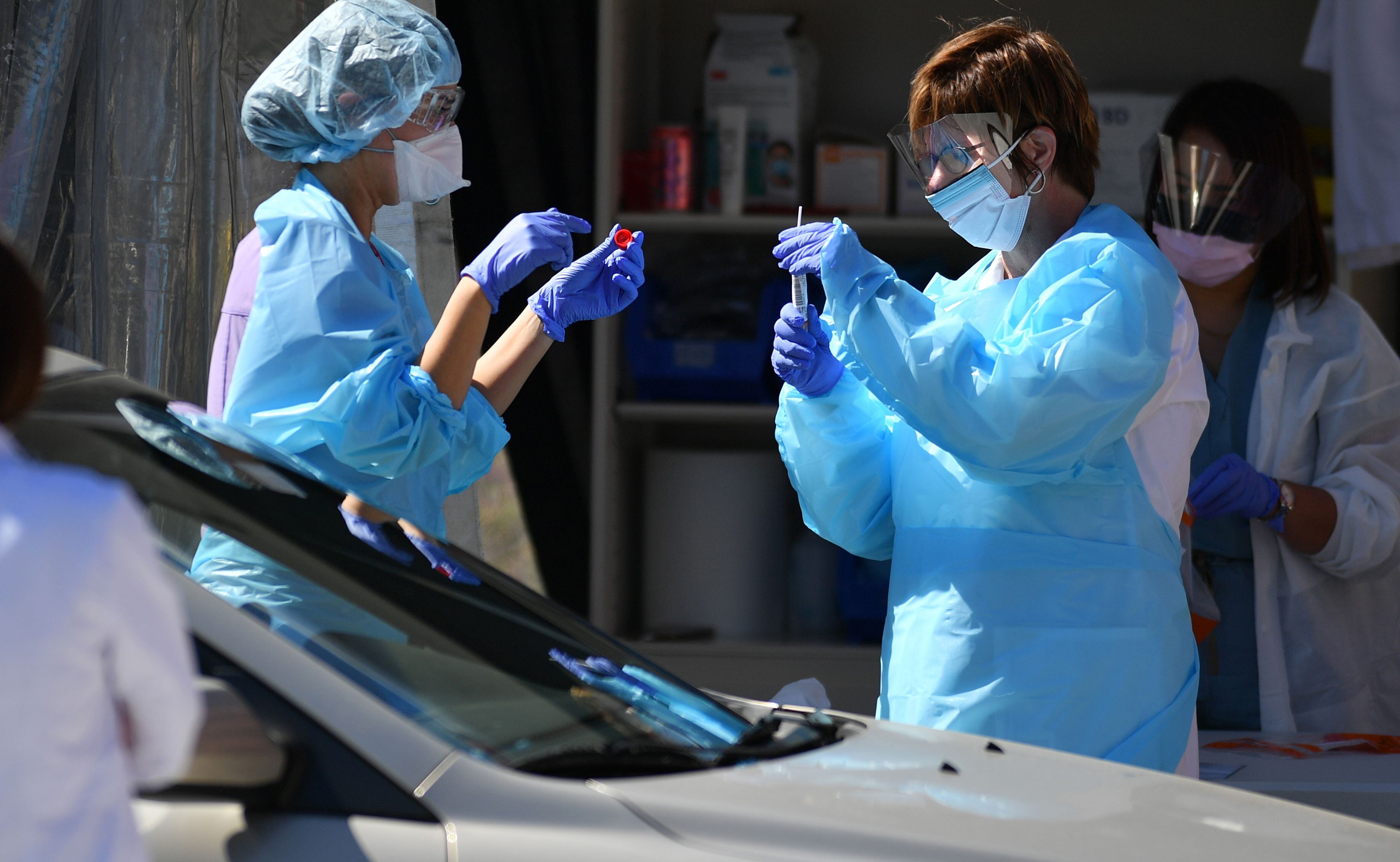
President Donald Trump's administration announced Friday it is awarding $1.3 million to two companies trying to develop rapid COVID-19 tests that could detect whether a person is positive for the new coronavirus within an hour.
The Department of Health and Human Services said it is awarding $679,000 to DiaSorin Molecular, of Cypress, California, and $598,000 to QIAGEN, of Germantown, Maryland, to accelerate development of their tests.
DiaSorin's test could be ready within six weeks for consideration by the U.S. Food and Drug Administration, and the QIAGEN test could be ready within 12 weeks for FDA consideration, according to HHS.
For most people, the new coronavirus causes only mild or moderate symptoms, such as fever and cough. For some, especially older adults and people with existing health problems, it can cause more severe illness, including pneumonia. The vast majority of people recover from the new virus.
According to the World Health Organization, people with mild illness recover in about two weeks, while those with more severe illness may take three to six weeks to recover. In mainland China, where the virus first exploded, about 81,000 people have been diagnosed and about 64,000 have recovered.
___
The Associated Press receives support for health and science coverage from the Howard Hughes Medical Institute’s Department of Science Education. The AP is solely responsible for all content.