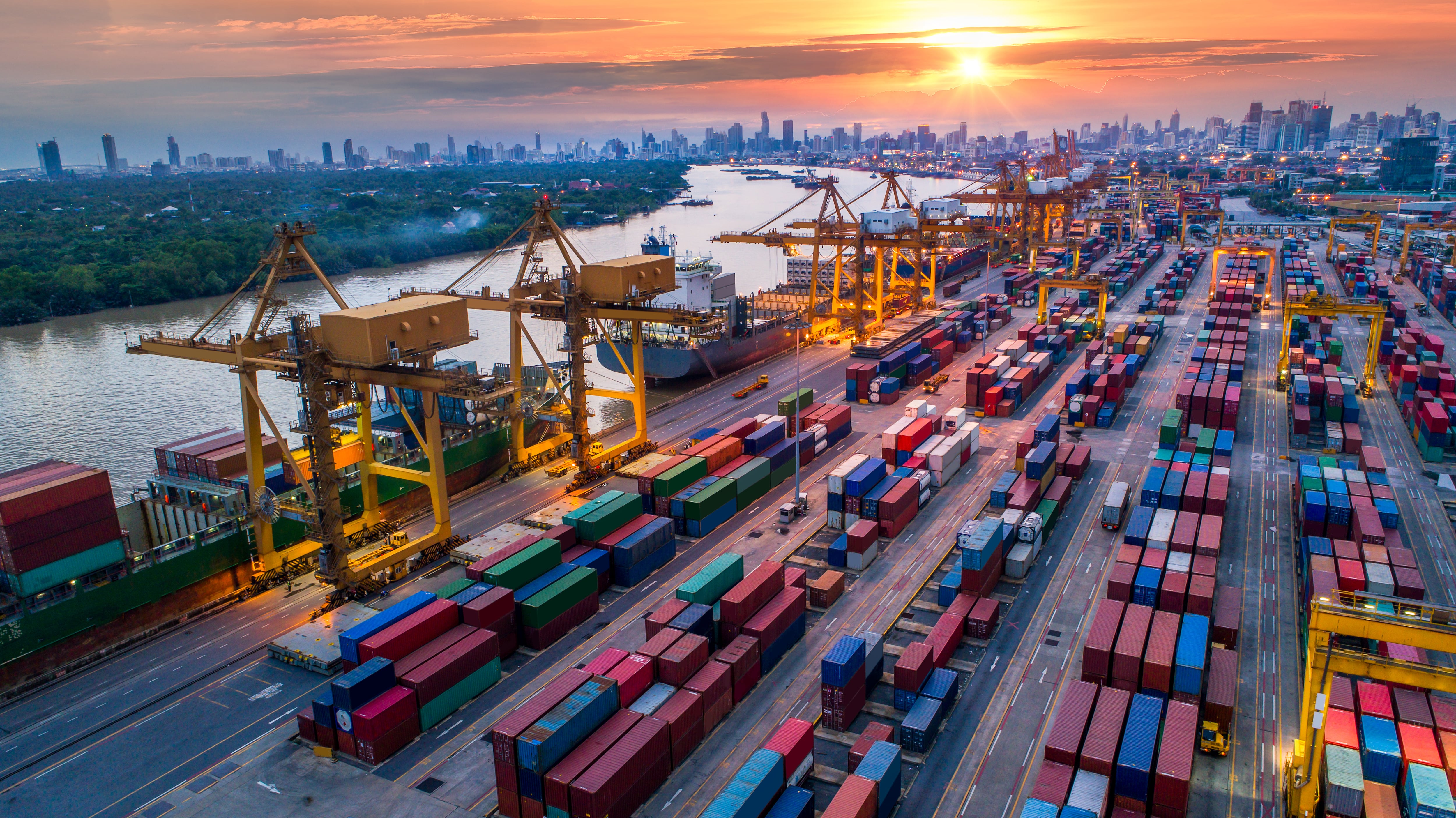
Enduring trade tensions and weakening economies worldwide are causing a significant decline in global commerce, the World Trade Organization warned on Tuesday. The instability led the Geneva-based organization to cut its forecast for trade volume growth to just 1.2 percent in 2019, an over 50 percent drop from an earlier estimate.
"Beyond their direct effects, trade conflicts heighten uncertainty, which is leading some businesses to delay the productivity-enhancing investments that are essential to raising living standards," said Roberto Azevêdo, the WTO's director-general.
The WTO took particular issue with trade policies dominated by punitive tariffs, which its report said can "produce a destructive cycle of recrimination." Financial volatility and looming geopolitical strife, along with escalating trade wars, could also trigger an accelerated downturn, the report said.
"Resolving trade disagreements would allow WTO members to avoid such costs," Azevêdo added. "The multilateral trading system remains the most important global forum for settling differences and providing solutions for the challenges of the 21st century global economy."
Fitch Ratings, a leading London-based financial information firm, also lowered its economic outlook this week, citing similar trade concerns as the WTO. For both 2019 and 2020, Fitch lowered its global GDP growth forecasts by 2 percent, dropping the estimates down to 2.6 percent and 2.5 percent, respectively. The WTO also lowered its trade growth forecast for 2020 from 3 percent to 2.7 percent.
"There can be few precedents since the 1930s of global growth prospects being affected so significantly by trade policy disruptions," said Brian Coulton, Fitch's chief economist.
The lowered guidance comes as governments and economists around the world are increasingly cautioning of an economic slowdown.
In the U.S., consumer spending — one of the primary drivers of economic growth — fell in August to just 0.1 percent growth, a sharp decline from the 0.5 percent growth in July, according to the Commerce Department's Bureau of Economic Analysis. The U.S. Federal Reserve also cut interest rates twice in recent months to spur growth and sustain expansion.
Not only is April Financial Literacy Month, it’s also the kickoff of the spring homebuying season. So now is the time to make sure you have a financial plan in place – and why it might not be wise for that to include buying your first home.
While the U.S. may slowly be on the path to lowering inflation (and therefore interest rates), Europe has thoroughly trounced America, putting it on the path to lower rates by this summer.
April's release of the monthly Housing Starts and Building Permits reports by the Census Bureau provides crucial insights into the construction activity in the housing market. These reports are an economic indicator, shedding light on the current state of the housing market and its broader economic impact.
Caitlin Clark is heading to the Indiana Fever, the number one draft pick and the highest-scoring college basketball player of all time. And while she may not be getting millions from the WNBA, there's a few ways she'll net compensation for her generational talents.
Author of 'Clean Meat,' Paul Shapiro joins Cheddar to discuss how the cellular agricultural revolution helps lower rates of foodborne illness and greatly improves environmental sustainability. Plus, how his company The Better Meat Co. is bringing healthier food options to the table.
Recent headlines might make it sound like World War III is imminent, but when it comes to your finances, it's not the time to panic. The market is coming off its longest winning streak since 2011.
You may have noticed fewer new venture capital-backed startups (like Airbnb or Uber) lately. The market slowed to a crawl after 2021, but things are expected to take off again in 2025.
Corporate earnings season is underway, that time when companies share their billions in sales or double-digit profits. But the data shows even companies are struggling with high inflation and interest rates.
Boeing continues their terrifying trend of having their planes fall apart mid-flight, inflation — checks notes — is still up and the future of AI looks terrifying. Cheery!
Food waste – uneaten scraps or leftovers sent to landfills – is responsible for 10% of global emissions. Mill, a new product from the co-founder of Nest, thinks technology can play a role in eliminating it.