By Yuri Kageyama
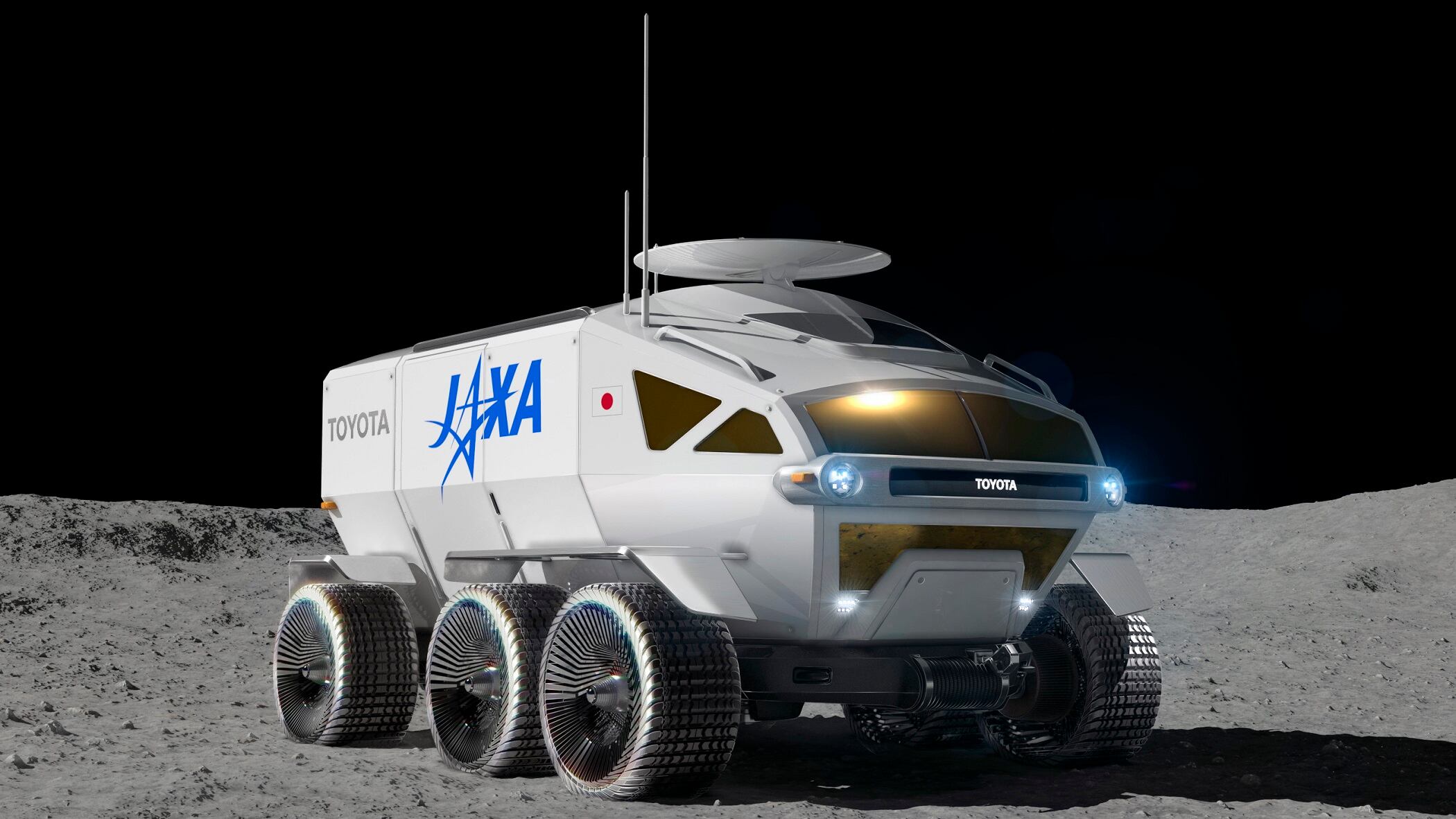
Toyota is working with Japan's space agency on a vehicle to explore the lunar surface, with ambitions to help people live on the moon by 2040 and then go live on Mars, company officials said Friday.
The vehicle being developed with the Japan Aerospace Exploration Agency is called Lunar Cruiser, whose name pays homage to the Toyota Land Cruiser sport utility vehicle. Its launch is set for the late 2020’s.
The vehicle is based on the idea that people eat, work, sleep and communicate with others safely in cars, and the same can be done in outer space, said Takao Sato, who heads the Lunar Cruiser project at Toyota Motor Corp.
“We see space as an area for our once-in-a-century transformation. By going to space, we may be able to develop telecommunications and other technology that will prove valuable to human life,” Sato told The Associated Press.
Gitai Japan Inc., a venture contracted with Toyota, has developed a robotic arm for the Lunar Cruiser, designed to perform tasks such as inspection and maintenance. Its “grapple fixture” allows the arm’s end to be changed so it can work like different tools, scooping, lifting and sweeping.
Gitai Chief Executive Sho Nakanose said he felt the challenge of blasting off into space has basically been met but working in space entails big costs and hazards for astronauts. That’s where robots would come in handy, he said.
Since its founding in the 1930s, Toyota has fretted about losing a core business because of changing times. It has ventured into housing, boats, jets and robots. Its net-connected sustainable living quarters near Mount Fuji, called Woven City, where construction is starting this year.
Japanese fascination with the moon has been growing.
A private Japanese venture called ispace Inc. is working on lunar rovers, landing and orbiting, and is scheduled for a moon landing later this year. Businessman Yusaku Maezawa, who recently took videos of himself floating around in the International Space Station, has booked an orbit around the moon aboard Tesla CEO Elon Musk’s Starship.
Toyota engineer Shinichiro Noda said he is excited about the lunar project, an extension of the automaker’s longtime mission to serve customers and the moon may provide valuable resources for life on Earth.
“Sending our cars to the moon is our mission,” he said. Toyota has vehicles almost everywhere. “But this is about taking our cars to somewhere we have never been.”