Social media company TikTok Inc. filed a lawsuit Monday seeking to overturn Montana's first-in-the-nation ban on the video sharing app, arguing the law is an unconstitutional violation of free speech rights and is based on “unfounded speculation” that the Chinese government could access users' data.
The lawsuit by TikTok itself follows one filed last week by five content creators who made the same arguments, including that the state of Montana has no authority to take action on matters of national security. Both lawsuits were filed in federal court in Missoula.
Republican Gov. Greg Gianforte signed the bill Wednesday and the content creators' lawsuit was filed hours later. The law is scheduled to take effect on Jan. 1.
Some lawmakers, the FBI and officials at other agencies are concerned that the video-sharing app, owned by the Chinese tech company ByteDance, could be used to allow the Chinese government to access information on U.S. citizens or push pro-Beijing misinformation that could influence the public.
Chinese law compels Chinese companies to share data with the government for whatever purposes it deems to involve national security. TikTok says this has never happened.
“TikTok is spying on Americans. Period,” Montana Attorney General Austin Knudsen, whose office drafted the bill, told a legislative committee in March. Knudsen's office has said they expected lawsuits and were prepared to defend the new law.
The federal government and about half the U.S. states, including Montana, have banned TikTok from government-owned devices.
Montana’s new law prohibits downloads of TikTok in the state. It would fine any “entity” — an app store or TikTok — $10,000 per day for each time someone “is offered the ability” to access the social media platform or download the app. The penalties would not apply to users.
Paul Tracey, Founder & CEO of Innovative Technologies, and author of 'Delete The Hacker Playbook' and 'Cyber Storm', joins Cheddar to discuss the most effective ways to protect small businesses from cyber attacks, the labor shortage's effects on cybercrime, and how businesses and employees can stay cyber secure while working from home.
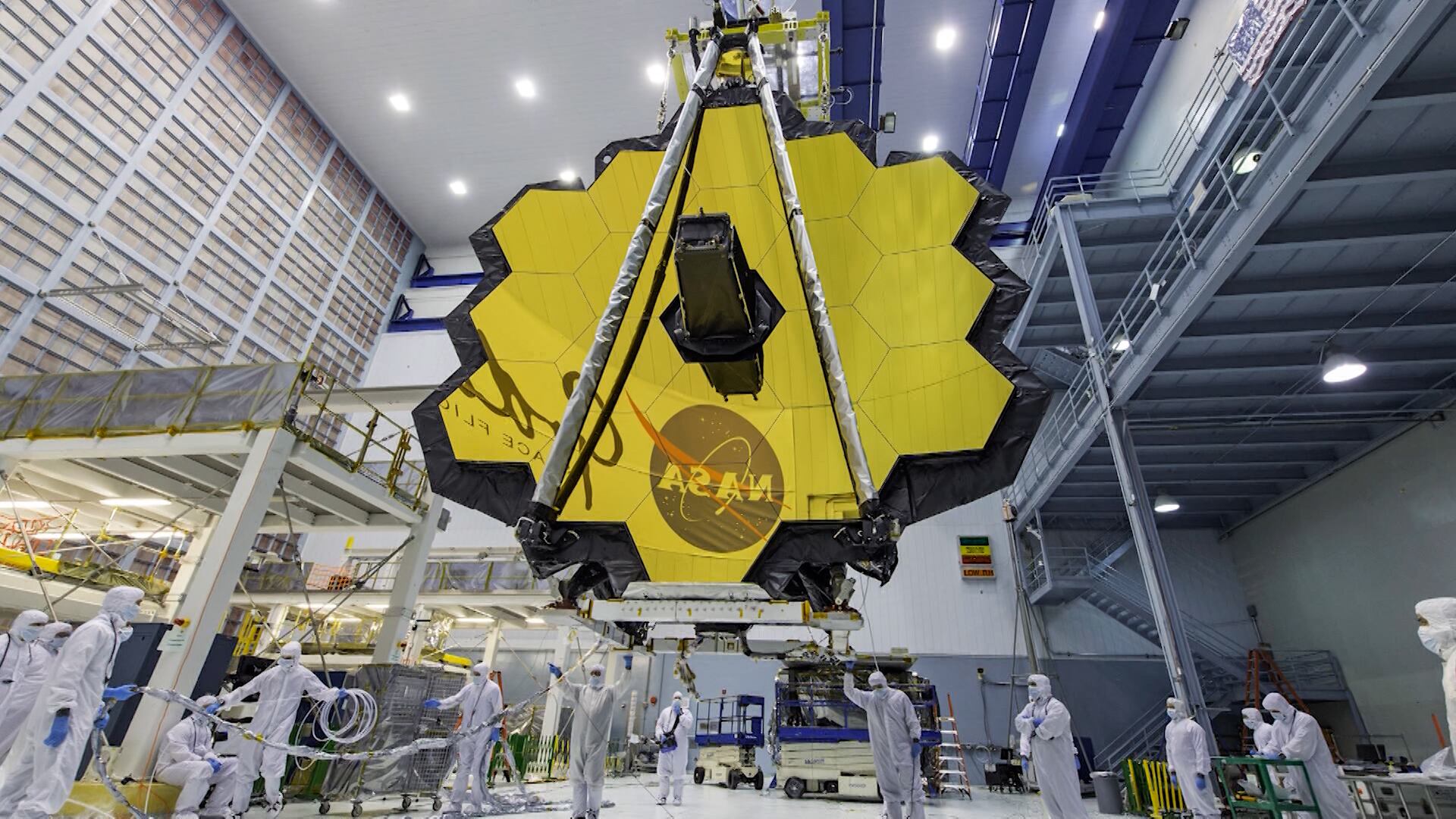
NASA has announced that the first official full-color images will be beamed back to Earth from the James Webb Telescope on July 12. Gregory L. Robinson, the director of the James Webb Space Telescope Program in the NASA Science Mission Directorate, joined Cheddar News to discuss the anticipated image drop. “We expect to see the universe different," he said. "Webb will allow us to see much, much clearer and deeper into the universe."
Dave Burg, EY Americas Cybersecurity Leader, joins Cheddar News to discuss the rise of quantum computing and how it can compromise existing security measures at play today, and what the timeline looks like for quantum computing to become a reality.
Nicolas Halftermeyer, Communications & Product Branding Director, SoftBank Robotics, and Emile Kroeger, Robotics Engineer, Humanizing Technologies, join Cheddar Reveals to unveil Pepper and NAO, the humanoid robots designed to interact with humans.
On this episode of Cheddar Reveals, Christopher Atkeson, roboticist and a professor at the Robotics Institute and Human-Computer Interaction Institute at Carnegie Mellon University, discusses what the robots of the future will look like, the role they will play in society and different industries, and if they will they ever reach human-level sentience; Nicolas Halftermeyer, Communications & Product Branding Director, SoftBank Robotics, and Emile Kroeger, Robotics Engineer, Humanizing Technologies, unveil Pepper and NAO, the humanoid robots designed to interact with humans; Cheddar gets a look at Curiosity Stream's 'iHuman.'
Christopher Atkeson, roboticist and a professor at the Robotics Institute and Human-Computer Interaction Institute at Carnegie Mellon University, joins Cheddar Reveals to discuss what the robots of the future will look like, the role they will play in society and different industries, and if they will they ever reach human-level sentience.